Barney speaks the truth…

Ohio voters are heading to the polls to decide if non-U.S. citizens can vote in state or local elections.
If passed, Issue 2 would change the Ohio Constitution. It proposes that only adult U.S. citizens who legally reside and are registered to vote in Ohio for at least 30 days can cast a ballot in future state and local elections.
The current Ohio Constitution states that “every citizen of the United States, of the age of eighteen years and has been registered to vote for thirty days is entitled to vote at all elections.”
The state constitution does not say that noncitizens cannot vote.
Federal law prohibits noncitizens from casting ballots in federal elections.
A 1917 ruling by the Ohio Supreme Court determined that the state constitution’s home rule, which gives cities control over their local issues, provided municipalities permission to expand voting rights in city elections.
Issue 2 would ensure that a city’s home rule does not circumvent the law that only adult U.S. citizens can cast ballots.
Supporters of Issue 2 believe the amendment will uphold the integrity of citizenship if it becomes law, while opponents claim it is an effort to “restrict voting access.”
At the forefront of Issue 2 is the village of Yellow Springs, which is located east of Dayton in southwest Ohio.
In 2019, village officials passed a referendum allowing residents who were not U.S. citizens to vote in local elections. Ohio Secretary of State Frank LaRose ordered the Greene County Board of Elections not to accept voter registration forms from noncitizens.
The referendum violated the U.S. and Ohio Constitutions, LaRose said. In a press release, he added, “Just when you thought 2020 couldn’t get any weirder, the village of Yellow Springs forces me, as Ohio’s chief elections officer, to restate the obvious – only U.S. citizens may vote.”
A U.S. judge has agreed to allow the FBI to delay production of records on late Democratic National Committee (DNC) staffer Seth Rich.
U.S. District Judge Amos Mazzant, an Obama appointee, granted on Oct. 18 the government’s request, which U.S. lawyers said was unopposed.
Mazzant had ordered in September the FBI to produce information from Rich’s laptop computer to Texas resident Brian Huddleston, who sued the bureau after he said it failed to respond properly to Freedom of Information Act requests.
The FBI previously claimed it didn’t have records regarding Rich, but during the case acknowledged it had taken possession of Rich’s laptop.
FBI officials argued that Rich’s family has a privacy interest that outweighs the public interest in the information from Rich’s computer but Mazzant rejected the arguments, noting that the FBI cited no case law.
He ordered the FBI to produce the information within 14 days.
But the FBI through Department of Justice lawyers asked for a two-week stay, saying it was preparing a motion for reconsideration/clarification “because the FBI is uncertain how to comply with the Court’s order as written, and the FBI is seeking input from a pending appellate consultation regarding the order to properly address this issue.”
The stay would allow the FBI sufficient time to complete its legal consultations and prepare and file the motion, according to Brit Featherston, a U.S. attorney who filed the motion. “This motion for stay is not made for purposes of delay, but so that justice may be served,” Featherston said.
Ty Clevenger, representing Huddleston, did not oppose the motion, according to the government.
Clevenger did not return a request for comment.
Mazzant granted the motion.
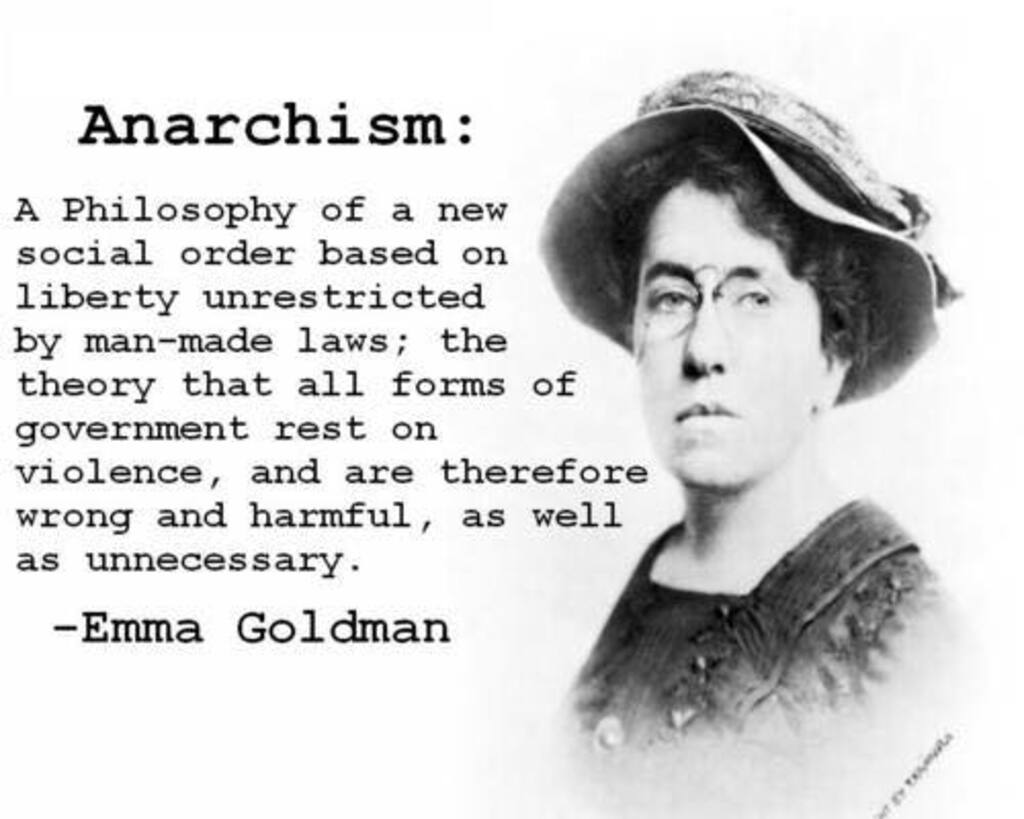
Documentary producer and investigative journalist James Gordon Meek hasn’t been seen since the FBI raided his apartment in Arlington, Virginia, just outside Washington DC, on 27 April of this year.
The 52-year-old’s neighbour John Antonelli told Rolling Stone magazine that he witnessed the raid from the street as he was heading out on a walk. He said he spotted 10 heavily armed people among the group of law enforcement officers, a green armoured tactical vehicle, a black utility vehicle with tinted windows and several Arlington police cars, among other vehicles.
Only the police cruisers were marked, Mr Antonelli noted. The heavily armed individuals had no markings revealing what agency they were working for. The raid took around 10 minutes.
“They didn’t stick around. They took off pretty quickly and headed west on Columbia Pike towards Fairfax County,” Mr Antonelli told Rolling Stone. “Most people seeing that green vehicle would think it’s some kind of tank. But I knew it was the Lenco BearCat. That vehicle is designed to be jumped out of so they can do a raid in that kind of time. It can return fire if they’re being fired upon.”
The magazine reported that Mr Meek was targeted by the FBI at his home at the Siena Park apartments, where he had lived for more than 10 years.
The FBI told Rolling Stone that agents went to the home on 27 April “at the 2300 block of Columbia Pike, Arlington, Virginia, conducting court-authorized law-enforcement activity. The FBI cannot comment further due to an ongoing investigation”.
While Mr Meek hasn’t been charged, observers think that this could be among the initial raids, if not the first, to be conducted on a reporter by the Biden administration.
Various veteran pilots flying over the Pacific Ocean in August and September have claimed that they saw UFOs flying in circles above them in the night sky.
Former FBI agent Ben Hansen, the host of the Discovery+ show “UFO Witness,” obtained recordings of reports to the Los Angeles Air Route Traffic Control Center (ARTCC) in which pilots described what they saw.
“We’ve got a few aircraft to our north here and he’s going around in circles, much higher altitude than us. Any idea what they are?” Mark Hulsey, who was flying a a Gulfstream charter jet, radioed ito ARTCC.
“Uh, no, no I do not,” the air controller replied, according to The Daily Mail. “You’re not entering any [military] airspace or anything. I am not sure.”
Hulsey claimed he could see “maybe three aircraft there” before calling again 23 minutes later, clarifying, “There’s now like seven of them … at least 5 or 10,000 feet above us. … They just keep going in circles. I was an F-18 pilot in the Marine Corps, and I’m telling you, I’ve done many intercepts: I’ve never seen anything like this.”
“Expert aviators say they believe the circular movement and duration of the sightings – some for hours – ruled out satellites,” The Daily Mail noted.
Veteran pilot Chris Van Voorhis, who has been flying for nearly 50 years and has amassed 32,000 hours in the air, told The Daily Mail he witnessed between three and five objects brighter than stars flying in a race track circular motion on an August flight between Honolulu and Los Angeles.
“They were lights that would come on very bright, you would see them move, then they would go out,” he stated. “It had to be in a very, very high orbit, or actually even out in space quite a ways away from anything that a satellite would be, because every time we were seeing it, it was in the lower right hand corner of the Big Dipper, no matter where we were in the world. It lasted for such a long time that it actually became boring, almost. If it was Starlink, or anything like that, then it’s going to be moving in a linear fashion, and all of them will be moving in the same direction. These weren’t. They were moving different directions.”
The Associated Press (AP) reported Tuesday that a coalition of major U.S. companies, including Walmart and General Motors, is quietly lobbying the government to make certain import data confidential — a change that would make it much more difficult for journalists and human rights activists to link imported goods to abusive labor practices abroad, including forced labor in China’s Xinjiang province and child labor in Africa.
Human rights lawyer Martina Vandenberg called the closed-door proposals “outrageous” and said American corporations should be “ashamed that their answer to this abuse is to end transparency.”
“Curtailing access to this information will make it harder for the public to monitor a shipping industry that already functions largely in the shadows,” agreed University of British Columbia professor Peter Klein, a prominent analyst of global supply chains.
In essence, the corporate executives who make up the U.S. Customs and Border Protection’s (CBP) Commercial Customs Operations Advisory Committee proposed “modernizing” import/export procedures in a variety of ways, one of which would make “data collected from vessel manifests confidential.”
This would frustrate the current practice of journalists using shipping manifests to determine where goods manufactured or harvested with abusive labor practices were sent, a key tactic in pressuring U.S. companies to stop allowing forced labor into their supply chains.
As the AP pointed out, this seems directly contrary to CBP’s commitment to “boost visibility into global supply chains, support ethical sourcing practices and level the playing field for domestic U.S. manufacturers.” Corporate public relations departments have also been assuring American consumers they wish to cleanse their supply chains of forced labor and child labor.
A policy of deliberate ignorance has corrupted top scientific institutions in the West. It’s been an open secret for years that prestigious journals will often reject submissions that offend prevailing political orthodoxies—especially if they involve controversial aspects of human biology and behavior—no matter how scientifically sound the work might be. The leading journal Nature Human Behaviour recently made this practice official in an editorial effectively announcing that it will not publish studies that show the wrong kind of differences between human groups.
American geneticists now face an even more drastic form of censorship: exclusion from access to the data necessary to conduct analyses, let alone publish results. Case in point: the National Institutes of Health now withholds access to an important database if it thinks a scientist’s research may wander into forbidden territory. The source at issue, the Database of Genotypes and Phenotypes (dbGaP), is an exceptional tool, combining genome scans of several million individuals with extensive data about health, education, occupation, and income. It is indispensable for research on how genes and environments combine to affect human traits. No other widely accessible American database comes close in terms of scientific utility.
My colleagues at other universities and I have run into problems involving applications to study the relationships among intelligence, education, and health outcomes. Sometimes, NIH denies access to some of the attributes that I have just mentioned, on the grounds that studying their genetic basis is “stigmatizing.” Sometimes, it demands updates about ongoing research, with the implied threat that it could withdraw usage if it doesn’t receive satisfactory answers. In some cases, NIH has retroactively withdrawn access for research it had previously approved.
Note that none of the studies I am referring to include inquiries into race or sex differences. Apparently, NIH is clamping down on a broad range of attempts to explore the relationship between genetics and intelligence.
What is NIH’s justification? Studies of intelligence do not pose any greater threat to the dignity of their participants than research based on non-genetic factors. With the customary safeguards in place, research activities such as genetically predicting an individual’s academic performance need be no more “stigmatizing” than predicting academic performance based on an individual’s family structure during childhood.
The cost of this censorship is profound. On a practical level, many of the original data-generating studies were set up with the explicit goal of understanding risk factors for various diseases. Since intelligence and education are also risk factors for many of these diseases, denying researchers usage of these data stymies progress on the problems the studies were funded to address. Scientific research should not have to justify itself on those grounds, anyway. Perhaps the most elemental principle of science is that the search for truth is worthwhile, regardless of its practical benefits.
NIH’s responsibility is to protect the safety and privacy of research participants, not to enforce a party line. Indeed, no apparent legal basis exists for these restrictions. NIH enforces hundreds of regulations, but you will search in vain for any grounds on which to ban “stigmatizing” research—whatever that even means.
The restrictions appear to be invented to impede research on certain topics that anonymous bureaucrats with ideological motivations have decided are out of bounds. It’s impossible to know whether senior NIH officials have instigated the restrictions or merely accepted them tacitly. Perhaps they are unaware of the problem; officials far down the bureaucratic ladder are responsible for approving specific applications.
The U.S. Department of State has awarded more than $20,000 for a cultural center in Ecuador to host “drag theater performances” in the name of diversity and inclusion.
The State Department awarded a $20,600 grant on Sept. 23 to the Centro Ecuatoriano Norteamericano (CEN), a non-profit organization supported by the U.S. Embassy and Consulate in Ecuador, to “promote diversity and inclusion” in the region.
The project at CEN, which started Sept. 30 and runs until Aug. 31, 2023, will include “3 workshops,” “12 drag theater performances,” and a “2-minute documentary,” according to the State Department’s grant listed on the USASpending.gov website.
A disturbing exclusive report from Libs of TikTok indicates that a high school teacher in California recently assigned to 10th grade students a story that graphically depicts a grown man unknowingly masturbating in front of young girls.
In the presumably fictitious short story entitled “Shower Power Hippie Man,” a 9-year-old named Michele and a group of girls her own age frequently sneak to a nearby neighborhood to watch a grown man take a shower. On one such occasion, the girls witness the man masturbate until he orgasms.
“He kept yanking and pulling, pulling and yanking, and slowly, like Tia Annie’s Boston terrier, it stood up, stood out, stood red, different from any other body part we’d ever seen in our lives,” the narrator describes. “An alien tentacle from another planet. He continued to lather. …
“Shower Power Hippie Man’s face slowly grew violent, and anger began to envelope his usual calm,” the narrator continues. “And suddenly, like the volcano in the film we saw in Mr. Larkey’s geography class, he exploded. I mean, right then and there in his shower, his house, in front of us, in front of our horrified eyes.


You must be logged in to post a comment.