Translating Social Justice Newspeak

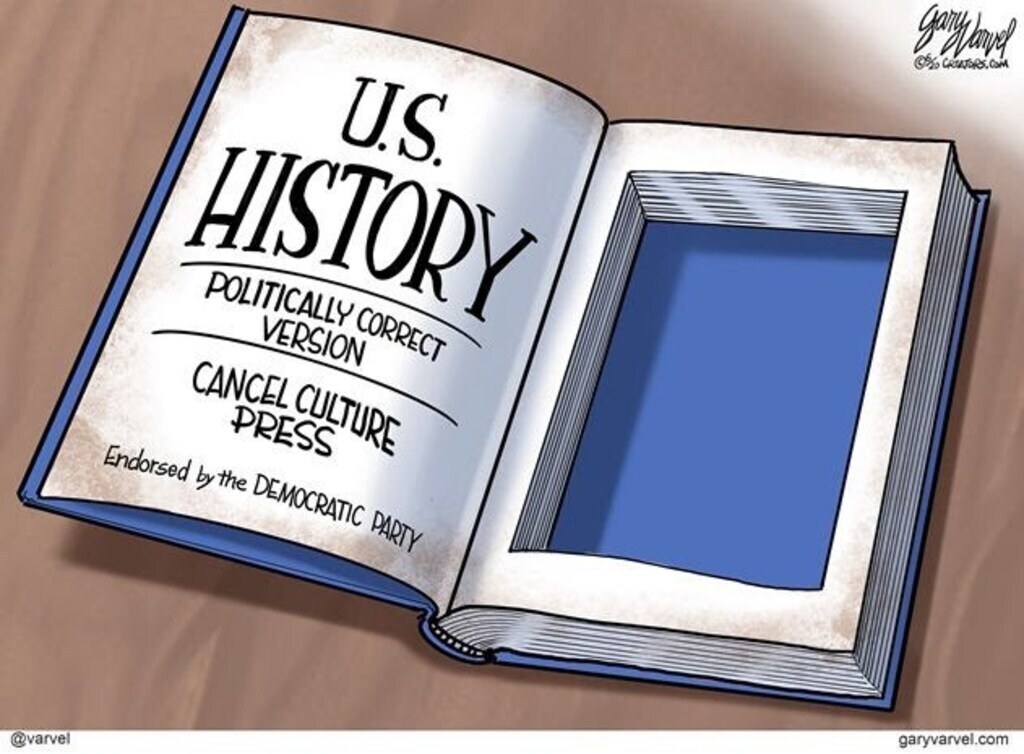
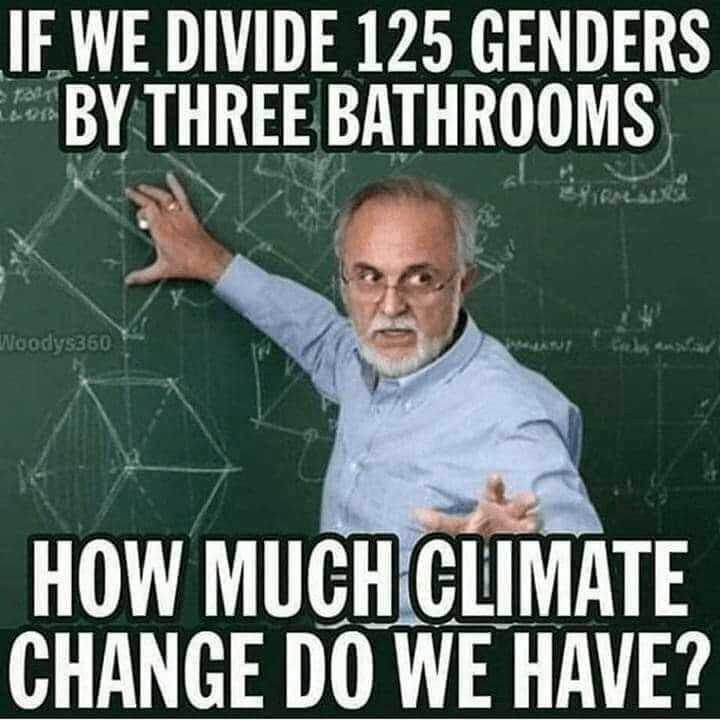
Opponents of our new social justice dispensation often find themselves at a rhetorical disadvantage. Social justice advocates desire to replace oppressive “cultural, structural, and personal norms” with a new, more “welcoming culture.” Anyone who opposes this transformation is, by definition, unwelcoming. Who wants to be defined as unwelcoming? The rhetorical disadvantage of dissidents is only compounded by the development of new code words for social justice (like diversity or inclusion). Social justice warriors win battles simply through deploying certain terms, since this language cows and confuses their opponents.

Americans, after all, value diversity, inclusion, and equity. Diversity of faculties and talents produces inequalities—and protecting such diversity was, as Madison writes in Federalist 10, “the first purpose of government.” Inclusion reflects the universality of the rights of man, though certain people would enjoy them sooner and others later as enlightenment spread. Equity is a characteristic of impartial laws, derived from English common law, that protects and recognizes all equally before them; it provides predictable rules and doctrines for settling disputes. Diversity, inclusion, and equity produce inequalities that serve the public good: they reward productivity, expand opportunities for individuals, and provide a basis for stable common life under equal laws.

Our regnant social justice ideology redefines these words, taking advantage of their sweet sounding civic bent. This co-option represents a thoroughly new civic education. Social justice advocates have won no small ground in American political debate by seeming to adhere to the words and ideas of the old civic education, while importing a new, pernicious vision. We must re-train our ears to hear what social justice ideology peddles.

Opponents of this movement can best grasp social justice newspeak through an analysis of its public documents. What follows is based on my analysis of the state of Washington’s 2020 Office of Equity Task Force’s Final Proposal. The same word salad is served everywhere critical race theory is taught—in university task forces (like Boise State’s), in corporate trainings, even in K-12 curriculum.

Keep reading

Biden Nominee Vanita Gupta Urged Facebook For More Censorship In Letter

President Joe Biden’s associate attorney general nominee Vanita Gupta urged Facebook in 2018 to adopt more censorship and hate speech policies because of free speech’s “harms” to “civil rights.”

In a letter addressed to Facebook CEO Mark Zuckerberg in 2018, Gupta’s leftist interest group The Leadership Conference on Civil and Human Rights laid out 11 ways the company has neglected what they claim are civil rights. Gupta’s twisted interpretation was that Facebook should therefore engage in increased levels of censorship and content policing.

“As a company whose public mission is to ‘give people the power to build community and bring the world closer together,’ Facebook has a responsibility to ensure that the platform is not used to drive bigotry and stoke racial or religious resentment and violence,” the letter states. “But for years, Facebook’s refusal to acknowledge and/or chronic mismanagement of civil and human rights violations occurring on the platform have raised many questions about Facebook—primarily, whether you are willing or able to fix the toxic online environment that you have allowed to flourish.”

The letter goes on to claim that several “harms” are indicative of why Facebook must purge its “toxic environment.” This includes the idea that white men are supposedly protected from hate speech but not black people, “racially charged “advertisements” that suppress voters of color, a lack of “anti-bias training and civil rights education for staff,” as well as “insufficient protections” for users who are attacked by misogynists.

Gupta called for an “audit” of Facebook for allowing “well-documented harms” to exist on the platform. To leftists like Gupta, “hate speech” is not merely rude speech or already outlawed calls to violence, but can include expressing a mainstream conservative perspective or a religious perspective such as that male and female are objectively defined. The letter also claims that Facebook should not look into anti-conservative bias since civil rights are “non-partisan.”

Surely, civil rights are in fact non-partisan. But Gupta conflates authoritarian oppression with freedom and discourse. Facebook and other corporations have colluded to censor conservatives in an unprecedented way for years, and the LCCR’s notion that “civil rights” requires Facebook to remove “hate speech” goes against the very notion of the First Amendment to the Constitution.

Keep reading

The Spectre of Totalitarianism

In March 2019, tax expert Maya Forstater was dismissed from her job — legally, according to a later judicial ruling — for voicing the view that “sex is a biological fact, and is immutable.” When author J.K. Rowling came to Forstater’s defence, she was bombarded with abuse, including an invitation from one lady to “choke on my fat trans cock”. The case became a cause célèbre. But it is only one of many such cases. Today, anyone who ventures a controversial opinion on “trans”, race, disability, Middle Eastern politics and a handful of other issues risks being fired, insulted, intimidated and possibly prosecuted. 

Last year, a “Journal of Controversial Ideas” was launched, offering authors the option of writing under a pseudonym “in order to protect themselves from threats to their careers or physical safety”. How did things come to this pass?

The new intolerance is often seen as a specifically left-wing phenomenon — an intensification of the “political correctness” which emerged on US campuses in the 1980s. But that is a one-sided view of the matter. It was US Zionists who pioneered the tactic of putting pressure on organisations to disinvite unfavoured speakers; far-right nationalists are among the keenest cyberbullies; and religious zealots of all stripes are prodigal of death threats. 

Generalising, one might say that left-wing groups, being more publicly respectable in our part of the world, prefer to pursue their objectives through institutions and the law, whereas right-wing groups seek out the anonymity of the internet. But the goal on each side is the same: it is to intimidate, suppress, silence. In any case, the distinction between “left” and “right” is becoming increasingly muddled, as lines shift and alliances regroup. All one can safely say is that the various forms of contemporary extremism imitate and incite each other. What has given way is the civilised middle ground.

Keep reading

Dr. Seuss Enterprises to Stop Publishing Six Books Due to Racist Imagery

Dr. Seuss Enterprises, which oversees the work of the late children’s book author, said it will stop publishing and licensing six books because they contain racist and insensitive images.

The decision was announced on the official Dr. Seuss website Tuesday, March 2nd, which also marks the author’s birthday. The six books are And to Think That I Saw It on Mulberry StreetIf I Ran the ZooMcElligot’s PoolOn Beyond Zebra!Scrambled Eggs Super!, and The Cat’s Quizzer.

Dr. Seuss Enterprises said it came to this decision last year after reviewing its catalog with the help of a panel of experts, including educators. “These books portray people in ways that are hurtful and wrong,” the statement reads. “Ceasing sales of these books is only part of our commitment and our broader plan to ensure Dr. Seuss Enterprises’ catalog represents and supports all communities and families.”

Keep reading

Amid protests against racism, scientists move to strip offensive names from journals, prizes, and more

For Earyn McGee, terminology matters.

McGee, a herpetologist, studies the habitat and behavior of Yarrow’s spiny lizard, a reptile native to the southwestern United States. The University of Arizona graduate student and her colleagues regularly pack their things—boots, pens, notebooks, trail mix—and set off into the nearby Chiricahua Mountains. At their field site, they start an activity with a name that evokes a racist past: noosing.

“Noosing” is a long-standing term used by herpetologists for catching lizards. But for McGee, a Black scientist, the term is unnerving, calling to mind horrific lynchings of Black people by white people in the United States in the 19th and 20th centuries. “Being the only Black person out in the middle of nowhere with a bunch of white people talking about noosing things is unsettling,” she says. McGee has urged her colleagues to change the parlance to “lassoing,” which she says also more accurately describes how herpetologists catch lizards with lengths of thread.

McGee isn’t alone in reconsidering scientific language. Researchers are pushing to rid science of words and names they see as offensive or glorifying people who held racist views.

Keep reading