Social media erupts after cancel culture claims career of 47-year NYTimes journalist

Many on social media were outraged that a journalist with a celebrated 47-year career was undone by what using an racial slur in an unintentionally offensive manner.

“This reads like a confession procured by the Khmer Rouge. It’s both ridiculous and terrifying,” replied Andrew Sullivan.

“A culture that lacks grace is both punitive and miserable. Does intent matter? Does forgiveness exist?” asked David French.

“It is now official NYT policy that for some words, intent does not matter, and it only takes one strike to sink a 47-year career,” said Reason editor-at-large Matt Welch.

“This reads like a Bolshevik at his own show trial admitting he’d betrayed the revolution even though he never meant to betray the revolution because he loves the revolution,” said Peter Savodnik of Vanity Fair.

Keep reading

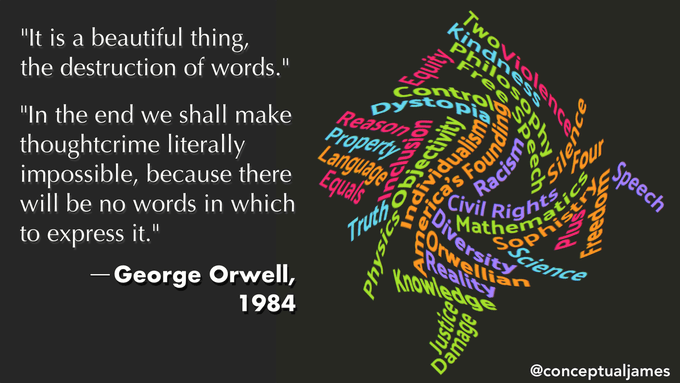
Students at UK University Demand the Word “Black” be Banned From Lectures & Textbooks

Students at Manchester University have demanded that the word “black” when used as a negative expression such as the word “blackmail” should be banned because it is “divisive.”

Yes, really.

The complaint was prompted by a university study surround issues affecting Black, Asian and Minority Ethnic (BAME) staff and faculty.

Citing concerns of black people, the report noted that there were “linguistic concerns about Black being associated with negative expressions” such as “blackmail” and “black sheep.”

After the report labeled the use of words which included “black” and “divisive and not inclusive,” the university’s student union demanded that “any other use of the word ‘black’ as an adjective to express negative connotations” should be banned in research papers, lecture slides, and books published by professors.

Students claimed that such words were based on a “colonial history” and should be abolished in light of the Black Lives Matter movement.

Keep reading

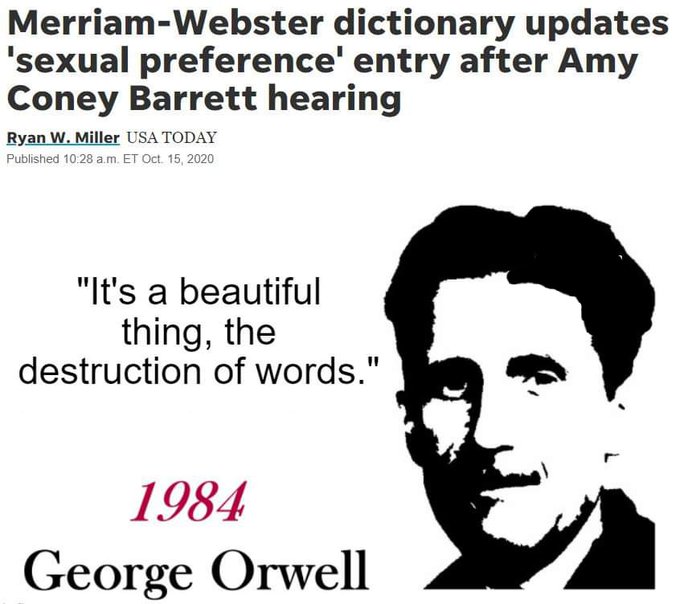
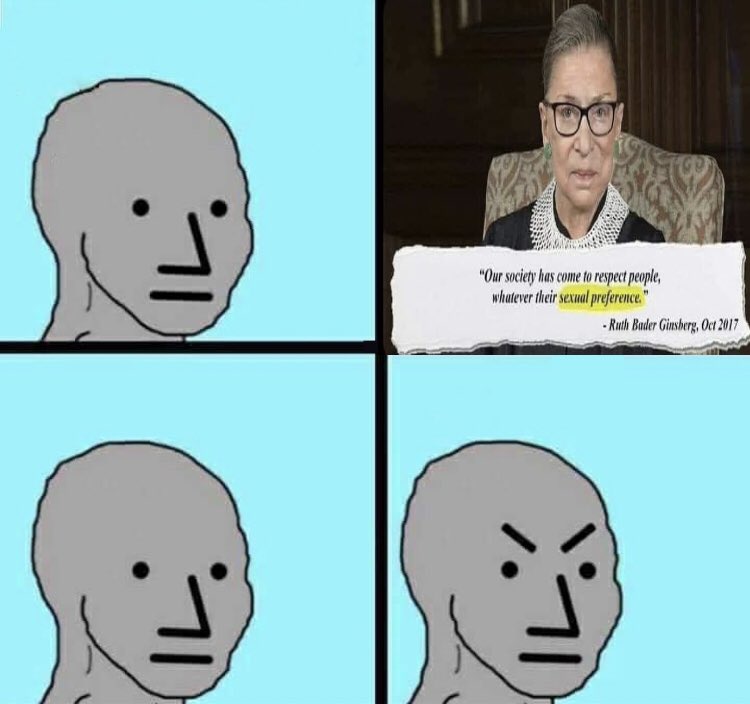
Webster’s Dictionary Sprints To Edit Definition Of Word ‘Preference’ To Comply With Grievance Culture

Webster’s Dictionary quickly edited the definition of the word “preference” after it was declared by some as an “offensive” term to use when discussing sex.

The dictionary previously added in a definition for “preference” to include “orientation” and “sexual preference,” Steve Krakauer, the executive producer of Megyn Kelly’s podcast, tweeted.

After Supreme Court nominee Judge Amy Coney Barrett used the term “sexual preference” Tuesday during confirmation hearings, some, including Democratic Hawaii Sen. Mazie Hirono, claimed that the term is offensive – despite it being used widely. Barrett later apologized, saying she “honestly did not mean any offense or to make any statement by that.”

Shortly after, Webster’s Dictionary sprinted to edit the definition of “preference” in regards to the term “sexual preference,” this time declaring that it is “offensive,” archives of the website suggest.

Keep reading