Blog

Journalism or partisanship? The media’s mistakes of 2016 continue in 2020

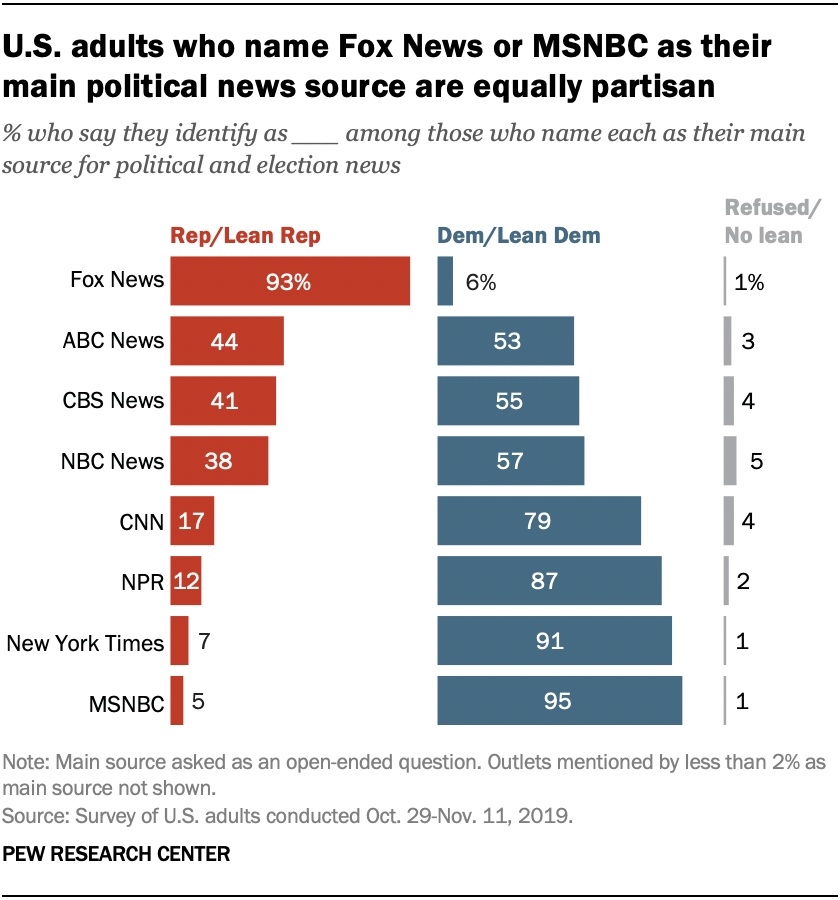
If there were any doubt left after 2016 as to what too much of the mainstream news media in America has become, it most certainly has been erased in 2020. Too often, many in my industry have revealed themselves as little more than propaganda tools for dueling political sides, no longer reporting the way journalists once did. We compete for the latest anonymous “scoop,” scandalous rumor, or unsupported accusation. We pounce on the supposed “bombshell” du jour and hype it on the news, accompanied by endless round robins with political operatives. Many of us don’t even bother to find and report on stories that powerful people and interests aren’t pushing.

To do this, too many of us have abandoned basic tenets of journalism. We ignore the suspicious timing of the handout “leaks” or scandals — as if nobody notices. We fail to explore or disclose sources’ motivations or conflicts of interest — as if nobody wonders about them. We don’t even pretend to assess the true news value of the “bombshell.” We’re simply happy to be of service to the propagandists; we invite them to use us, and our superiors reward us with admiration. Many of our peers either repeat the reporting, seek to confirm it using equally dubious methods, or discredit it. Rarely do we step back and consider that the whole drama is being orchestrated by political puppet-masters who count their successes by the number of news stories they generate.

Keep reading

From 9/11 to Covid-19: Nineteen Years of Permanent “Emergency”

During March and April of this year—during the early days of the covid-19 panic—each day came to be accompanied by a general feeling of dread. As new emergency orders and decrees rained down from governors, mayors, and faceless health bureaucrats, I wondered, What new awful thing will governments think up today? As business and churches were closed by government edict, politicians increasingly were threatening to arrest and jail ordinary citizens for doing things that were perfectly legal mere days before.

Even worse was the new orthodoxy that seemed to immediately spring up. All dissent from the new regime of lockdowns and business seizures was denounced and mocked. We were now all expected to chant new slogans. “We’re all in this together. Flatten the curve.”

There was no sign of any sizable opposition. The courts were silent. So-called due process was abandoned.

But for those of us who are old enough to remember the dark times that followed the 9/11 attacks, the feelings of dread had a familiarity to them.

The blind sloganeering, the anger toward dissent, and the obeisance toward politicians who were credited with “keeping us safe” brought back bad old memories.

They were memories of the days and months and years that followed the 9/11 attacks. These were the days of so many new assaults on basic human freedoms and human rights. They were days when the public was bullied into accepting whatever new scheme politicians were dreaming up in the name of keeping us “safe.”

In many ways, the current hysteria is even worse than that of the early years of the twenty-first century. It affects the everyday lives of countless Americans in ways the 9/11 panic did not.  But the current crisis is nonetheless very much a continuation of the attitudes and paranoia that surged nineteen years ago.

Keep reading

Gov. Newsom signs controversial bill into law reducing penalties for sexual relations with minors

California’s Democratic Gov. Gavin Newsom has signed a controversial new law regarding judges’ discretion on whether or not to add individuals to the state’s sex offender registry who have committed sodomy with minors.

Newsom signed the bill, passed by the Democratic-controlled state legislature, into law without comment on Friday, expanding the discretion granted to judges in statutory rape cases, according to ABC 7 News Los Angeles.

California law permitted judges to decide whether a man was placed on the sex offender registry if he had consensual intercourse with someone 14 to 17 years old and was not more than 10 years older than the other person. However, that discretion only applied to vaginal intercourse, which LGBT advocates, including the author of the new bill signed into law Friday, argued was discriminatory to gay men.

“This eliminates discrimination against LGBTQ youth in our criminal justice system,” the bill’s sponsor, San Francisco Democratic state Rep. Scott Wiener, said about the legislation (known as SB 145) that he proposed.

“SB 145 ends discrimination against #LGBTQ young people on the sex offender registry. Currently, these youth are forced onto the registry for consensual sex — even if a judge doesn’t think it’s appropriate — in situations where straight youth are not,” Wiener added on social media. “This discrimination destroys lives.”

Many have criticized the bill, arguing that sex between a teenager and someone 10 years older than them is not always consensual and should always warrant being placed on the sex offender registry.

Keep reading

Vanderbilt Quiz On Constitution Marked Students Wrong Who Said It Was Not Designed To Perpetuate White Supremacy

The statement is wrong on a number of levels. There is no question the Constitution did not end our deeply shameful history of slavery. However, even with the Declaration of Independence figures like John Adams and Thomas Jefferson sought to address slavery.  The decision was made to accommodate slave states to secure the Declaration. The same political calculus was behind the infamous the Three-Fifths Compromise found in Article 1, Section 2, Clause 3 of the United States Constitution.

Thus, the Constitution did indeed perpetuate and protect the institution of slavery with its inherent white supremacy values.  However, that was not the “design” of the Constitution. The Three-Fifths Compromise was a fight over representation and taxation.  The decision to leave slavery unaddressed was based on the same political expediency. It was wrong. It is no excuse to secure the independence of most citizens at the cost of leaving enslaved others.  It was and remains the original sin of our nation. The design of our Constitution should have guaranteed freedom from all men and women.

Yet, the actual design of the Constitution was the Madisonian vision of shared and limited government.  It was founded on the philosophical work of figures ranging from John Locke to Montesquieu. The assertion that the design was to perpetuate slavery is revisionist and wrong.

Keep reading

American Idolatry Meets Woke Iconoclasm

Protesters who pull down statues are usually not content with removing the inanimate metal or stone object from its pedestal. They berate it, ridicule it, hammer it; they try to set it on fire; when that doesn’t work, they’re liable to behead it or dump it in a river to drown. Then the authorities retrieve it, as though fishing a corpse out of the lake. They crate it up so it can do no further harm, ship it to a statue internment facility, and forget about it forever.

Sympathetic accounts of the process make it sound quite rational. A statue of a Confederate general or a slave-owning president or Christopher Columbus, looming at you above the public square, might, especially if you are black or Indigenous, make you realize that the people who run and adorn your city aren’t like you. In fact, they make heroes out of the sort of people who oppress people like you, and they create a built environment where you might have to make your way through your oppressors’ distorted, self-serving interpretations of history every day on your way to the bus stop.

That would be a reason to go to the city council and urge members to hold some hearings on removals and replacements. Screaming at a statue, slapping it around, and then beheading it suggest another level of rage—and another level of interpretation. The statue has come to be identified with the person it represents. Ridiculing the hunk of bronze is ridiculing the represented person and attacking everything that, in turn, that person seems to mean. Traditionally (in the French Revolution, for example), pulling a statue off its pedestal is symbolically overthrowing or expunging the leader or ruler it depicts. One of the first things American soldiers did when they got to Baghdad was pull down the colossal Saddam Hussein. Reporters and television crews covered the toppling of the statue obsessively; it may be the best-remembered image of the Iraq invasion. Overthrowing Hussein and pulling down his statue didn’t seem to be clearly distinguished in anyone’s mind.

Monuments are often fated to become effigies, their destruction a premonition of the fall of the leader and the transformation of his symbolic order. In other cases, the destruction of the monument is a reenactment of the death or dismemberment of the leader that has already taken place, a way of killing him over and over even if he died in his sleep, as in the fate of thousands of statues of Stalin after the fall of the Soviet Union. Robert E. Lee is dead, but that doesn’t mean we shouldn’t kill him again (and again) in his images. What was “he” doing still hovering over the city of Richmond in 2020, anyway?

President Donald Trump’s response to this has also been traditional, indeed ancient. Appearing on Independence Day in front of one of the world’s largest sculptures, he said: “Today, we pay tribute to the exceptional lives and extraordinary legacies of George Washington, Thomas Jefferson, Abraham Lincoln, and Teddy Roosevelt. I am here as your president to proclaim before the country and before the world: This monument will never be desecrated, these heroes will never be defaced, their legacy will never, ever be destroyed, their achievements will never be forgotten, and Mount Rushmore will stand forever as an eternal tribute to our forefathers and to our freedom.” Then he announced that the “ringleader” of the “attack” on a statue of Andrew Jackson in D.C. had been arrested.

Keep reading