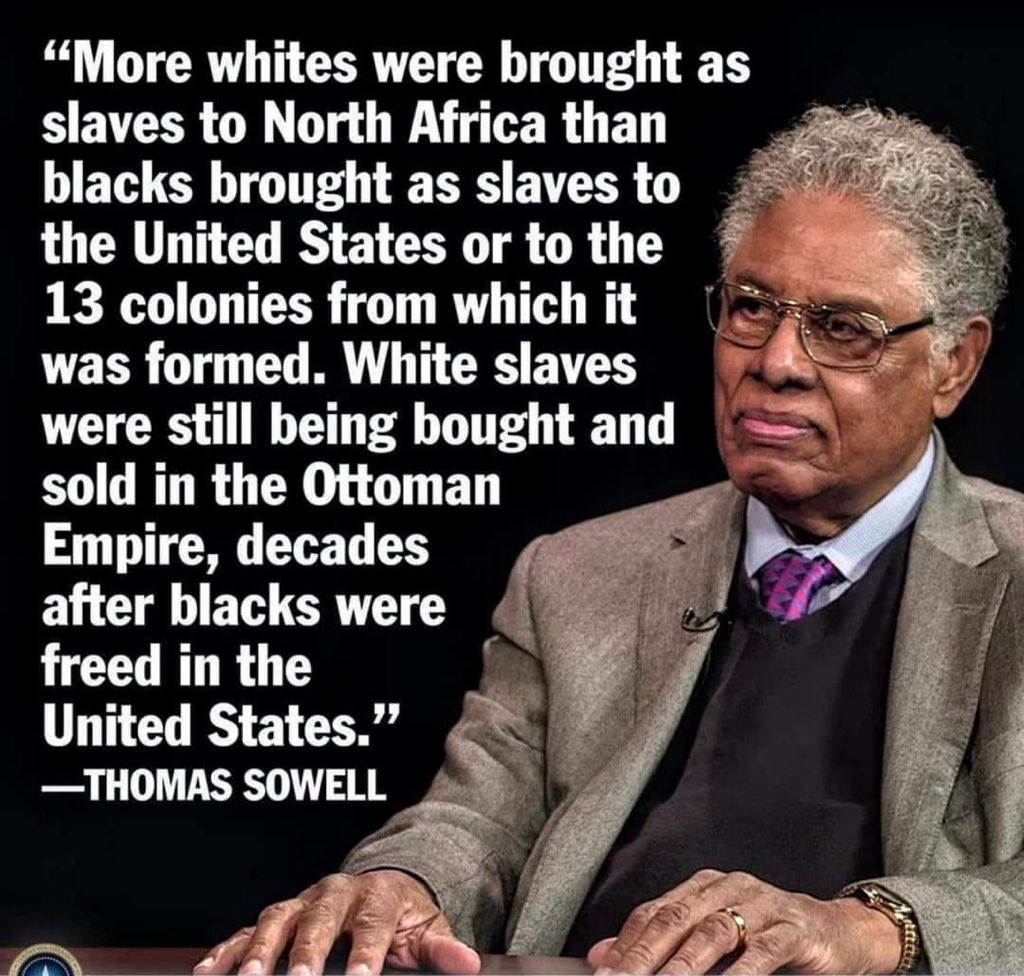
Thomas Sowell on slavery…

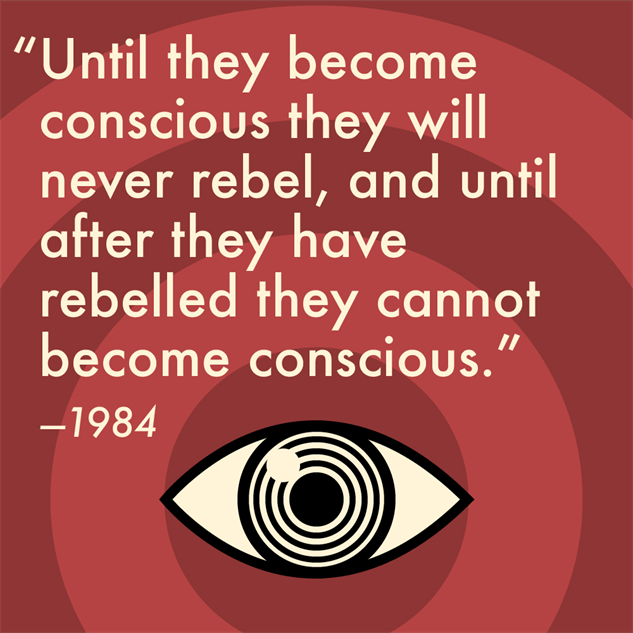
This is astonishing, even by 2020 standards.
The Centers for Disease Control and Prevention, operating under the US Department of Health and Human Services, has asserted jurisdiction over private residential leases nationwide. It intends to curtail evictions until at least the end of the year, and in fact its new directive threatens federal criminal penalties against landlords who ignore tenant “declarations” made using CDC forms.
It is unclear, to put it mildly, exactly how this jurisdiction over private contracts and state/local courts flows even to Congress, much less an administrative agency acting on its own. One federal official justifies the bizarre and legally dubious action based on the CDC’s broad charter to stop the spread of communicable diseases—a charter at which they’ve failed miserably with covid:
Congress has delegated broad authority to HHS, the Surgeon General and CDC, to take reasonable efforts to combat the spread of communicable diseases, and frankly I think it makes sense for those authorities abroad because we don’t know for any given situation or scenario what steps will be needed to stop the spread. I think, in this particular order, the CDC has made a very compelling case that it is quite problematic at this particular time. It’s focused on this particular pandemic, which is obviously the uniquely powerful grasp in the nation’s entire history in terms of the effect it’s had that for a bunch of reasons in particular, that the home has been sort of the focal point of people social distancing and building, sort of a safe space themselves over the past few months, and also the fact that if people get kicked out, they may end up in overcrowded congregated living facilities or homeless shelters, and that is a potential recipe for a big spread of COVID-19.
For an event described by the New York Times as a “peaceful protest,” the words are jarring: “[I]f you kill one of us, it’s time for us to kill one of yours,” a speaker thundered toward the end of last weekend’s Justice for Jacob rally in Kenosha, Wisconsin. Several apparently incurious news reports referred to the speaker as an unidentified man who “took the microphone” toward the end of the program. However, through a Facebook post, The Dispatch identified the scheduled speaker as Maruwa Ferrell, president of one of the host organizations of the rally listed on a Facebook page announcing the event: the UNIA-ACL Sir Isaiah Morter Division 401 Chicago, a chapter of the Universal Negro Improvement Association and African Communities League.
On August 29, Jacob Blake’s family and supporters held the “Justice for Jacob” event in Kenosha, the town where Blake was shot seven times in the back by police during his arrest in mid-August. The Kenosha News reported that most “speakers were more focused on social justice and not physical revenge,” but the newspaper initially headlined its story on the rally with Ferrell’s inflammatory words. Despite the sensational nature of the threatening words, the story did not get much attention until Daniel Thompson, an editor at the newspaper (and according to Thompson, the only black full-time staff member) resigned when the paper refused to change the headline. Thompson asserted that the headline distorted the overall peaceful tone of the rally. (The paper subsequently changed the headline after Thompson’s resignation.)
Maruwa Ferrell was enthusiastically introduced at the rally by Jacob Blake’s uncle Justin Blake (who acted as emcee for the event) only as “my president,” an apparent reference to Ferrell’s position with the Chicago UNIA. Ferrell warned his listeners that his words would not be welcomed by all, and he did not disappoint. Ferrell’s “it’s time for us to kill one of yours” threat was met with a muted reaction by the crowd, but he was permitted to finish his remarks.
Farrell’s group, the UNIA-ACL Sir Isaiah Morter Division 401 Chicago, describes itself as “committed to the economic, political and social liberation of African people.” The organization emphasizes self-sufficiency for people of African descent. The group’s Facebook page posts various memes such as “None of my ancestors died for me so I can vote for the white people that killed them!” and “Them: Black Lives Matter. Me: Race First / Black Power. It’s a Difference!” Other Facebook posts boost black-owned businesses and the UNIA’s charitable endeavors.


Facebook is officially designating the actions of Kyle Rittenhouse, the 17-year-old who allegedly killed two people and wounded another in Kenosha, Wisconsin, after being mobbed and attacked by rioters, a “mass murder,” despite the fact that this has not been proven in court. Facebook confirmed that it would remove any posts that support Rittenhouse.
Conservative author and YouTube personality Mark Dice reported that his Facebook page had received a threat of suspension after he posted a video of Rittenhouse offering to give medical assistance to wounded protesters in Kenosha shortly before the shooting.
“Facebook just removed a video I posted showing Kyle Rittenhouse offering help to a wounded protester in Kenosha,” said Dice, who also posted the video on Twitter.
Facebook, he said, is now “threatening to delete my entire account.”
In a comment to Breitbart News, a Facebook spokesman confirmed that the company is removing posts “in support” of Rittenhouse, because the incident is considered a “mass murder” by the company.
“We’ve designated the shooting in Kenosha a mass murder and are removing posts in support of the shooter, including this one,” said the spokesman.
 Hellbound and Down
You must be logged in to post a comment.