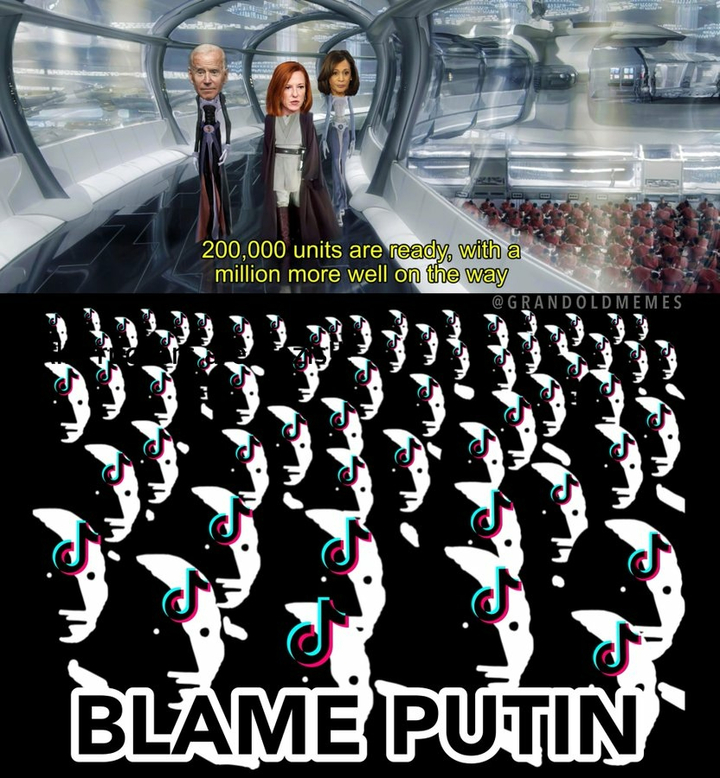
New York Times Asked Communist Chinese Tech Company To Censor Americans

The New York Times asked TikTok, a social media app with known connections to the Chinese Communist Party (CCP), to censor American users sharing election integrity concerns on its platform.

In a recent article titled, “On TikTok, Election Misinformation Thrives Ahead of Midterms,” Times writer Tiffany Hsu details how “TikTok is shaping up to be a primary incubator of baseless and misleading information” ahead of the 2022 midterms, with the issue of voter fraud being a prominent topic shared across the platform. Buried within the article, however, Hsu tacitly reveals that as a result of the Times reaching out to the CCP-connected company, TikTok began censoring users from using a popular hashtag associated with fears about election interference.

“Baseless conspiracy theories about certain voter fraud in November are widely viewed on TikTok, which globally has more than a billion active users each month,” the article reads. “Users cannot search the #StopTheSteal hashtag, but #StopTheSteallll had accumulated nearly a million views until TikTok disabled the hashtag after being contacted by The New York Times.”

Hsu goes on to note the platform’s failure to address the spread of “misinformation” in foreign elections, citing those in France and Australia as examples.

Keep reading

This Mother-Daughter Duo Has Become the Center of Creepy TikTok Conspiracy Theories

At first glance, Bebop and Bebe, a TikTok page with more than two million followers, looks like a typical, albeit somewhat idiosyncratic, family account. The page features videos of Bebop, a girl with stick-straight hair who looks to be about eight or nine years old, mugging for the camera with her mom, a peroxide blond with a fondness for ethereal makeup filters. Together they dance to songs like “Footloose” by Kenny Loggins and Louis Theroux’s “Jiggle Jiggle” remix, lip-synching poorly to audios, usually against the backdrop of what appears to be a splashily decorated preteen girl’s room, with Bebop flaunting a wide range of impressive makeup looks and hairstyles.

It’s only when you go to the comments that you start to get the impression that something more sinister may be afoot. “Wear green if you’re kidnapped <3,” reads one comment with 1,559 likes; another says, “put a heart next to your next video if you’re in danger.” (In the next video the two post, neither Bebop nor Bebe are wearing green, but the title of the video is sandwiched by heart emojis; this is not unusual, however, as there are emojis in most of the titles of their videos.) In one of the videos, to the Ting-Tings’ “That’s Not My Name,” one commenter writes: “She’s not saying hey hey. She’s saying help help.”

Over the past few months, Bebop and Bebe have become the center of a sprawling, multi-armed conspiracy theory that has largely taken root on TikTok, driving millions of views and thousands of ostensibly concerned commenters to their page. Many of these commenters believe Bebop is being forced to produce content, and that a mysterious man who is sometimes seen in the videos — Bebe’s brother, who is occasionally referred to as “the Brother” — is responsible. They also believe Bebop has an older brother, who has been locked out of his social media accounts after refusing to film with the family (a teenage boy can be seen in some older videos, but his absence can easily be explained by the fact that a teenager may not want to appear in TikTok videos with his mom and little sister anymore.)

But the speculation runs even deeper than that. Many believe that Bebop and/or Bebop and Bebe are being trafficked, due to a lock seen in the bedroom they often film in. Some have suggested that the bedroom is in fact a set (something Bebe herself confirmed in a Live, though recording from a set is not uncommon among content creators). Some have proposed, due to BeBop’s sometimes mature appearance, that she is not, in fact, a real child, but an adult or teenager being forced to masquerade as a child, a la Gypsy Rose Blanchard. This particular thread has been fueled by the fact that some (but by no means all) of Bebop and Bebe’s content is genuinely disquieting; in one video, Bebop appears wearing a low-cut police costume more typically seen on an older woman, while in another, she wears a collar commonly associated with the kink community.

Perhaps the most nefarious vein of this narrative, however, is the suggestion that Bebop is not actually Bebop, but a missing child named Aranza Maria Ochoa-Lopez, a four-year-old girl from Vancouver, Washington who was in foster care before allegedly being abducted by her biological mother, Esmerelda Lopez-Lopez. Lopez-Lopez was arrested in 2019 and pled guilty to second-degree kidnapping and robbery and first-degree custodial interference, receiving a 20-month sentence as a result, but Aranza is still missing and believed to be living with relatives in Mexico.

Keep reading

‘Pandas Aren’t Real’ Is the Latest Conspiracy Theory Taking Off on TikTok

When you think of pandas, you typically think about one of two things: One, the adorable, monochromatic animal that was the subject of a 2003 DreamWorks Animation film, or two, that song by Desiigner. The latest conspiracy theory currently making the rounds on TikTok concerns the former — specifically, whether or not panda bears are real, or whether, as some have speculated, they are simply humans in bear costumes.

As discussed on this week’s episode of Don’t Let This Flop, Rolling Stone‘s podcast about internet culture, the “pandas aren’t real” conspiracy theory has been circulating on the internet in some form for a long time. On Reddit, for instance, a 2015 post with the headline, “I’m fairly certain pandas are just an extremely elaborate hoax” received a few thousand upvotes, with people speculating whether pandas are just humans in adult costumes, because of how human-like a lot of their movements are. Others have also pointed out odd facts about pandas — such as that they are carnivores that almost exclusively eat bamboo, or that they famously refuse to have sex in captivity — to underscore what they perceive to be the evolutionary impossibility of their existence. 

To complicate things even further, there have been documented cases of zoos faking panda bears. For instance, a zoo in Taiwan was reportedly caught dying a sun bear black and white and marketing it as a panda in the late 1980s. An Italian circus was also caught dying puppies black-and-white in an effort to pass them off as pandas in 2014. Such incidents clearly have given skeptics ammunition to believe that panda bears as a whole aren’t real. 

Keep reading

Meta paid GOP operatives to push negative stories about TikTok

Meta has hired a top GOP consulting firm to gin up rage against TikTok and deflect political scrutiny away from Facebook and Instagram, according to a report on Wednesday. 

The consulting firm, Targeted Victory, pushed to “get the message out that while Meta is the current punching bag, TikTok is the real threat especially as a foreign owned app that is #1 in sharing data that young teens are using,” according to an internal email from February reported by the Washington Post.  

Targeted Victory reportedly advanced Meta’s agenda by pushing news stories blaming dangerous online trends such as the “slap a teacher challenge” on TikTok — even though the trend actually originated on Facebook. 

The group also helped place op-eds and letters to the editor in local papers like the Denver Post and Des Moines Register, raising concerns about China “deliberately collecting behavioral data on our kids,” according to the report. 

Meta CEO Mark Zuckerberg has blamed TikTok for Facebook’s slowing user growth, which has contributed to its stock tanking 32.5% so far this year

Keep reading

The White House is briefing TikTok stars about the war in Ukraine

On Thursday afternoon, 30 top TikTok stars gathered on a Zoom call to receive key information about the war unfolding in Ukraine. National Security Council staffers and White House press secretary Jen Psaki briefed the influencers about the United States’ strategic goals in the region and answered questions on distributing aid to Ukrainians, working with NATO and how the United States would react to a Russian use of nuclear weapons.

As the crisis in Ukraine has escalated, millions have turned to TikTok for information on what is happening there in real time. TikTok videos offered some of the first glimpses of the Russian invasion and since then the platform has been a primary outlet for spreading news to the masses abroad. Ukrainian citizens hiding in bomb shelters or fleeing their homes have shared their stories to the platform, while dangerous misinformation and Russian propaganda have also spread. And TikTok stars, many with millions of followers, have increasingly sought to make sense of the crisis for their audiences.

The White House has been closely watching TikTok’s rise as a dominant news source, leading to its decision to approach a select group of the platform’s most influential names.

Keep reading

Murder Charges Filed, Human Remains Found in Missouri Case That Fueled Gruesome TikTok Rumors

Two men charged in September with felony kidnapping have now been charged with murder in the missing persons case of Cassidy Rainwater, a Missouri woman who appeared caged and partially nude in photos sent to the FBI. 

On Wednesday, the Dallas County Sheriff’s Department announced the murder charges against Timothy Norton, 56, and James Phelps, 58, in a statement on Facebook, and court documents reveal new disturbing details of the case. An amended criminal complaint shows the two men each still face a kidnapping charge as well as a felony count of abandonment of a corpse, saying they “knowingly disposed of the corpse of Cassidy Rainwater” at or near Phelps’ property without notifying authorities. Court documents reveal that beyond showing Rainwater in a cage, additional photos the FBI had shared with county detectives in September showed Rainwater’s body “bound to a gantry crane device (commonly used for processing wild game),” and depicted her “evisceration and dismemberment.” Authorities had also found what were confirmed by lab testing to be Rainwater’s remains packaged in a freezer and dated “7-24,” court documents said, and had discovered skeletal remains on the property that they believe to be Rainwater’s, as well. They allegedly recovered messages between Phelps and Norton planning Rainwater’s murder on Jul. 24.

Keep reading

It Started With Thirst Traps on TikTok. Now, She’s Accused of Running a Cult

When Chae first saw Angela Vandusen, aka @angelatheegoddess, on her TikTok For You page last year, she was instantly smitten. A 27-year-old based in Michigan, Vandusen was a home health care aide and an aspiring natural oils entrepreneur, but she had amassed many devoted adherents by posting thirst traps on the platform, most of which followed a specific template: she’d turn her steely blue gaze on the camera, usually while biting her lower lip and lip-synching provocative lyrics, or simulating strap-on sex while winking to the camera. She’d built a following of about 50,000 followers based on those videos, as well as videos documenting her dramatic weight loss journey.

A single stay-at-home mom of two children, Chae, who requested her last name be withheld to protect her privacy, wasn’t looking for a girlfriend at the time. But when Vandusen popped into her TikTok Live late last year, she was giddy with excitement. “She was my biggest TikTok crush at the time,” Chae says. It wasn’t just Vandusen’s looks — the penetrating stare, the chest tats, the razor-sharp cheekbones — that attracted Chae. It was also the fact that Vandusen frequently made videos about her love of BBWs (big beautiful women), coupled with those documenting her own weight loss journey. As a BBW herself, Chae was intrigued. “She understands what a bigger person goes through, the insecurities and stuff like that,” Chae says.

Chae and Vandusen exchanged numbers, and they began chatting every day, sometimes late into the night while Vandusen was still working her shifts. When Vandusen told Chae she was involved in the kink lifestyle and wanted Chae to be her submissive, Chae says, she didn’t bat an eyelash; though she’d never dabbled in kink before, the prospect intrigued her. Same went for the fact that Angela had a slew of online admirers, who’d go into her Lives every Saturday to lobby for her affection: Chae was also interested in the poly lifestyle, and says she didn’t initially feel jealousy in that regard.

Then, in the winter of 2021, another one of Angela’s subs started calling her “daddy.” Angela apparently liked it, and on one of her Lives, she requested that all of her followers refer to her as “Daddy,” and that they refer to themselves as “Daddy’s Girls.” “It mainly was like a sisterhood,” says Chae. “At least, that’s how it started.”

Now, Vandusen, who did not respond to multiple requests for comment, is alleged to be the leader of the Daddy’s Girls cult, a group of female devotees who identify themselves with a yellow heart in their bio (this was, Chae says, inspired by the fact that she once painted her nails yellow, and Angela liked the color). Many of the members of the so-called “Daddy’s Girls cult,” as TikTokers describe it, are Black women; their bizarre Lives, in which they pray to Vandusen like a god, have attracted the attention of black TikTok. The level of scrutiny around them was heightened last spring after Chae left the group and made several allegations against Angela publicly, such as that she forced her “Girls” to cut themselves and pull out their own hair if they displeased her. And while many of Vandusen’s so-called “girls” state that their relationships with her are consensual, and that they follow her of their own volition, cult experts disagree.

“What definitely is going on here is psychological manipulation,” says Diane Benscoter, a cult expert and former member of the Unification Church, who runs the group Antidote.ngo. “This person is taking advantage of TikTok and social media and it’s a business, almost, where the goal is total control over a specific group of people. It’s definitely got all of the components that one would call a cult.” In their Lives, Angela and other members of the group would also validate claims that the group was a “cult,” albeit in a tongue-in-cheek fashion. “They say it’s a cult,” Angela says in one Live, responding to another user’s comment and grinning. “Want to join?” 

Keep reading

WitchTok: the rise of the occult on social media has eerie parallels with the 16th century

It’s 1.30am in the morning, and I’m about to watch a duel between magicians. One is a “demonolater”, a word I have never heard before, someone who claims they worship demons and can petition them in return for knowledge or power. The other describes themselves as a “Solomonic magician”, and claims to be able to command demons to do his bidding, as some Jewish and Islamic traditions have believed of King Solomon, who ruled Israel in the 10th century BC.

I first discovered this debate because, in the course of studying 16th century books of magic attributed to Solomon, I had found, to my astonishment, that “Solomonic magic” is still alive and well today, and growing in popularity. Twitter had suggested to me that I might be interested in an account called “Solomonic magic”, and a few clicks later I had found myself immersed in a vast online community of young occultists, tweeting and retweeting the latest theories and controversies, and using TikTok to share their craft.

To my further bemusement, it seemed that the tradition of Solomonic magic had recently faced accusations that its strict and authoritative approach to the command of demons amounted to a form of abuse, akin to domestic violence. As I had made a note in my diary of a public debate that I wanted to attend out of sheer curiosity, it seemed astonishing to be asking myself whether Solomonic magic, the same found in books of necromancy dating back hundreds of years, was on the brink of cancellation in 2021.

Keep reading

TikTok Is Watching You – Even If You Don’t Have an Account

2020 was TikTok’s year. Although the social media platform was already popular by late-2018, nothing could have boosted its user base faster than our thirst for distraction from the imminent collapse of society. And if all press is good press, TikTok certainly benefited from media attention in 2020, taking centre stage in the geopolitical struggle between China and the US. 

Suddenly, everyone cared about what data was being collected by TikTok’s parent company, ByteDance. But despite the Trump administration’s claims that China might be spying on you via your favourite entertainment app, there is no evidence that your data is less safe in the hands of a Chinese company than in those of the US-based “usual suspects”, like Facebook and Amazon. In fact, in July of 2020, the European Court of Justice struck down the EU-US privacy agreement known as Privacy Shield, on the grounds that US national security laws endangered EU citizens’ data.Life

In light of all this, I wanted some clarity. Taking advantage of the EU’s General Data Protection Regulation (GDPR), I asked TikTok to send me all the data they had on me. Anyone in the EU can do this – here is the template I used, and the email address you should send it to.

Keep reading