‘Action could be taken’ against students using wrong pronouns at PPU

On September 13, the Office of Equity and Inclusion notified the student body of Point Park University (PPU) that “action could be taken” against individuals who do not use their classmates’ preferred pronouns. 

Campus Reform obtained a copy of the email.

The university’s Misgendering, Pronoun Misuse, and Deadnaming Policy states that “any individual who has been informed of another person’s gender identity, pronouns, or chosen name is expected to respect that individual.” If a complaint is filed regarding this policy, “action could be taken,” the email reads. 

“While the University recognizes the aspect of intent versus impact, we must recognize that regardless of the intent, if an individual is impacted in a harmful way, action could be taken if a complaint is filed,” the email states.

The email served to notify students on the university’s anti-discrimination policy for the 2021-2022 academic year. 

“The Office of Equity and Inclusion would like to welcome in the 2021-2022 academic year with information on current policies that exist through our office and information regarding the Preferred Name Policy, instances of misgendering, pronoun misuse, and deadnaming (the use of a person’s legal “dead” name instead of using the person’s chosen or preferred name), as well as resources on microaggressions and additional training,” the opening of the email reads. 

Keep reading

Cancel Culture Is Ideological, Not Generational

From streaming services removing older episodes of “The Office” to scholars and teachers losing their jobs and suffering serious professional consequences, cancel culture is running rampant in America today. However, new data from the canonical American National Election Studies (ANES) reveals that significant numbers of Americans believe that cancel culture has gone too far. Self-censoring and easy offense are on the rise. And contrary to popular belief, younger Americans are just as likely as their older counterparts to view cancel culture as a net negative. Americans’ opinions of cancel culture and hypersensitivity fall along traditional ideological, educational, and racial lines, suggesting that this movement is anything but something exclusively spawned by younger Americans.

Specifically, the latest round of ANES data shows that non-trivially large numbers of Americans across all generational cohorts report censoring their speech at similar frequencies. Forty-five percent of Gen Zers (Americans ages 18 to 24) as well as 45 percent of Millennials (ages 25 to 40) say that they self-censor themselves at least occasionally. Forty-one percent of their Gen X parents (ages 41 to 57) report doing this, and 40 percent of their Boomer grandparents (ages 57 to 75) say the same. Ironically, those in the Silent Generation – Americans between ages 76 and 93 – are far less likely to report silencing themselves, with only 29 percent reporting doing so. Even if the eldest cohort is more open, the fact remains that almost 4 in 10 Americans readily concede that they limit and watch what they say on a fairly regular basis and think this is not healthy behavior in a democratic polity.

Keep reading

Virginia Tech instructor apologizes for ‘injustice’ of being white and straight

A Virginia Tech instructor’s syllabus for fall students included her apologies for the “injustice” of being white, heterosexual, and middle class.

“I am a Caucasian cisgender female and first-generation college student from Appalachia who is of Scottish, British, and Norwegian heritage,” the “WHO I AM” section of Crystal Duncan Lane’s released Human Development 1134 syllabus read. “I am married to a cisgender male, and we are middle class. While I did not ‘ask’ for the many privileges in my life: I have benefitted from them and will continue to benefit from them whether I like it or not.”

Lane, a human development and family science instructor, said she recognizes the unfair privileges of her having white skin, the documents said.

“This is injustice. I am and will continue to work on a daily basis to be antiracist and confront the innate racism within myself that is the reality and history of white people,” she wrote in the syllabus, according to Campus Reform.

Lane ended her apology by suggesting Caucasian students “join her” on a path to confront implicit racial biases.

“I want to be better: Every day. I will transform: Every day. This work terrifies me: Every day,” she said. “I invite my white students to join me on this journey. And to my students of color: I apologize for the inexcusable horrors within our shared history,” the documents said.

Keep reading

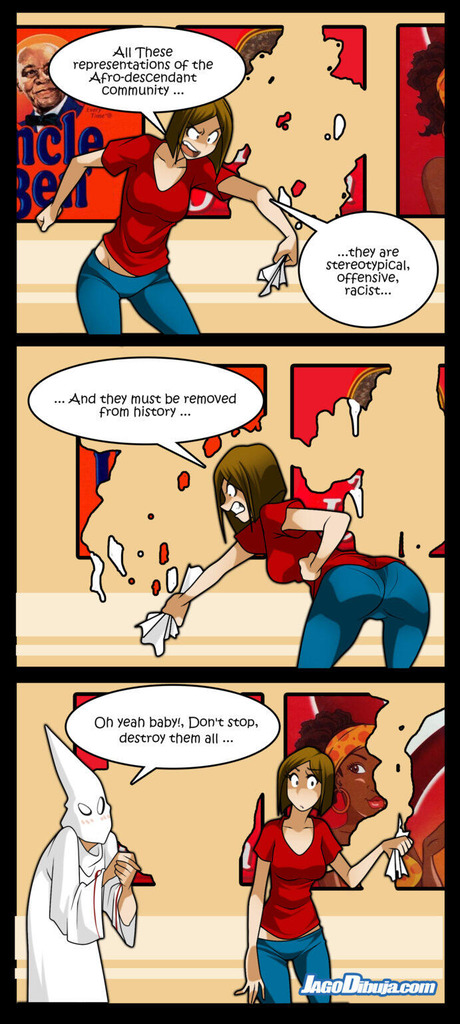
Bubble-Wrapping History: The National Archives Moves To “Reimagine” The Founding

We are living in the age of reimagination. We are not reducing police, we are “reimagining policing” … not “packing” the Supreme Court but “reimagining justice” … not embracing media bias but “reimagining journalism” … not embracing censorship but “reimagining free speech.”

Conversely, the lack of such imagination can be a career-ending flaw. As a result, many remain silent rather than question the need for the revisions that come with “reimagination.”

That dilemma was evident as a federal task force recently issued a call to “reimagine history” at the National Archives, including adding warnings to protect unsuspecting visitors before they read our founding documents. We are reimagining ourselves out of the very founding concepts that once defined us. Reimagining the founding documents comes at a time when many are calling to “reimagine the First Amendment” and other constitutional guarantees.

National Archivist David Ferriero created a racism task force for the National Archives after last summer’s protests over the killing of George Floyd in Minneapolis. Such task forces are created with the expectation that they will find problems, and — once recommendations are made — objecting to “anti-racist” reforms can easily be misconstrued as being insensitive or even racist.

Obviously, documents and spaces can be viewed differently from different backgrounds. There is also a need to contextualize our history to deal honestly with our past. However, the “reimagination” line should not divide the woke from the wicked. Yet that is the fear for many academics who do not want to risk their careers after campaigns against dissenting voices on campuses around the country.

For example, for many of us, the National Archives’ Rotunda – containing the Declaration of Independence, the Constitution and the Bill of Rights – is a moving, reverential place celebrating common articles of constitutional faith. That is not what the task force members saw.

Instead, they declared that the iconic Rotunda is one of three examples of structural racism: “a Rotunda in our flagship building that lauds wealthy White men in the nation’s founding while marginalizing BIPOC, women, and other communities.” They called for “reimagining” the space to be more inclusive, including possible dance and performance art. Even the famous murals in the Rotunda might have to go: The task force noted that some view the murals as “an homage to White America.”

The report objected to the laudatory attention given white Framers and Founders, particularly figures like Thomas Jefferson. It encouraged the placement of “trigger warnings” to “forewarn audiences of content that may cause intense physiological and psychological symptoms.”

The task force report called for “reimagining” the portrayal of founding documents on OurDocuments.gov, the website for America’s “milestone documents.” The task force objected that the “100 milestone documents of American history” included “adulatory and excessive language to document the historical contributions of White, wealthy men.”

The task force called for warnings and revision of racist language but stressed that such language “means not only explicitly harmful terms, such as racial slurs, but also information that implies and reinforces damaging stereotypes of BIPOC individuals and communities while valorizing and protecting White people.” It also called for “the creation of safe spaces” in every facility run by the National Archives and Record Administration (NARA).

Keep reading

Book burning at Ontario francophone schools as ‘gesture of reconciliation’ denounced

A book burning held by an Ontario francophone school board as an act of reconciliation with Indigenous people has received sharp condemnation from Canadian political leaders and the board itself now says it regrets its symbolic gesture.

The “flame purification” ceremony, first reported by Radio Canada , was held in 2019 by the Conseil scolaire catholique Providence, which oversees elementary and secondary schools in southwestern Ontario. Some 30 books, the national broadcaster reported, were burned for “educational purposes” and then the ashes were used as fertilizer to plant a tree.

“We bury the ashes of racism, discrimination and stereotypes in the hope that we will grow up in an inclusive country where all can live in prosperity and security,” says a video prepared for students about the book burning, Radio Canada reported.

In total, more than 4,700 books were removed from library shelves at 30 schools across the school board, and they have since been destroyed or are in the process of being recycled, Radio Canada reported.

Keep reading

Portland State University Professor Resigns, Says School Is a ‘Social Justice Factory’

Portland State University professor Peter Boghossian said he’s resigned from his position in an open letter and accused the college administration of creating an environment that imperils dissent.

“I never once believed—nor do I now—that the purpose of instruction was to lead my students to a particular conclusion,” Boghossian, a philosophy professor, wrote in the letter. “Rather, I sought to create the conditions for rigorous thought; to help them gain the tools to hunt and furrow for their own conclusions. This is why I became a teacher and why I love teaching.”

But over time, he argued, Portland State University—a publicly-funded college—made “intellectual exploration impossible” and has transformed itself into a “social justice factory” with a primary focus on race, victimhood, and gender.

“Students at Portland State are not being taught to think. Rather, they are being trained to mimic the moral certainty of ideologues,” said the letter, which was published on Bari Weiss’s Substack page. Weiss herself previously worked for the New York Times until 2020 when she resigned, accusing her Times colleagues of bullying, and argued that the paper capitulated to Twitter-based pressure campaigns.

Keep reading

Constitution, Declaration Of Independence Now Have ‘Trigger Warnings’ On National Archives Site

Digital copies of America’s founding documents — as well as other historical documents in the National Archives’ online catalog — now feature “trigger warnings” alerting readers that they may contain “harmful language,” and the change appears to follow the release of a “little-noticed” report from a National Archives racism task force that suggested the agency provide “context” for its historical materials.

Digital copies of the Constitution and the Declaration of Independence, most notably, now feature a “Harmful Language Alert,” which appears at the top of the page, and directs users to a National Archives and Records Administration (NARA) statement on “potentially harmful content.”

The NARA does not specify why the Constitution, Declaration, or Bill of Rights received the warning, but the NARA statement indicates that documents and historical materials are marked as having “harmful language” when they:

  • reflect racist, sexist, ableist, misogynistic/misogynoir, and xenophobic opinions and attitudes;
  • be discriminatory towards or exclude diverse views on sexuality, gender, religion, and more;
  • include graphic content of historical events such as violent death, medical procedures, crime, wars/terrorist acts, natural disasters and more;
  • demonstrate bias and exclusion in institutional collecting and digitization policies.

Trigger warnings are listed as just one of a number of solutions to the problem of providing historical documents to an increasingly “diverse community,” the NARA notes, and are part of an “institutional commitment” to “diversity, equity, and inclusion.”

Keep reading

CDC’s new ‘inclusive’ health equity guide tackles anti-vaxxers, smokers

The Health Equity Guiding Principles for Inclusive Communication suggest new descriptive terms for everyone from smokers, to anti-vaxxers, to criminals, according to a report.

Those who puff on cancer-sticks should no longer be called “smokers,” according to the CDC, but “people who smoke.”

The disabled shouldn’t be referred to as “differently abled,” but simply as “people with disabilities.”

And using the word “homosexual” is out in favor of a variety of alphabet soup terms, including “LGBTQ (or LGBTQIA or LGBTQ+ or LGBTQIA2),” according to the guide.

“The way people’s social identities overlap should be considered to better understand, interpret, and communicate health outcomes,” the agency said.

Poor people should be referred to as “with self-reported income in the lowest income bracket (if income brackets are defined).”

And don’t say “the black community.”

“If you are creating an image, do not illustrate the patient as a minority and the doctor as white; likewise do not illustrate a homeless person as a minority,” the CDC now says.

Even criminals are no longer criminals, but should be called “persons in pre-trial or with charge,” “persons on parole or probation,” or “people in immigration detention facilities.”

Keep reading

Arts Council of Wales finds itself racist for… asking employees to speak Welsh

The Arts Council of Wales spent £51,000 on a report that found its own Welsh language policies “systemically racist.” By asking workers to know the language, the council upholds a “white supremacist ideology,” the report claimed.

The Arts Council of Wales tests its employees on their Welsh language skills every year, while National Museums Wales assesses whether Welsh language skills are “essential” for particular roles. 

However, the arts council recently paid an outside organisation, the Welsh Arts Anti-Racist Union, £51,000 ($69,474) to investigate whether these language policies exclude black people and other non-white minorities. 

Keep reading