
Los Angeles bans Halloween trick-or-treating due to COVID-19 risk

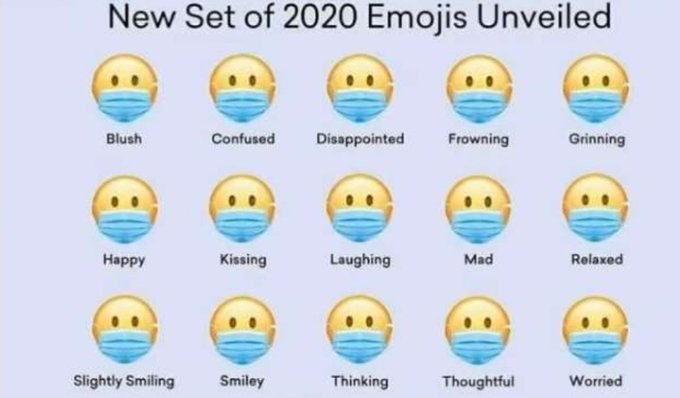
Traditional Halloween activities like trick-or-treating, parties, festivals and haunted houses won’t be permitted throughout Los Angeles this fall due to the risk of contracting or spreading COVID-19, health officials announced.

“Door to door trick or treating is not allowed because it can be very difficult to maintain proper social distancing on porches and at front doors especially in neighborhoods that are popular with trick or treaters,” the new guidance reads.

Also banned this year is so-called “trunk or treating,” where children get candy and other treats from cars instead of doorsteps, as well as gatherings or parties with non-household members and live entertainment like haunted house attractions, county officials said.

“Since some of the traditional ways in which this holiday is celebrated does not allow you to minimize contact with non-household members, it is important to plan early and identify safer alternatives,” county health officials said in a statement.

To that end, those who wish to celebrate Halloween amid the pandemic with safer alternatives can host or attend online get-togethers, costume contests or pumpkin carving parties.

Keep reading

Oscars Announce New Diversity and Inclusion Standards for Best Picture Eligibility

The Academy of Motion Picture Arts and Sciences has announced new diversity and inclusion standards for Oscars Best Picture eligibility.

For films to be considered for Best Picture, they must meet criteria that includes two of four standards: Standard A “Onscreen Representation, Themes and Narratives,” Standard B “Creative Leadership and Project Team,” Standard C “Industry Access and Opportunities” and Standard D “Audience Development.” Each standard has criteria requiring the inclusion of people in underrepresented groups, including women, people from an underrepresented racial or ethnic group, LGBTQ+ people, and people with cognitive or physical disabilities or who are deaf or hard of hearing.

For example, Standard A requires at least one of the lead actors or significant supporting actors to be from an underrepresented racial or ethnic group; the general ensemble cast must include 30 percent of actors from at least two underrepresented groups; and/or the main storyline(s) theme or narrative of the film is centered on an underrepresented group(s).

Keep reading

SAN FRANCISCO IS PAYING FOR JAMAL TRULOVE’S WRONGFUL CONVICTION. WILL KAMALA HARRIS?

After a jury convicted Jamal Trulove, then 25, of first degree murder in February 2010, then-San Francisco District Attorney Kamala Harris praised the “brave witness who stepped forward from the crowd.” Harris was then running for attorney general of California and in her campaign bragged about her high conviction rates as the San Francisco DA. Harris echoed what her deputy prosecutor Linda Allen said repeatedly to the jury: Priscilla Lualemaga, the only eyewitness to testify at trial about the July 2007 homicide of Seu Kuka, did so at great risk of retaliation. “She’ll never get her life back,” Allen said, adding that Lualemaga testified knowing that “maybe [she’ll] get killed over being a witness because she saw someone else kill someone.” 

Lualemaga’s identification of Trulove as the shooter who killed Kuka on a sidewalk in San Francisco’s Sunnydale housing project was the critical evidence against him. For prosecutors to win, the jury had to believe Lualemaga’s claim that just before 11 p.m. on July 23, 2007 she saw the shooting from a second-floor window when the street below was shrouded in darkness. 

The jury also had to believe Lualemaga saw the shooter despite a poor vantage point of the crime scene; her failure to pick Trulove from a photo wall she had viewed with police for hours; her evolving memory of the shooting over time; and the benefits the prosecution provided to Lualemaga and her family that would eventually total over $60,000 in living expenses. Yet the prosecution argued that Lualemaga’s testimony was credible because it came at profound personal risk. 

But there was no evidence corroborating the prosecutor’s suggestion that, as a court of appeal later described it, there were “assassins lurking on defendant’s behalf.” 

There was also no physical or forensic evidence that inculpated Trulove, and no other witnesses said he was the shooter. Trulove insisted from the beginning that he was innocent.

The case’s glaring flaws didn’t matter: in October 2010, Trulove, then a young father, aspiring actor, and hip-hop performer who had appeared on the VH1 reality television show “I Love New York 2,” was sentenced to 50 years to life.


Four years later, in 2014, a California Court of Appeal overturned his conviction based on the prosecutor’s repeated attempts to exaggerate Lualemaga’s credibility. The state’s claim that Lualemaga risked retaliation for testifying in the Trulove case was, the court said, a “yarn … made out of whole cloth.” The prosecution “did not present a scintilla of evidence at trial that defendant’s friends and family would try to kill Lualemaga if she testified against him,” the court said, and that misconduct, combined with Trulove’s trial counsel’s failure to object, gave him the right to a new trial. 

In 2015, the same prosecutor at the San Francisco DA’s office retried Trulove, but he was acquitted and walked free for the first time since his 2008 arrest. In April 2018, a federal civil jury awarded Trulove $10 million, finding that San Francisco police officers fabricated evidence against him and withheld exculpatory evidence. In March, the city’s Board of Supervisors approved a $13.1 million payment to settle the suit.

Keep reading

Disney Thanks Chinese Labor Camp Authorities in Mulan Credits

The new Mulan movie is facing a barrage of criticism—and promises to boycott—for filming near Chinese concentration camps and then thanking the Chinese Communist Party (CCP) for the privilege.

The filma live-action version of the 1998 Disney cartoon by the same name—is based on Chinese folklore about a young woman (Hua Mulan) who pretends to be a boy so that she can fight in her father’s place when he is conscripted into the Chinese army. In a sense, it’s a tale about cleverness, bravery, and familial love helping to overcome hardships brought about by a violent and overbearing government.

That’s makes Disney’s filming location—Xinjiang—an extra slap in the face. Xinjiang is where China has been holding Uighurs in concentration camps and subjecting them and other Muslim minorities to horrible human rights abuses.

Keep reading

Biden Surrogate Builds Wall, Makes Michigan Taxpayers Pay For It

Michigan Democratic governor Gretchen Whitmer’s state-owned residence is getting $1.1 million in security upgrades, including an eight-foot-tall perimeter fence.

Whitmer has long questioned the effectiveness of physical barriers, but is asking Michigan taxpayers to foot the bill for a seven-figure project to keep out uninvited guests. The governor’s office confirmed the renovation on Friday, telling the Detroit News that the wall would help “ensure the safety, security, and protection of any sitting governor and the first family.” The renovation will include an electrified fence that Whitmer claims is necessary because of threats she has received.

Whitmer, a Biden surrogate, has attacked the idea of using barriers to prevent illegal immigration. She called President Donald Trump’s border wall “costly and ineffective” in February 2017, nearly a week after suggesting that money for the wall would be better spent elsewhere.

“$40 BILLION for the wall,” Whitmer tweeted. “Think how many kids that would educate, how many roads, bridges and pipes it would fix.”

Whitmer also campaigned against Trump’s wall in 2018, saying, “it is time we get back to building bridges, not walls.”

Keep reading