One Year On… Navalny Poison Pulp Fiction – Surprisingly – Provides a Real Conclusion

There is no doubt Navalny is an asset for Western intelligence agencies assigned to subvert Russia from within with his scripted media antics.

The hallmark of a shoddy, pulp fiction story is it quickly fades from memory. It’s a bit like lots of other made-for-fast-consumption experiences: fast-food, trashy news, infotainment, drugs, or indeed propaganda stunts. It’s sold brashly with gaudy packaging but the intended substance is lacking. Hence, in a short period, the experience and memory vanish leaving a disappointing void.

The alleged poisoning of Russian blogger and political gadfly Alexei Navalny is a case in point. It was one year ago that he dramatically fell ill while on a flight from Siberia. He was rushed to hospital where the Russian doctors stabilized his condition. The medics found nothing extraneous in his body fluids and suggested he was suffering from a medical reaction. Two days later, Navalny was permitted by the Russian government to be flown on a private airplane for treatment in Germany. Within days, the Berlin authorities were claiming he had been poisoned with a Soviet-era nerve agent, Novichok. (After body samples had been analyzed at a Bundeswehr military laboratory!)

This was the same nerve poison that was allegedly used by Kremlin assassins against Russian traitor-spy Sergei Skripal and his daughter in England in March 2018. Remember the Western media kerfuffle over that drama, the diplomatic expulsions and sanctions? Where have all the expressions of concern about that obscure incident gone? Indeed, where are the Skripals now? The British authorities like a conjuror refuse to disclose the whereabouts of the disappeared. The silence is beyond bizarre.

As with the Skripal case, there then followed a torrent of accusations from Western governments and media claiming that Navalny had likewise been the victim of an assassination plot by the Kremlin. There were grave demands for Moscow to conduct a criminal investigation into the alleged poisoning of Navalny.

One year on, Western governments and media have stopped playing to the gallery with unsubstantiated claims about Navalny. Even the blogger himself, who is now serving three years in a Russian jail for financial corruption, has stopped talking about it. Last year, while allegedly convalescing in Germany for five months in violation of his probation terms for an earlier suspended conviction by a Russian court, Navalny made sensational claims that President Vladimir Putin had personally ordered his assassination. Western media indulged and amplified the slander. Then he returned to Russia in January, whereupon the Russian prison authorities detained him and converted his suspended sentence into jail time. Rightly so, too.

Laughably, the prisoner has been free to give interviews to prominent Western media outlets. So much for him being “persecuted in a penal colony”!

Last week, he wrote an opinion piece for the British Guardian and this week gave an interview to the New York Times. Strangely, however, he barely mentions the purported assassination plot that Putin had allegedly ordered. That shows, inadvertently, that not even Navalny has any conviction in peddling the preposterous story.

The contradiction and absurdities in the Navalny saga, as with the Skripal “prequel”, are legion. A detailed account of official communications from the Russian foreign ministry demonstrates how the German authorities have refused to follow basic standards of informational exchange with Moscow on the provenance of claims made by Navalny that have been amplified by Berlin and other Western governments. That refusal, like the British one over the Skripal affair, is a shocking dereliction of diplomatic standards and due process.

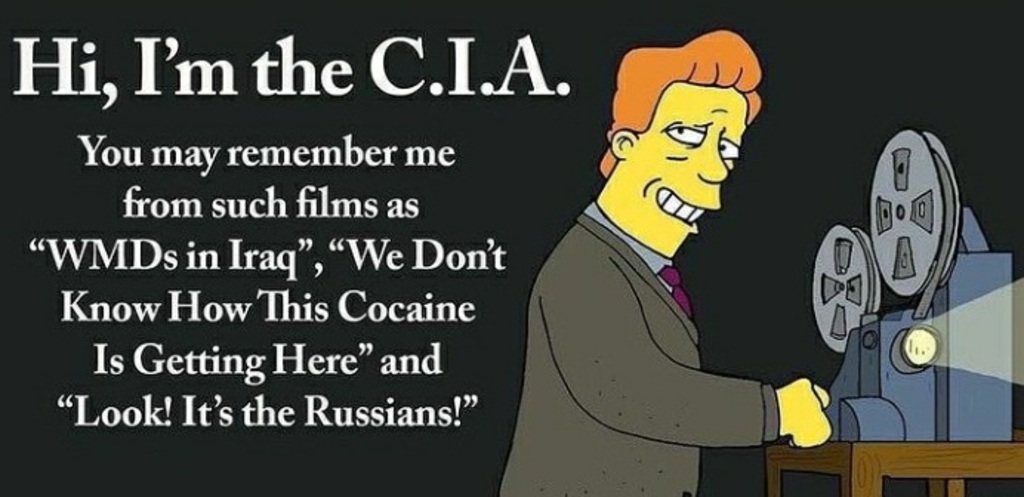
As with so many other anti-Russian tropes – from election meddling to cyber attacks – there is an absolute dearth of evidence provided to back up accusations. The accusations are recklessly repeated over and over and thereby take on the appearance of being established facts (The Big Lie technique of Josef Goebbels no less). When in fact the claims are always fiction.

Keep reading

Did Biden Just Cut Off Ammo Supply to Law-Abiding Americans?

Let’s take a break from the chaos in Afghanistan to discuss what the Biden administration just did that could impact law-abiding Americans’ access to ammunition. We’re already being pinched. The price of copper has reached historic highs. Stephen Gutowski of The Reload has been covering this story noting that we might not see some calibers, like 9MM and .223/.556 ammunition readily available for up to two years. Yes, the Biden administration’s anti-gun agenda is impacting the situation, but the COVID pandemic saw nine million Americans become first-time gun owners. The latter part is a good thing, but increased demand, coupled with a White House that’s antagonistic towards Second Amendment rights and the price of materials has pinched the market. Now, the latest sanctions on Russian arms could compound the issues centering on access to ammunition. Our own Cam Edwards said that one should now worry…for now. After a couple of years, however, it’s a different story.

Here’s the portion of the new sanctions Edwards highlighted, pursuant of the Chemical and Biological Weapons Control and Warfare Elimination Act of 1991.

“Restrictions on the permanent imports of certain Russian firearms. New and pending permit applications for the permanent importation of firearms and ammunition manufactured or located in Russia will be subject to a policy of denial.”

Keep reading

Biden Bans Importation of Russian Ammunition in Backhanded Swipe at Gun Owners

President Joe Biden’s State Department announced it would deny all importation permits for ammunition manufactured in Russia on Friday, with the department citing the alleged 2020 poisoning of Russian political dissident Aleksy Navalny. 

The ammo ban serves as a de facto punishment for American gun owners for alleged corruption and misconduct on the part of the Russian government. Ammunition manufactured in Russia has consistently been the cheapest available since the onset of the coronavirus pandemic in 2019, with brands such as Tula and Wolf offering steel-cased rounds in the .223 caliber at prices well below their western competitors. Steel-cased ammo is easier to manufacture than rounds cased in materials such as copper. 

The anti-gun measure may leave blue-collar shooters without means to practice using their weapons, although it’s possible the forcible exit of Russian manufacturers from the US commercial exit will enable American manufacturers to fill the void of affordable rifle ammunition. 

The backdoor attack may represent the most impactful attack on the Second Amendment during Biden’s tenure on the presidential throne, with luxury liberals increasingly realizing that direct attempts to criminalize civilian gun ownership are a lost cause and that backhanded measures are more effective. 

Keep reading

After Russiagate, Why WOULDN’T People Be Skeptical About Covid?

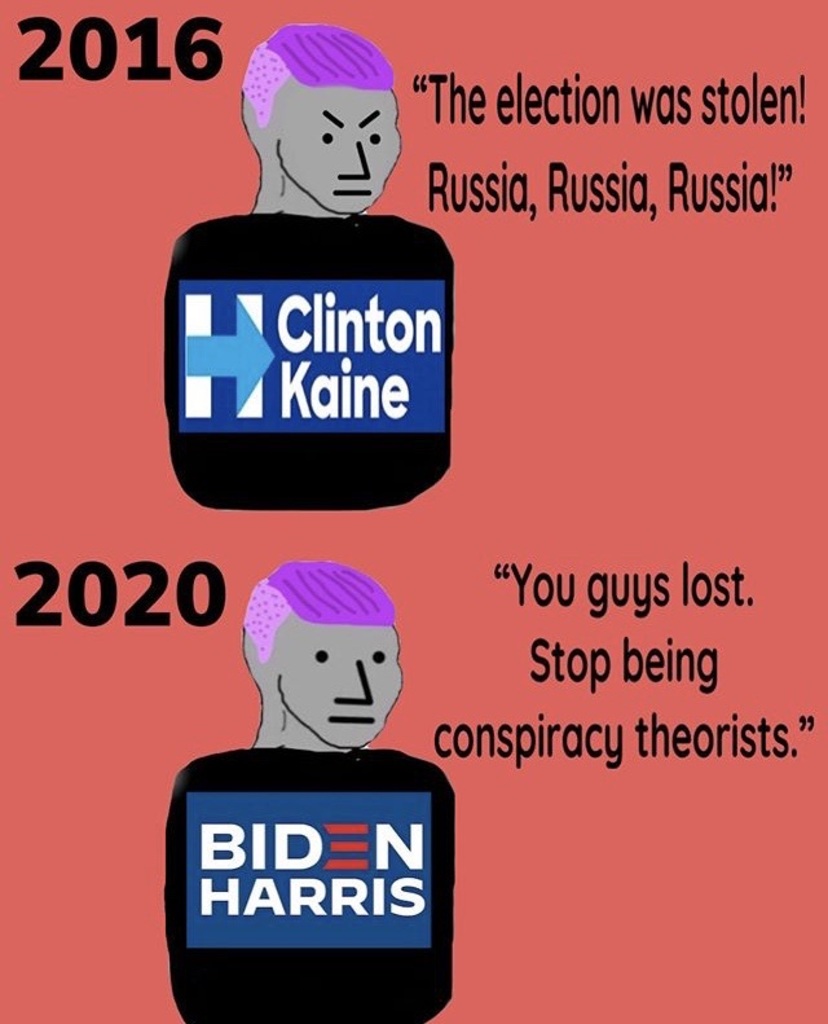
You hardly ever hear about Russiagate anymore. The last time it made a blip in the radar was when disgraced Collusion author Luke Harding published a very thinly-sourced story in The Guardian claiming to have proof that Donald Trump was a Kremlin asset, but other mass media outlets barely touched it and it vanished as quickly as it came.

Looking at mainstream news outlets in 2021, you’d hardly know they’d recently spent years hammering the story into public consciousness that Vladimir Putin had infiltrated the highest levels of the US government, day after day after day after day after day.

But they did. Vast fortunes were raked in off the public interest generated by click-friendly stories about the latest BOMBSHELL revelation involving some peripheral member of Trump’s associates perhaps maybe having some kind of contact with a Russian national at some point. Entire careers were built on this.

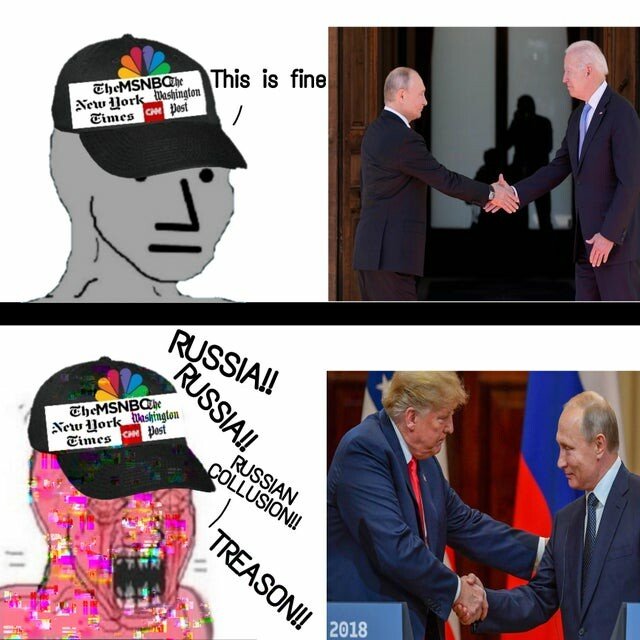
Then the Mueller investigation invalidated the entire claim by failing to indict a single American for conspiring with the Russian government, and the mass media who’d spent the previous few years bashing everyone in the face with that story just kind of slowly sidled away from it.

And now they act like it never happened.

Keep reading

Luke Harding’s Continued Employment Discredits All Western Media

Collusion author Luke Harding continues to receive mainstream traction authoring stories which generate headlines in influential media outlets around the world promoting his theory that Trump conspired with the Kremlin, despite the fact that both he and his theory have been completely and utterly discredited many times over.

The Guardian has published an article co-authored by Harding on “what are assessed to be leaked Kremlin documents” which “suggest” that Russian officials had a conversation which delivers “apparent confirmation that the Kremlin possesses kompromat, or potentially compromising material, on the future president.”

“The paper refers to ‘certain events’ that happened during Trump’s trips to Moscow,” says Harding with his two co-authors. “Security council members are invited to find details in appendix five, at paragraph five, the document states. It is unclear what the appendix contains.”

“Russia’s three spy agencies were ordered to find practical ways to support Trump, in a decree appearing to bear Putin’s signature,” the article reads, adding, “Western intelligence agencies are understood to have been aware of the documents for some months and to have carefully examined them. The papers, seen by the Guardian, seem to represent a serious and highly unusual leak from within the Kremlin.”

Keep reading

An Ugly War Among Leftist YouTubers Shows Two Common, Toxic Pathologies Plaguing U.S. Politics

An incredibly vicious and protracted war is being waged, seemingly with no end in sight, among numerous prominent liberal and left-wing commentators who work primarily on YouTube. The conflict erupted on May 26 when Cenk Uygur — the founder and long-time host of The Young Turks, the largest liberal-left YouTube platform — baselessly and falsely accused independent journalist Aaron Maté of being “paid by the Russians,” while his co-host, Ana Kasparian, spouted innuendo that Maté was “working for” unnamed dictators.

Maté is one of the very few left-wing journalists who reported skeptically on Russiagate and who questioned the U.S. Government’s narrative about the civil war in Syria, including by traveling to war-torn parts of that country to do so. He won the 2019 Park Center for Independent Media’s Izzy Award for his work debunking Russiagate. Yet with a one-minute rant from their insulated studio, Uygur baselessly branded Maté as someone who is “paid by the Russians” while Kasparian asserted that he “seemed” to be working for Assad and other dictators — a potentially reputation-destroying smear for a journalist and one that can be quite dangerous for a reporter who, like Maté, works on the ground in war zones.

The conflict engendered by those grotesque fabrications escalated significantly when Kasparian sent a private Twitter message to one of Maté’s defenders, Jimmy Dore, in which she threatened to accuse Dore of #MeToo-type sexual harassment from when they worked together seven years earlier. Kasparian made clear that her intent to publicly vilify Dore as a sexual harasser would serve as punishment for his criticisms of The Young Turks. Dore then revealed Kasparian’s threat on his program, and days later, Kasparian made good on her threat by accusing Dore of sexual harassment back in 2014.

Keep reading