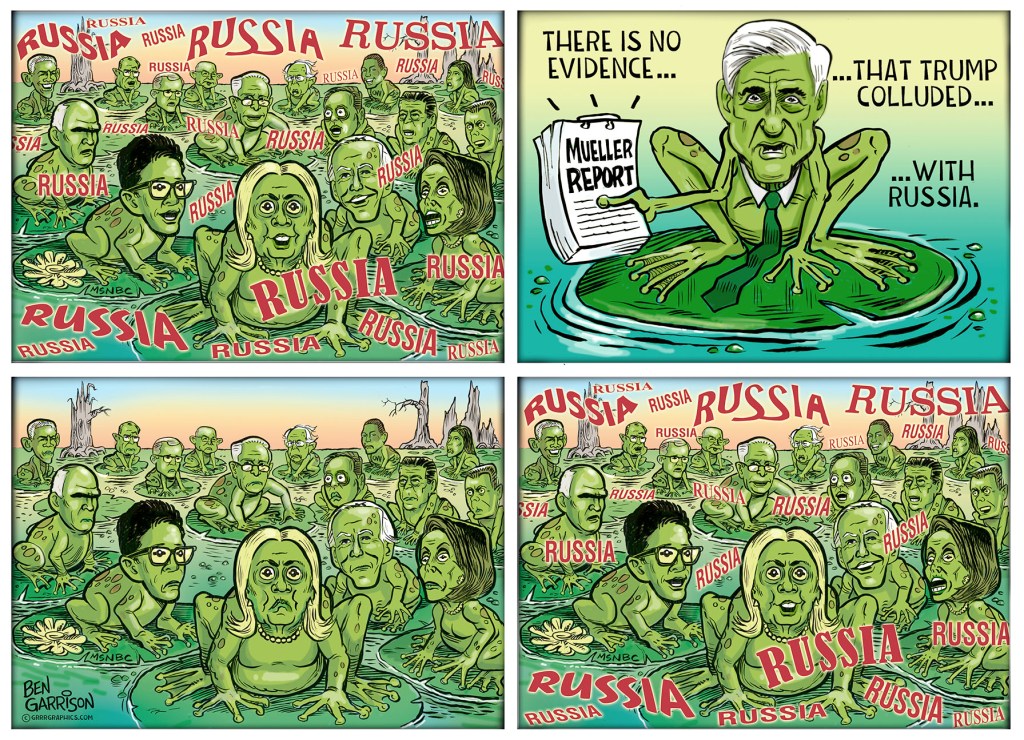
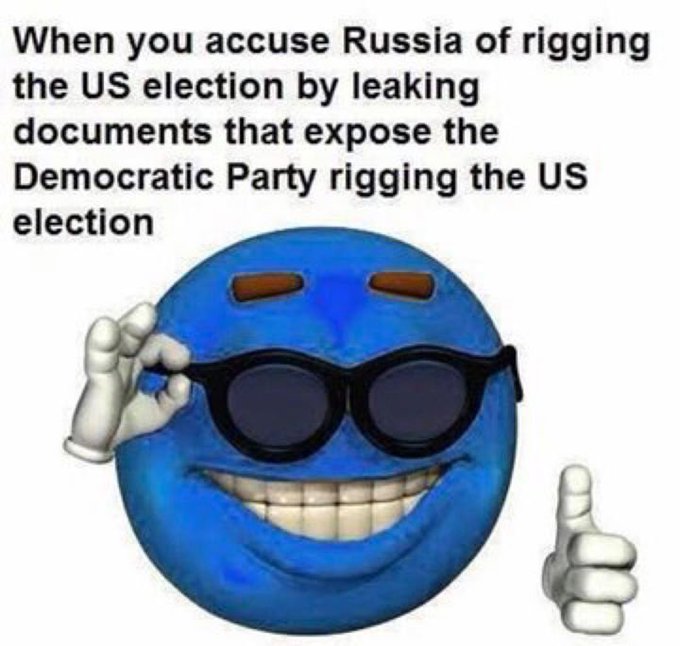
Wikileaks and Russian hackers…


Global scandals now labeled Russiagate, Spygate, and what President Trump calls “Obamagate” shook the political world, but hit me closer to home. I’m the reason the so-called FBI “spy” at the center of Spygate, Stefan Halper, met Carter Page, the alleged “Russian Asset” in Russiagate’s Crossfire Hurricane investigation.
On May 19, 2018, this realization blindsided me in London as I was about to fly out for my wedding. The New York Times, NBC News and other sources had outed my PhD supervisor, Stefan Halper, as a spy known to the UK’s MI6 intelligence service as “The Walrus.”
It didn’t seem real. Could a former professor I once trusted as a mentor have betrayed his word, profession, and country to start these disasters? I had moved to England to pursue an academic career and leave DC’s politics behind, only to have my PhD supervisor throw me back into the most outrageous political firestorms I could imagine. Just my luck. Then an even worse question began nagging at me. Did I unintentionally light the match that started it all?
As I started to piece together what happened over the next few months, I realized something. The stories that The New York Times, Washington Post, and others were pushing didn’t add up. Many seemed planted to cover up or advance the agendas of several individuals whose tentacles secretly ran through these scandals, and who each had longstanding ties to intelligence services like the FBI, CIA, and MI6. I call these individuals the Cambridge Four.
Strangely, all four were linked through that sleepy British academic town thousands of miles from the alleged “ground zeroes” of Russiagate’s conspiracies, Moscow and DC. In addition to the central “Spygate” figure Halper, they include the central source of “Russiagate’s” fake conspiracy theories, Christopher Steele; former MI6 Director Sir Richard Dearlove; and Halper’s and Dearlove’s partner in a Cambridge Intelligence Seminar linked to titillating — but false — tales of a “Russian spy” seducing Trump’s top national security advisor. My years of work with Halper provided an inside view of how their four networks interconnected.
The more I dug up new pieces of this puzzle, the more I saw how these individuals’ seemingly separate acts might fit together in an absurd picture of how these scandals really started.

The New York Times sensationally headlines:
Russia Continues Interfering in Election to Try to Help Trump, U.S. Intelligence Says
But a new assessment says China would prefer to see the president defeated, though it is not clear Beijing is doing much to meddle in the 2020 campaign to help Joseph R. Biden Jr.
But when one reads the piece itself one finds no fact that would support the ‘Russia Continues Interfering’ statement:
Russia is using a range of techniques to denigrate Joseph R. Biden Jr., American intelligence officials said Friday in their first public assessment that Moscow continues to try to interfere in the 2020 campaign to help President Trump.
At the same time, the officials said China preferred that Mr. Trump be defeated in November and was weighing whether to take more aggressive action in the election.
But officials briefed on the intelligence said that Russia was the far graver, and more immediate, threat. While China seeks to gain influence in American politics, its leaders have not yet decided to wade directly into the presidential contest, however much they may dislike Mr. Trump, the officials said.
The assessment, included in a statement released by William R. Evanina, the director of the National Counterintelligence and Security Center, suggested the intelligence community was treading carefully, reflecting the political heat generated by previous findings.
The authors emphasize the scaremongering hearsay from “officials briefed on the intelligence” – i.e. Democratic congress members – about Russia but have nothing to back it up.
Residents of cities across Russia are receiving SMS messages about the U.S. State Department’s newly announced $10 million “Rewards for Justice” (RFJ) offer for information that helps identify or locate hackers attempting to interfere in the 2020 presidential elections, reports the Russian outlet TJournal.
Russian social media users began sharing screenshots of these messages online on August 6, the day after the U.S. State Department announced the reward offer. Reports about the messages also started to appear in local news outlets, such as the Yekaterinburg-based outlet It’s My Cityand the Vladivostok-based outlet Vl.ru, among others. According to the website Pikabu.ru, residents of the Russian cities of Saratov, Krasnodar, Ulyanovsk, Chelyabinsk, Perm, and Tyumen also reported receiving similar messages.
MEMORANDUM FOR: Speaker Nancy Pelosi
FROM: Veteran Intelligence Professionals for Sanity
SUBJECT: Did Russia Hack the DNC Emails?
Dear Madam Speaker:
After your intelligence briefing Friday, Politico reported that you were sharply frustrated by the lack of detail presented on “Russia’s continued interference in the 2020 election campaign.” You were quoted as saying you thought the administration was “withholding” evidence of foreign election meddling and added, “What I am concerned about is that the American people should be better informed.” We share your concern and, having followed this issue closely from the perspective of non-partisan, veteran intelligence officials, we are able to throw considerable light on it.
The narrative that Russia hacked Democratic National Committee emails in 2016 and gave them to WikiLeaks to hurt Hillary Clinton’s candidacy has become an article of faith for about half of Americans — somewhat fewer than the number misled into believing 18 years ago that there were weapons of mass destruction in Iraq — but it is still considerable.
Because of a bizarre, but highly instructive media lapse these past three months, most Americans remain unaware that the accusation that Russia “hacked” the DNC has evaporated.It turns out the accusation was fabricated — just like the presence of weapons of mass destruction in Iraq. In fact, some of the same U.S. officials were involved in both deceptions. For example, James Clapper, Obama’s director of national intelligence, played a key role 18 years ago in covering up the fact that no WMD had been identified in satellite imagery of Iraq; more recently he helped conjure up evidence of Russian hacking.
We quote below the horse’s-mouth testimony of Shawn Henry, head of CrowdStrike, the cyber security outfit paid by the DNC, and certified as a “high-class entity” by FBI Director James Comey, to look into the “hacking” of the DNC. Mr. Henry admitted in sworn testimony on December 5, 2017 that his firm has no concrete evidence that the DNC emails were hacked — by Russia or anyone else. This testimony was finally declassified and released on May 7, 2020, but you will not find a word about it in The New York Times, Washington Post or other “mainstream” outlets. (We wonder if you yourself were made aware of Henry’s testimony.)
The original accusation achieved its purpose in fostering the belief that President Trump owed his election to President Putin, and thus is beholden to him. It also provided a degree of verisimilitude — as well as faux-righteous indignation — to support a host of punitive measures. “Russian hacking” was immediately used to justify President Obama’s expulsion of 35 Russian diplomats/intelligence officers at the end of 2016. Those with a sharp anti-Russia axe to grind no doubt deemed this unnecessary diplomatic step felicitous, welcome collateral damage to ties between Washington and Moscow.
Binney has now laid out, in this speech, the evidence that he wants to present in court against Barack Obama’s CIA, that it defrauded Americans to believe in “Russiagate” (the allegation that Russia ‘hacked’ the computers of Hillary Clinton and Democratic Party officials and fed that information to Wikileaks and other organizations). Binney cites evidence, which, if true, conclusively proves that Russiagate was actually created fraudulently by the CIA’s extensive evidence-tampering, which subsequently became covered-up by the Special Counsel Robert Mueller, in his investigations for the Democratic Party’s first (and failed) try at impeaching and removing from office U.S. President Donald J. Trump.
The FBI official who ran the investigation into whether the Donald Trump campaign colluded with Russia to steal the 2016 presidential election privately admitted in newly released notes that a major New York Times article was riddled with lies, falsehoods, and “misleading and inaccurate” information. The February 2017 story was penned by three reporters who would win Pulitzers for their reporting on Trump’s supposed collusion with Russia.
The FBI’s public posture and leaks at the time supported the now-discredited conspiracy theory that led to the formation of a special counsel probe to investigate the Trump campaign and undermine his administration.
“We have not seen evidence of any individuals affiliated with the Trump team in contact with [Russian Intelligence Officials]. . . . We are unaware of ANY Trump advisors engaging in conversations with Russian intelligence officials,” former FBI counterespionage official Peter Strzok wrote of the Feb. 14, 2017 New York Times story “Trump Campaign Aides Had Repeated Contacts With Russian Intelligence.” That story, which was based on the unsubstantiated claims of four anonymous intelligence officials, was echoed by a similarly sourced CNN story published a day later and headlined “Trump aides were in constant touch with senior Russian officials during campaign.”
Strzok’s notes are the latest factual debunking of these stories, which were previously shown to be false with the release of Robert Mueller’s special counsel report finding no evidence whatsoever in support of the Hillary Clinton campaign assertion that Trump affiliates colluded with Russia to steal the 2016 election. A report from the Department of Justice Office of Inspector General on just one aspect of the investigation into Russia collusion — FBI spying on Trump campaign affiliates — also debunked these news reports.
Former FBI Director James Comey admitted under oath in June 2017 that the reporting was “false,” something his deputy director Andrew McCabe privately acknowledged to the White House earlier that year but refused to admit publicly. Efforts by the White House to get the FBI to say publicly what they were admitting privately were leaked to the media in order to suggest the White House was obstructing their investigation. “Obstruction” of the Russia investigation would form a major part of the special counsel probe, and media and Democrat efforts to oust the president.
As for the merits of the explosive New York Times story alleging repeated contacts with senior Russian intelligence officials before the election, Strzok said it was “misleading and inaccurate… no evidence.” Of the unsubstantiated claim that former Trump campaign manager Paul Manafort was on the phone calls with Russian intelligence officials, Strzok said, “We are unaware of any calls with any Russian govt official in which Manafort was a party.” And of the New York Times claim that Roger Stone was part of the FBI’s inquiry into Russian ties, Strzok said, “We have not investigated Roger Stone.”
The Times report, which came hours after National Security Advisor Michael Flynn was ousted due to criminal leaks against him, was one of the most important articles published by major media as part of their campaign to paint Trump as a Russian operative. Widely accepted by the media and political establishment, it did as much to cement the false and damaging Russia conspiracy theory as CNN’s story legitimizing the now-discredited Christopher Steele dossier or the Washington Post’s now-discredited suggestion that Flynn was a secret Russian operative who was guilty of violating an obscure 1799 law called the Logan Act.
The New York Times declined to retract or correct the article three years ago, even after Comey testified it was false, on the grounds that the anonymous sources who fed the false information remained pleased with the initial story.
The damage this false story caused the Trump administration can not be underestimated. It’s a story worth recounting here.
The Primary Subsource said at first that maybe he had asked some of his friends in Russia – he didn’t have a network of sources, according to his lawyer, but instead just a “social circle.” And a boozy one at that: When the Primary Subsource would get together with his old friend Source 4, the two would drink heavily. But his social circle was no help with the Manafort question, and so the Primary Subsource scrounged up a few old news clippings about Manafort and fed them back to Steele.
Also in his “social circle” was Primary Subsource’s friend “Source 2,” a character who was always on the make. “He often tries to monetize his relationship with [the Primary Subsource], suggesting that the two of them should try and do projects together for money,” the Primary Subsource told the FBI (a caution that the Primary Subsource would repeat again and again.) It was Source 2 who “told [the Primary Subsource] that there was compromising material on Trump.”
And then there was Source 3, a very special friend. She would borrow money from the Primary Subsource that he didn’t expect to be paid back. She stayed with him when visiting the United States. The Primary Subsource told the FBI that in the midst of their conversations about Trump, they would also talk about “a private subject.” (The FBI agents, for all their hardnosed reputation, were too delicate to intrude by asking what that “private subject” was).
The Russians are coming — again.
Joe Biden, the presumptive 2020 Democratic nominee, warned Americans on Friday that Russia would again try to interfere in the presidential election, just as they did in 2016.
The former vice president said he is now receiving intelligence briefings on the matter, Reuters reported.
“We know from before, and I guarantee you that I know now, because now I get briefings again. The Russians are still engaged in trying to delegitimize our electoral process. Fact,” Biden said during an online fundraiser for his campaign. In the same event Biden also warned that China was getting in on the act to with maneuvers “designed for us to lose confidence in the outcome”
You must be logged in to post a comment.