How gun laws work…


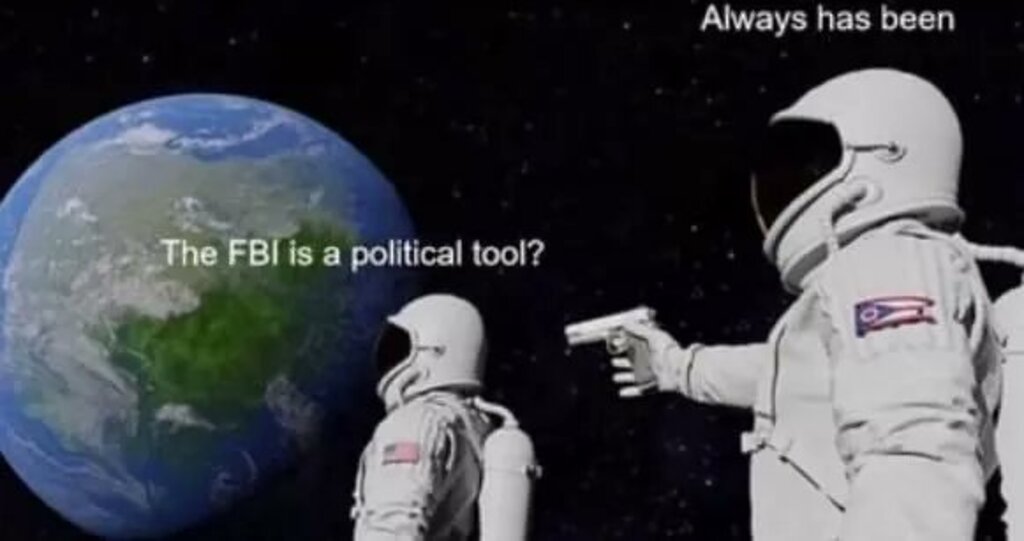
FBI AGENT GRAYDEN RIDD had a confidential message for his informant. An FBI team had been given the green light by the Justice Department to ambush and derail a planned meeting between a reporter and a source, and the informant’s job was to let the FBI know when and where the meeting would take place.
The reporter whose meeting they planned to target was me.
It was January 2014, and I was an investigative reporter in the Washington bureau of the New York Times focusing on national security. The FBI wanted to stop me from obtaining documents that I’d been told would reveal the details of massive spying operations by the National Security Agency. The FBI was convinced that I was in contact with someone they had secretly nicknamed the “second Snowden,” who was about to give me an archive that they feared could go far beyond what former NSA contractor Edward Snowden had leaked about the agency’s spying operations the year before.
The FBI’s plan to grab my source at our scheduled meeting was approved by top officials at the FBI and the Justice Department during the Obama administration, according to audio recordings I obtained of several phone conversations between Ridd and his informant. At the time, Eric Holder was U.S. attorney general and James Comey was FBI director.
“Right now, they are on board,” Ridd said in one phone conversation to plan the ambush operation, referring to top Justice Department and FBI officials. “I have to periodically go up to the throne room and recommit them. … We actually have a lot of buy-in and a lot of support, but I do need to feed the beast.”
The FBI declined to comment and the Justice Department did not respond to requests for comment. Holder did not answer a request for comment left with his office; Comey did not respond to a request for comment conveyed through his lawyer. Ridd did not respond to a request for comment placed with a relative or to a knock at the door of his home in Washington, D.C.
On June 5, 1968, a few minutes after midnight, Robert Kennedy was shot and killed at the Ambassador Hotel in Los Angeles while walking through a narrow serving area called “the pantry.” Kennedy had just won the California primary and was on his way to a room where print media reporters were waiting to hear him speak.
In early March, Lyndon B. Johnson had thrown open the race by announcing that he would not seek re-election because of the failure of his Vietnam policy. Kennedy emerged as a leading contender by energizing the youth wing of the party with his calls for sweeping social change.
Kennedy was in many ways a strange liberal icon because he grew up idolizing Herbert Hoover, was closest in his family to his father, Joseph, the millionaire business tycoon, began his career supporting Joseph McCarthy’s anti-communist witch-hunt, called for victory against communism in Vietnam in the early 1960s, and oversaw a terrorist campaign designed to overthrow the Cuban government.
Nevertheless, by the latter part of the 1960s, Kennedy had evolved into a crusader for the poor and dove on Vietnam who was trying to ride the wave of the protest movement into the White House.[1]
Biographers Lester and Irene David wrote that Bobby was the Kennedy who “felt deepest, cared the most, and fought the hardest for humanity—crying out against America’s involvement in the Vietnam War, championing the causes of blacks, Hispanics, and Mexican-Americans, and crusading against the suffering of children, the elderly and anyone else hurt or bypassed by social and economic progress.”[2]
After Kennedy’s death, the Democratic Party became a shadow of its former self, with six of the next nine presidents being Republicans. The Party in this period abandoned its core base—union laborers, minorities, and blue-collar workers—focusing instead on Wall Street.
A Norwegian feminist faces up to three years in prison for saying that biological men can’t be lesbians.
Yes, really.
Christina Ellingsen, of the global feminist organization Women’s Declaration International (WDI), is under police investigation for making the claim in a tweet in which she criticized the trans activism group FRI.
“Why [does] FRI teach young people that males can be lesbians? Isn’t that conversion therapy?” Ellingsen allegedly tweeted.
She also questioned the legitimacy of FRI’s advisor Christine Jentoft identifying as a lesbian despite being born a biological male.
“Jentoft, who is male and an advisor in FRI, presents himself as a lesbian – that’s how bonkers the organization which supposedly works to protect young lesbians’ interests is. How does it help young lesbians when males claim to be lesbian, too?” Ellingsen reportedly said.
“You are a man. You cannot be a mother,” Ellingsen allegedly told Jentoft. “To normalize the idea that men can be mothers is a defined form of discrimination against women.”
“Amnesty International is also accusing Ellingsen of harassment for saying that Jentoft is a man on national television,” reports Reclaim the Net.
Norway’s hate crime laws were made more draconian last year to make criticizing gender ideology a crime and Ellingsen faces up to three years in prison if she is convicted.
The Rutherford Institute is calling on the City of Houston to address glaring constitutional concerns relating to a recently adopted ordinance that requires private businesses to install citywide digital surveillance cameras that can be accessed by police without a search warrant. The Exterior Security Cameras Ordinance, adopted by the Houston City Council on April 20, 2022, requires private businesses to purchase and install digital surveillance cameras that carry out round-the-clock, citywide surveillance on the populace while “allowing” police to access the footage at any time, for any reason, and without the need of a court-issued warrant. In a letter to the Houston City Council, Rutherford Institute attorneys warn that the City’s thinly veiled attempt to evade oversight and accountability for Fourth Amendment violations by forcing a quasi-private/public arrangement on private businesses regarding the ownership and governance of digital surveillance cameras will not likely hold up to judicial scrutiny.
“By placing the burden of round-the-clock, citywide surveillance on private businesses, the City of Houston is clearly attempting an end-run around the Fourth Amendment’s warrant requirement as it relates to surveillance by government officials,” said constitutional attorney John W. Whitehead, president of The Rutherford Institute and author of Battlefield America: The War on the American People. “This kind of warrantless, citywide surveillance program inevitably gives rise to a suspect society in which the burden of proof is reversed so that guilt is assumed and innocence must be proven.”
On April 20, 2022, the Houston City Council passed an ordinance ostensibly aimed at addressing “an increase of violent crimes due to the pandemic, social anxiety and economic uncertainty, open carry law and a strained criminal justice system resulting in a criminal backlog of cases.” The Exterior Security Cameras Ordinance requires certain private businesses (all bars, nightclubs, sexually-oriented businesses, convenience stores and game rooms inside city limits) to work in consultation with the Houston Police Department in order to install digital surveillance cameras that record the exterior property areas at all times. Business owners must bear the costs of the cameras, ensure the cameras are in proper working order, maintain recordings for at least 30 days, and provide video footage within 72 hours to police upon their request without a search warrant. The Ordinance is slated to take effect mid-July. Failure to comply with the Ordinance is a punishable offense for business owners with fines up to $500 per day. However, as The Rutherford Institute warns, by lodging the responsibility for the cameras with private businesses, the City is proceeding as if it is not bound by the warrant requirements of the Fourth Amendment, giving police carte blanche access to the surveillance footage from these digital cameras. Consequently, the Ordinance does not require a judge or magistrate to confirm that the police demand for video footage is supported by probable cause of criminal activity under oath, it does not limit the scope of the video footage which can be requested by the police in order to prevent obtaining extra and unnecessary video footage, and it does not require the crime to be violent or even serious in relation to the Ordinance’s stated goal of reducing violent crime. The Ordinance also fails to limit the use and further dissemination of the video footage by the police.
When residents of Rockville, Maryland saw Daniel Morozewicz, 38, patrol their neighborhoods, they likely felt protected. But they were not. Morozewicz is a child predator of the worst kind and has since admitted to running a horrifying child sexual abuse material distribution ring.
Morozewicz was working at his position in the National Guard where he was distributing COVID-19 vaccines at Six Flags in Bowie when feds raided the clinic and arrested him in March 2021.
This week, Morozewicz pleaded guilty to possessing and distributing over 12,000 files of child pornography. The guilty plea was announced by United States Attorney for the District of Maryland Erek L. Barron.
According to his guilty plea, from September 2020 to January 2021, while employed as a Rockville Police Officer and an Army National Guardsman, Morozewicz received, possessed, and distributed child pornography on the BitTorrent file sharing network. Morozewicz also used multiple electronic devices to download and distribute child pornography involving prepubescent minors and infants.
During that time, Morozewicz repeatedly distributed child pornography to undercover law enforcement officers. On at least four instances in 2020, investigators determined that the devices associated with Morozewicz’s IP address downloaded and shared child pornographic files on the BitTorrent, including massive compressed files of images and videos.
The US Supreme Court ruled recently on the government’s use of the state secrets doctrine in an opinion that will make it easier for intelligence agencies to evade accountability in future individual rights cases. In US v. Zubaydah, government torture policy and state secrets converge. A torture victim requested information related to his treatment at a CIA “black site,” and the government blocked that request, citing national security interests. Seven members of the Court joined parts of an opinion siding with the government, with only Justices Sotomayor and Gorsuch dissenting. The case has implications for other torture-related cases and for government accountability more broadly as it expands state secrecy powers based on a doctrine that was already overbroad, and suspect in its origins.
The Zubaydah case is procedurally unusual. Abu Zubaydah is currently detained at Guantanamo, but the history of his confinement and treatment at numerous sites over the past two decades is well known. The government has admitted to waterboarding him and subjecting him to other forms of torture, and the 2014 Senate Report on Torture refers specifically to Zubaydah at numerous points. Moreover, former President Obama conceded that Zubaydah was tortured. In the course of seeking a tribunal that would hear his claims, Zubaydah asked the Polish government to investigate criminally the interrogations that took place at a CIA black site in Poland, Stare Kiejkuty. Since much of the supporting evidence was located in the United States, Zubaydah had to petition a US District Court for an order compelling its production. Federal law allows for such a petition, but when it was filed, the US government objected, citing the state secrets doctrine. The case worked its way up to the Supreme Court and the Court ruled for the first time in years on the scope and application of the doctrine.
The state secrets privilege (SSP) is an evidentiary doctrine originating in the 1953 case of US v. Reynolds, a Cold War-era dispute involving the crash of a military aircraft. In Reynolds, the victims’ families sought information about the crash, specifically survivors’ statements and an accident report. The government objected, claiming that revealing this information would endanger national security. The Supreme Court agreed, and their ruling gave birth to the SSP, which expanded in use over the ensuing seven decades. In short, the ruling says that the government is entitled to withhold information, in the course of litigation, where there is a “danger that compulsion of the evidence will expose military matters which, in the interest of national security, should not be divulged.” But the potential for such a broadly stated secrecy power to be abused is self-evident and was so even in the Reynolds case itself. As Louis Fisher has shown, the information withheld in Reynolds surfaced on the Internet in the 1990s and was quite mundane, containing not military secrets but evidence of government negligence instead.
Courts have applied the SSP to thwart discovery of evidence in a case where a twelve-year-old boy came under CIA scrutiny for writing letters overseas, where government workers sought information about deadly chemicals to which they had been exposed (so they could get treatment for their illness), and where the victim in an earlier torture case sought relief. But some questions had not been settled. Could the very subject matter of a case be a state secret, so that no discovery requests could even be made? Could trial courts order production of alleged secret evidence in chambers so a judge could view it before ruling on the SSP? And most centrally relevant to Zubaydah’s case, could the SSP apply to information already in the public domain (in other words, to non-secrets)?
It is this last question – whether the SSP applies to already-known information – that the Court took on in its recent opinion. The existence of Stare Kiejkuty is well-known, described in various sources. And the witnesses whose testimony Zubaydah sought to procure had already testified in similar proceedings. James Mitchell and Bruce Jessen were government contractors – psychologists specializing in family therapy who developed coercive interrogation protocols and then supervised their use by the CIA on-site. One of them even wrote a book about his exploits, and both had already testified about their interrogation work in other cases, such as the trial of Khalid Shaikh Mohammed.

When one talks about the “global elite”, one usually refers to a small group of wealthy and powerful individuals who operate beyond national borders. Through various organizations, these non-elected individuals gather in semi-secrecy to decide policies they want to see applied on a global level.
The World Economic Forum (WEF) is smack dab in the middle of it all. Indeed, through its annual Davos meetings, the WEF attempts to legitimize and normalize its influence on the world’s democratic nations by having a panel of world leaders attending and speaking at the event.
A simple look at the list of attendees at these meetings reveals the organization’s incredible reach and influence. The biggest names in media, politics, business, science, technology, and finance are represented at the WEF.
According to mass media, the Davos meetings gather people to discuss issues such as “inequality, climate change, and international cooperation”. This simplistic description appears to be custom-made to cause the average citizen to yawn in boredom. But topics at the WEF go much further than “inequality”.
Throughout the years, people at the WEF have said some highly disturbing things, none of which garnered proper media attention. In fact, when one pieces together the topics championed by the WEF, an overarching theme emerges: The total control of humanity using media, science, and technology while reshaping democracies to form a global government.
If this sounds like a far-fetched conspiracy theory, keep reading. Here are the 10 most dystopian things that are being pushed by the WEF right now. This list sorted is in no particular order. Because they’re all equally crazy.

You must be logged in to post a comment.