Media Again Falsely Claim That Joe Biden’s Intervention In Ukraine Was Innocent

Yesterday the New York Post posted a bombshell report related to Joe Biden’s corrupt interventions in the Ukraine:

Smoking-gun email reveals how Hunter Biden introduced Ukrainian businessman to VP dad

Hunter Biden, Joe’s son, was hired as lobbyist by the Ukranian gas company Burisma while his father, then Vice President of the United States, directed U.S. foreign policy with regards to the Ukraine.

Joe Biden famously ordered (vid) the Ukrainian President Poroshenko to fire his General Prosecutor Viktor Shokin. He threatened to otherwise withhold a $1 billion loan to the Ukraine. Biden’s pressure to fire Shokin came ten days after Shokin had confiscated several house of Burisma owner Mykola Zlochevsky. Shokin was eventually fired, the loan to the Ukraine was released and the corruption case against Zlochevsky was buried.

Joe Biden has denied:

  • That he had talks with his son about Hunter’s lobbying job for Burisma.
  • That he had ever any talk with Burisma related people.
  • That his insistent on firing Shokin was related to an investigation by Shokin into the owner of Burisma.

The emails the NY Post posted show that one of Burisma’s managers thanked Hunter Biden for arranging a meeting with Joe Biden. The source of the emails is allegedly a laptop owned by Hunter Biden which was left at a repair shop.

Some Biden acolytes claim that the emails must have come from an alleged Russian hack of Burisma. But the NY Post also published private photos of Hunter Biden showing him smoking and passed out next to a crack pipe. The photos may well have been, as the Post claims, on a laptop Hunter Biden owned. It is extremely unlikely that they were hacked from Burisma severs.

Keep reading

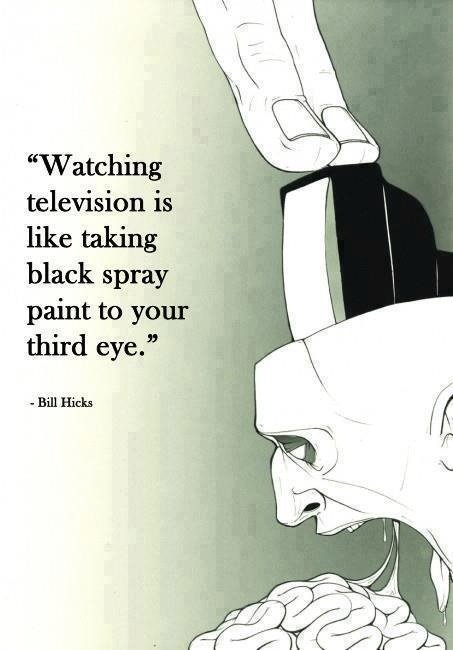
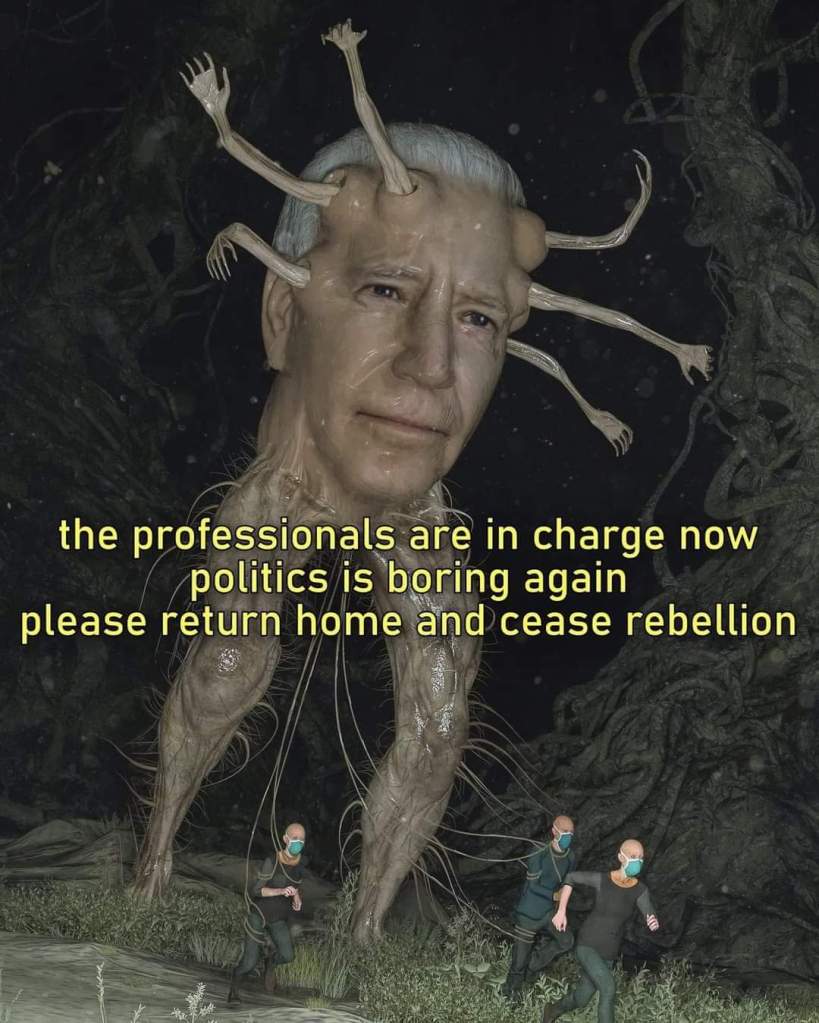
Joe Biden is the luckiest, least scrutinized frontrunner

Eight months ago, Joe Biden was in danger of losing the Democratic nomination. Now he’s a prohibitive favorite for president — who got there with lots of luck and shockingly little scrutiny.

Why it matters: The media’s obsession with Trump — and Trump’s compulsion to dominate the news — allowed Biden to purposely and persistently minimize public appearances and tough questions.

Since Aug. 31, Biden has answered less than half as many questions from the press as Trump — 365 compared with 753 — according to a tally by the Trump campaign, which the Biden campaign didn’t dispute.

Keep reading

The Covidian Cult

One of the hallmarks of totalitarianism is mass conformity to a psychotic official narrative. Not a regular official narrative, like the “Cold War” or the “War on Terror” narratives. A totally delusional official narrative that has little or no connection to reality and that is contradicted by a preponderance of facts.

Nazism and Stalinism are the classic examples, but the phenomenon is better observed in cults and other sub-cultural societal groups. Numerous examples will spring to mind: the Manson family, Jim Jones’ People’s Temple, the Church of Scientology, Heavens Gate, etc., each with its own psychotic official narrative: Helter Skelter, Christian Communism, Xenu and the Galactic Confederacy, and so on.

Looking in from the dominant culture (or back through time in the case of the Nazis), the delusional nature of these official narratives is glaringly obvious to most rational people. What many people fail to understand is that to those who fall prey to them (whether individual cult members or entire totalitarian societies) such narratives do not register as psychotic. On the contrary, they feel entirely normal. Everything in their social “reality” reifies and reaffirms the narrative, and anything that challenges or contradicts it is perceived as an existential threat.

These narratives are invariably paranoid, portraying the cult as threatened or persecuted by an evil enemy or antagonistic force which only unquestioning conformity to the cult’s ideology can save its members from. It makes little difference whether this antagonist is mainstream culture, body thetans, counter-revolutionaries, Jews, or a virus. The point is not the identity of the enemy. The point is the atmosphere of paranoia and hysteria the official narrative generates, which keeps the cult members (or the society) compliant.

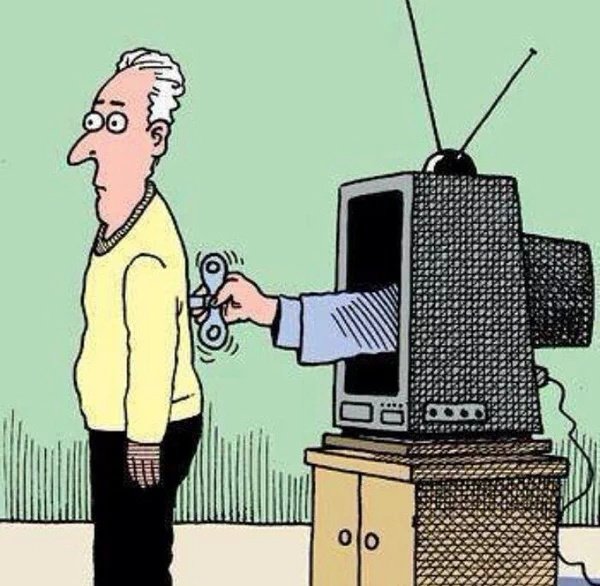
In addition to being paranoid, these narratives are often internally inconsistent, illogical, and … well, just completely ridiculous. This does not weaken them, as one might suspect. Actually, it increases their power, as it forces their adherents to attempt to reconcile their inconsistency and irrationality, and in many cases utter absurdity, in order to remain in good standing with the cult. Such reconciliation is of course impossible, and causes the cult members’ minds to short circuit and abandon any semblance of critical thinking, which is precisely what the cult leader wants.

Moreover, cult leaders will often radically change these narratives for no apparent reason, forcing their cult members to abruptly forswear (and often even denounce as “heresy”) the beliefs they had previously been forced to profess, and behave as if they had never believed them, which causes their minds to further short circuit, until they eventually give up even trying to think rationally, and just mindlessly parrot whatever nonsensical gibberish the cult leader fills their heads with.

Keep reading

Not News But A Juicy Collection Of Narratives – How The New York Times Failed Its Readers

The striving for ‘juicy narratives’ is the biggest mistake of current news media. Their attempt to copy the success of Hollywood dramas by creating narratives has destroyed their credibility. It has put incentives on the wrong aspect of a reporter’s work. Instead of requiring well checked facts the editors are now asking for confirmations of preconceived tales:

What is clear is that The Times should have been alert to the possibility that, in its signature audio documentary, it was listening too hard for the story it wanted to hear — “rooting for the story,” as The Post’s Erik Wemple put it on Friday.

Callimachi is far from the only one guilty of creating fake news to fulfill her editors demand of narratives. The four year long coverage of ‘Russiagate’, the fairytale collection of made up connections between Donald Trump and Russia, was full of such. The editorial push towards narratives is rooted in the desire to create clickbait and to generate a social media echo around the reporting. That may be profitable in the short term but it is also a guarantee for a long term failure.

False of hyped narratives will over time get debunked. People then lose trust in the media that provided them with the fake news. That again will cause a long term loss of readership.

Keep reading