NBC Journalist Arrested in Israel on ‘Very Serious Offenses’

A reporter who is currently working for NBC News was arrested in Jerusalem last week for allegedly praising Hamas and celebrating the terror group’s Oct. 7 terror attacks on social media as they were happening.

Those attacks left at least 1,200 Israelis dead and hundreds more were kidnapped.

According to The Jerusalem Post, 45-year-old freelance reporter Marwat Al-Azza was taken into custody last Friday.

She is described by the Israeli newspaper Haaretz as a Palestinian residing in East Jerusalem.

She had been wanted for questioning by police since last month over pro-Hamas Facebook posts. Last week, prosecutors granted police that request.

Haaretz reported that Al-Azza praised Hamas on her Facebook page while Israeli citizens were being massacred.

The newspaper, Israel’s oldest publication still in print, reported:

“On October 7, Al-Azza put up posts on her personal Facebook account allegedly supporting Hamas terrorism.

“She wrote on the kidnapping of an elderly woman from a Gaza border community, ‘It’s killing me, it’s a black comedy, the old woman looks happy, a bit of action before she dies.’”

Haaretz further reported in other posts on her Facebook page, Al-Azza portrayed the ongoing massacre as a film in which Hamas militants were the stars.

Keep reading

Yet Another Leftist Journalist Arrested On Child Pornography Charges

In the last 12 months alone, two senior producers for ABC and CNN were sentenced to prison for child porn.

We’re starting to sense a trend.

On Monday, Slade Sohmer, 44, the former managing editor of CNN’s now defunct BEME video sharing app and, until a month ago, editor-in-chief of the left-leaning video-driven news site The Recount, was freed on $100,000 bail after he was charged in a Massachusetts court with possessing and disseminating “hundreds of child pornography images and videos.”  He has pled not guilty to two counts of possession of child pornography and two counts of dissemination of child pornography.

Descriptions of the materials in question are indeed horrific, and prosecutors have hinted that Sohmer may have been involved in the production of some videos as well as the abuse of children. Court documents cited by the Berkshire Eagle earlier this week allege that Sohmer’s phone contained disturbing video clips showing boys believed to be as young as 3 years of age being raped and forced to perform sex acts by adults. Assistant District Attorney Marianne Shelvey said this was one of the most “egregious” cases of its kind she has come across.

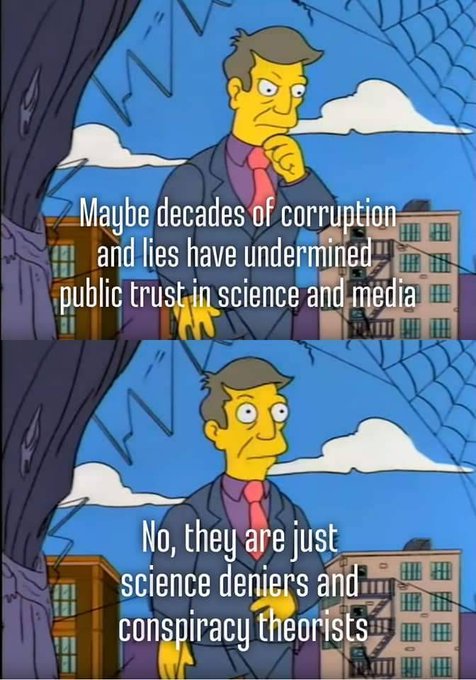
Sohmer’s career history is replete with yellow journalism and attacks on conservatives. The Recount’s bread and butter content for at least a couple years included a steady stream of hatchet job videos targeting “conspiracy theorists,” primarily people who stood against covid mandates and forced vaccination.  

The arrest of the former editor comes not long after the arrest of CNN producer John Griffin for child sexual abuse, as well as the arrest of ABC producer James Gordon Meek on child pornography charges. Some critics argue that the growing list of leftist journalists caught in child pornography scandals helps to explain some of the strange behavior of media outlets where child abuse “networking” is concerned.

Their extreme hostility to stories like Pizzagate, their defense of movies like Cuties, as well as their attacks on the film The Sound Of Freedom make more sense if there is a trend of pedophilia hidden within media circles.          

Sohmer, whose X handle is @Slade, was once praised by John Podesta for ‘sleuthing out the origin of the sinkhole,’ replying to a joke from Slade implying that a sinkhole around Mar a Lago was due to Trump’s ‘glowing orb’ meeting.

Keep reading

MSM Admits “Magical Thinking” Guided Its Reporting On Ukraine… Many Thousands Of Deaths Later

A very short while ago, any US politician or media pundit publicly calling for peace negotiations in Ukraine with Russia’s Putin was branded ‘pro-Kremlin’ and somehow compromised. For example, mainstream media has sought to isolate and cancel thinkers like John Mearsheimer for his realism toward Moscow and the conflict, and urging immediate ceasefire which would require territorial concessions from Kiev. It was only in September that one prominent publication branded him “the world’s most hated thinker.”

But now, at a moment Ukraine’s leadership itself has become more desperate while admitting its forces are facing almost insurmountable odds, the D.C. beltway consensus has clearly and drastically changed, and now it’s apparently okay to admit the following…

The WSJ piece actually calls for a longer-term strategy of confronting Russia, while also admitting that Washington’s approach thus far has been based on “magical thinking”. 

Or else we might just call the establishment narrative to this point fraudulent

Keep reading

Gen-Z TikTokers send Bin Laden’s 2002 ‘Letter to America’ viral: Terror chief’s 9/11 justification wins support among pro-Palestine youngsters who claim their ‘eyes have been opened’ after finding it on Guardian website

An open letter to the US by Osama Bin Laden justifying his 9/11 terror attacks has gone viral after being discovered by pro-Palestine Gen-Z TikTokers on the Guardian website.

The ‘Letter to America’ was circulated amongst British Islamic extremists in 2002, a year after the atrocities, and saw the al-Qaeda leader attempt to justify the murderous acts in New York, Pennsylvania and Virginia that killed nearly 3,000.

It was published on the Guardian’s website in its entirety, based on a translation it obtained, under a link titled ‘Read the Bin Laden letter in full’ – but the newspaper has now removed it after people began sharing it in the context of the Israel-Hamas war.

On TikTok and other social media platforms, video creators appear to have equated the 9/11 mastermind’s views on Palestine with showing solidarity with Palestinian people in the current conflict in the Middle East.

One user wrote: ‘Just read it… my eyes have been opened,’ while another said: ‘I think this has made a lot of people realize that even ‘villains’ can speak the truth.’ 

Bin Laden – who was killed by US troops in a Pakistan operation in May 2011 – espoused deeply anti-Semitic views and conspiracy theories in the letter, and said that the American army was ‘shamelessly helping the Jews fight against us’.

He also sought to justify the indiscriminate slaughter of American citizens because they indirectly fund American military efforts through paying taxes.

He wrote: ‘The American people are the ones who pay the taxes which fund the planes that bomb us in Afghanistan, the tanks that strike and destroy our homes in Palestine, the armies which occupy our lands in the Arabian Gulf, and the fleets which ensure the blockade of Iraq

‘These tax dollars are given to Israel for it to continue to attack us and penetrate our lands. So the American people are the ones who fund the attacks against us, and they are the ones who oversee the expenditure of these monies in the way they wish, through their elected candidates.’

The Guardian’s digital edition of the letter was shared to TikTok by a number of users – seemingly deliberately ignoring Bin Laden’s role as a terrorist warlord responsible for instigating, and inspiring, atrocities across the world.

Nor do most users make any comment on the most extreme comments Bin Laden makes in the manifesto, including calls for the ‘rejection’ of homosexuality and a claim that AIDS was a ‘satanic American invention’.

Keep reading

Blaming Mass Shootings on Mental Illness Doesn’t Address Either Issue

Since a gunman went on a rampage in Lewistown, Maine, killing 16 people, we’ve learned a few things about the shooter, Robert Card, who was found with a fatal self-inflicted gunshot wound after a two-day manhunt. A member of the Army Reserve, Card had recently been committed to a mental health facility after he reported hearing voices and threatened to shoot up the National Guard base in Saco, Maine.

Card’s mental health history has been central to reporting that laid out the lead-up to the deadliest mass shooting in the US this year. Questions of how Card was able to have access to guns, given his psychiatric hospitalization and documented concerns of family and soldiers in his reserve unit, drove much of the coverage. Lax gun laws that allow people like Card to slip through the cracks warrant interrogation, but the reality is that most mass shooters don’t have a mental health history like Card’s, nor is a record of mental illness a good predictor of gun violence.

Card’s ability to carry out this tragedy is a symptom of the gun violence crisis in the US, but the presence of his mental illness is not representative of the issue. In the vast majority of cases of mass violence, mental illness is not considered a primary factor. Attempting to rationalize the horrors of a mass shooting by emphasizing the perpetrator’s mental state does very little to address the larger issue at best, and leads to dangerous mental health stigma at worst.

Keep reading

The New York Times Credulously Embraces the ‘Super Meth’ Theory

story about polysubstance use in today’s New York Times mentions “super meth” four times: once in the headline, once in a subhead, and twice in the body text. “A decade or so ago, Mexican drug lords figured out how to mass-produce a synthetic ‘super meth,'” Times reporter Jan Hoffman writes. “It has provoked what some researchers are calling a second meth epidemic. Popular up and down the West Coast, super meth from Mexican and American labs has been marching East and South and into parts of the Midwest.”

Yet Hoffman never explains what “super meth” means. Instead she links to a widely cited 2021 article in The Atlantic by journalist Sam Quinones. In that piece, which is based on Quinones’ 2021 book The Least of Us, he posits that methamphetamine derived from phenyl-2-propanone (P2P), the dominant method nowadays, is more potent and more hazardous than methamphetamine derived from pseudoephedrine, a process that became less common after the U.S. government restricted access to that precursor.

If that were true, it would be yet another illustration of prohibition’s tendency to make drug use more dangerous: By cracking down on cold and allergy medications containing pseudoephedrine, the government pushed production abroad and encouraged traffickers to use P2P instead, which, according to Quinones, made the resulting methamphetamine purer, more addictive, more physically harmful, and more likely to trigger “mental illness”—so much so that, according to the headline over his Atlantic article, it might not even make sense to “call it meth anymore.” But although Hoffman evidently considers Quinones a credible source, he never offered a plausible reason to believe any of that.

As drug historian David Herzberg notes in a Washington Post review of Quinones’ book, “Quinones has no laboratory or epidemiological evidence that P2P meth is different from ephedrine-produced meth—the ‘super-meth’ theory is based entirely on anecdotes.” Herzberg adds that “journalists were writing equally terrifying things about ‘crack’ cocaine and ephedrine-based meth (and heroin) back in the 1980s and 1990s.”

Quinones himself is hazy on the scientific basis for his theory. “No one I spoke with knew for sure” why “P2P meth” was “producing such pronounced symptoms of mental illness in so many people,” he says.

Claire Zagorski, a paramedic who teaches harm reduction at the University of Texas at Austin College of Pharmacy, questions the assumption underlying that question. “We have no evidence supporting the idea that the meth currently on the market is meaningfully different at a population level,” she writes in Filter, “or that P2P-produced meth is any more or less neurotoxic than ephedrine meth.” Nor is that surprising, since “all meth actually has the same chemical makeup,” and “the only difference is the production method.”

Hoffman avers that “super meth” packs “a potentially lethal, addictive wallop far stronger” than ephedrine-based meth. But on the face of it, you would expect the latter method to produce more potent methamphetamine—exactly the opposite of what Hoffman and Quinones are claiming. An “ephedrine/pseudoephedrine reduction,” the Drug Enforcement Administration notes, yields “high quality d-methamphetamine,” the psychoactive isomer, without unwanted l-methamphetamine. The P2P method, by contrast, “yields lower quality dl-methamphetamine,” a combination of the two isomers.

Quinones concedes that P2P-derived meth is not actually a new thing, noting that “the Hell’s Angels and other biker gangs” used this method before phenyl-2-propanone, which was placed on Schedule II of the Controlled Substances Act in 1980, became harder to come by. In his telling, the key development in the marketing of P2P meth happened sometime around 2006, when Mexican cartels figured out how to “separate d-meth from l-meth,” which he describes as “tricky” and “beyond the skills of most clandestine chemists.” In reality, Zagorski says, “isomer separation is fairly teachable” and “not all that mysterious”:

The cleanest and most straightforward way to remove the L from the psychoactive D isomer is capillary electrophoresis. This process involves feeding a meth sample into a small capillary tube and exploiting differences between the two isomers that cause one to “stick” to the tube’s coating while the other continues on. Anyone with around $4,000 can do this with via a capillary electrophoresis machine, which automates the process to minimize human error and labor.

However challenging the process, it is necessary only because the P2P method yields an inferior mixture compared to the “high quality d-methamphetamine” produced by the pseudoephedrine method. Either way, Zagorski notes, the goal is something like “pharmaceutical-grade meth, the regulated version of which is sold under the brand name Desoxyn.” Yet that “FDA-approved prescription form” of the drug “doesn’t cause ‘cerebral catastrophe'” involving the “violent paranoia, hallucinations, conspiracy theories, isolation, massive memory loss, [and] jumbled speech” that Quinones describes.

Unfazed by the lack of such symptoms in patients who take Desoxyn, Quinones asserts that “methamphetamine is a neurotoxin” that “damages the brain no matter how it is derived.” Still, he says, “P2P meth seems to create a higher order of cerebral catastrophe.”

Why would that be? “One theory is that much of the meth contains residue of toxic chemicals used in its production, or other contaminants,” Quinones writes. “Even traces of certain chemicals, in a relatively pure drug, might be devastating.”

The problem, in other words, is not that P2P meth is especially pure but rather that it contains potentially “devastating” contaminants. Maybe.

Keep reading

Nashville Mayor’s Office, MSM Flips Out After Trans Shooter Manifesto Leaks; Facebook Censors

As the Epoch Times notes:

Metro Nashville Mayor Freddie O’Connell said in a statement on Nov. 6 that he had directed the city’s legal director to initiate an investigation into the leak, but he didn’t address the veracity of the documents. Other agencies were unable to verify the authenticity of the documents when asked to do so by The Epoch Times on Nov. 6.

I have directed Wally Dietz, Metro’s law director, to initiate an investigation into how these images could have been released,” Mr. O’Connell said in the statement. “That investigation may involve local, state, and federal authorities. I am deeply concerned with the safety, security, and well-being of the Covenant families and all Nashvillians who are grieving.”

A spokeswoman for MNPD said there was “no information” they could provide at this time when reached via phone on Nov. 6. So far, the Tennessee Bureau of Investigation said that they can offer no confirmation of the documents, according to a spokesman of the agency.

. . .

Earlier Monday Alex Jones claimed that the Biden DOJ suppressed the document.

Keep reading

Media’s In-House Critics to Reporters: Quit Quoting Palestinians About Civilian Deaths

The devastating explosion at a Gaza hospital on October 17 provoked soul-searching in US corporate media—over the willingness of press outlets to quote Gaza officials who attributed the calamity to an Israeli airstrike.

“News Outlets Backtrack on Gaza Blast After Relying on Hamas as Key Source,” NPR (10/24/23) reported. “The initial coverage of a deadly blast at a Gaza hospital last week offers a fresh reminder of how hard it can be to get the news right—and what happens when it goes awry,” wrote NPR media correspondent David Folkenflik.

“How the Media Got the Hospital Explosion Wrong” was the headline of an Atlantic article by Yascha Mounk (10/23/23), which asserted:

As more details about the blast emerged, the initial claims so credulously repeated by the world’s leading news outlets came to look untenable….

The cause of the tragedy, it appears, is the opposite of what news outlets around the world first reported. Rather than having been an Israeli attack on civilians, the balance of evidence suggests that it was a result of terrorists’ disregard for the lives of the people on whose behalf they claim to be fighting.

The New York Times (10/23/23) offered an editorial mea culpa, saying its initial coverage “relied too heavily on claims by Hamas, and did not make clear that those claims could not immediately be verified.”

(What seems to be the New York Times‘ first mention of the blast—posted on its live feed on the “Israel/Hamas War” at 4:41 pm EDT on October 17—was headed “Hundreds Die in an Explosion at a Gaza Hospital, Setting Off Exchanges of Blame.” The first paragraph concluded, “The authorities blamed an Israeli airstrike, but the assertion was disputed by the Israel Defense Forces, which blamed an errant rocket fired by an armed Palestinian faction.” By 7:32 that evening, the feed was headed, “Israelis and Palestinians Blame Each Other for Blast at Gaza Hospital That Killed Hundreds.”)

Keep reading