Real Life Drama: Tucker County Residents v. AI Data Center Behemoth

As a child, Nikki Forrester dreamed of living in a cabin in the woods surrounded by mountains, trees, water and the outdoor opportunities that came with the natural land. In 2022 — four years after earning her graduate degree and moving to Tucker County from Pittsburgh — Forrester and her partner made that dream a reality when they bought two acres of land near Davis, West Virginia to build a home.

Forrester has thrived in the small mountain town known for its mountain biking, hiking, stargazing, waterfalls and natural scenery. She and her partner moved into their new home in February. Hiking and biking trails are right outside her front door. In the winter, she said, snow piles up making the nearby mountains look like “heaven on Earth.”

It’s been quite literally a dream come true.

“I feel like I’ve never felt at home so much before. I love being in the woods. I love this community. It’s super cheesy, but this was my childhood dream and now it’s actually come true,” Forrester said. “It felt so good to set down roots here. We knew Davis was where we wanted to start our future.”

But in March, one small public notice posted in the Parsons Advocate — noticed by resident Pamela Moe, who scrambled to find answers after seeing it — changed Forrester’s assumptions about that future.

A Virginia-based company, Fundamental Data, was applying for an air permit from the West Virginia Department of Environmental Protection for what it called the “Ridgeline Facility.” The company’s heavily redacted application showed plans to build an off-the-grid natural gas power plant between Thomas and Davis. That power plant will likely be designed to power an enormous data center just a mile out from Tucker County’s most populous and tourist-attracting areas.

Earlier this month, representatives for Fundamental Data — who did not respond to requests for comment on this article — told the Wall Street Journal that the facility could be “among the largest data center campuses in the world,” spanning 10,000 acres across Tucker and Grant counties if fully realized.

Now, Forrester said, she and her neighbors are in the middle of what feels like a “fight for [their] lives” as they attempt to learn more about the vague development plans and fight against “big data.”

Her images of the future — skiing on white snow, hiking through waterfalls, looking up at clear and starry nights all with one-of-a-kind mountain scenery below — now exist in the shadows of a looming natural gas plant, an industrial complex and the contaminants that could come with them. The fresh, mountain air that surrounds her home and community could be infiltrated by tons of nitrogen oxide (gases that contribute to smog), carbon monoxide, particulate matter and other volatile organic compounds, per the company’s air permit application.

“Honestly, I feel like if this happens, it will destroy this place. People come here because it’s remote, it’s small, it’s surrounded by nature. If you have a giant power plant coughing up smoke and noise pollution and light pollution, it puts all of those things in jeopardy,” Forrester said. “It would honestly make me question whether I would want to live here anymore, because I do love the landscapes here so much, but they would be fundamentally altered and, I think, irreparably harmed if this actually comes to be.”

Keep reading

The Real Opioid Crisis Isn’t Prescriptions—It’s Prohibition

Purdue Pharma recently reached a $7.4 billion settlement with all 50 states and the District of Columbia over its alleged role in fueling the opioid crisis through aggressive marketing of OxyContin. Regardless of the case’s merits, this landmark deal highlights what can happen when an expedient narrative replaces data-driven public policy.

Nowhere is the gap between narrative and data more clear than in West Virginia, the hardest-hit state in the country. While a wave of books and Netflix docudramas has promoted an oversimplified and often misleading storyline, new data from the West Virginia Department of Health cast a glaring spotlight on the human cost of “prescription opioid prohibition”—a policy that has failed in every tangible way. 

Overdose deaths in the state have doubled as illicit fentanyl and other street drugs have replaced the much safer prescription pills. Meanwhile, policymakers and regulators have demonized pain medications, causing real harm to patients. Many patients can no longer access legal prescriptions and instead turn to the streets, where they have an increased risk of death from taking adulterated or counterfeit pills. Policymakers addressed the wrong problem with the wrong tools—and made the crisis worse.

West Virginia Department of Health data illustrate this deadly shift. From 2015 to 2023, as prescription opioid access declined, overdose deaths in West Virginia soared—even though overdoses from prescription medications declined slightly—because users and abusers turned to riskier street drugs.

Keep reading

‘Huge Win’: West Virginia Governor Issues Executive Order Allowing Religious Exemptions

West Virginia Gov. Patrick Morrisey on his first full day in office issued an executive order allowing for religious exemptions from mandatory school vaccinations, ending one of the most restrictive vaccination policies in the country.

“We’re ensuring that the current policy, which does not recognize a religious and conscientious exemption for vaccines — that is being changed,” he said at a news conference.

The exemption will be available to anyone who wants to send their child to school but objects on “religious or conscientious grounds” to one or more of the vaccines required by the state’s compulsory immunization law.

To comply with the new order parents need only provide a written statement on why they object to the vaccines.

West Virginia state law requires children to receive vaccines for chickenpox, hepatitis B, measles, meningitis, mumps, diphtheria, polio, rubella, tetanus and whooping cough before starting school. The state does not require COVID-19 vaccinations for children.

West Virginia was one of a tiny minority of states that didn’t recognize religious exemptions for vaccines. “Today that changes,” Morrisey said.

Keep reading

National ARM’s Grand Jury Petition ‘Vaccine’ Crime Evidence Being Sent to Louisiana and West Virginia Governor and Attorneys General

As a board member of the National American Renaissance Movement, I am pleased to announce that National ARM is sending a 92 page Grand Jury petition containing evidence of C19 ‘vaccine’ crimes to the Governor and the State Attorney General of Louisiana and West VirginiaNational ARM’s Grand Jury Petitions State that C19 shots should be, “Banned Immediately and Criminal Investigations Should Begin”

Missouri brings the total to 25 states to receive the Grand Jury Petition. Note: this is not litigation. This is an attempt to spur appropriate investigations by providing evidence and to hopefully prompt someone to do their job…

Previously, this evidence was submitted to the Governors, Attorneys General, in MissouriHawaii, Kentucky, and Massachusetts New YorkVirginiaOregon and South DakotaWashington State and NevadaIndianaGeorgiaArizonaPennsylvaniaNew MexicoSouth CarolinaOhioCaliforniaTennesseeTexasIdahoFlorida and New Jersey

This document was prepared by National American Renaissance Movement President, and NJ criminal defense and trial attorney, David Meiswinkle. This 92 page document lists 153 exhibits of evidence and asserts that state and federal crimes have been committed. This document demands an immediate ban of C19 ‘vaccines’ and calls for criminal investigations. The document also lists persons of interest.

Crimes include, murder, racketeering, biological weapons laws violations, treason, and genocide. National ARM intends to submit evidence of vaccine crimes to local prosecutors and law enforcement in all 50 states. This is partly about removing plausible deniability.

Keep reading

West Virginia court rules that gender-affirming surgery should be paid for by tax payer, in landmark decision

Gender-affirming surgery must be paid for by state healthcare plans, a Richmond court has ruled.

The federal appeals court is the first in the country to say that transition should be covered for transgender people with government-sponsored insurance.

The decision arose out of a set of cases in North Carolina and West Virginia, in which transgender residents argued that their surgeries should be funded by either employee health plans or state-subsidized Medicaid.

State officials said that their policy of not covering transgender surgeries was based on financial concerns and not bias.

But the Richmond-based 4th US Circuit Court of Appeals ruled 8-6 in the case on Monday.

The courts decision does not mean that transition will automatically be covered for transgender people with government-sponsored insurance. The ruling could be appealed in the Supreme Court, which recently allowed Idaho to enforce a ban on gender-affirming care for minors. 

But the powerful Court has been somewhat unwilling to engage on the issue and has allowed multiple 4th Circuit rulings supporting transgender rights stand.

In West Virginia, transgender Medicaid users challenged the state’s policy, which has by law banned the funding of ‘transsexual surgeries’ since 2004. 

In North Carolina, state employees challenged their coverage which has not covered surgeries for gender dysphoria since 2018.

In January, Ohio become the 23rd state to ban transgender care for minors, amid a wave of laws passed by Republican-controlled legislatures in recent years.

‘The coverage exclusions discriminate on the basis of sex and gender identity, and are not substantially related to an important government interest,’ Judge Roger Gregory, first appointed by former President Bill Clinton and re-appointed by former President George W. Bush, wrote in the majority opinion.

Keep reading

Court Overturns West Virginia Transgender Sports Ban

A federal appeals court has blocked a West Virginia law that banned students from participating in single-sex sports teams that don’t match their biological sex.

The 4th Circuit Court of Appeals issued an order and opinion on April 16 that blocks enforcement of the Save Women’s Sports Bill on grounds that the law violated the constitutional rights of the plaintiff, a 13-year-old eighth-grade track athlete who was born male but identifies as female.

The measure was signed into law by West Virginia Gov. Jim Justice in 2021. It was quickly challenged in court by the American Civil Liberties Union (ACLU), which brought the lawsuit on behalf of Becky Pepper-Jackson, the transgender student who was prevented from joining the girls’ cross-country team.

The ACLU argued that Becky Pepper-Jackson (referred to in court filings by the initials B.P.J.), who was diagnosed with gender dysphoria in 2019 and was treated with puberty blockers followed by “gender-affirming” hormone therapy, never underwent male puberty and so doesn’t have any athletic advantage over naturally-born girls.

The group claimed that the West Virginia law discriminated against children like B.P.J. “on the basis of sex and transgender status” in violation of the U.S. Constitution and Title IX, including the Equal Protection Clause of the Fourteenth Amendment, which prohibits a state from denying a person within its jurisdiction “equal protection of the laws.”

Keep reading

Recommended reading…

Get it HERE.

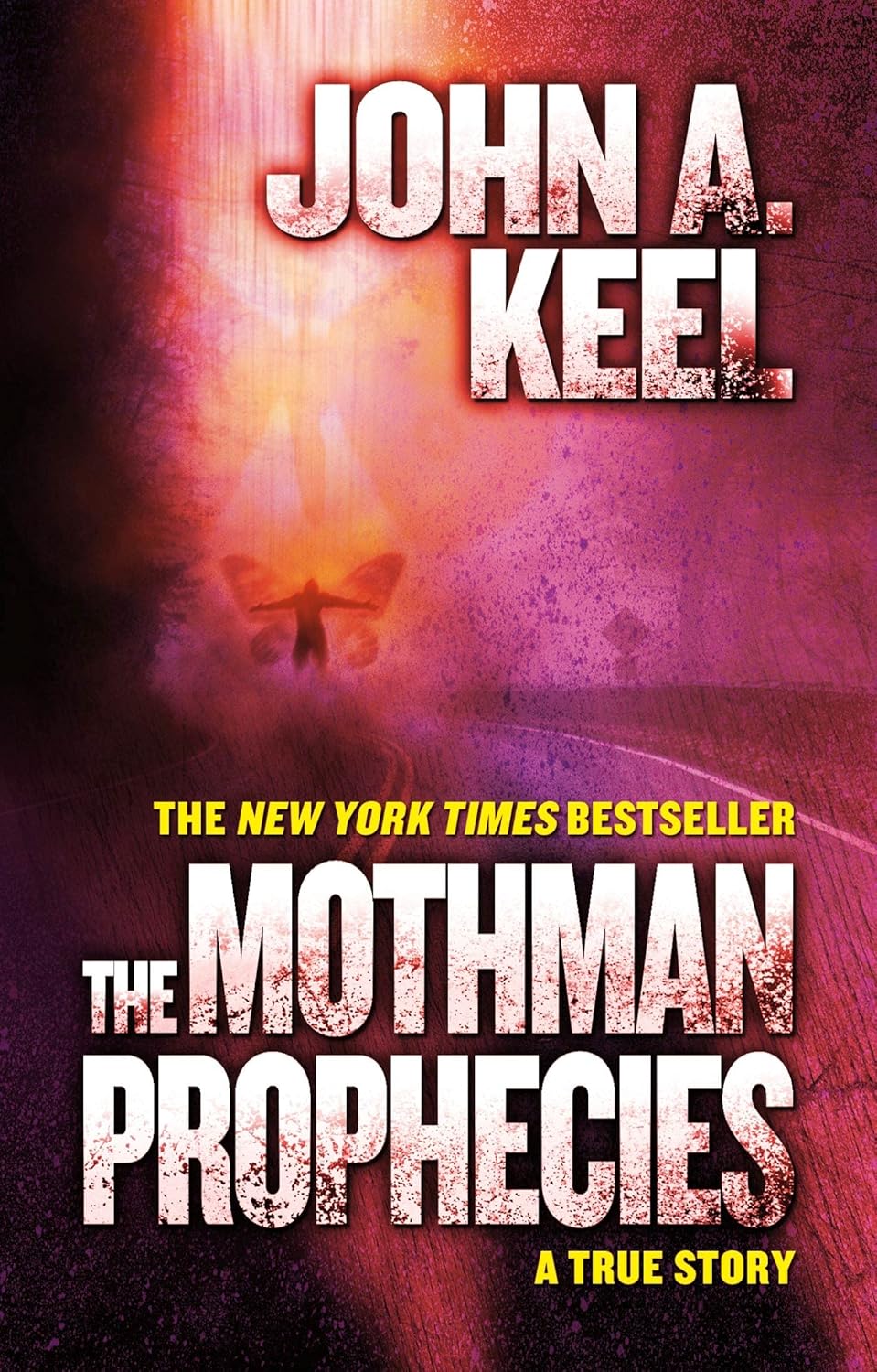
Translated into over thirteen languages and now a major motion picture, John Keel’s The Mothman Prophecy is an unsettling true story of the paranormal that has long been regarded as a classic in the literature of the unexplained.

West Virginia, 1966. For thirteen months the town of Point Pleasant is gripped by a real-life nightmare culminating in a tragedy that makes headlines around the world. Strange occurrences and sightings, including a bizarre winged apparition that becomes known as the Mothman, trouble this ordinary American community. Mysterious lights are seen moving across the sky. Domestic animals are found slaughtered and mutilated. And journalist John Keel, arriving to investigate the freakish events, soon finds himself an integral part of an eerie and unfathomable mystery.”

West Virginia Senate President Says Marijuana Could Be Legalized To Help Curb Fentanyl Epidemic, ‘Sooner Than Later’

West Virginia’s Republican Senate president says that legalizing marijuana could help ease the state’s crush of fatal fentanyl overdoses, predicting that the policy change will come “sooner than later” but probably not in the new legislative session.

“My gut tells me it might not happen this year,” Senate President Craig Blair (R) said at a media event last week, according to West Virginia Public Broadcasting. “But you’re going to see it sooner than later, because that is a way to combat the issue.”

Data from the Centers for Disease Control and Prevention (CDC) show that West Virginia had more fatal fentanyl overdoses per capital in 2022 than any other state in the nation.

The Senate president also noted that he sees a lot of West Virginia license plates at marijuana dispensaries when he’s visiting other states, according to West Virginia watch.

Speaking to the fentanyl problem, Blair also claimed at the event that “there is a problem in the state of West Virginia when marijuana, over 70 percent of it that gets tested, has fentanyl on it.” He is supporting legislaiton that would apply the death penalty to people who sell fentanyl.

It’s not clear what data, if any, Blair was referencing with that assertion. The organization Partnership to End Addiction says there’s “no solid evidence that marijuana is being laced with fentanyl.”

House Minority Leader Sean Hornbuckle (D) also discussed his own party’s support for legalization in West Virginia.

“We’re a believer in adult-use cannabis,” he said, pointing out that policy change “polls well into the 60s” in terms of percent of voter support.

“That is something that we can have in our toolkit that can help pay for items,” he told the event’s attendees.

Keep reading

West Virginia State Police Investigation: 10 more minors, 42 more women in total to sue West Virginia State Police over hidden cameras

Wheeling West Virginia Attorney Teresa Toriseva sent a notice of legal action to Interim WVSP Superintendent Colonel Jack Chambers and West Virginia Attorney General Patrick Morrisey on April 21 saying 42 women, including 10 minors, plan to file lawsuits against the West Virginia State Police.

The minors attended Junior Trooper Academy.

According to a letter sent by Cpl. Joseph Comer, a member of the WV State Police, to state lawmakers, Governor Jim Justice, and the office of the Attorney General on February 16, a hidden camera or cameras were placed and operated inside the female locker room at the State Police Academy. Toriseva says her clients and other female Junior Trooper program attendees accessed and used the female locker room at the Academy during the time the anonymous letter states the cameras were in use. Toriseva also says the taping of the females in the Academy did not end until 2020, the same time the Junior Trooper Program was discontinued in 2020.

“Our ongoing investigation shows rampant sexual misconduct, including hidden videotaping, toward female cadets and others, while they attended the Academy,” Toriseva told 7News. “Much of the conduct is through witness provided evidence.”

Toriseva says these women that were videotaped have experienced varying levels of physical and emotional abuse

“All of these women were victims of a civil conspiracy perpetrated by instructors, staff and leadership at the West Virginia State Police Academy,” the letter states. “Accordingly, these women will bring suit seeking all available damages under the law.”

Keep reading

Supreme Court rules West Virginia transgender athletes can compete on female sports teams

The Supreme Court has ruled that transgender athletes in West Virginia can compete on female school sports teams in response to a challenge by the state to allow it to enforce a law that prohibits such athletes from doing so.

In a brief, unsigned order, the justices denied the state’s emergency request to lift an appeals court’s injunction, which enabled a transgender girl to compete on her middle school’s female teams until the three-judge panel reaches a final decision.

The appeals panel is now set to hear the student athlete’s appeal in full, and the case could ultimately return to the high court.

Justice Samuel Alito in a statement joined by Justice Clarence Thomas dissenting from the decision said the case “concerns an important issue that this Court is likely to be required to address in the near future.”

West Virginia in 2021 became the seventh state in the nation — and the sixth that year — to enact a law prohibiting transgender women and girls from competing on female sports teams. The measure, officially titled the “Save Women’s Sports Act,” bars transgender female athletes from participating in sports consistent with their gender identity in public elementary schools, high schools and universities.

West Virginia Gov. Jim Justice (R) could not cite a specific example of a transgender athlete with an unfair competitive advantage in his state when asked during an interview following his approval of the bill, but he said his experience as a girls’ basketball coach led him to believe the legislation is fair.

Keep reading