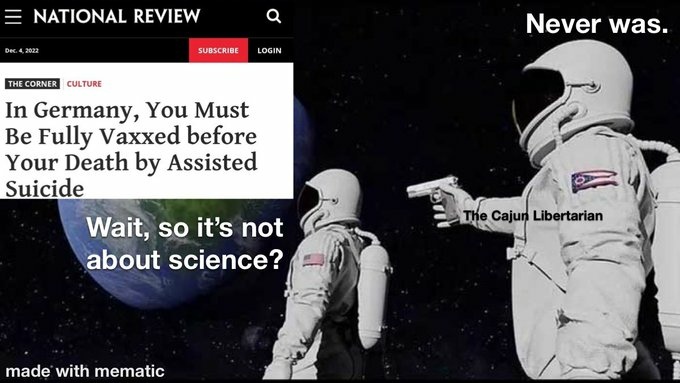
Makes perfect sense…

For some who find the Fibonacci sequence used to entanglement qubits to be baffling, which is a crazy topic we published a video about here, you’d best grab onto something solid.
Recently, a group of scientists discovered that quantum systems may mimic wormholes, theoretical shortcuts in spacetime, in that they permit the instantaneous transfer of information between distant places.
Despite the fact that quantum particles are unaffected by gravity in the same manner that classical objects are, the study team believes their results may have ramifications for investigating quantum gravity. The study appeared this week in the journal Nature.
“The relationship between quantum entanglement, spacetime, and quantum gravity is one of the most important questions in fundamental physics and an active area of theoretical research,” California Institute of Technology physicist Maria Spiropulu, the paper’s primary author, claimed in a press release. “We are excited to take this small step toward testing these ideas on quantum hardware and will keep going.“
It’s time to take a breather. It should be made clear that the researchers did not really transmit quantum information via a spacetime rip, which in principle would unite previously disconnected parts of the universe.
Think of it as folding a sheet of paper in half and sticking a pencil in between the folds. Since the paper represents spacetime, you may use it as a gateway to connect two seemingly inaccessible locations.
As millions of Americans are struggling just to make ends meet, the National Science Foundation (NSF) under fake president Joe Biden is shelling out “nearly $40 million into social media censorship grants and contracts,” according to a new report from the Foundation for Freedom Online (FFO).
To keep a lid on what people say online, the NSF is throwing American taxpayer money at all sorts of projects aimed at controlling what gets posted to the internet. Since Biden started occupying the Oval Office, some $38.8 million has been spent by the NSF to battle “misinformation.”
A total of 64 grants totaling $31.8 million were also handed over to 42 colleges and universities to conduct “research” into the concept of “stopping viral ideas” – meaning ideas that people come up with themselves as opposed to the ones being fed to them by the globalist deep state.
The claim is that said research is “neutral” and “scientific” in nature, but the descriptions slapped on some of the grants openly and explicitly indicate that their true aim is to “explicitly target ‘populist politicians’ and ‘populist communications’ to scientifically determine ‘how best to counter populist narratives’.”
French researchers have reanimated over a dozen prehistoric viruses which have been trapped deep within the Siberian permafrost for nearly 50 million years, according to a pre-print study.
After obtaining seven ancient permafrost samples, scientists from the French National Centre for Scientific Research were able to document 13 never-before-seen viruses that had been lying dormant in the ice, Science Alert reports.
The same researchers found a 30,000-year-old virus in 2014 which was trapped in permafrost. Notably, it was still able to infect organisms. Now, they’ve beaten their own record with a find that’s 48,500 years old, which they named Pandoravirus yedoma, according to Science Alert.
The scientists, who called these “zombie viruses” a public health threat, pointed to global warming as an ongoing risk that could result in the release of deadly pathogens from long ago.
“Due to climate warming, irreversibly thawing permafrost is releasing organic matter frozen for up to a million years, most of which decomposes into carbon dioxide and methane, further enhancing the greenhouse effect,” the authors wrote. “Part of this organic matter also consists of revived cellular microbes (prokaryotes, unicellular eukaryotes) as well as viruses that remained dormant since prehistorical times.“
The pineal gland in the human brain possesses structures remarkably similar to those in our eyes. It also has strikingly similar faculties. This gland has cells that act as light receptors, as our retina has, and a structure comparable to the vitreous, the gel-like substance between the retina and lenses of our eyes. Something like a lens also exists in the pineal gland.
Scientists are still learning much about the pineal body. It has been known in both Eastern and Western belief systems as the seat of human consciousness. Eastern spiritualism holds that eyes exist all over the body in the form of apertures—acupuncture points. Western science is also coming to grasp that the pineal body is a kind of “third eye.”
For years, scientists recognized similarities between the pineal body and our eyes. In 1919, Frederick Tilney and Luther Fiske Warren wrote that said similarities prove the pineal gland was formed to be light-sensitive and possibly have other visual capabilities.
More recently, in 1995, Dr. Cheryl Craft, chair of the department of cell and neurobiology at the University of Southern California, wrote about what she called the “mind’s eye.”
“Under the skin in the skull of a lizard lies a light-responsive ‘third eye’ which is the … equivalent of the bone-encased, hormone-secreting pineal gland in the human brain. The human pineal is denied access to light directly, but like the lizard’s ‘third eye,’ it shows enhanced release of its hormone, melatonin, during the night,” she wrote. “The pineal gland is the ‘mind’s eye.’”
Tiny human adrenal glands similar to those found in 4-month-old fetuses have been grown from stem cells in the lab for the first time. The achievement may help to develop treatments for conditions in which these glands don’t function properly.
Adrenal glands are located in the kidneys and make molecules that are involved in our metabolism, our response to stress and the production of sex hormones.
Previous attempts to grow small versions of the glands from induced pluripotent stem (IPS) cells – adult cells that have been coaxed to revert to a form where they have the potential to develop into almost any cell type – have failed to create something similar to the glands found in the body.
A controversial Harvard scientist says he is launching an expedition to retrieve a meteor that he believes is actually alien technology lying at the bottom of Pacific Ocean.
In April, the US Space Command confirmed that a meteor that hit Earth in January 2014 did come from another solar system and is therefore the first known interstellar object.
US Space Command officials have said that the meteor, measuring just 1.5 feet across, ‘was indeed an interstellar object’.
Their confirmation means the famous interstellar object known as Oumuamua, discovered in 2017, is actually the second interstellar object to visit our solar system.
But Harvard physicist Avi Loeb claims that the object is instead a piece of alien technology.
‘Our discovery of an interstellar meteor heralds a new research frontier,’ Loeb wrote in The Debrief.
‘The fundamental question is whether any interstellar meteor might indicate a composition that is unambiguously artificial in origin.
A defrocked philosopher and bon viveur, Giordano Bruno committed a heinous crime: his philosophy did not agree with the official science embodied by the Catholic Church. Bruno thought the earth rotated around other planets and the universe was infinite: real heresy. After eight years of detention, unlike Galileo, he refused to recant and was burned at the stake in AD 1600.
Bruno’s end was extreme. Although it would not happen nowadays, the persecution principle is alive and kicking. It has been energised but also brought to the surface by the Covid pandemic.
In the effort to silence alternative voices, widespread use was made not only of censorship, but of tactics of suppression that damaged the reputations and careers of dissenting doctors and scientists, regardless of their academic or medical status and regardless of their stature prior to expressing a contrary position. In place of open and fair discussion, censorship and suppression of scientific dissent has deleterious and far-reaching implications for medicine, science, and public health.Shir-Raz, Y., Elisha, E., Martin, B. et al. Censorship and Suppression of Covid-19 Heterodoxy: Tactics and Counter-Tactics. Minerva (2022). https://doi.org/10.1007/s11024-022-09479-4
The above is taken from a study that explored the experiences and responses of doctors and research scientists from different countries who have been targets of suppression and/or censorship following their publications and statements about Covid-19 that challenged official views. Trust the Evidence reviewed this recent study and summarised its findings.
With schools teaching sex and gender ideology beginning in kindergarten, the Biden administration encouraging early medical treatments for gender dysphoria, and social media influencers discussing the topic, a record number of adolescent girls believe they are transgender and are transitioning to live as males.
Concerned adults are sounding the alarm on the lack of scientific studies to support transgender medical treatments that permanently alter a young person’s physiology and leave their mental health issues unresolved.
Child and adolescent psychiatrist Miriam Grossman, who has been a mental health professional for 40 years, said the gender industry is built on the lies of one troubled psychologist.
“The person who came up with the theory was Dr. John Money, and he came up with this idea that a person’s biology—their body, their chromosomes—is completely separate from their feeling of whether they are male or female,” Grossman said during a Sept. 23 interview for EpochTV’s “American Thought Leaders” program.
British scientists have successfully grown fillet steak in a laboratory – and it could be available to buy as early as next year.
3D Bio-Tissues (3DBT), a spinoff from Newcastle University, produced three small prototype fillets, each weighing just 5g each.
According to the team, when pan fried, the fillets seared easily and showed heavy caramelisation, with aromas ‘identical to those of barbecued meat’.
Che Connon, Chief Executive of 3DBT, said: ‘We are extremely pleased with the results of our first prototype which has exceeded our expectations in terms of integrity, aroma, texture and more.
‘We believe our prototypes to be some of the first fillets of cultivated meat in the world, representing a ground-breaking development for the industry.’
 Hellbound and Down
You must be logged in to post a comment.