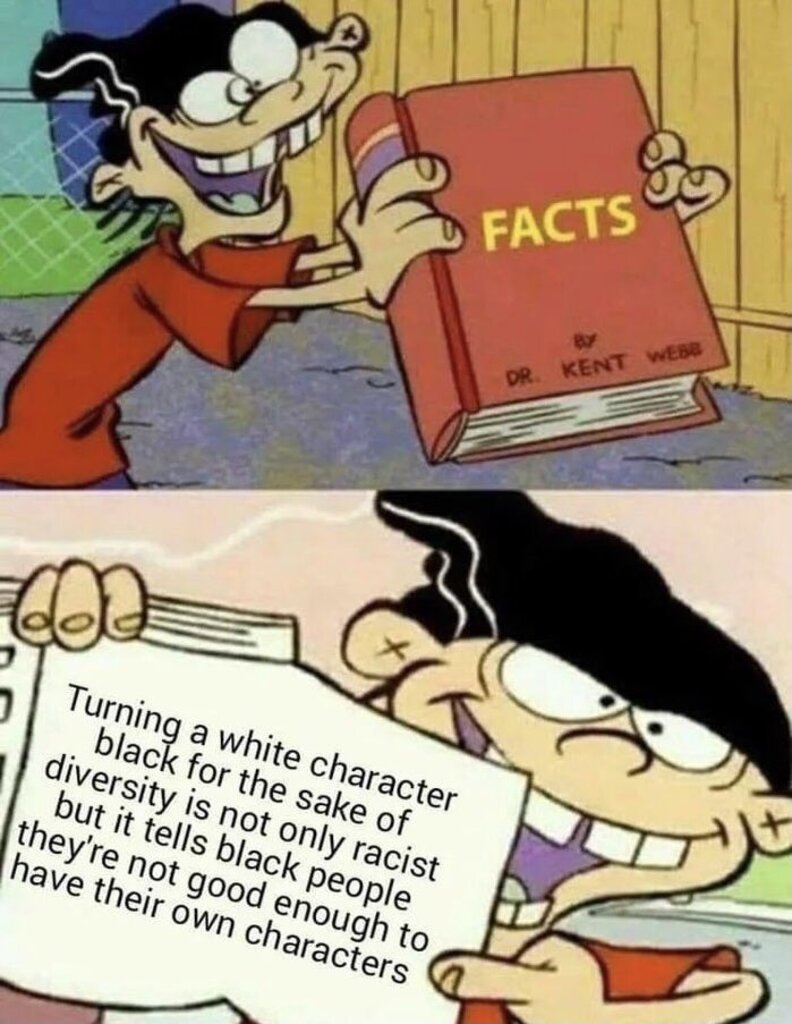
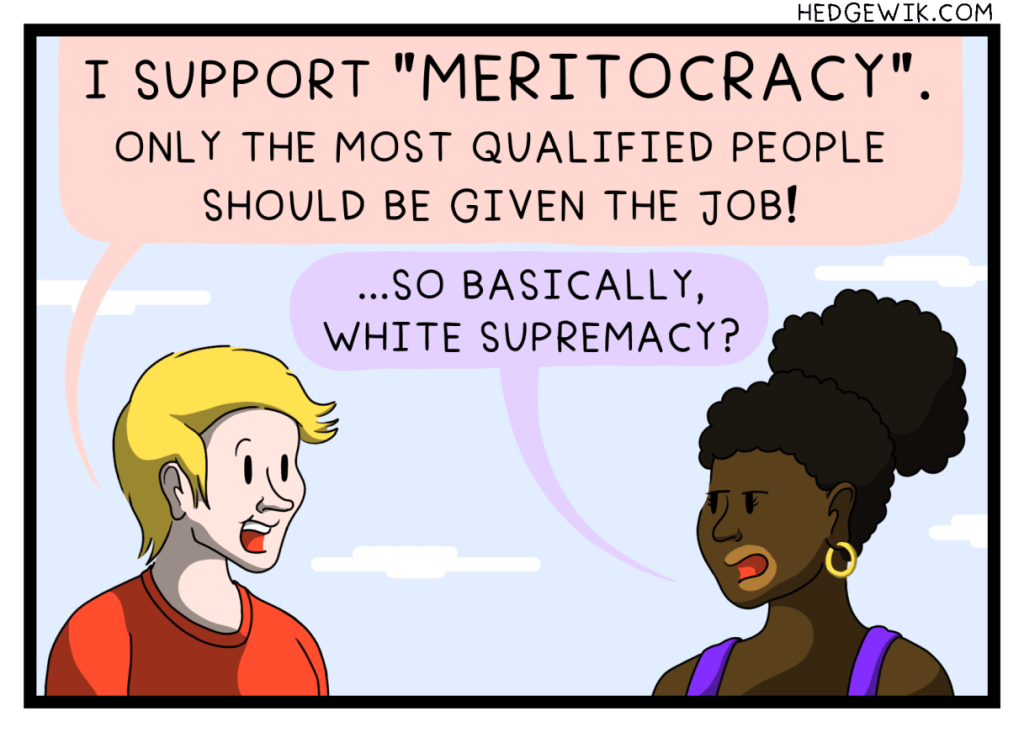
Remember this?


It’s hard to be surprised anymore over what the left sees racism in. From traffic lights to evergreen trees, there’s really no end. Now, thanks to Transportation Secretary Pete Buttigieg, that list is growing to include infrastructure (according to its true definition, not Sen. Kirsten Gillibrand’s).
During an interview with theGrio’s White House correspondent April Ryan, Buttigieg explained how roads and bridges divide communities along racial lines and said there’s “racism physically built” into American infrastructure.
“If you’re in Washington, I’m told that the history of that highway is one that was built at the expense of communities of color in the D.C. area,” he said. “There are stories and I think Philadelphia and Pittsburgh [and] in New York, Robert Moses famously saw through the construction of a lot of highways.”
This “wasn’t just an act of neglect,” he said, but was a “conscious choice.”
Buttigieg is currently working with the Biden administration on the $2.25 trillion “infrastructure” plan; less than 6 percent actually goes toward roads and bridges, however.
The Centers for Disease Control and Prevention (CDC) deemed racism a “serious” public health threat, according to an entry published on the agency’s website.
In an entry titled “Racism is a Serious Threat to the Public’s Health,” the agency asserts racism is intricately intertwined with public health matters:
A growing body of research shows that centuries of racism in this country has had a profound and negative impact on communities of color. The impact is pervasive and deeply embedded in our society—affecting where one lives, learns, works, worships and plays and creating inequities in access to a range of social and economic benefits—such as housing, education, wealth, and employment. These conditions—often referred to as social determinants of health—are key drivers of health inequities within communities of color, placing those within these populations at greater risk for poor health outcomes.
The CDC cites data suggesting racial and ethnic minority groups experience higher rates of health conditions, including hypertension, diabetes, and heart disease “when compared to their White counterparts.”
Amid the disturbing rise in attacks on Asian Americans since March 2020 is a troubling category of these assaults: Black people are also attacking Asian Americans.
White people are the main perpetrators of anti-Asian racism. But in February 2021, a Black person pushed an elderly Asian man to the ground in San Francisco; the man later died from his injuries. In another video, from New York City on March 29, 2021, a Black person pushes and beats an Asian American woman on the sidewalk in front of a doorway while onlookers observe the attack, then close their door on the woman without intervening or providing aid.
As the current president of the Association for Asian American Studies and as an ethnic studies and critical race studies professor who specializes in Asian American culture, I wanted to address the climate of anti-Asian racism I was seeing at the start of the pandemic. So in April 2020, I created a PowerPoint slide deck about anti-Asian racism that my employer, the University of Colorado Boulder, turned into a website. That led to approximately 50 interviews, workshops, talks and panel presentations that I’ve done on anti-Asian racism, specifically in the time of COVID-19.
The point I’ve made through all of those experiences is that anti-Asian racism has the same source as anti-Black racism: white supremacy. So when a Black person attacks an Asian person, the encounter is fueled perhaps by racism, but very specifically by white supremacy. White supremacy does not require a white person to perpetuate it.

CNN has developed a reputation for finding offense around every corner, but the liberal network was mocked on Wednesday for taking it a step further and declaring certain text fonts “communicating Asianness” can be racist.
“CNN has reached the epitome of ‘we’re out of stuff to pretend to be outraged by this week for clicks’ if they’re surmising which fonts are racist,” political satirist Tim Young told Fox News.
A font, defined as a set of type or characters all of one style, can “perpetuate problematic stereotypes,” according to CNN. The network’s verified Twitter account wrote, “For years, the West has relied on so-called ‘chop suey’ fonts to communicate ‘Asianness’ in food packaging, posters and ad campaigns. But such fonts perpetuate problematic stereotypes,” to accompany a report examining the theory.
“This piece leaves me with more questions than virtue signals,” Young said. “Which fonts belong to which demographics? Does this mean Times New Roman is a Caucasian font? Is the old typewriter font for elderly people? Are there straight and gay fonts or fonts based on the 54 genders? I need to know. I’m so confused at this point.”
I recently got asked to comment privately about Thomas Sowell’s work and why his views about racism and personal responsibility are so anathema to Critical Race Theory. The short answer is, obviously, that not only does he disagree and not only is he at least significantly right about what he’s saying, he’s also putting responsibility on what Theory considers, in a not-at-all-racist way, to be a permanent victim class. That’s simply not allowed. Critical Race Theory ultimately seeks to “empower” blacks and (kind of) other “minoritized races” by forcing onto them and leveraging a perpetual victimhood status. Admittedly, this clearly has some short-term practical efficacy, though that comes at significant, if not Pyrrhic, costs.
This isn’t empowerment, though. It’s disempowerment, even if we discount the other costs of such a not-at-all-racist doctrine. It’s really important to understand that the Woke movement is significantly about deferring responsibility from groups it defines as “victims of systemic oppression,” which it, in turn, defines as ordinary and all-but-permanent states of affairs that are woven into the very fabric of society. That’s one of the main points of the whole Woke project: to make “it’s not our fault; nothing is” a motto for the “oppressed.” So when someone like Sowell tells people that there’s some issue with that inherently disabling perspective, or with the visibly and very discriminantly abusive “politically black culture” (“Blackness”) that has risen up around it, advocates of Theory and the grifters who can use the narrative of perpetual victimhood to their own advantage get really mad at him.
The University of Miami Law School is facing a controversy over how to handle racist comments directed against white students – with objections over a double standard at the university.
It is increasingly common to read anti-white commentary in the media, including a column recently from Elie Mystal writer for Above the Law and The Nation’s justice correspondent who lashed out at “white society” and how he strived to maintain a “whiteness free” life in the pandemic.
Miami Law School has been silent in the face of complaints filed against student Jordan Gary after she posted her comments publicly on Instagram.
Gary publicly declared that she “hate[s] white people,” and noted that “People always tell me like ‘hate is such a strong word. And yes it is, but these are some strong ass stories I heard. And until I can figure out how to reconcile that in my head, and in my heart, I hate white people.” According to her LinkedIn page, Gary is the president of the Black Law Students Association and also the writing editor for the Race & Social Justice Law Review at the university.
Conservative sites asked Miami’s Dean for a comment but there has been no public statement even after the filing of complaints.
The issue of anti-white commentary raises a subject so sensitive that few universities are willing to openly discuss it. As will come as little surprise to many on this blog, my default remains with free speech, particularly for comments made outside of a school on social media. That does not mean that schools should not denounce intolerant or racist speech. However, these comments are bound up with an array of personal, social, and political issues for students like Gary. I would rather discuss these views than seek to punish their expression.
The University of Oregon’s School of Journalism and Communication paid New York Times journalist Nikole Hannah-Jones, the writer behind the anti-historical “1619 Project,” for a Zoom lecture in February on “1619 and the Legacy that Built a Nation,” as first reported by Campus Reform.
Hannah-Jones raked in $25,000, evident by a Freedom of Information Request filed by Campus Reform. The Feb. 19 event was co-sponsored by the university’s Office of the President, Office of the Provost, and Division of Equity and Inclusion, among other groups.

You must be logged in to post a comment.