
Orwellian discourse, cont.

Many on social media were outraged that a journalist with a celebrated 47-year career was undone by what using an racial slur in an unintentionally offensive manner.
“This reads like a confession procured by the Khmer Rouge. It’s both ridiculous and terrifying,” replied Andrew Sullivan.
“A culture that lacks grace is both punitive and miserable. Does intent matter? Does forgiveness exist?” asked David French.
“It is now official NYT policy that for some words, intent does not matter, and it only takes one strike to sink a 47-year career,” said Reason editor-at-large Matt Welch.
“This reads like a Bolshevik at his own show trial admitting he’d betrayed the revolution even though he never meant to betray the revolution because he loves the revolution,” said Peter Savodnik of Vanity Fair.
“Racism has never done this country any good, and it needs to be fought against, not put under new management for different groups.”
Thomas Sowell
On Friday’s broadcast of HBO’s “Real Time,” host Bill Maher suggested racism in America is exaggerated by “radicals,” such as members of the Marxist political organization Black Lives Matter.
“Is the picture of America that’s presented by the radicals, I would say — Black Lives Matter, some of them, the anti-racists — of America 2021, is it an accurate picture? Because sometimes I’m like, ‘Are they talking about 2021?’” asked Maher on his show, according to a report by Daily Beast.
“Am I wrong to not want to see race all the time?” added Maher. “Because that’s how I was brought up. Like, that’s what a good liberal does, is you don’t see race. And now, they switched it all around, and I’m bad because I don’t see it all the time. Is ubiquity even effective? To make people aware of this issue at every turn?”
Academics at the University of York removed a depiction of the three wise monkeys from their website after they determined it could be seen as an insult to ethnic minorities.
The Three Wise Monkeys, which embody the Japanese proverb “see no evil, hear no evil, speak no evil” and are often used to describe those turning a blind eye to wrongdoing, have become the latest victims of the Black Lives Matter iconoclastic movement in the United Kingdom.
The organisers of an upcoming art history conference at the University of York in England have apologised for their use of the three monkeys in their call for submissions and removed it from their website.
“Upon reflection, we strongly believe that our first poster is not appropriate as its iconology promulgates a longstanding visual legacy of oppression and exploits racist stereotypes,” the organisers wrote in comments reported by The Times.
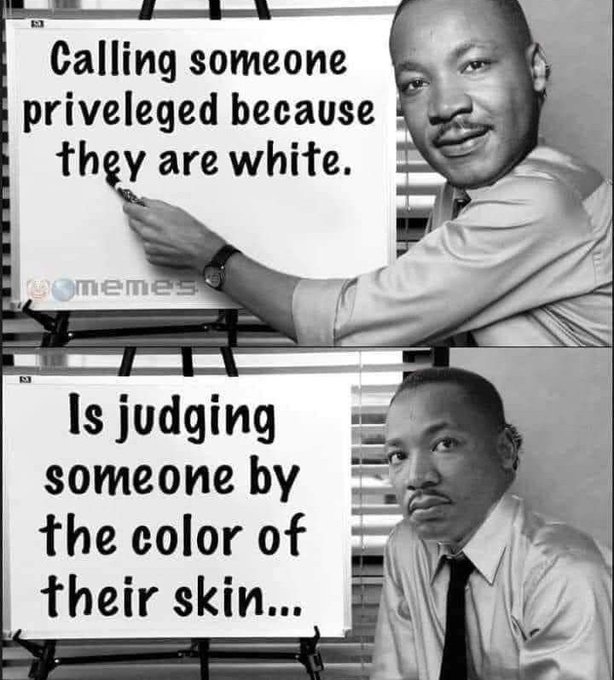
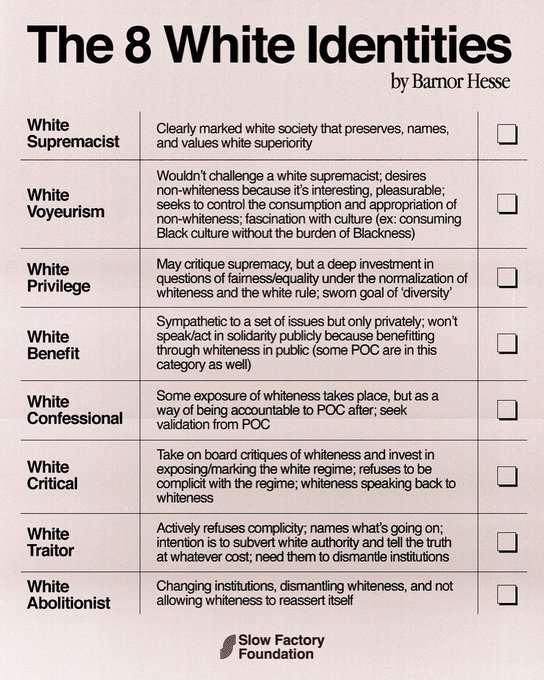
“We bring this to your attention, so that we may be held accountable for our actions and, in our privileges, do and be better.”
Experts in Japanese history and culture were shocked by the academics insistence on likening the three monkeys to racist iconography.
The former curator of the British Museum’s Japanese collections, Tim Clark, said that he had “no idea” why they would be seen as offensive.

Hitler and his henchmen victimized an entire continent and exterminated millions in his quest for a co-called “Master Race.”
But the concept of a white, blond-haired, blue-eyed master Nordic race didn’t originate with Hitler. The idea was created in the United States, and cultivated in California, decades before Hitler came to power. California eugenicists played an important, although little known, role in the American eugenics movement’s campaign for ethnic cleansing.
Eugenics was the racist pseudoscience determined to wipe away all human beings deemed “unfit,” preserving only those who conformed to a Nordic stereotype. Elements of the philosophy were enshrined as national policy by forced sterilization and segregation laws, as well as marriage restrictions, enacted in twenty-seven states. In 1909, California became the third state to adopt such laws. Ultimately, eugenics practitioners coercively sterilized some 60,000 Americans, barred the marriage of thousands, forcibly segregated thousands in “colonies,” and persecuted untold numbers in ways we are just learning. Before World War II, nearly half of coercive sterilizations were done in California, and even after the war, the state accounted for a third of all such surgeries.
California was considered an epicenter of the American eugenics movement. During the Twentieth Century’s first decades, California’s eugenicists included potent but little known race scientists, such as Army venereal disease specialist Dr. Paul Popenoe, citrus magnate and Polytechnic benefactor Paul Gosney, Sacramento banker Charles M. Goethe, as well as members of the California State Board of Charities and Corrections and the University of California Board of Regents.
Eugenics would have been so much bizarre parlor talk had it not been for extensive financing by corporate philanthropies, specifically the Carnegie Institution, the Rockefeller Foundation and the Harriman railroad fortune. They were all in league with some of America’s most respected scientists hailing from such prestigious universities as Stamford, Yale, Harvard, and Princeton. These academicians espoused race theory and race science, and then faked and twisted data to serve eugenics’ racist aims.
Stanford president David Starr Jordan originated the notion of “race and blood” in his 1902 racial epistle “Blood of a Nation,” in which the university scholar declared that human qualities and conditions such as talent and poverty were passed through the blood.
The year 2020 will be remembered in the real world for a terrifying pandemic, mass unemployment, a nationwide protest movement, and a historically uninspiring presidential race. The year in media, meanwhile, was marked by grotesque factual scandals, journalist-cheered censorship, and an accelerating newsroom mania for political groupthink that was equal parts frightening and ridiculous.
The tiniest violations of perceived orthodoxies cost jobs. Reporters and editors were whacked en masse in uprisings at the New York Times, the Philadelphia Inquirer, the Wall Street Journal, Vox, the Miami Herald, and countless other places.
Some of the purges were themselves amazing news stories. A contractor named Sue Schafer was fired after the Washington Post published a 3,000-word expose about a two-year-old incident in which she attended a Halloween party dressed as Megyn Kelly, who herself had been fired from NBC for defending blackface costumes. Schafer, in other words, was fired for dressing in blackface as a satire of blackface costumes, in an incident no one heard of until the Post decided to make an issue of it. This was one example of what the New Yorker recently exulted as the “expensive and laborious” process of investigative journalism, as practiced in 2020.
Raymond Chandler once said that when he ran out of ideas, he just had a character burst into a room with a gun. 2020 op-ed writers in the same predicament could insert random nouns into a MadLibs template: “Is _____ Racist?” Everything from knitting to Jesus to women to botanical gardens to dieting to mermaids to Scrabble and perhaps a hundred other things made the cut, to the point where it became a bottomless running gag for inevitable cancel targets like the satirical Twitter personality, “Titania McGrath.”


You must be logged in to post a comment.