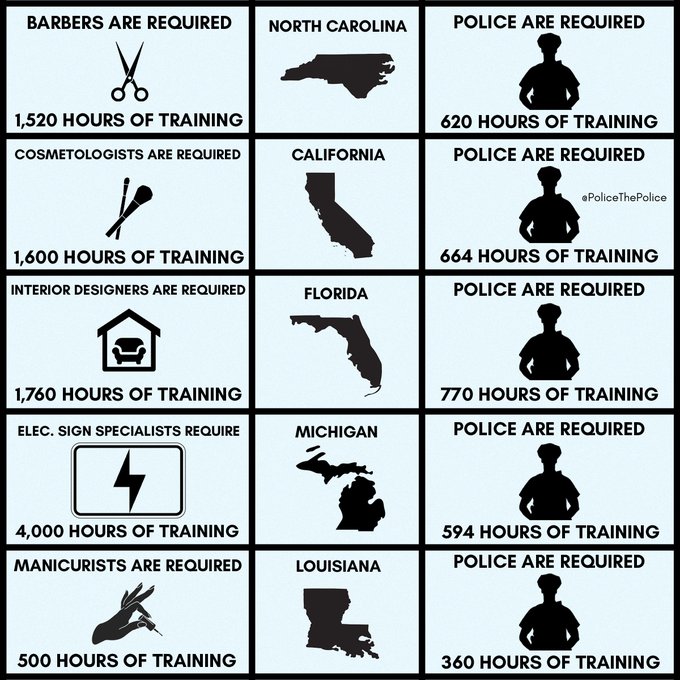
Makes sense or not…

The Drug Enforcement Administration (DEA) is telling lawmakers that it reserves “the final authority” to make any scheduling decision on marijuana following an ongoing review, regardless of what the U.S. Department of Health and Human Services (HHS) recommends.
In a letter sent to Congressional Cannabis Caucus co-chair Rep. Earl Blumenauer (D-OR), DEA Acting Chief of the Office of Congressional Affairs Michael Miller gave a general overview of the scheduling review process that was initiated under a directive from President Joe Biden in October 2022.
That started with a scientific assessment from HHS that reportedly advised DEA to move marijuana from Schedule I to Schedule III of the Controlled Substances Act (CSA). Once HHS made its recommendation in August, “DEA conducts its own review,” the letter, sent last month and first reported by Punchbowl News, says.
“DEA has the final authority to schedule, reschedule, or deschedule a drug under the Controlled Substances Act, after considering the relevant statutory and regulatory criteria and HHS’s scientific and medical evaluation,” it says. “DEA is now conducting its review.”
The agency’s statement came in response to an earlier letter from 31 bipartisan lawmakers, led by Blumenauer, that implored DEA to consider the “merits” of legalization as it carried out its review. That initial letter also criticized the limitations of simply placing cannabis in Schedule III, as opposed to fully removing the plant from CSA control.
“While Congress works to send the President comprehensive cannabis legislation, the urgency of full descheduling should inform DEA’s position on overall cannabis reform and appropriate enforcement centered on advancing public safety, not unjust criminalization,” the lawmakers’ letter said. “Marijuana’s continued inappropriate scheduling is both arcane and out-of-touch with the will of the American people.”
In that context, DEA’s response offered little insight, with the agency declining to address the lawmakers’ key arguments and instead simply outlining the procedural details of the scheduling review.
Ohio’s Republican governor is adamant that lawmakers must pass legislation as soon as possible to expedite regulated recreational marijuana sales and also ban purchases of intoxicating hemp products.
With the legislature coming back into session for the new year, Gov. Mike DeWine (R) said “we just need to get something done” to address the adult-use sales rollout timeline under a voter-approved legalization law that took effect last month.
It’s a “strange situation” the state has found itself in, he said, with sales currently set to open up in late summer or early fall. DeWine said he supports a bill the Senate passed last month, which would provide for sales through existing medical cannabis dispensaries within 90 days of enactment. However, he acknowledged the House has a differing version and pushed for lawmakers to “work together and make sure that we can deal with with this problem.”
“Our bill that we would prefer would allow us to start selling this marijuana in a controlled basis. The people who said they were for this said, ‘Let’s do it the same way we do with liquor—control how it’s done,’” he said. “Under our bill, we would be able to sell that very quickly now, early in this year, through the facilities that now do the medical marijuana.”
South Dakota Republican lawmakers have filed a bill to mandate that state-licensed medical marijuana dispensaries post a sign at their businesses warning patients that federal law prohibits cannabis consumers from possessing firearms.
The legislation, led by Rep. Kevin Jensen (R) and Sen. Jim Stalzer (R) and 10 other legislators, comes at a time when the constitutionality of the underlying federal gun ban for marijuana consumers is being challenged in multiple courts.
Under the bill, South Dakota medical cannabis dispensaries would need to post at each entrance to their business and at each register or point of sale a sign that reads:
“WARNING: Federal law prohibits the possession of a firearm by certain individuals who are users of or addicted to marijuana. See 18 U.S.C. § 922(g).”
The measure, HB 1036, states that the warning requirement would be suspended if the attorney general certifies that “federal law no longer prohibits the possession of a firearm by certain individuals who are users of or addicted to marijuana.”
Until then, businesses that fail to post the notice would be subject to a civil penalty of $250 per day, with those fees going to state general fund.
The GOP lawmakers also filed a separate bill, HB 1024, that would require state application forms for medical cannabis cards to contain a notice of the federal restrictions on gun possession by marijuana consumers. Patients would have to sign to specifically acknowledge the warning.
The Justice Department has insisted on the necessity of the ban in numerous federal courts, arguing at points that people who use marijuana and possess guns pose a unique danger, akin to permitting people with serious mental illness to own firearms.
C.j. hopkins is one of the very few Americans to follow through on the quadrennial promise, sworn by countless millions, to leave the country because they didn’t like the result of a particular general election.
You probably haven’t heard of C. J. Hopkins. A playwright, satirist, and self-described “old lefty,” Hopkins, who is now 62, was working in New York’s downtown experimental-theater scene in the early years of the 21st century when he began to “grow sick of the atmosphere” during the run-up to the Iraq War. “I helped organize those big protests before the invasion,” Hopkins told me, and “was active a little bit in the anti-globalization stuff, the anarchists.” Serendipitously, around that time, one of his plays took off in Europe, and in the summer of 2004, he packed his bags for Berlin, thus sparing himself the agony of witnessing George W. Bush’s reelection up close.
Having fled his native country for Germany nearly 20 years ago because of what he describes as America’s “really oppressive” climate of opinion, Hopkins now has reason to reconsider the wisdom of that decision. Facing criminal charges for a tweet, he is getting a taste of his adopted country’s limited tolerance for free expression.
Hunter Biden most likely isn’t going to jail any time soon despite an obvious track record of fraud and criminality. But if you happen to be a small business owner in the Land of the Free, you are looking at potentially two years in prison if you don’t comply with a new law that just took effect yesterday.
It started nearly five years ago, in the spring of 2019.
Back then, a member of Congress from the state of New York– a career politician with five decades of experience named Carolyn Maloney– introduced a new bill to the House of Representatives called the Corporate Transparency Act, or CTA.
At first her bill didn’t go anywhere.
But the following summer, during the peak Covid insanity of 2020, the CTA was jammed into the nearly 1,500-page National Defense Authorization Act (NDAA), i.e. the military budget that Congress is required to pass each year.
The NDAA (and hence the CTA along with it) were passed on January 1, 2021. And now, three years later, the CTA has formally taken effect.
Now, the whole premise behind the Corporate Transparency Act is the classic bogeyman premise that evil criminals and terrorists use US corporations and LLCs to conduct their illicit activities, so therefore the government wants more rules, regulations, and reporting for US companies.
This is the same simple-minded hysteria that we always hear about cryptocurrency, i.e. criminals and terrorists use Bitcoin, therefore it should be tightly regulated by hapless government bureaucrats.
Obviously, it’s true that criminals can and do use crypto– or US business entities like Delaware LLCs– to commit their crimes.
Criminals also use iPhones, Facebook, Gmail, Dell laptops, JP Morgan Chase bank accounts, Ford F-150 pickup trucks, Amazon gift cards, and Verizon Wireless to commit their crimes.
But in this case, in the infinite wisdom of Congress, it’s business entities that are being singled out for additional scrutiny.
So, because criminals sometimes use US business entities to launder money, every law-abiding US citizen with a completely legitimate business now must jump through all sorts of hoops and reporting requirements.
And if you fail to report, you’re looking at two years in prison.
Since at least the year 2020 the Department of Homeland Security has been funding a series of woke university programs across the country. They have spent millions of dollars (that we know of) to incentivize academic groups, not with the goal of countering foreign terror elements or even to investigate US preppers and patriots, but to develop tools for disrupting what some call the “Manosphere” movement (previously known as the Red Pill movement) – A movement focused on countering feminism and feminist propaganda.
Is arguing logically against feminism really such a threat to the nation? No, but it is a threat to the woke movement, which has been on the decline in recent years as more and more information about their ideology is scrutinized by the public.
Woke activism, which includes third-wave feminism, is transparently astroturf. It relies on billions of dollars in funding supplied by elitist institutions such as the Ford Foundation, The Rockefeller Foundation and the Open Society Foundation. The oppressive authoritarian nature of the woke apparatus has given rise to a large individualist counter-culture that is truly grassroots and this includes various men’s rights groups, political commentators and YouTubers (collectively known as the Manosphere).
The division has created what many refer to as the “culture war.” And, if it wasn’t clear by now, evidence shows that government agencies have chosen a side…
In a more recent exposure, documents have surfaced from a DHS funded program linked to the University of Arizona, home of the McCain Institute. Included in the network are a number of NGOs and Big Tech conglomerates as well as the SPLC and ADL. The project rhetoric ties the Manosphere to extremism, racism and even terrorism.
An Opelousas Police officer involved in a domestic shooting incident has surrendered to the St. Landry Parish Sheriff’s office, according to a news release.
Officer Savannah Butler, 42, turned herself in Jan. 1 at the parish jail but then posted bonded of $22,000, according to Sheriff Bobby J. Guidroz.
According to the release, a domestic issue Dec. 22 led to the negligent shooting of Opelousas Police Chief Graig LeBlanc and his wife, Capt. Crystal LeBlanc of the St. Landry Parish Sheriff’s Office. The investigation revealed that LeBlanc and his wife were shot at Butler’s home on Garnet Drive.
Crystal Leblanc went to Butler’s home Dec. 22 to speak to her husband, according to the release. Chief LeBlanc walked outside, and the two began arguing. Butler then entered the doorway armed with a gun.
Chief LeBlanc put his hand in front of Butler’s weapon to retrieve the gun and was shot in the hand, the release said. The bullet then traveled through his hand and hit his wife in the arm. After being shot, both admitted themselves to local hospitals. The LeBlancs were treated then released pending additional medical treatment.
The investigation revealed that Butler cleaned up the scene to cover up evidence prior to notifying the sheriff’s office, which constituted the charge of obstruction of justice.
As a new law in Washington State took effect this week to shield most job applicants who legally use cannabis from facing employment discrimination during the hiring process, two lawmakers have filed legislation to roll back those protections for workers in the drug treatment industry.
HB 2047, sponsored by Reps. Tom Dent (R) and Lauren Davis (D), would add to the new law’s list of exemptions, which already include law enforcement, jobs requiring a federal background investigation or security clearance, fire departments, first responders, safety-sensitive positions, corrections officers and those in the airline or aerospace industries.
Specifically, the bill would allow employers to deny people who test positive for cannabis a position “as a substance use disorder professional or trainee, or any position as a health care professional licensed or certified…where the person will be providing services directly to clients or patients receiving treatment for substance use disorder.”
While the legislation would not require employers to screen job applicants for marijuana, they would no longer be subject to the newly effective provision making it “unlawful for an employer to discriminate against a person in the initial hiring for employment if the discrimination is based upon” the use of marijuana off the job and away from the workplace or a positive drug test for cannabis metabolites.
Notably, the new anti-discrimination cannabis law applies only to job applicants. Employers can still maintain drug-free workplaces or prohibit the use of cannabis by workers after they’re hired.
Davis, who’s long said she supports an end to criminal cannabis prohibition but has concerns about the dangers of legalization, filed two marijuana-related bills in 2023 during the first part of the two-year session. One, HB 1641, would place various restrictions on marijuana products with more than 35 percent total THC, including banning advertising and prohibiting sales of the products to people under 25. The other, HB 1642, would ban the production and sale of concentrates with more than 35 percent THC unless the products were intended for medical patients.
In 2020, she sponsored legislation that would have banned all concentrates with more than 10 percent THC.
As New York works to significantly expand the state’s regulated marijuana market, a new bill would empower individual municipal governments to shut down unlicensed cannabis businesses and seize their products.
The legislation from Assemblymember Jenifer Rajkumar (D) aims to address the proliferation of illegal operators that have emerged throughout the state amid the protracted rollout of New York’s legalization law.
Currently, state regulators with the Cannabis Control Board (CCB) hold enforcement authority to close unlicensed businesses. The newly filed Stop Marijuana Over-proliferation and Keep Empty Operators of Unlicensed Transactions (SMOKEOUT) Act would expand that authority to local governments by giving municipal officials the power to “order the immediate closure of any business” found to be illegally marijuana and to seize its merchandise.
“The lack of authority for municipalities to interdict unlawful retailers, combined with limited resources from the Board, has resulted in the proliferation of so-called ‘smoke shops’ openly selling illegal, unregulated cannabis and other contraband with near total impunity,” a justification memo attached to the bill says.
“The vast amount of contraband and loose cash in these smoke shops have made them tantalizing targets for robberies and hotbeds of crime. This has put communities, shop employees, and their customers in extreme danger,” it says. “These shops are also unfair competition to licensed dispensaries, who cannot afford to sell their rigorously tested and regulated cannabis at the prices smoke shops offer.”
The bill’s introduction comes as New York regulators move to process hundreds of marijuana business license applications. Over a dozen new cannabis retailers opened in December alone following a settlement agreement lifting an injunction that had imposed a months-long licensing blockade.
“Our top priority is to grow and expand New York’s legal cannabis industry while cracking down on the illicit storefronts that continue to plague communities,” Gov. Kathy Hochul (D) had said at the time.
 Hellbound and Down
You must be logged in to post a comment.