Religion Is Not The Only Thing That Should Be Separated From The State

The Act of Supremacy of 1534 declared that King Henry VIII (and his successors) was “the only supreme head in earth of the Church of England” and not the pope of Rome. The Treason Act of 1534 made it an act of treason, under punishment of death, to deny the Act of Supremacy. During the reign of Queen Mary, the daughter of Henry VIII, the Act of Supremacy was repealed, but was enacted by the English Parliament again in 1559 after Henry’s other daughter Elizabeth became the queen. The British monarch is to this very day still the head of the Church of England or Anglican Church, which is the established church in England. This is one of the main differences between the United States and Great Britain. Although the United States has a National Cathedral where some state funerals are held (most recently for Jimmy Carter), it is actually an Episcopal church (part of the worldwide Anglican Communion), not owned or controlled by the federal government. The “separation of church and state” is a hallmark of the American system of government.

The First Amendment

The Constitution was drafted in 1787, ratified in 1788, and took effect in 1789. It established the United States as a federal system of government where the states, through the Constitution, granted a limited number of powers to a central government. The Bill of Rights (the first 10 amendments to the Constitution) was ratified by the states in 1791 in response to criticisms of the Constitution by the Anti-Federalists that the Constitution contained no explicit protection of speech, assembly, religion, or the right to bear arms.

The First Amendment reads: “Congress shall make no law respecting an establishment of religion, or prohibiting the free exercise thereof; or abridging the freedom of speech, or of the press; or the right of the people peaceably to assemble, and to petition the government for a redress of grievances.” It was President Thomas Jefferson who, in an 1802 letter to the Baptists of Danbury, Connecticut, equated the religion clauses in the First Amendment with the “separation of church and state”:

Believing with you that religion is a matter which lies solely between Man & his God, that he owes account to none other for his faith or his worship, that the legitimate powers of government reach actions only, & not opinions, I contemplate with sovereign reverence that act of the whole American people which declared that their legislature should “make no law respecting an establishment of religion, or prohibiting the free exercise thereof,” thus building a wall of separation between Church & State.

That the “separation of church and state” applied to just the federal government is evident by the fact that some of the states still maintained established churches at the time the Constitution was adopted. The phrase was resurrected by Justice Hugo Black in the case of Everson v. Board of Education (1947). But as Mike Maharrey of the Tenth Amendment Center has observed: “The federal government’s use of the First Amendment to prohibit religious displays in local parks, to force the removal of the Ten Commandments from public schools, or to ban prayers in public assemblies would horrify the founding generation.” Massachusetts was the last of the original states to fully disestablish its churches in 1833. The idea of the “separation of church and state” is now enshrined in all state constitutions.

But religion is not the only thing that should be separated from the state. Unfortunately, the very people who talk the loudest about the separation of church and state never call for the separation of anything else from the state.

Keep reading

New York City Considers ‘Accelerator Restrictors’For Habitual Speeders

For those of you who’ve had your share of speeding tickets, just imagine putting your pedal to the metal, only to have your car’s accelerator top out at — or below! — the speed limit.

A new measure under consideration in New York City could really clamp down on repeat speeders with accelerator-restrictor technology … particularly focusing on speeders cited on surface streets and in school zones. The city could end up mandating the accelerator restrictors to force chronic speeders to involuntarily slow down.

The devices are part of a pilot program known as Intelligent Speed Assistance (ISA). Some use GPS data and maps to determine the correct speed depending on your car’s location. Some makes and models already have this technology installed as of a year ago. Vehicles that do not currently have ISA would have to be modified to add the technology.

If approved, New York would join Virginia, Georgia and Washington, D.C., in enacting new state laws requiring convicted speeders be forced to install ISA devices to curb their ability to accelerate beyond legal limits.

Keep reading

They Really Do Want Us To Be Weak Physically, Mentally, Emotionally, Financially, & Spiritually So That We Will Become Dependent On Them

It takes strength to be free.  That is why they want us to be weak.

When we are weak, we are much more likely to become dependent upon the system to survive, and that makes us much easier to control.  So they give us junk to eat, they put poisons into our air and water, they “dumb us down” from a very early age, they feed us a steady stream of “programming” that makes us depressed and afraid, they get us hooked on legal and illegal drugs, and they constantly try to get us into as much debt as possible.

Something that a rapper known as Zuby posted on Twitter sums this up perfectly…

Keep reading

Trump Administration Squashes Biden Plan to Ban Menthol Cigarettes

As you may recall, the Nanny State under Joe Biden was planning to ban menthol cigarettes. They first planned to do it early last year, but then decided to postpone the plan to after the election because they were afraid it would cost them votes.

Now that the election is over and Joe Biden lost, the plan was hanging in the wind.

The new Trump administration just ended the plan for good. Isn’t it nice when adults have the freedom to decide these things for themselves?

The Hill reports:

Trump FDA officially withdraws long-delayed menthol cigarette ban

The Food and Drug Administration (FDA) has withdrawn a rule that would have banned menthol cigarettes and flavored cigars, putting a formal end to a policy that had been indefinitely delayed under the Biden administration.

A regulatory filing showed the rule had been “withdrawn” on Jan. 21, President Trump’s second day in office. The move is a significant blow to public health groups who said banning menthol had the potential to save hundreds of thousands of lives, particularly among Black smokers.

“There is no justifiable reason to withdraw the FDA’s proposed rule to ban menthol,” said Kelsey Romeo-Stuppy, managing attorney at Action on Smoking and Health. “Tobacco industry profits should never be prioritized over American lives, but unfortunately, that’s what has happened with the FDA withdrawing the proposed rule to ban menthol in tobacco products.”

The FDA declined to comment, pointing to a newly-ordered temporary ban on public communication.

Keep reading

The FDA Proposes a De Facto Cigarette Ban, Which Would Expand the Disastrous War on Drugs

On its way out the door, the Biden administration has proposed a rule that would effectively ban cigarettes by requiring a drastic reduction in nicotine content. The Food and Drug Administration (FDA), which unveiled the proposed rule on Wednesday, says the aim is to make cigarettes unappealing by eliminating their “psychoactive and reinforcing effects.”

In addition to cigarettes, the FDA’s proposed rule covers cigarette tobacco, pipe tobacco (except shisha for waterpipes), and cigars (except for “premium” cigars). All of those products would be limited to 0.7 milligrams of nicotine per gram of tobacco. That cap technically complies with a federal law that bars the FDA from banning tobacco products or “requiring the reduction of nicotine yields of a tobacco product to zero.” But the negligible amount of nicotine allowed under the rule would amount to both in practice.

The FDA, which first considered this policy under Scott Gottlieb during the first Trump administration, has abandoned the idea of gradually phasing in the nicotine reduction because that would initially result in “compensatory smoking.” That is, current smokers would be apt to inhale more deeply, take more or bigger puffs, or consume more cigarettes to get the nicotine dose to which they are accustomed, which would increase their exposure to the toxins and carcinogens in tobacco smoke. But avoiding that pitfall by mandating an immediate cut to a negligible nicotine level would magnify the black-market effects of de facto cigarette prohibition.

Given the disastrous results of the war on drugs, it is hard to fathom why a government agency in 2025 would think it is a good idea to expand that crusade to include products that are regularly consumed by nearly 30 million American adults. The proposed nicotine cap “would effectively outlaw almost all cigarettes currently being sold,” which would “benefit organized crime by igniting a robust illicit market for cigarettes and other tobacco products,” the Law Enforcement Action Partnership (LEAP) notes in an emailed press release.

Keep reading

Be Skeptical of ‘Beneficially Coercive’ New Rules for Booze

A new warning from Surgeon General Vivek Murthy that links alcohol to cancer ought to raise questions about the purpose of such public health edicts—especially in the wake of the COVID-19 pandemic, which saw a dramatic decline in Americans’ willingness to trust such expertise.

Is the goal of public health to provide scientifically accurate information so Americans can understand the risks and trade-offs that are an inevitable part of life?

Or is the goal to change public behavior to eliminate risk, and to force that change if people are unwilling to go along?

Writing in The New York Times, physician Rachael Bedard argues for the latter. She likens Murthy’s new warning about alcohol to vaccine mandates: A “beneficially coercive” policy that “can evolve over time as people get used to new expectations and restrictions.”

“The way that public health most effectively helps people change their habits is by changing the incentives, pressures, and opportunities in the culture around them,” she writes—as if human beings were wild animals that the state is charged with domesticating, rather than rational actors with free will.

But Bedard is merely stating the quiet part out loud—even as she admits that “a majority of Americans might not be in the mood for the surgeon general’s advice.” Indeed, she also acknowledges that the surgeon general’s report isn’t meant to convince ordinary Americans to change their behavior—like her husband, who apparently rolled his eyes when told about the advisory. Rather, these “recommendations, like the one to change alcohol labeling to highlight cancer risk, are policy ideas.”

In other words, they’re not meant to convince you to do anything differently. They are meant to convince policymakers, who will then make the decision for you.

It’s a safe bet that Americans are in no mood to be scolded by public health officials these days, when the noble liesshifting science, and officially authorized misinformation from the pandemic is still fresh in mind.

That would be true even if Murthy’s edict was based on sound science.

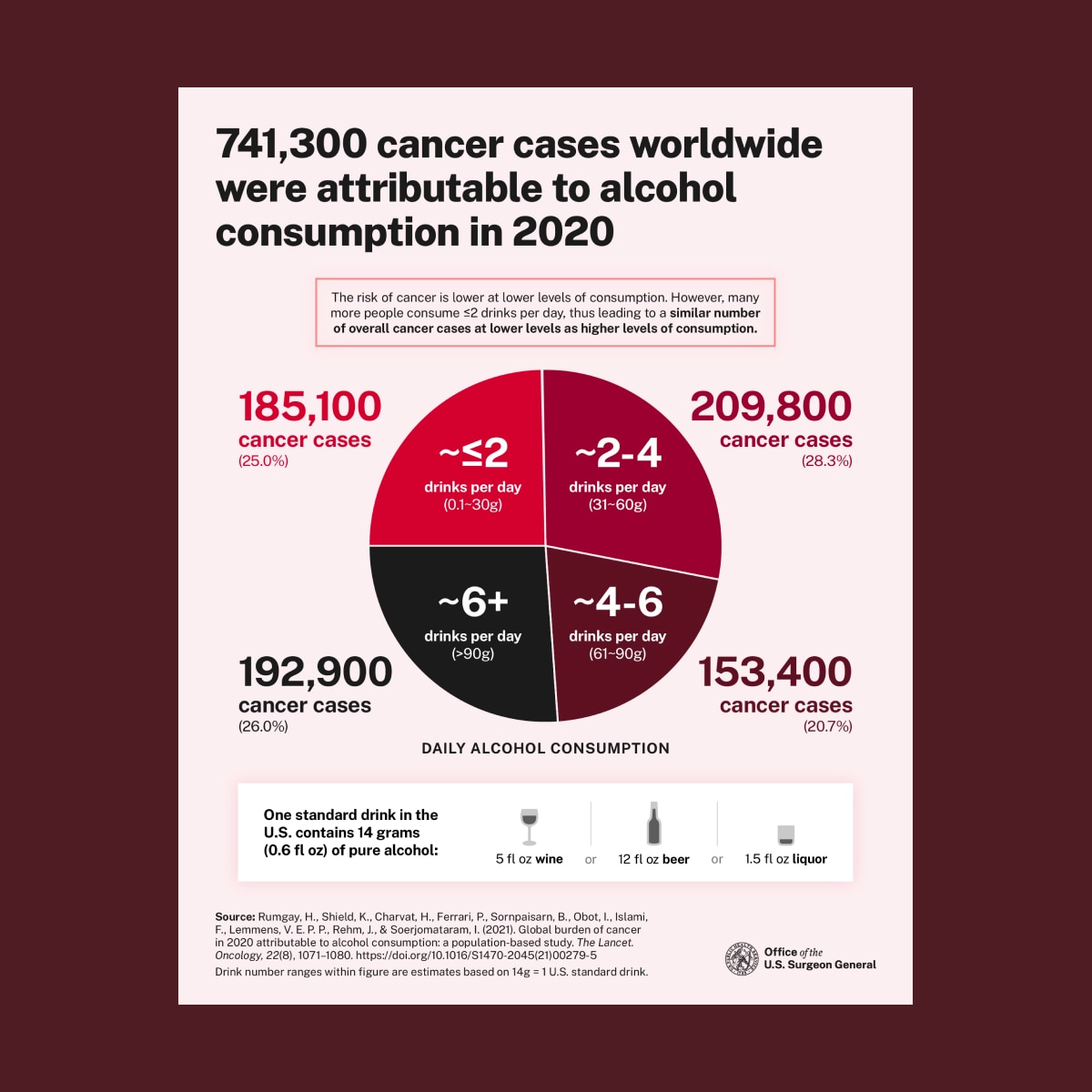
It’s not. Murthy’s report claims that drinking beer, wine, and liquor is “a leading preventable cause of cancer in the United States” and that “evidence shows that this risk may start to increase around one or fewer drinks per day.”

The evidence actually tells a far more complex story. Of the more than 740,000 cases of cancer worldwide in 2020 that Murthy says could have been prevented by abstaining from alcohol, more than 75 percent were attributable to people who had more than two drinks per day. 

Keep reading

Global Age Verification Measures: 2024 in Review

EFF has spent this year urging governments around the world, from Canada to Australia, to abandon their reckless plans to introduce age verification for a variety of online content under the guise of protecting children online. Mandatory age verification tools are surveillance systems that threaten everyone’s rights to speech and privacy, and introduce more harm than they seek to combat.

Kids Experiencing Harm is Not Just an Online Phenomena

In November, Australia’s Prime Minister, Anthony Albanese, claimed that legislation was needed to protect young people in the country from the supposed harmful effects of social media. Australia’s Parliament later passed the Online Safety Amendment (Social Media Minimum Age) Bill 2024, which bans children under the age of 16 from using social media and forces platforms to take undefined “reasonable steps” to verify users’ ages or face over $30 million in fines. This is similar to last year’s ban on social media access for children under 15 without parental consent in France, and Norway also pledged to follow a similar ban.

No study shows such harmful impact, and kids don’t need to fall into a wormhole of internet content to experience harm—there is a whole world outside the barriers of the internet that contributes to people’s experiences, and all evidence suggests that many young people experience positive outcomes from social media. Truthful news about what’s going on in the world, such as wars and climate change is available both online and by seeing a newspaper on the breakfast table or a billboard on the street. Young people may also be subject to harmful behaviors like bullying in the offline world, as well as online.

The internet is a valuable resource for both young people and adults who rely on the internet to find community and themselves. As we said about age verification measures in the U.S. this year, online services that want to host serious discussions about mental health issues, sexuality, gender identity, substance abuse, or a host of other issues, will all have to beg minors to leave and institute age verification tools to ensure that it happens. 

Keep reading

Is America Finally Having Its Raw Milk Moment?

American media is abuzz with news of President-elect Donald Trump’s nomination of Robert F. Kennedy Jr. to be the head of the Department of Health and Human Services (HHS). Seemingly every story mentions his controversial views on topics from vaccines to fluoride in the water to raw milk—a longtime libertarian cause célèbre. Though it’s hard to envision a more unlikely catalyst, RFK Jr.’s nomination may be the final push that gets raw milk across the legalization finish line.

Until the late 1800s, raw milk was simply known as “milk” and was the only game in town for Americans desiring a delicious dairy beverage. But when it was discovered that heating up products like milk could reduce the presence of potentially harmful bacteria, the pasteurization craze was underway. Given reports of thousands of babies dying from bacteria-riddled milk around this time period, pasteurization was seen as a remarkable public health breakthrough.

This set off a wave of 20th century state and local government mandates that required milk to be pasteurized. Finally, in 1987, a federal court cemented a federal ban on all interstate raw milk sales. But not long afterward, the modern organic food movement was born, and raw milk became a cult favorite among the crunchy political left. Now, raw milk has increasingly been adopted as a sort of culture war status symbol on the political right.

“Long a fringe health food for new-age hippies and fad-chasing liberal foodies, raw milk has won over the hearts and minds of GOP legislators and regulators in the last few years,” writes Marc Novicoff in Politico. In addition to its inherent deregulatory appeal, Novicoff recounts that “conservatives discovered that raw milk fit neatly inside a worldview that was increasingly skeptical of credentialed expertise.”

Over the last decade, numerous states have passed laws to legalize raw milk, leading food policy expert Baylen Linnekin to declare that the “raw milk restoration is underway.” Could it now be about to kick into overdrive, potentially even spreading to an overturn of the federal interstate sales ban?

Whatever one’s views of RFK’s potential adeptness—or lack thereof—at navigating the federal bureaucracy to pursue his agenda, he may not be the only member of Trump’s cabinet to be a raw milk enthusiast. Rep. Thomas Massie (R–Ky.), who has run a bill in Congress for the last decade to overturn the federal ban, is heavily rumored to be the next Secretary of Agriculture.

Keep reading

The Trojan Horse of “Public Health”

At the recent Mises Institute Supporters Summit in Hilton Head, South Carolina Tom Woods made some flattering comments about Yours Truly regarding my 2000 book coauthored with James T. Bennett entitled
From Pathology to Politics: Public Health in America (Transaction Publishers).  That’s the year 2000, not 2020.  Tom’s comment was the result of his discovery that my coauthor and I had smoked out the dishonesty and left-wing political gimmickry of the “public health establishment” nearly a quarter of a century ago.

The “public health” movement was created shortly after the Civil War with the creation of state and local government “health departments” that concentrated on sanitation issues, disease research, enforcing quarantines, inoculations, controlling mosquitoes, waste disposal, swamp drainage, immunizations, and attempting to control communicable diseases in general.  The American Public Health Association (APHA) was founded in 1872 as a trade association for public health professionals.  It is almost shocking today to read about how post Civil War cities in America were full of such things as pig pens, cesspools, privy vaults, and manure piles!

For the first several decades of its existence the presidents of the APHA were all people with scientific training – surgeons, medical statisticians, chemists, sanitarians, experts in bacteriology, hygiene, anatomy, and even botany.  Great progress was made in controlling diseases and eradicating some of them, like Yellow Fever, and improving mortality rates.  Economic growth surely played an important role as well, enabling Americans to attain better nutrition and living standards in general.

By the 1950s the dire problems that existed in the post-war years had pretty much disappeared, confronting the public health establishment with a major dilemma: With its mission essentially accomplished, how would it continue to justify its existence and its tax-funded support?

Lyndon Johnson’s “great society” explosion of welfare state spending during the 1960s provided the answer.  The federal government’s “Kerner Report” of 1968 on the “root causes” of poverty was fully embraced by the APHA.  In doing so the public health establishment changed its focus entirely from controlling disease to creating a healthy society through welfare statism.  The goal was no longer enhancing individual health but “curing” society’s ills.  That’s where the big tax money was.  Fewer and fewer medical and health professionals were among “public health” professionals, with more and more lobbyists, political activists, sociologists, anthropologists, and other social scientists.  The public health establishment began crusading for increased welfare payments, a guaranteed annual income “for all Americans,” government housing subsidies, racial hiring quotas, and school busing.

Keep reading

Kamala’s VP Wannabe Tim Walz Levied WHOPPING 95% Tax on Zyn.

Governor Tim Walz (D-MN), tapped as Kamala Harris‘s running mate in the upcoming presidential election, approved an astonishing 95 percent tax on Zyn, the popular tobacco-free nicotine product, in the North Star State this year. Previously, the tax on “moist snuff” did not include Zyn, as it contains no tobacco, but the law was amended to gouge users of Zyn and “similar tobacco-free product[s] containing nicotine” in May.

The tax on cigars, including premium cigars, smoking tobacco, chewing tobacco, e-cigarettes, and vapor products in Minnesota is also set at 95 percent.

As Governor, Walz has created a new payroll tax, raised taxes on retail deliveries, motor vehicle sales, corporate income tax, and net investment income, and reduced itemized deductions. He also greenlit local sales and purchase taxes in the seven-county metro area surrounding the Twin Cities of Minneapolis and St. Paul.

Keep reading