
Raw Milk: The Wrong Lesson

New York distillers poisoned thousands of infants with filthy milk, and the politicians paid to stop them took bribes instead. Then the government drew exactly the wrong lesson. Rather than remove the conditions that caused the disaster, it treated the symptom, protected the system, and taught generations of Americans that the cow was the problem.

She was not.

In the spring of 1858, a New York publisher named Frank Leslie received milk at his door that was blue, watery, and contaminated with pus. He ordered an analysis, disliked what he found, and sent reporters and illustrators to trace the milk to its source. What they uncovered was not a quality control failure. It was an industrial scandal that had become a business model.

The distilleries of Manhattan and Brooklyn produced enormous quantities of spent grain mash. Disposing of it cost money. Feeding it to cattle produced profit. Distillers built cow sheds against their whiskey operations and packed them with animals standing in filth, tethered over troughs and fed steaming waste from the stills. The diet destroyed the animals. Teeth loosened. Sores opened. Udders became diseased. Cows too weak to stand were suspended in slings and milked until they died.

That milk was sold to the public.

Because it was thin and blue, it was adulterated first. Chalk and plaster for color. Flour and starch for body. Molasses for appearance. Water for volume. Wagons labeled “Pure Country Milk” carried it through the city while families believed they were buying fresh milk from the country. Contemporary estimates attributed thousands of infant deaths a year to it.

The corruption that protected the trade should sound familiar.

When public outrage forced an investigation, inspectors warned the operators before arriving. The barns were cleaned. The conditions were staged. The committee toured the sanitized sheds, declared the danger exaggerated, and recommended better ventilation. One member, Charles Haswell, filed a dissent describing the fraud and warning that children were dying. He was ignored. Years of pressure passed before the state acted.

The story is usually told backward.

Nothing about the swill milk scandal shows that milk was inherently dangerous. The deaths came from confinement, diseased animals, contaminated feed, adulteration, and political corruption. The milk was dangerous because the system producing it was dangerous.

There were two ways to respond.

One was to fix the source. Take the cattle out of the distillery sheds. Clean up the conditions. Test the animals. Keep the herds healthy. Produce milk under conditions that do not cause disease.

The other was to leave the industrial system in place and try to neutralize the result after the fact.

The second path won.

Pasteurization was not the choice made in 1858. It did not yet exist as a practical milk intervention. Pasteur’s early work was on wine; milk pasteurization did not take hold in the United States until decades later. The officials who inspected the swill dairies were not choosing heat over reform. They were choosing corruption over reform.

That distinction matters.

Decades later, when the federal government did push pasteurization, it conceded that the method was not ideal, only practical under existing conditions. In plain terms, restructuring the production system was harder than heating the final product. The industry was already large, centralized, and politically connected. Heating the milk was easier than fixing the barn.
Keep reading

UNHINGED: Purple-Haired Radical Rosa DeLauro Has Total MELTDOWN Over Raw Milk

Far-left Democrat Rep. Rosa DeLauro (D-CT), the same purple-haired radical we’ve repeatedly exposed for her unhinged public meltdowns, completely lost it Thursday during a House hearing while grilling HHS Secretary Robert F. Kennedy Jr. over Americans’ right to drink raw milk.

DeLauro demanded that RFK Jr. publicly condemn raw milk as “dangerous” and essentially toe the corporate line pushed by Big Pharma and pasteurized milk lobbyists. When Kennedy refused to play along with the fearmongering, the 83-year-old Connecticut congresswoman went full meltdown mode.

“You are the Secretary of Health and Human Services. Is there not some moral responsibility or compunction to say, ‘Don’t drink raw milk, don’t do that, because it’s unpasteurized and can cause serious harm to your health?’ Is that not something you view as your responsibility?

“If I were the head of HHS, I would by God say don’t take raw milk! It is dangerous to your health and if you can’t say that well maybe there are some other conclusions that can be drawn!” DeLauro said.

Kennedy told lawmakers that agencies should “inform the public” and “let people make a choice,” rather than dictate behavior outright.

This is the same Rosa DeLauro whom The Gateway Pundit previously reported on when RFK Jr. absolutely buried the purple-haired Democrat back in May 2025 during his first major HHS hearing. She tried to lecture him then too, and got completely owned.

The radical left, Big Pharma, and the corporate food cartel hate raw milk because it represents everything they despise: freedom, tradition, local farms, and real nutrition that doesn’t come in a plastic-wrapped, government-approved package.

Keep reading

Is America Finally Having Its Raw Milk Moment?

American media is abuzz with news of President-elect Donald Trump’s nomination of Robert F. Kennedy Jr. to be the head of the Department of Health and Human Services (HHS). Seemingly every story mentions his controversial views on topics from vaccines to fluoride in the water to raw milk—a longtime libertarian cause célèbre. Though it’s hard to envision a more unlikely catalyst, RFK Jr.’s nomination may be the final push that gets raw milk across the legalization finish line.

Until the late 1800s, raw milk was simply known as “milk” and was the only game in town for Americans desiring a delicious dairy beverage. But when it was discovered that heating up products like milk could reduce the presence of potentially harmful bacteria, the pasteurization craze was underway. Given reports of thousands of babies dying from bacteria-riddled milk around this time period, pasteurization was seen as a remarkable public health breakthrough.

This set off a wave of 20th century state and local government mandates that required milk to be pasteurized. Finally, in 1987, a federal court cemented a federal ban on all interstate raw milk sales. But not long afterward, the modern organic food movement was born, and raw milk became a cult favorite among the crunchy political left. Now, raw milk has increasingly been adopted as a sort of culture war status symbol on the political right.

“Long a fringe health food for new-age hippies and fad-chasing liberal foodies, raw milk has won over the hearts and minds of GOP legislators and regulators in the last few years,” writes Marc Novicoff in Politico. In addition to its inherent deregulatory appeal, Novicoff recounts that “conservatives discovered that raw milk fit neatly inside a worldview that was increasingly skeptical of credentialed expertise.”

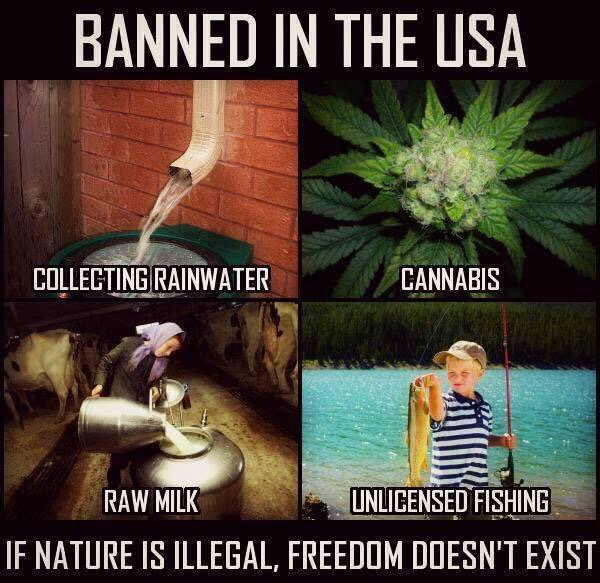
Over the last decade, numerous states have passed laws to legalize raw milk, leading food policy expert Baylen Linnekin to declare that the “raw milk restoration is underway.” Could it now be about to kick into overdrive, potentially even spreading to an overturn of the federal interstate sales ban?

Whatever one’s views of RFK’s potential adeptness—or lack thereof—at navigating the federal bureaucracy to pursue his agenda, he may not be the only member of Trump’s cabinet to be a raw milk enthusiast. Rep. Thomas Massie (R–Ky.), who has run a bill in Congress for the last decade to overturn the federal ban, is heavily rumored to be the next Secretary of Agriculture.

Keep reading