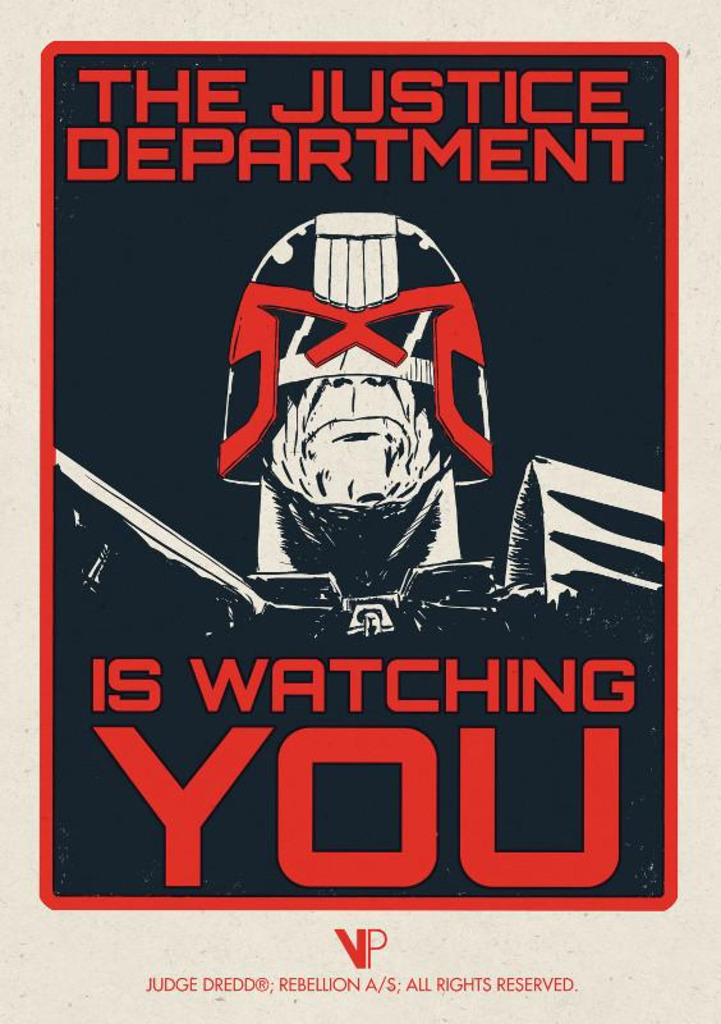
Secret Facial Recognition Program Could Cover Every State

America’s law enforcement has been secretly using a facial recognition program that can be used to ID activists and protesters.The first-ever acknowledgement of the program was recently revealed by the Washington Post.

“The court documents are believed to be the first public acknowledgment that authorities used the controversial technology in connection with the widely criticized sweep of largely peaceful protesters ahead of a photo op by President Trump.”

What makes this so troubling are two things. One, it appears to be used by law enforcement nationwide.

As the Washington Post explains, “the case is one of a growing number nationwide in which authorities have turned to facial recognition software to help identify protesters accused of violence.”

And two, this secret law enforcement facial recognition database contains images of at least 1.4 million Americans.

“The case also provides the first detailed look at a powerful new regional facial recognition system that officials said has been used more than 12,000 times since 2019 and contains a database of 1.4 million people but operates almost entirely outside the public view. Fourteen local and federal agencies have access.”

The name of this new facial recognition program is called the “National Capital Region Facial Recognition Investigative Leads System” (NCRFRILS).

A thousand law enforcement agencies could have access to a billion public records.

Keep reading

Michigan Governor: Up To Six Months In Prison If Businesses Don’t Surveil Customers For Contact Tracing

The Michigan Department of Health and Human Services (MDHHS) is requiring restaurants, barbershops, tattoo parlors, recreational facilities, and entertainment establishments to record the names, contact information, and visit times of all customers to “aid with contact tracing.” Any establishment that does not comply is threatened with a maximum $200 fine, a misdemeanor charge punishable with up to six months in prison, and a $1,000 civil fine for violating the state’s emergency orders.

The order, announced Friday, comes as Michigan’s Democratic Gov. Gretchen Whitmer and her administration began backtracking on the state’s latest reopening plan and tightening COVID-19 restrictions, citing rising hospitalizations and deaths. Other states including New York have implemented similar contact tracing rules, requiring restaurants to record diners’ information in the case of an outbreak.

Keep reading

Michigan unveils order forcing restaurants to record ‘names and phone numbers’ of customers

Restaurants in Michigan will be required to take down the names and phone numbers of customers beginning Monday, Nov. 2.

The Michigan Department of Health and Human Services announced the new order on Thursday, which will require restaurants to note the date and time of entry for customers who visit the premises.

“All dine-in food service establishments must maintain accurate records of the names and phone numbers of patrons who purchase food for consumption on the premises, and the date and time of entry,” the order stated.

The order also requires schools and businesses to “aid in contact tracing and case investigation efforts” during a time when positive tests for the virus have surged in the state.

The press release also noted changes in the capacity limits for indoor events such as weddings, parties, and banquets. The order reduces the number of people who can gather at these events from 500 to 50.

Keep reading

The Most Surveilled Cities in the World

According to a study by research website Comparitech, most of the world’s most surveilled cities are located in China. The country has been making headlines for its generous use of surveillance technology and is featured heavily throughout the whole ranking that looked at the 150 most populous cities worldwide, excluding those for which insufficient data was available.

The Chinese city of Taiyuan, located in the Shanxi province roughly 300 miles Southwest of Beijing, tops the list with 120 public CCTV cameras per 1,000 inhabitants. The highest-ranked non-Chinese city is London, also notorious for its strict surveillance of public spaces, with 67 cameras per 1,000 people, with Los Angeles the highest-ranked U.S. city in the ranking with 6 cameras per 1,000 inhabitants.

CCTV technology is controversial in many places around the world, with proponents touting its benefits for fighting crime and opponents cautious about surveillance’s potential to be used as a tool of public control and to violate privacy rights. The makers of the survey said that they found little correlation between lower crime rates or a heightened feeling of security and surveillance in the cities surveyed.

Keep reading