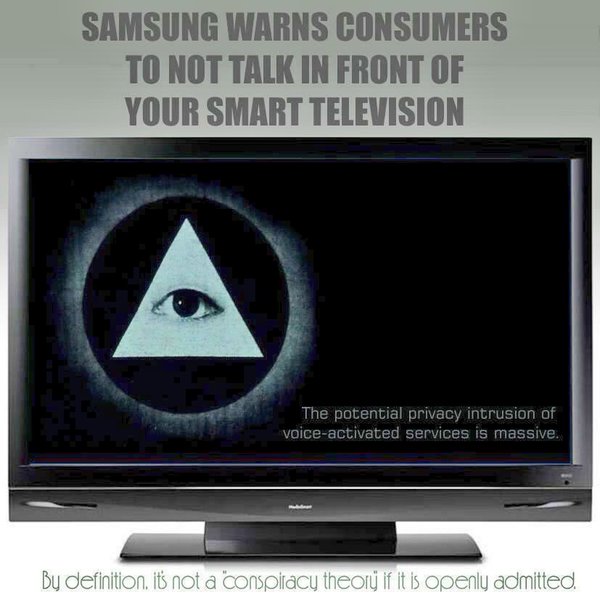
Spy TVs: 200 million Smart TVs serve as eavesdropping and listening devices — even when switched off

Remember when the government used to have to plant an electronic bug inside the home or office of a suspected criminal, and they needed to get a search warrant providing solid evidence of criminal wrongdoing before they could plant such a device?

Those days are long over, as most of us purchase the bug ourselves and set it up in our living rooms. Most, if not all, smart TVs, along with smartphones, smart appliances, etc., are daily collecting loads of data on every individual and family in America.

Cybernews reports in a September 8, 2026 article that LG Corp.’s smart TVs can listen in on voice commands, gather data that reveals your location, and scan your home for other connected devices, according to a major new investigation into the company’s webOS platform.

LG Electronics, maker of the smart TVs, is owned by the South Korean conglomerate LG Corp., which after Samsung is the world’s second-largest maker of internet-connected smart televisions.

Researchers working with independent technology outlet Gamers Nexus captured LG televisions scanning local networks and identifying phones, smartwatches, printers, air-conditioning units, and many other everyday consumer devices and appliances that had never been connected to the TV. These devices all have one thing in common, however. They are all connected to the internet and are part of the “internet of things.”

I’m pretty sure that if a similar test was run on other brands of smart TVs, the results would be similar, but this article focuses exclusively on LG as that was the company that was placed under a microscope by the independent researchers in their recent study.

Their investigation found that LG’s televisions use an advertising technology called Automatic Content Recognition, or ACR, to identify what was being watched across different inputs, while voice interactions could be converted into plain text and stored in logs on the television. In other words, the TV’s speakers hear what you’re saying and the software is trained, probably using AI, to make a note of it and feed this information into algorithms.

In one test, researchers said voice data continued to be stored even after the TV was disconnected from the internet.

Smart TVs are not only ubiquitous in homes, but in hotel rooms, hospitals and corporate offices, “potentially placing them alongside sensitive conversations and devices,” Cybernews reports.

Gamers Nexus worked with cybersecurity researchers MrBruh and unturn, alongside Wendell Wilson of Level1Techs, to investigate LG TVs and the company’s webOS software. The results are presented in a video (below) posted to YouTube.
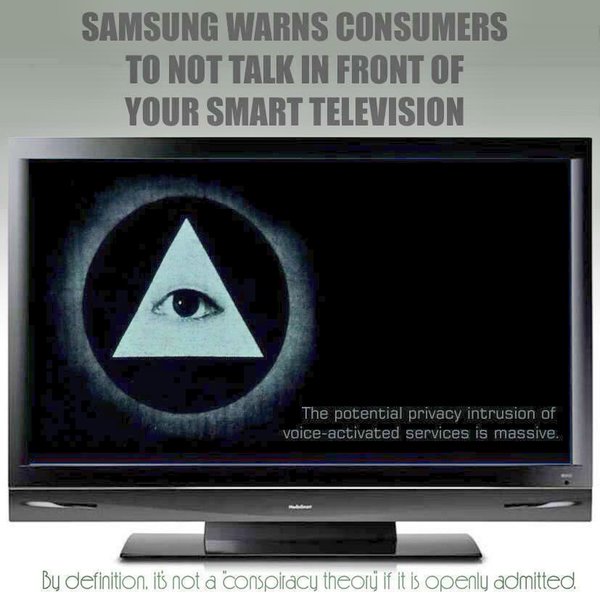
Keep reading

‘Whoever came up with this is a massive idiot’: LG’s gaming monitors and TVs are facing a user revolt, due to seemingly installing adware on PCs — and telling you to warn guests they may be recorded by AI features, to comply with ‘wiretapping’ laws

How smart should a smart TV be? According to LG‘s latest TV terms and conditions, the answer is “not quite smart enough to comply with wiretapping laws”, because that’s now your responsibility if LG captures the voice of a guest in your house through its AI voice services. Though the situation with LG monitors appears to be even more dramatic.

As Gamers Nexus reports, some LG monitors appear to be installing adware on Windows PCs without asking for permission: in addition to the LG Monitor App Installer, they also install McAfee Scam Detector.

LG’s own app requires full access to all system resources, which potentially includes all your online activity, logins, hardware, location and more — while McAfee has a long history of being installed on devices as ‘bloatware’, and people are not reacting positively to suddenly finding it on their PC.

There may be a perfectly innocent explanation for all of this, but when big tech firms keep getting caught doing bad things because they thought they could get away with it, it’s no wonder people are assuming the worst.

The bit that’s causing consternation regarding smart TVs is part 6(d) of the new LG Electronics terms of service, headed Voice Recognition and Privacy Compliance.

As Notebookcheck‘s Hannes Brecher notes, the section states that it’s your responsibility “to obtain all necessary consents from any third parties whose voices may be captured by the Product and to notify household members and guests that their voices may be captured and processed, in compliance with applicable wiretapping, eavesdropping, and privacy laws.”

There are three ways around that. One, you can turn off all microphone-based features. Some people won’t mind that, but they can be useful — especially asking it for settings you don’t know how to find.

Keep reading

Smart TVs a ‘Vast System of Digital Surveillance’ That Targets Everyone, Especially Kids

The streaming television industry has morphed into a vast data-driven viewer surveillance apparatus, transforming people’s TVs into tools for monitoring, tracking and targeting, according to a new report from the nonprofit Center for Digital Democracy.

The 48-page report, “How TV Watches Us: Commercial Surveillance in the Streaming Era,” charts the evolution from broadcast, cable and satellite television to connected TV (CTV), a term that encompasses the wide range of content delivered through the internet to smart TVs.

CTV includes popular apps like YouTube TV, Free Advertiser-Supported TV (FAST) channels, and streaming services like Disney +, Netflix and Amazon Prime. It also includes Roku, smart TVs and smart TV devices themselves.

The report documents how CTV, whose surge in viewership is largely driven by young audiences, harvests user data through a “sophisticated and expansive commercial surveillance system” that privacy advocates argue undermines existing consumer protections.

“CTV has become a privacy nightmare for viewers,” said Jeff Chester, report co-author and executive director of the Center for Digital Democracy, in a press release. “It is now a core asset for the vast system of digital surveillance that shapes most of our online experiences … as it gathers and uses sensitive data about health, children, race and political interests.”

Over the past five years, CTV corporations have teamed up with data brokers like Experian and TransUnion to create new data-mining tools that capture and aggregate everything an individual user does on their smart TV. This information can be integrated with data captured from other devices and real-world activities.

Existing privacy policies don’t explain or protect people from these new forms of data capture, the Center for Digital Democracy said — so viewers should disregard any promises companies make about not collecting or sharing user information.

These new data-capture practices form the foundation for a system with “unprecedented capabilities for surveillance and manipulation,” the report warns. “As a consequence, buying a smart TV set in today’s connected television marketplace is akin to bringing a digital Trojan Horse into one’s home.”

The Center for Digital Democracy submitted the report, along with letters to the Federal Trade Commission, the Federal Communications Commission, the California attorney general and the California Privacy Protection Agency, calling for an investigation into the industry.

Keep reading

Smart TV hackers are filming people having sex on their sofas – and putting it on porn sites

Next time, you’re snuggling up to your other half on the sofa, imagine that some sweaty, sex-pest nerd might be watching you through your TV’s webcam. Horrifyingly, it’s actually true: hackers HAVE ‘watched’ couples making love on their sofas via webcams built into smart TVs – and put the video on porn sites. Many ‘smart TVs’ have poor security, and hackers can take over various functions – including webcams built for Skype. Laura Higgins of the Revenge Porn Helpline told the Daily Mail, ‘We have dealt with one couple who were filmed making love in their living room through their smart TV by someone who had taken control of it. ‘The footage just appeared on a website.

Keep reading