
It is a duopoly…



Twitter fact-checkers don’t believe in the mounting evidence of voter fraud across the country due to issues with universal mail- in ballots. In fact, the social media platform doesn’t even want you to question it.
President Donald Trump Tweeted out a simple statement of fact “the ballots being returned to states cannot be accurately counted. Many things are already going very wrong!”
Twitter – which is supposed to be a platform of free discourse – again acted as a publisher to fact check the President, putting a link below his Tweet in red saying “learn how voting by mail is safe and secure.”
But look at this major issue with vote-by-mail ballots in New York City – the The New York Post, Breitbart and others reported this year in the Democratic primary that 26 percent of mail in votes were disqualified (roughly 84,208 ballots.) Wow, that’s a lot of voters.

Republicans and Democrats alike fear that the other party will attempt to hijack this election. President Trump is convinced that mail-in ballots are a scam except in Florida, where it’s safe to vote by mail because of its “great Republican governor.” The FBI is worried about foreign hackers continuing to target and exploit vulnerabilities in the nation’s electoral system, sowing distrust about the parties, the process, and the outcome.
I, on the other hand, am not overly worried: after all, the voting booths have already been hijacked by a political elite comprised of Republicans and Democrats who are determined to retain power at all costs.
The outcome is a foregone conclusion: the Deep State will win and “we the people” will lose.
The Chinese government invited then-astronaut Mark Kelly, now an Arizona Democratic Senate candidate, to an all-expenses-paid retreat at a countryside resort in 2003. He left China five days later not only with a future spouse, former Rep. Gabby Giffords (D., Ariz.), but also with lucrative regime business contacts.
Kelly attended the annual Young Leaders Forum, a five-day junket cohosted by the Chinese People’s Institute of Foreign Affairs, which is “under the leadership of the Communist Party of China.” The conference allowed Kelly an opportunity to mingle with high-profile Communist Party officials and rising stars in Chinese society. Attendees included Cui Tiankai, now Chinese ambassador to the United States; Fang Xinghai, former director of the CCP’s top committee on the economy; and Zhou Mingwei, the party’s former top foreign propaganda honcho.
China analyst Gordon G. Chang said that party connections—such as those Kelly fostered—are “absolutely essential” for securing Chinese business deals.
“The Communist Party tries to control everything, whether it’s a state enterprise or a private company,” he said. “And so it’s extremely important to have Communist Party contacts [to do business].”
Kelly has also had extensive ties with China since becoming a civilian. World View Enterprise, an aerospace company he cofounded and in which he still holds investments, received funding from Chinese tech giant Tencent, which censors the internet for Beijing. As the Washington Free Beacon reported, he also held a financial stake in a Colorado company that courted investments from a Chinese state-funded tech enterprise.
He now has assets worth up to $27 million, according to his financial disclosure.
Earlier this week, Facebook gave us a welcome break from the virtue-signaling by threatened to pull its business from Europe should courts uphold an EU-wide ban on transfering European user data to US-based servers (something Washington is desperately trying to stop TikTok from doing, in a sense).
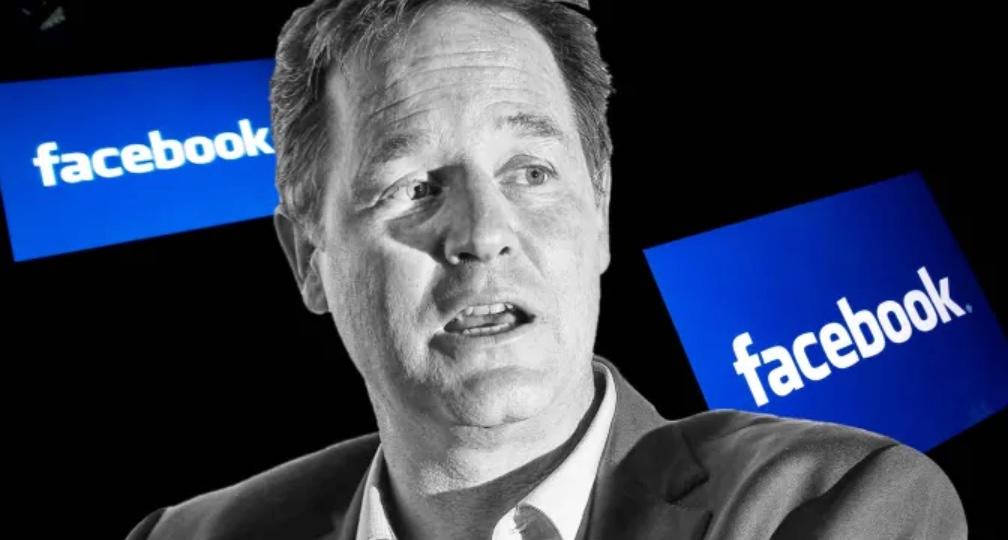
But that didn’t last long. On Tuesday, the social media giant’s head of global communications, former deputy PM Nick Clegg, told the Financial Times that the company is developing contingency plans should the US election lead to an outbreak of chaos and uncertainty. Though he didn’t go into too much detail, the implication is clear: Facebook is planning to significantly curtail speech on its platform, echoing the Internet blackouts utilized by authoritarian regimes including Iran, Venezuela and elsewhere.
Clegg preferred to call them the “break-the-glass” options, and assured readers that they probably wouldn’t happen anyway.
In an interview with the Financial Times, Nick Clegg, the company’s head of global affairs, said it had drawn up plans for how to handle a range of outcomes, including widespread civic unrest or “the political dilemmas” of having in-person votes counted more rapidly than mail-in ballots, which will play a larger role in this election due to the coronavirus pandemic. “There are some break-glass options available to us if there really is an extremely chaotic and, worse still, violent set of circumstances,” Mr Clegg said, though he stopped short of elaborating further on what measures were on the table. The proposed actions, which would probably go further than any previously taken by a US platform, come as the social media group is under increasing pressure to lay out how it plans to combat election-related misinformation, voter suppression and the incitement of violence on the November 3 election day and during the post-election period.
Of course, post-election day indecision is nothing new in American politics, though it will be the first time we’ve seen one since Facebook was founded in 2004. It also comes – as the FT none-too-subtly points out – as “conerns mount that even US president Donald Trump himself could take to social media to contest the result or call for violent protest, potentially triggering a constitutional crisis.”
But don’t worry: Because as Clegg explains, Facebook has done this before in “other parts of the world.”
“We have acted aggressively in other parts of the world where we think that there is real civic instability and we obviously have the tools to do that [again],” Mr Clegg added, citing the previous use of “pretty exceptional measures to significantly restrict the circulation of content on our platform”.
Facebook has also taken several steps to immediately step up and address any harmful activity that might emerge on its platform during the election. Citing unnamed sources, the FT says Facebook has planned for more than 70 scenarios, and that any high-stakes decisions will fall to a team of executives including CEO Mark Zuckerberg and COO Sheryl Sandberg. The company is employing a range of experts, including military planners, to help the company’s leadership make the best decisions possible.
“We’ve slightly reorganised things such that we have a fairly tight arrangement by which decisions are taken at different levels [depending on] the gravity of the controversy attached,” Mr Clegg said. The executive also said that “the amount of resources we are throwing at this is very considerable”. Facebook will have a virtual war room – dubbed its “Election Operations Centre” – for monitoring for suspicious activity and updating its “voter information hub”, which will showcase verified results to users, he said.


You must be logged in to post a comment.