
Albert Camus on freedom…

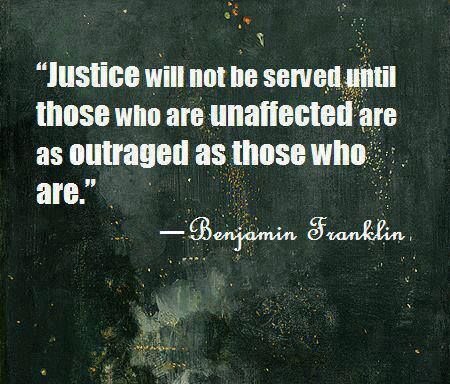
In a move that legal experts say is “patently unconstitutional,” federal authorities in Portland are arresting people for minor offenses and then barring them from attending any future protests as a condition of their release, ProPublica reported Tuesday. According to the report, at least 12 people arrested in connection with the demonstrations were expressly prohibited from being present at any future public demonstrations as they await their days in court.
In one instance, the conditions of release issued by the U.S. District Court in Oregon for a defendant whose offense was “fail[ing] to comply with the lawful direction of federal police officers” stated that “Defendant may not attend any other protests, rallies, assemblies or public gatherings in the state of Oregon.”
With the July 2 arrest and indictment of Ghislaine Maxwell, the longtime partner of Jeffrey Epstein, the victims of their child sex-trafficking ring are once again being led to believe that the truth about the network of high-profile abusers and protectors will finally be revealed.
One victim, Maria Farmer, first reported Epstein’s crimes to the FBI in the 1990s, but her reports were ignored. Maria is currently battling two forms of cancer. The arrest of Maxwell has given her renewed hope. “When you wait a quarter of a century for something, it’s pretty exciting when it happens,” she told the Daily Beast through happy tears. “I really feel hopeful that . . . maybe they’ll go down the list of coconspirators.” Another victim, Jennifer Araoz, said, “Maxwell was the center of that sex trafficking ring.” Her arrest “means some justice for survivors can exist.” Courtney Wild said that the arrest of Maxwell “gives me more confidence in our system.”
In a previous column, I described how the federal government has covered up for Epstein and Maxwell and their coconspirators. Back in 2005, more than 30 child victims, some as young as 14 when they were recruited to become sex slaves for Epstein and his guests, were tricked into cooperating with the FBI, based on the promise that the U.S. attorney’s office in south Florida intended to prosecute the Epstein-Maxwell child sex ring. Instead, the lead prosecutor on the case, Alexander Acosta, double-crossed the victims and entered into a secret and illegal deal to grant immunity to Epstein and all his “potential coconspirators.” Acosta later explained that he cut the nonprosecution deal with Epstein’s attorneys because he had “been told” to back off, that Epstein was above his pay grade: “I was told Epstein ‘belonged to intelligence’ and to leave it alone.”
The problem for the victims is that a deep dive into the Epstein-Maxwell network would implicate not just powerful men like Bill Clinton, who took at least 26 trips on Epstein’s private jet—nicknamed the Lolita Express—but also untouchable U.S. intelligence officials like Michael Hayden, who was CIA director in 2007 when Acosta was told to “leave [Epstein] alone.”
Thus, the government has gone to great lengths to avoid any detailed investigations into the criminal enterprise. Then in November 2018, a reporter from the Miami Herald embarrassed the government by identifying about 80 victims of the sex ring and by telling the story of how the victims were double-crossed by Acosta’s office in 2007. In response to this series in the Herald, federal agents arrested Epstein last summer and charged him under the same indictment that had been drafted and shelved a decade before.

“The problem with the world is that the intelligent people are full of doubts, while the stupid ones are full of confidence.”
Charles Bukowski
Cancel culture is slippery in the taxonomist’s hands, but I think something like columnist Ross Douthat’s definition is about right: “Cancellation, properly understood, refers to an attack on someone’s employment and reputation by a determined collective of critics, based on an opinion or an action that is alleged to be disgraceful and disqualifying.”
This description highlights the differences of function between medieval outlawry and cancel culture today: Outlawry was a formal, legal punishment backed by the threat of violence and usually intended to punish people accused of felony crimes like murder, arson, or conspiracy. Cancel culture has no such legal force. It’s a movement of social censure, and in its quintessential cases—e.g., Justine Sacco or, more recently, David Shor or the woman from The Washington Post Halloween party story—there’s no criminal allegation or, many times, even a lean outside the Overton Window. (The “Central Park Karen,” somewhat unusually among high-profile cancellation stories, is being prosecuted.)
Beyond these distinctions, however, outlawry and cancel culture have much in common: They grow out of the same human impulse of ostracism, the desire to exclude offenders from “respectable” society. They give the broader community permission to attack their targets, whether with physical violence (as in outlawry) or via verbal abuse, doxxing, or threats (as in cancel culture). They oust offenders from their social class (today, typically the professional-managerial class) and deprive them of their normal means of livelihood.
The medical doctor who runs the Arizona Republican Party had her Twitter account “temporarily limited” for spreading misinformation during the coronavirus pandemic.
“Twitter has ‘temporarily limited’ the account features of Arizona Republican Party Chairwoman Kelli Ward after determining she violated its policy on spreading misleading and ‘potentially harmful’ information about the COVID-19 pandemic,” the Arizona Republic reported Tuesday. “Ward, a physician, has downplayed the severity of the virus’s spread in Arizona, even as caseloads skyrocketed and the state spiraled into a national hot spot.
 Hellbound and Down
You must be logged in to post a comment.