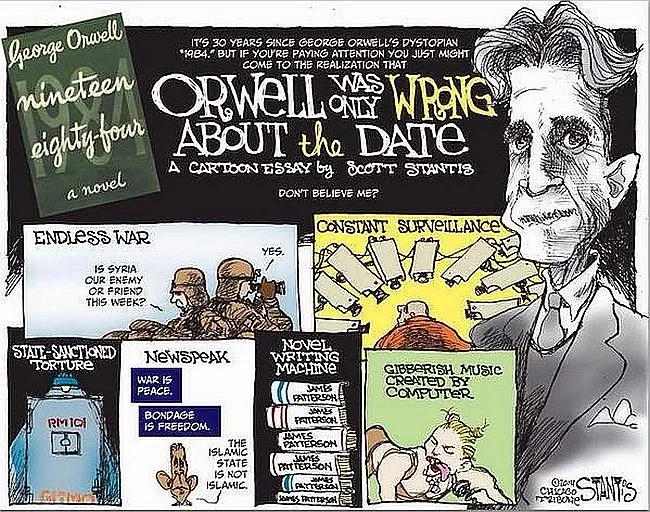
It’s beginning to look a lot like…




Among the most fervent war hawks in America today is Alexander Vindman, a retired lieutenant colonel in the U.S. Army and a former member of the NSC, who now works at the Johns Hopkins School of Advanced International Studies Foreign Policy Institute. His previous claim to fame was as a witness who testified about former president Donald Trump’s call to Ukrainian officials in the second impeachment trial of Trump. He became an instant hero to the crowd at MSNBC and other anti-Trump major media (is there any other kind?). Vindman also reportedly claimed that Trump “bears an enormous burden of responsibility” for the Russia-Ukraine war, even though Russia’s aggression against Ukraine has occurred during the Obama and Biden administrations. There was no Russian aggression against Ukraine on Trump’s watch.
Vindman has now taken to the pages of Foreign Affairs to urge U.S. policymakers to “embrace the goal of Ukrainian victory” against Russia by throwing caution to the wind. The United States, he writes, is not doing enough to help Ukraine win this war. We should forget about building a stable relationship with Russia and instead provide Ukrainian forces with sufficient military weaponry to take the war to Russia’s territory, Vindman counsels. We need to “discard the desire” to seek a compromise with Russia for a negotiated peace.
Vindman writes that our aid thus far has been too “incremental.” Too many of our policymakers, he says, are acting based on a “flawed assessment of the risk of escalation and the potential consequences of a Russian defeat.” The United States should provide Ukraine with weapons that can reach far inside Russia to destroy “militarily relevant targets” there. “There can be no return to business as usual with Russia,” according to Vindman, “as long as Putin rules from the Kremlin.” In other words, our policy toward Russia should be regime change.
The U.S. economy is strained to the point of breaking Americans’ budgets, and this week’s releases of consumer and producer inflation data showed that the pain being felt by American families and U.S. companies isn’t going to ease up soon.
As a result of steadily rising inflation that kicked off just after President Biden took office and has so far reached and stayed in 40-year high territory — including repeated all-time records set for fuel prices — Americans’ budgets are being stretched to the breaking point and then some.
That’s because, even as wage growth is trending higher — around five percent over last year — the eight-plus percent consumer inflation means Americans’ real wages are actually three percent lower than twelve months ago.
Until recently, I was a director of data science at Thomson Reuters, one of the biggest news organizations in the world. It was my job, among other things, to sift through reams of numbers and figure out what they meant.
About a year ago, I stumbled on a really big story. It was about black Americans being gunned down across the country and the ways in which we report on that violence. We had been talking nonstop about race and police brutality, and I thought: This is a story that could save lives. This is a story that has to be told.
But when I shared the story with my coworkers, my boss chastised me, telling me expressing this opinion could limit my ability to take on leadership roles within the company. Then I was maligned by my colleagues. And then I was fired.
This is the story Reuters didn’t want to tell.
I had been at Thomson Reuters for over six years—most recently, leading a team of data scientists applying new machine learning and artificial intelligence algorithms to our legal, tax and news data. We advised any number of divisions inside the company, including Westlaw, an online legal research service used by most every law firm in the country, and the newsroom, which reaches an audience of one billion every day around the globe. I briefed the Chief Technology Officer regularly. My total annual compensation package exceeded $350,000.
In 2020, I started to witness the spread of a new ideology inside the company. On our internal collaboration platform, the Hub, people would post about “the self-indulgent tears of white women” and the danger of “White Privilege glasses.” They’d share articles with titles like “Seeing White,” “Habits of Whiteness” and “How to Be a Better White Person.” There was fervent and vocal support for Black Lives Matter at every level of the company. No one challenged the racial essentialism or the groupthink.
This concerned me. I had been following the academic research on BLM for years (for example, here, here, here and here), and I had come to the conclusion that the claim upon which the whole movement rested—that police more readily shoot black people—was false.
The data was unequivocal. It showed that, if anything, police were slightly less likely to use lethal force against black suspects than white ones.
In March, a 10-year-old girl called 911 and told dispatchers that her father, a veteran Chicago cop, had sexually abused her.
“The victim was scared and called 911,” responding officers would later report, according to the Chicago Sun Times, adding that the actions she described “were sexual in nature.”
The officer’s arrest started out normal and it appeared that he would be held accountable. He was taken into custody, according to the arrest report, for “aggravated criminal sexual abuse by family member” — a serious felony charge.
But after spending several hours in jail, he would be released on zero bail with new charges of “domestic battery” — a misdemeanor.
When someone with an actual conscience inside the department learned about the officer’s special treatment, a red flag was raised sparking two separate investigations. An internal investigation is now underway as well as another by the Civilian Office of Police Accountability.


You must be logged in to post a comment.