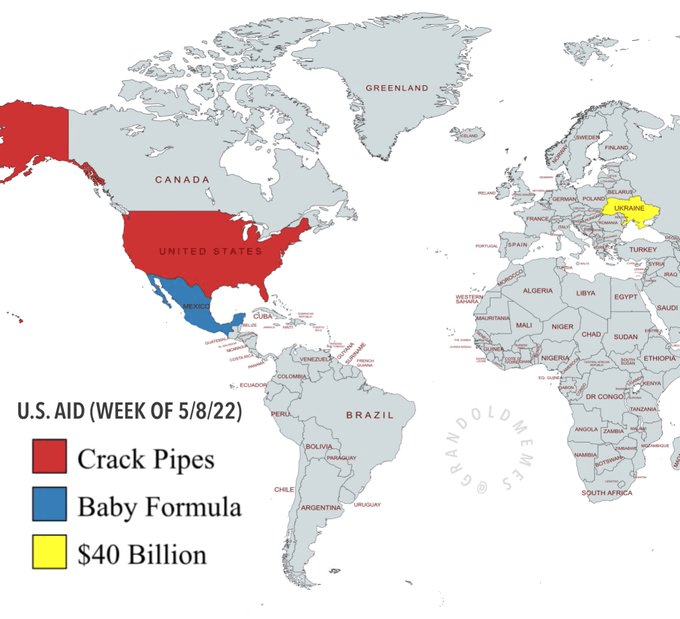
Your tax dollars at work…

Michael Aquino joined the U.S. Army in 1968 where he became an officer specializing in psychological warfare and, later, a Lieutenant colonel in military intelligence.
As Aquino climbed the ranks of the U.S. military, he also climbed the ranks of another organization: The Church of Satan.
“Michael Aquino began corresponding with Anton LaVey while a psychological operative for the U.S. Army, stationed in the jungles of Vietnam. Aquino returned to the States and was soon made a high-ranking priest and editor of the church’s Cloven Hoof newsletter. His distinctive appearance — he sported a prominent widow’s peak and darkly accented eyebrows — was further enhanced by a small 666 tattooed on his scalp.”
– Washington Post, A Devil of a Time
As years passed, the relationship between Aquino and LaVey deteriorated. The main reason: LaVey believed that Satan was a symbolic force while Aquino believed in the literal existence of Satan. In 1975, Aquino founded the Temple of Set – an occult order that revolved around an Egyptian deity on whom the Hebraic Satan was supposedly based.
Aquino’s occult activities did not interfere with his military career. In fact, he described politics and propaganda as forms of “lesser black magic”.
Aquino divided black magic into two forms: lesser black magic and greater black magic. He stated that lesser black magic entails “impelling” things that exist in the “objective universe” into doing a desired act by using “obscure physical or behavioral laws” and into this category he placed stage magic, psychodramas, politics, and propaganda.
– Jesper Aagaard, “The Seeds of Satan: Conceptions of Magic in Contemporary Satanism”
In 1980, as a “PSYOP Research & Analysis Team Leader”, Aquino c0-authored MindWar – an internal U.S. Army paper about the future of psychological operations. While this document was only intended for the eyes of government policymakers, it accidentally became public. And it caused quite a stir.
The US House of Representatives has voted 368-57 to spend $40 billion on a world-threatening proxy war while ordinary Americans struggle to feed themselves and their children. All 57 “no” votes were Republicans. Every member of the small faction of progressive House Democrats popularly known as “The Squad” voted yes.
The massive proxy war bill then went to the Senate, where it was stalled with scrutiny not from progressive superstar Bernie Sanders, but from Republican Rand Paul.
This is because the left-wing Democrat is a myth, like the good billionaire or the happy open marriage. It’s not a real thing; it’s just a pleasant fairy tale people tell themselves so they don’t have to go through the psychological turmoil of acknowledging that their entire worldview is built on lies.


New research from a Texas doctor has linked the onset of Gulf War illness in some veterans to exposure to the deadly nerve gas sarin.
“Our findings prove that Gulf War illness was caused by sarin, which was released when we bombed Iraqi chemical weapons storage and production facilities,” said Dr. Robert Haley, professor of internal medicine and director of the Division of Epidemiology at the University of Texas Southwestern Medical Center. “There are still more than 100,000 Gulf War veterans who are not getting help for this illness and our hope is that these findings will accelerate the search for better treatment.”
Haley, a medical epidemiologist who studies disease outbreaks in groups of people, has been investigating Gulf War illness for 28 years and used a genetic study that found some people have a stronger natural ability to fight the deadly chemical.
Troops who have genes that help metabolize the gas were less likely to develop the myriad of symptoms associated with the mysterious illness than those without it, according to the new research, which was released Wednesday. The findings were published in Environmental Health Perspectives, a peer-reviewed medical journal.
From the start of the Russian invasion of Ukraine on February 24, the Biden White House has repeatedly announced large and seemingly random amounts of money that it intends to send to fuel the war in Ukraine. The latest such dispatch, pursuant to an initial $3.5 billion fund authorized by Congress early on, was announced on Friday; “Biden says U.S. will send $1.3 billion in additional military and economic support to Ukraine,” read the CNBC headline.
This was preceded by a series of new lavish spending packages for the war, unveiled every two to three weeks, starting on the third day of the war:
Those amounts by themselves are in excess of $3 billion; by the end of April, the total U.S. expenditure on the war in Ukraine was close to $14 billion, drawn from the additional $13.5 billion Congress authorized in mid-March. While some of that is earmarked for economic and humanitarian assistance for Ukraine, most of it will go into the coffers of the weapons industry — including Raytheon, on whose Board of Directors the current Secretary of Defense, Lloyd Austin, sat immediately before being chosen by Biden to run the Pentagon. As CNN put it: “about $6.5 billion, roughly half of the aid package, will go to the US Department of Defense so it can deploy troops to the region and send defense equipment to Ukraine.”
As enormous as those sums already are, they were dwarfed by the Biden administration’s announcement on April 28 that it “is asking Congress for $33 billion in funding to respond to the Russian invasion of Ukraine, more than double the $14 billion in support authorized so far.” The White House itself acknowledges that the vast majority of that new spending package will go to the purchase of weaponry and other military assets: “$20.4 billion in additional security and military assistance for Ukraine and for U.S. efforts to strengthen European security in cooperation with our NATO allies and other partners in the region.”
It is difficult to put into context how enormous these expenditures are — particularly since the war is only ten weeks old, and U.S. officials predict/hope that this war will last not months but years. That ensures that the ultimate amounts will be significantly higher still.
The amounts allocated thus far — the new Biden request of $33 billion combined with the $14 billion already spent — already exceed the average annual amount the U.S. spent for its own war in Afghanistan ($46 billion). In the twenty-year U.S. war in Afghanistan which ended just eight months ago, there was at least some pretense of a self-defense rationale given the claim that the Taliban had harbored Osama bin Laden and Al Qaeda at the time of the 9/11 attack. Now the U.S. will spend more than that annual average after just ten weeks of a war in Ukraine that nobody claims has any remote connection to American self-defense.
Even more amazingly, the total amount spent by the U.S. on the Russia/Ukraine war in less than three months is close to Russia’s total military budget for the entire year ($65.9 billion). While Washington depicts Russia as some sort of grave and existential menace to the U.S., the reality is that the U.S. spends more than ten times on its military what Russia spends on its military each year; indeed, the U.S. spends three times more than the second-highest military spender, China, and more than the next twelve countries combined.
A Johns Hopkins University center dedicated to preventing child sexual abuse hired a professor who said adult sexual attraction to minors is OK as long as it’s not acted upon.
The Moore Center for the Prevention of Child Sexual Abuse announced Thursday that Allyn Walker will join the center as a postdoctoral fellow May 25, Fox News reported.
The cable network said the Moore Center confirmed the news in a statement that went on to note, “Walker is a leader in the field of perpetration prevention research, which is essential for developing a comprehensive public health approach to addressing child sexual abuse and effective prevention programs. … Walker’s expertise and qualitative research methodology will enhance and advance the Center’s work.”
Walke, while previously an assistant professor of sociology and criminal justice at Old Dominion University, stated in an interview last November that “there is no morality or immorality attached to attraction to anyone because no one can control who they’re attracted to at all.”
In 1976, Congress amended the Higher Education Act to make federal student loans nondischargeable through bankruptcy unless the borrower meets the undue hardship standard. The standard requires them to prove that they cannot maintain a minimal standard of living, their circumstances will likely not improve, and they have made a good-faith effort in repaying their debt.
Nearly three decades later, Joe Biden — then a senator serving Delaware — had a large role in making it that standard stricter. In 2005, Congress passed the Bankruptcy Abuse Prevention and Consumer Protection Act, and its implications for student-loan borrowers were dire. As signed into law under former President George W. Bush, the bill expanded the undue hardship requirement to borrowers with private student loans, expanding the scope of borrowers who would have to prove their impossible predicament in court.
During his 2020 presidential campaign, Biden defended his vote for the bill, saying in a Democratic primary debate that he “improved it.”
“I had a choice, it was going to pass — Republican president, Republican Congress, and I offered two amendments to make sure that people under $50,000 would not be affected and women and children would go to the front of the line on alimony and support payments,” Biden said in March 2020. “I did not like the rest of the bill, but I improved it, number one.”
Sen. Bernie Sanders of Vermont, one of Biden’s 2020 rivals who pushed for expansive student debt cancellation, blasted the 2005 bankruptcy law, along with Biden’s support of it.
“That bankruptcy bill made it impossible or very difficult for people to escape from that student debt,” Sanders said during the primary debate. “It was a very, very bad bill.”



You must be logged in to post a comment.