The Massive Infiltration of U.S. Virus Research by China’s Military

The following is one example of a much larger problem, not just at this institution, but all across the United States involving billions of taxpayer dollars in knowledge, skills and research grants being fed into China’s virus research laboratories, no doubt, some going to its biowarfare program.

The University of Texas Medical Branch (UTMB) in Galveston is a major virus research center heavily funded by the National Institutes of Health, especially Dr. Anthony Fauci’s National Institute of Allergy and Infectious Diseases.

In August 2020, UTMB was designated by Anthony Fauci as one of the ten Centers for Research in Emerging Infectious Diseases and newly funded by a NIAID grant totaling $82 million.

Perhaps not coincidentally, Fauci also designated Peter Daszak’s EcoHealth Alliance, a long-time collaborator with the Wuhan Institute of Virology, as another Center for Research in Emerging Infectious Diseases, awarding it $7.5 million.

UTMB is also the home of the Department of Defense-funded Center for Biodefense and Emerging Infectious Diseases.

UTMB has one of the few Biosafety Level 4 facilities for containing and conducting research on the world’s most dangerous viruses.

One does not need to dig very deeply to find that UTMB has been infiltrated by scientists of People’s Liberation Army, some believed to be linked to China’s biowarfare program.

Keep reading

Reporters Once Challenged the Spy State. Now, They’re Agents of It

After the Capitol riots of January 6th, the War on Terror came home, and “domestic extremists” stepped into the role enemy combatants played before. George Bush once launched an all-out campaign to pacify any safe haven for trrrsts, promising to “smoke ‘em out of their holes.” The new campaign is aimed at stamping out areas for surveillance-proof communication, which CNN security analyst and former DHS official Juliette Kayyem described as any online network “that lets [domestic extremists] talk amongst themselves.”

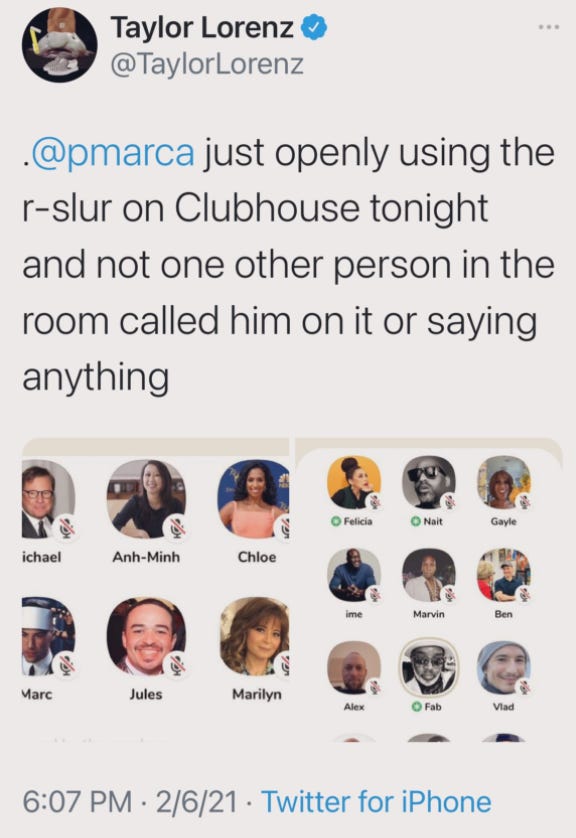
Reporters pledged assistance, snooping for evidence of wrongness in digital rather than geographical “hidey holes.” We’ve seen The Guardian warning about the perils of podcasts, ProPublica arguing that Apple’s lax speech environment contributed to the January 6th riot, and reporters from The Verge and Vice and The New York Times listening in to Clubhouse chats in search of evidence of dangerous thought. In an inspired homage to the lunacy of the War on Terror years, a GQ writer even went on Twitter last week to chat with the author of George Bush’s “Axis of Evil” speech about imploring the “authorities” to use the “Fire in a Crowded Theater” argument to shut down Fox News.

Multiple outlets announced plans to track “extremists” in either open or implied cooperation with authorities. Frontline, ProPublica, and Berkley Journalism’s Investigative Reporting Program used “high-precision digital forensics” to uncover “evidence” about the Boogaloo Bois, and the Huffington Post worked with the “sedition hunters” at the Twitter activist group “Deep State Dogs” to help identify a suspect later arrested for tasering a Capitol police officer. One of the Huffington Post stories, from February, not only spoke to a willingness of the press to work with law enforcement, but impatience with the slowness of official procedure compared to “sleuthing communities”:

The FBI wants photos of Capitol insurrections to go viral, and has published images of more than 200 suspects. But what happens when online sleuthing communities identify suspects and then see weeks go by without any signs of action…? There are hundreds of suspects, thousands of hours of video, hundreds of thousands of tips, and millions of pieces of evidence… the FBI’s bureaucracy isn’t necessarily designed to keep organized.

Keep reading

Reporters have to get quotes approved by White House before publishing

White House reporters are ​seething over a policy that requires them to submit quotes from interviews with Biden administration officials to the communications team for approval, editing or veto, according to a report on Tuesday.  ​

The White House is demanding that reporters who conduct interviews with administration officials do so under conditions known as “background with ​quote approval,” Politico reported. ​

The information from the interview can be used in a story, but for a reporter to be able to attach a name to the quote, ​the reporter must transcribe the comments and send them to the communications team, the report said. ​

At that point, the White House can approve them, edit them or veto their use.

Keep reading

Research Finds More Than Half of School Apps Sending Personal Student Data to Third Parties

According to a new research report published by the nonprofit entity Me2B Alliance, around 60 percent of school apps are sending student data to a wide range of high-risk third parties without getting the permission of either the students or their parents.

The study audited 73 apps from 38 different schools spread over 14 American states. It involved almost half a million people, including students, their teachers, and family members. The organization warned that school apps must not include third-party data channels and that an “unacceptable amount” of school data was being shared with third parties through these apps, specifically with analytics and advertising platforms.

“The findings from our research show the pervasiveness of data sharing with high-risk entities and the amount of people whose data could be compromised due to schools’ lack of resources… The study aims to bring these concerns to light to ensure the right funding support and protections are in place to safeguard our most vulnerable citizens – our children,” Lisa LeVasseur, executive director of Me2B Alliance, said in a statement.

The study found that around 18 percent of the apps had links to very high risk third parties, meaning that such parties probably re-shared the data with hundreds of thousands of entities. 67 percent of public school apps were found to be sending data to third parties, which is 10 percent higher than private school apps. 

Keep reading

REPORT: U.S. Special Forces Train Drug Cartel Enforcers Linked to Rape, Torture, Decapitation

Cártel Jalisco Nueva Generación (CJNG) has become one of the most feared paramilitaries in Mexico over the last decade. Images of the group have become the standard depiction of the Mexican cartel writ large. Their propaganda videos often feature groups of masked men bristling with enough small arms to make them formidable against even conventional armies.

In an interview aired on Mexico’s Telemundo network in May 2019, a former CJNG soldier described his experience at a training camp and claimed that the cartel employed U.S. special operations forces (SOF) to train their recruits. According to the former sicario assassin: there were Marines, there were Navy from the United States, there were Delta Force, there was everything there.”

The cartel dropout’s account is consistent with years of reports which show that U.S. special forces training is diffusing into the service of paramilitaries in Mexico.

The Special Forces training has been funded under the Plan Mérida, which has resulted in the U.S. providing more than $1.6 billion for fighting the War on Drugs, most of it in military aid.

Keep reading

DEA Report Shows Marijuana Arrests And Seizures Up In 2020

Data recently released by the U.S. Drug Enforcement Agency shows that federal law enforcement agents and their state and local partners seized more than 4.5 million marijuana plants in 2020, a figure that is up nearly 20% over 2019. The annual DEA report also shows that federal law enforcement officers made nearly 5,000 cannabis-related arrests in 2020, a year wracked by the social and economic fallout of the Covid-19 pandemic.

According to the data published in the DEA’s yearly Domestic Cannabis Eradication/Suppression Program Statistical Report, approximately 4.54 million cannabis plants were seized and eradicated in 2020, up from about 4 million plants in 2019. The totals include more than 3.7 million cannabis plants seized from 4,151 outdoor grow sites and more than 830,000 plants confiscated from 1,286 indoor cultivation operations.

“In 2020, the DEA continued its nationwide cannabis eradication efforts, providing resources to support the 127 state and local law enforcement agencies that actively participate in the program,” the agency wrote on its website. “This assistance allows the enhancement of already aggressive eradication enforcement activities throughout the nation.”

The data in the DEA report also showed that nearly 5,000 arrests for federal marijuana-related offenses were made by law enforcement officers in 2020. That figure is up slightly over 2019 when 4,718 arrests for federal marijuana crimes were made by agents. 

California saw the largest percentage of both arrests and confiscated cannabis plants in the country, a trend that continues from previous years. In 2020, approximately 82% of the seized cannabis plants and 40% of the marijuana-related arrests nationwide occurred in California. Nationwide, agents seized more than $41 million in assets related to the DEA’s marijuana eradication efforts in 2020.

Keep reading