
They have a point…

For about a decade, Joe Davis has been trying to send a message into space. This message is not intended for potential intelligent alien listeners, though. He’s already sent two signals into the void for them. He hopes that this communiqué will reach humans. On Earth. Ideally around 1935.
The dispatch, which Davis calls Swansong, is at its simplest a one-hour Morse code transmission listing numerous pandemics, natural disasters, genocides, and other tragedies that humans failed to mitigate or prevent between 1935 and 2011. The idea is to send it towards Cygnus X-1, a black hole over 6,000 lightyears from Earth, in order to slingshot the signal off of its time-distorting edge, into the past, and back towards us. If the gambit works, the Swansong project could, as Davis put it in his notes for a 2017 presentation on the idea, “be used to break the wheel of time.”
It’s easy to brush Swansong off as an outlandish idea, especially when you know that Davis is not a trained scientist. He earned a BA in creative arts in 1973 from the now-defunct Mount Angel College in Oregon, then moved back to Mississippi, where he’d grown up, and started working blue collar jobs, usually with machines. (He reportedly used his art and machine skills to design his own prosthetic after losing a leg.) In recent decades, he’s struggled to make ends meet as an artist, taking dishwashing gigs to help cover basic expenses — and occasionally failing to do so, facing eviction, and sleeping on friends’ couches or in his truck for days or weeks on end.
But Davis’s lack of credentials and material success do not reflect his intellectual capabilities. As an undergrad in the early 70’s, he reportedly got permission from notorious innovation hub Bell Laboratories to use their laser rigs to carve acrylic, glass, and plastic, publishing his techniques in an academic journal. Then, while working as a laborer, he drew up designs for an electron gun that NASA agreed to launch on its space shuttle to conduct an experiment that could have theoretically produced artificial northern lights. (Despite the agreement, theproject, dubbed Ruby Falls, never got off the ground due to a NASA budget shortfall.) And in 1982, he talked his way into a meeting with the head of MIT’s Center for Advanced Visual Studies, outlined his Ruby Falls plan and several other ideas, and walked out a research fellow. He’s been affiliated with MIT ever since.
Researchers have achieved a breakthrough in the development of artificial intelligence by using light instead of electricity to perform computations.
The new approach significantly improves both the speed and efficiency of machine learning neural networks – a form of AI that aims to replicate the functions performed by a human brain in order to teach itself a task without supervision.
Current processors used for machine learning are limited in performing complex operations by the power required to process the data. The more intelligent the task, the more complex the data, and therefore the greater the power demands.
Such networks are also limited by the slow transmission of electronic data between the processor and the memory.
Researchers from George Washington University in the US discovered that using photons within neural network (tensor) processing units (TPUs) could overcome these limitations and create more powerful and power-efficient AI.
It’s been a wild weekend for Russian startup 3D Bioprinting Solutions.
First, the company announced a partnership with fast food chain KFC as part of an effort to create the “world’s first laboratory-produced chicken nuggets.”
Now, the same company is ready to announce that it’s been hard at work bringing similar tech into orbit as well.
In an experiment on board the International Space Station that took place in 2018 but has only now been published, Russian cosmonaut Oleg Kononoenko was tasked to 3D print human cartilage cells in near-zero gravity using a machine called “Bioprinter Organ.Aut,” as Space.com reports — a machine assembled by, you guessed it, 3D Bioprinting Solutions.
The goal was to investigate ways to reverse some of the negative effects of spending prolonged periods of time in space, in particular evidence that parts of the human body can atrophy over time — something we’ve known about for quite some time.
The eventual hope is to give astronauts the ability to print entire body parts in space, according to the researchers — just in case something goes catastrophically wrong during a mission.
A paper about the research was published in the journal Science Advances last week.
A new material called Proteus is billed as just 15 percent the density of steel, but completely resistant to being cut through. That means cyclists around the world may be blessed with truly inviolable locks for the first time ever.
People who want to steal the outdoor furniture from restaurant patios will have to cut the furniture now instead of the cable lock. Most importantly, TV writers will have to work even harder to make it seem easy to get into a locked electrical storage or nuclear facility.
Researchers in Germany and the U.K. have teamed up to make a material they say uses harmony and vibration to thwart any attempts to cut it. “Our architecture derives its extreme hardness from the local resonance between the embedded ceramics in a flexible cellular matrix and the attacking tool, which produces high-frequency vibrations at the interface,” they explain in their paper.
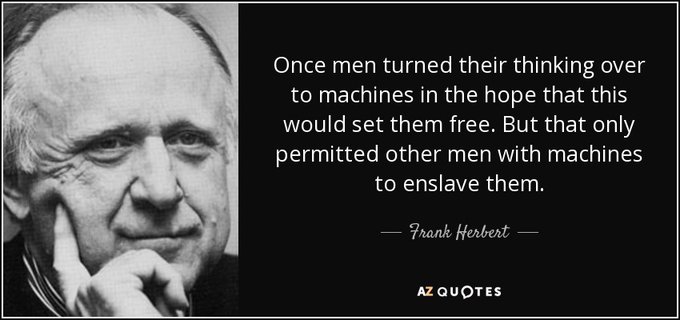
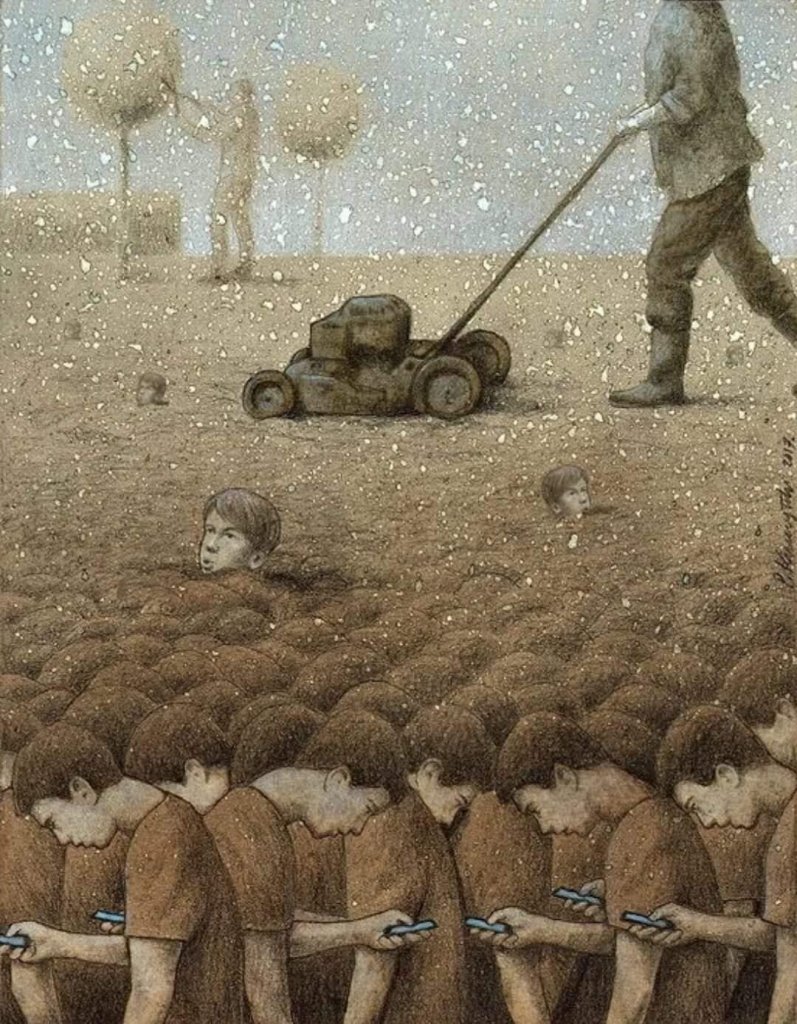

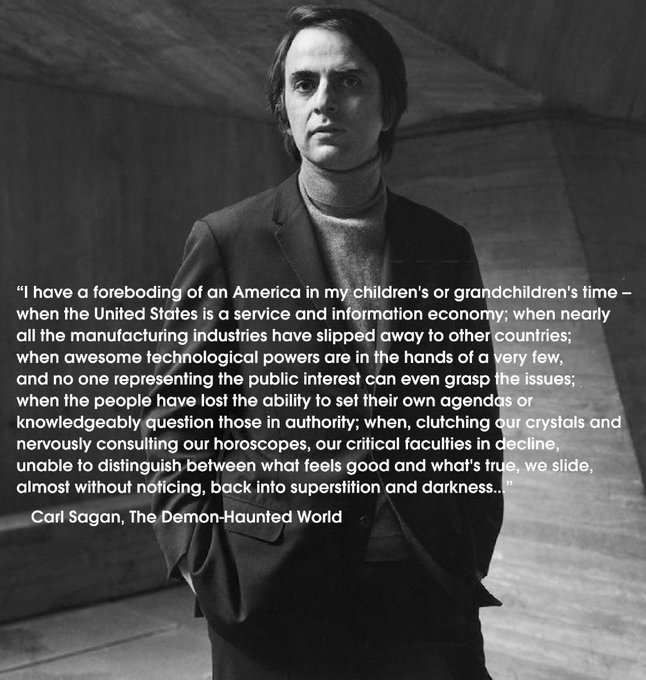
NATIONWIDE PROTESTS AGAINST racist policing have brought new scrutiny onto big tech companies like Facebook, which is under boycott by advertisers over hate speech directed at people of color, and Amazon, called out for aiding police surveillance. But Microsoft, which has largely escaped criticism, is knee-deep in services for law enforcement, fostering an ecosystem of companies that provide police with software using Microsoft’s cloud and other platforms. The full story of these ties highlights how the tech sector is increasingly entangled in intimate, ongoing relationships with police departments.
Microsoft’s links to law enforcement agencies have been obscured by the company, whose public response to the outrage that followed the murder of George Floyd has focused on facial recognition software. This misdirects attention away from Microsoft’s own mass surveillance platform for cops, the Domain Awareness System, built for the New York Police Department and later expanded to Atlanta, Brazil, and Singapore. It also obscures that Microsoft has partnered with scores of police surveillance vendors who run their products on a “Government Cloud” supplied by the company’s Azure division and that it is pushing platforms to wire police field operations, including drones, robots, and other devices.


You must be logged in to post a comment.