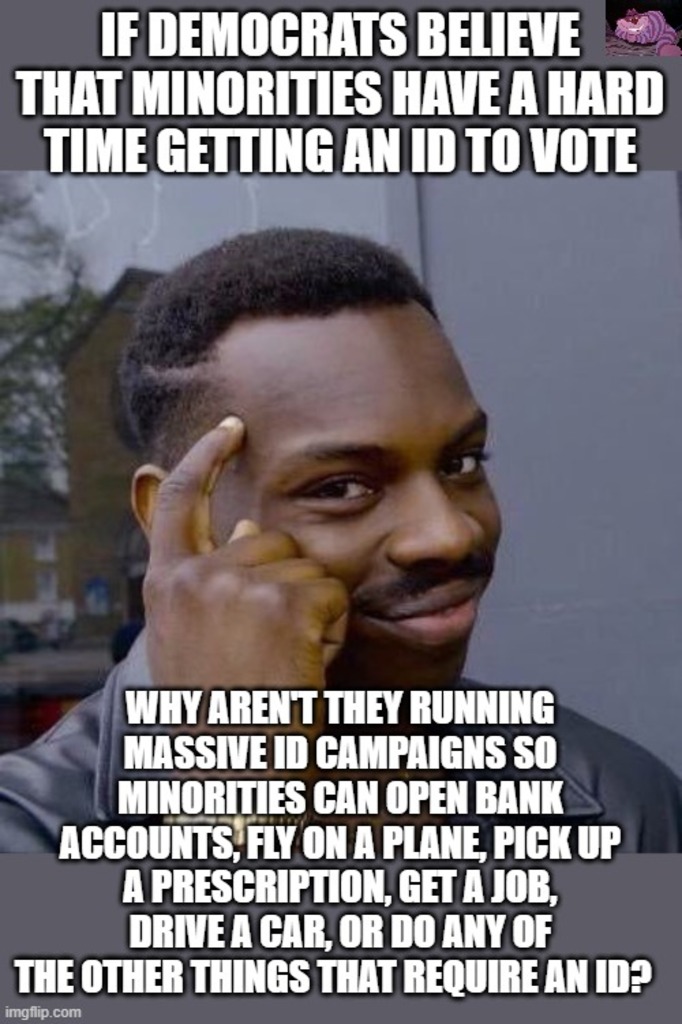
Wokeness and Its Not-at-all-racist Doctrines of Disempowerment

I recently got asked to comment privately about Thomas Sowell’s work and why his views about racism and personal responsibility are so anathema to Critical Race Theory. The short answer is, obviously, that not only does he disagree and not only is he at least significantly right about what he’s saying, he’s also putting responsibility on what Theory considers, in a not-at-all-racist way, to be a permanent victim class. That’s simply not allowed. Critical Race Theory ultimately seeks to “empower” blacks and (kind of) other “minoritized races” by forcing onto them and leveraging a perpetual victimhood status. Admittedly, this clearly has some short-term practical efficacy, though that comes at significant, if not Pyrrhic, costs.

This isn’t empowerment, though. It’s disempowerment, even if we discount the other costs of such a not-at-all-racist doctrine. It’s really important to understand that the Woke movement is significantly about deferring responsibility from groups it defines as “victims of systemic oppression,” which it, in turn, defines as ordinary and all-but-permanent states of affairs that are woven into the very fabric of society. That’s one of the main points of the whole Woke project: to make “it’s not our fault; nothing is” a motto for the “oppressed.” So when someone like Sowell tells people that there’s some issue with that inherently disabling perspective, or with the visibly and very discriminantly abusive “politically black culture” (“Blackness”) that has risen up around it, advocates of Theory and the grifters who can use the narrative of perpetual victimhood to their own advantage get really mad at him.
Keep reading

Law Student’s Instagram Posting Triggers Debate Over Anti-White Speech

The University of Miami Law School is facing a controversy over how to handle racist comments directed against white students – with objections over a double standard at the university. 

It is increasingly common to read anti-white commentary in the media, including a column recently from Elie Mystal writer for Above the Law and The Nation’s justice correspondent who lashed out at “white society” and how he strived to maintain a “whiteness free” life in the pandemic.

Miami Law School has been silent in the face of complaints filed against student Jordan Gary after she posted her comments publicly on Instagram.

Gary publicly declared that she “hate[s] white people,” and noted that “People always tell me like ‘hate is such a strong word. And yes it is, but these are some strong ass stories I heard. And until I can figure out how to reconcile that in my head, and in my heart, I hate white people.”  According to her LinkedIn page, Gary is the president of the Black Law Students Association and also the writing editor for the Race & Social Justice Law Review at the university.

Conservative sites asked Miami’s Dean for a comment but there has been no public statement even after the filing of complaints.

The issue of anti-white commentary raises a subject so sensitive that few universities are willing to openly discuss it. As will come as little surprise to many on this blog, my default remains with free speech, particularly for comments made outside of a school on social media. That does not mean that schools should not denounce intolerant or racist speech.  However, these comments are bound up with an array of personal, social, and political issues for students like Gary. I would rather discuss these views than seek to punish their expression.

Keep reading

University Of Oregon Paid ‘1619 Project’ Writer Nikole Hannah-Jones $25K To Lecture On ‘Systemic Racism’

The University of Oregon’s School of Journalism and Communication paid New York Times journalist Nikole Hannah-Jones, the writer behind the anti-historical “1619 Project,” for a Zoom lecture in February on “1619 and the Legacy that Built a Nation,” as first reported by Campus Reform.

Hannah-Jones raked in $25,000, evident by a Freedom of Information Request filed by Campus Reform. The Feb. 19 event was co-sponsored by the university’s Office of the President, Office of the Provost, and Division of Equity and Inclusion, among other groups.

Keep reading

SF district attorney withdraws charges against defendant in attack on Asian man

San Francisco District Attorney Chesa Boudin withdrew charges on Monday against one of two suspects in a disturbing attack on an Asian man in San Francisco’s Bayview that was captured on video and prompted outrage from city leaders, officials said.

The district attorney’s office will pursue a “restorative justice” model against 20-year-old Dwayne Grayson, who was booked last week on suspicion of robbery, elder abuse, a hate crime charge and probation violation following the Feb. 22 incident.

Police said Grayson recorded the attack and posted it to social media.

Boudin charged him with elder abuse last week, but pulled back the charges after having a conversation with the victim, said Alex Bastian, a spokesman for the district attorney’s office. The victim has not been identified or spoken publicly about the incident.

“We’ve been in conversation with the victim who expressed interest in a restorative justice outcome in this case,” Bastian said. “Specifically, against the young person who videoed the incident. We respect victims and their desires, and we will explore a restorative justice outcome.”

Keep reading

Russia Warns of Anti-White ‘Aggression’ in U.S.

Russian Foreign Minister Sergei Lavrov on Thursday warned that anti-white racism might be building in the United States and said that political correctness “taken to the extreme” would have lamentable consequences.

In an interview with political scientists broadcast on national television, Moscow’s top diplomat said Russia had long supported a worldwide trend that “everyone wants to get rid of racism.”

“We were pioneers of the movement promoting equal rights of people of any skin color,” he said.

But Lavrov stressed it was important “not to switch to the other extreme which we saw during the ‘BLM’ (Black Lives Matter) events and the aggression against white people, white U.S. citizens.”

Keep reading

The tyranny of racial groupthink

‘White privilege’, ‘black oppression’ – these are the kinds of grand generalisations with which we are all familiar by now. They are the sweeping concepts we are encouraged to use to interpret our world – a world in which we don’t realistically live as individuals, but as ‘black people’, ‘white people’, ‘Asians’, ‘people of colour’ et al. The only ideas that are deemed to matter are the ‘structures’ and ‘systems’ that underpin the Big Picture, while everything else is deemed pretty much irrelevant detail. In the world of these grand theories and totalising narratives on race, the individual is relegated to the background.

The important question, of course, is why this has happened, especially given that the desire to be treated as individuals, not nameless members of this or that group, is a pretty universal one. I find it difficult to imagine there are people of any ethnic or racial background who do not want to be viewed primarily as individuals, including those most responsible for popularising the sweeping groupist language of our times. I find it hard to believe many would disagree with the words of Czesław Miłosz, the Polish Nobel-winning writer, who, in reference to the soul-numbing language of the communist ideologues who ran Cold War Eastern Europe, said: ‘The true enemy of man is generalisation.’ Nothing quite diminishes us more. So why then has language obscuring our individuality taken such a strong hold in what is supposed to be an age of empathy? After all, to empathise requires, by definition, seeing a human individual, not a group or statistic.

Keep reading