
Doublespeak

It is a language that is alive and well in our world today.

Doublespeak can refer to terms that are euphemisms (mild expressions designed to hide harsher or more direct ones), deliberately ambiguous (expressions designed to hide the truth) or actual inversions (outright lies which state the opposite of the truth).

Although he never used the term doublespeak in his book 1984, many associate doublespeak with George Orwell.

After all, it was Orwell who famously wrote that the motto of the totalitarian ruling party in 1984 was “War is Peace, Freedom is Slavery, Ignorance is Strength” – an example of an inversion.

Orwell did however use the term newspeak to refer to a new kind of language which drastically reduced the scope of available words and terms, so as to concurrently reduce the scope of possible free thought among the ruled population.

Many doublespeak terms in the following list are oxymorons, meaning that the term itself is contradictory.

Many hide the truth because it is too raw, unpalatable, uncomfortable or outright horrifying. It is vitally important we watch our language, because it plays a great part in how we shape our world and in how we create our reality.

In many ways, by unconsciously using these terms instead of more accurate or truthful ones, we are quietly lying to ourselves, or at a minimum acquiescing to the process of being lied to and programmed.

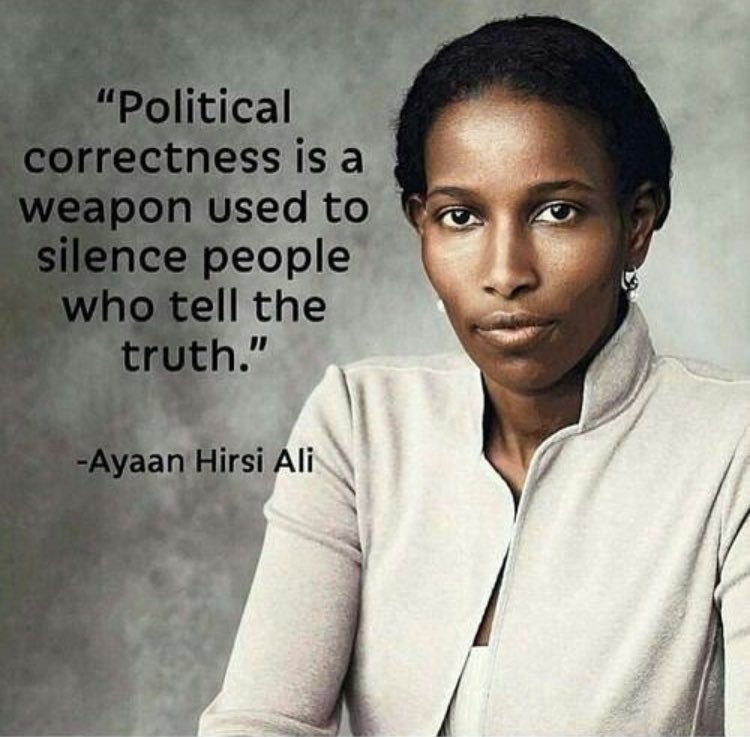
Political correctness is a great example of how language control, thought control and doublespeak can be introduced to an entire population without people realizing they are being deceived and manipulated.

Below is list of the top 20 modern Orwellian doublespeak terms, with the first half focusing on military and geopolitical terms.

Keep reading

HBO Max Adds Introduction to ‘Blazing Saddles’ About ‘Racist Language’

If you go to watch Mel Brooks’ classic Western spoof Blazing Saddles on HBO Max this weekend, you’ll find something new: An introduction from film scholar and TCM host Jacquline Stewart. This follows HBO Max’s decision to briefly remove the controversial Oscar winner Gone With the Wind from its offerings, and then to make it available again with its own contextualizing intro, also by Stewart.

Keep reading

Rocker Nick Cave: Cancel Culture Is ‘Bad Religion Run Amuck’

Earlier this year, the highly regarded Australian rocker and “Goth heartthrob” Nick Cave criticized “perpetually pissed-off…pearl-clutchers” who demand that old songs, novels, and other works of creative expression be censored or changed when they offend contemporary sensibilities. Writing in his monthly newsletter The Red Hand Files, he averred

I would rather be remembered for writing something that was discomforting or offensive, than to be forgotten for writing something bloodless and bland.

In the most recent edition of The Red Hand Files, Cave again takes aims against “cancel culture,” especially what he sees as its “refusal to engage with uncomfortable ideas” and “asphyxiating effect on the creative soul of a society.” Cancel culture, he writes, “is mercy’s antithesis,” an impulse that combines the worst aspects of religious fervor and ideological certitude.

Political correctness has grown to become the unhappiest religion in the world. Its once honourable attempt to reimagine our society in a more equitable way now embodies all the worst aspects that religion has to offer (and none of the beauty) — moral certainty and self-righteousness shorn even of the capacity for redemption. It has become quite literally, bad religion run amuck.

Cancel culture’s refusal to engage with uncomfortable ideas has an asphyxiating effect on the creative soul of a society. Compassion is the primary experience — the heart event — out of which emerges the genius and generosity of the imagination. Creativity is an act of love that can knock up against our most foundational beliefs, and in doing so brings forth fresh ways of seeing the world. This is both the function and glory of art and ideas. A force that finds its meaning in the cancellation of these difficult ideas hampers the creative spirit of a society and strikes at the complex and diverse nature of its culture.

Keep reading

Georgia student expelled for racist social media reinstated, school finds she didn’t post it

Wesleyan College in Macon, Georgia, said Tuesday a student expelled for racist social media was reinstated after an appeal revealed the woman did not post the content.

“We received new information showing that the student did not post the racist content in early June,” the school said in a statement. “We will ensure she transitions seamlessly back into campus life when the fall semester begins. She has our full support.”

The expulsion was announced by the school June 4 after the college, the first in the world chartered for women, was made aware of the postings that morning, according to Tuesday’s statement as well as one made June 4.

On that day, multiple accounts on social media highlighted Instagram posts by a woman purporting to be a Wesleyan student. One photo features a woman and a statement about Black Americans that uses the n-word.

Two Halloween posts shared that day include a photo of a woman in a green “Border Patrol” t-shirt holding handcuffs and posing with a man in a serape and sombrero, paired with the words, “border?…secured. found him, met him & and just had to get a pic.”

While the institution said it cleared the student because she did not post the content, it did not say if the content in question showed the student using racist language and imagery. It did not reveal the student’s name, nor did it refer directly to the Instagram posts described by critics.

Jan Lawrence, a member of the school’s board of managers, said on Facebook that the student argued convincingly at a “Faculty Student Judicial Board” hearing “she did not make the racist post.”

The imagery examined by the school was from the student’s high school days, Lawrence said, and was created during school activity. The student’s argument “supposedly includes proof that the words were added by someone who downloaded her photo and then reposted it,” she said.

The college did not immediately respond to an NBC News inquiry.

“Even though we erred in judgment in the case of this particular student, that will not deter us from doing our part to denounce racism and hate and build an environment where mutual respect and understanding can flourish,” Fowler said.

Keep reading