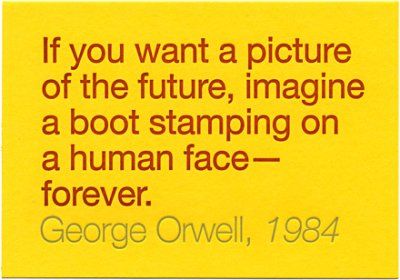
But but but the Constitution…


Is this Canada’s first “mask murder”?
Those who keep up with coronavirus-related news in the US probably remember an incident that transpired a few months ago where a security guard at a Family Dollar store in Michigan was shot and killed after asking a customer to put on a mask. But a similar incident that occurred more than a month later, where police shot and killed a man after he refused to wear his mask, got much less attention outside of the local press.
Well, this week, Canada one of its first samples of mask-related violence when police shot and killed a man in Ontario after he refused to put on a mask.
According to the CBC, Ontario’s police watchdog unit is investigating an incident where two officers shot and killed a 73-year-old man in Haliburton County on Wednesday morning. Right before the killing, the man had refused to wear a mask and allegedly assaulted a grocery store employee before driving off, according to a statement from the Ontario police that leaves out most of the details about how the shooting transpired.
Initially, police were called to a Valu-Mart in Minden, Ontario, just after 8am local time, according to OPP Sgt. Jason Folz, who spoke with the CBC.
When the suspect left the scene after officers arrived, police refrained from trying to stop him after he drove off “in the interest of public safety”. Instead, they took down his license plate, and showed up at his house later.
Two officers later visited the man at his home in Minden on Indian Point Road, the SIU said.
Outside the home, an unspecified “interaction” ensued, and two police officers fired their guns at the man. The Ontario Police SIU (the unit that handles press) said that after the shooting, the officers called in “additional resources”, which were brought to the area near Eagle Lake, by the village of Haliburton.
The shooting victim was taken to a nearby hospital, where he was pronounced dead a couple of hours later. Officers recovered a pistol and a semi-automatic rifle from the scene, but it’s not clear whether the man had brandished them at the police, or whether he was unarmed during the encounter.
As of Friday, investigators have thoroughly searched the scene, and an autopsy report is expected (though the findings aren’t really in doubt).
But if the man attacked the officers first, why didn’t they just say that?

Pandemic maps are all the rage, these days, but the latest one from the Electronic Frontier Foundation (EFF) is a little different; instead of viral hotspots, it displays a plague of official snoopiness, arranged by location and sortable by technology. While it documents intrusions that predate the current crisis, the Atlas of Surveillance is all too relevant to the age of coronavirus. Concerns about curtailing contagion help to normalize detailed scrutiny of people’s lives and drive us toward a pervasive surveillance state.
“The Atlas of Surveillance database, containing several thousand data points on over 3,000 city and local police departments and sheriffs’ offices nationwide, allows citizens, journalists, and academics to review details about the technologies police are deploying, and provides a resource to check what devices and systems have been purchased locally,” EFF announced on July 13.
Users can click on the map to see what surveillance technologies are used in specified localities. If you want to see what’s going on in your area, the map is searchable by the name of a city, county, or state. The map can also be filtered according to technologies such as body-worn cameras, drones, and automated license plate readers.


AS PROTESTS DENOUNCING POLICE BRUTALITY against unarmed Black people spread to thousands of cities, it was videos of police violence — this time, directed at protesters — that went viral. Clips showed officers launching tear gas canisters at protesters’ heads, shooting pepper spray from moving vehicles and firing foam bullets into crowds.
ProPublica looked at nearly 400 social media posts showing police responses to protesters and found troubling conduct by officers in at least 184 of them. In 59 videos, pepper spray and tear gas were used improperly; in a dozen others, officers used batons to strike noncombative demonstrators; and in 87 videos, officers punched, pushed and kicked retreating protesters, including a few instances in which they used an arm or knee to exert pressure on a protester’s neck.
While the weapons, tactics and circumstances varied from city to city, what we saw in one instance after another was a willingness by police to escalate confrontations.
Experts said weapons that aren’t designed to be lethal, from beanbag rounds to grenades filled with pepper spray, can make officers more willing to respond to protesters with force and less disposed to de-escalate tense situations. Not only can some of these weapons cause considerable injury to protesters, particularly if misused, but experts say the mere presence of the weapons often incites panic, intensifies confrontations and puts people on all sides at risk.
And of course, unlike a mass demonstration urging action on an issue like climate change, the protests over police brutality are directed squarely at the officers standing watch. Any use of force can remind protesters what brought them into the streets in the first place and redouble their outrage.
You must be logged in to post a comment.