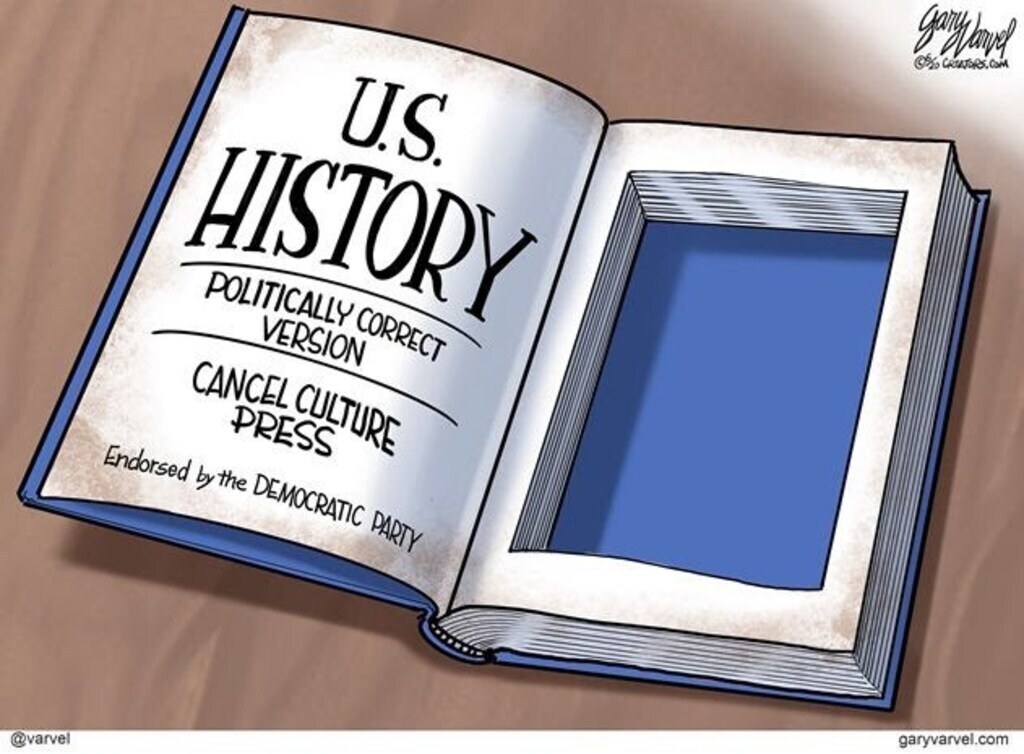
New York Times Columnist Suggests Canceling Speedy Gonzales, Pepé Le Pew

Charles Blow, a left-wing columnist for the New York Times, has suggested canceling the popular Looney Tunes cartoon characters Speedy Gonzales and Pepé Le Pew — the former because it is “racist,” the latter for contributing to “rape culture.”

Blow made the suggestions in a column applauding the removal of several Dr. Seuss books from circulation for allegedly racist caricatures. In the column, titled, “Six Seuss Books Bore a Bias,” Blow argued: “Racism must be exorcised from culture, including, or maybe especially, from children’s culture.”

He wrote:

As a child, I was led to believe that Blackness was inferior. And I was not alone. The Black society into which I was born was riddled with these beliefs.

It wasn’t something that most if any would articulate in that way, let alone knowingly propagate. Rather, it was in the air, in the culture. We had been trained in it, bathed in it, acculturated to hate ourselves.

It happened for children in the most inconspicuous of ways: It was relayed through toys and dolls, cartoons and children’s shows, fairy tales and children’s books.

Some of the first cartoons I can remember included Pepé Le Pew, who normalized rape culture; Speedy Gonzales, whose friends helped popularize the corrosive stereotype of the drunk and lethargic Mexicans; and Mammy Two Shoes, a heavyset Black maid who spoke in a heavy accent.

Keep reading

The Spectre of Totalitarianism

In March 2019, tax expert Maya Forstater was dismissed from her job — legally, according to a later judicial ruling — for voicing the view that “sex is a biological fact, and is immutable.” When author J.K. Rowling came to Forstater’s defence, she was bombarded with abuse, including an invitation from one lady to “choke on my fat trans cock”. The case became a cause célèbre. But it is only one of many such cases. Today, anyone who ventures a controversial opinion on “trans”, race, disability, Middle Eastern politics and a handful of other issues risks being fired, insulted, intimidated and possibly prosecuted. 

Last year, a “Journal of Controversial Ideas” was launched, offering authors the option of writing under a pseudonym “in order to protect themselves from threats to their careers or physical safety”. How did things come to this pass?

The new intolerance is often seen as a specifically left-wing phenomenon — an intensification of the “political correctness” which emerged on US campuses in the 1980s. But that is a one-sided view of the matter. It was US Zionists who pioneered the tactic of putting pressure on organisations to disinvite unfavoured speakers; far-right nationalists are among the keenest cyberbullies; and religious zealots of all stripes are prodigal of death threats. 

Generalising, one might say that left-wing groups, being more publicly respectable in our part of the world, prefer to pursue their objectives through institutions and the law, whereas right-wing groups seek out the anonymity of the internet. But the goal on each side is the same: it is to intimidate, suppress, silence. In any case, the distinction between “left” and “right” is becoming increasingly muddled, as lines shift and alliances regroup. All one can safely say is that the various forms of contemporary extremism imitate and incite each other. What has given way is the civilised middle ground.

Keep reading

Moral Outrage Is Self-Serving, Say Psychologists

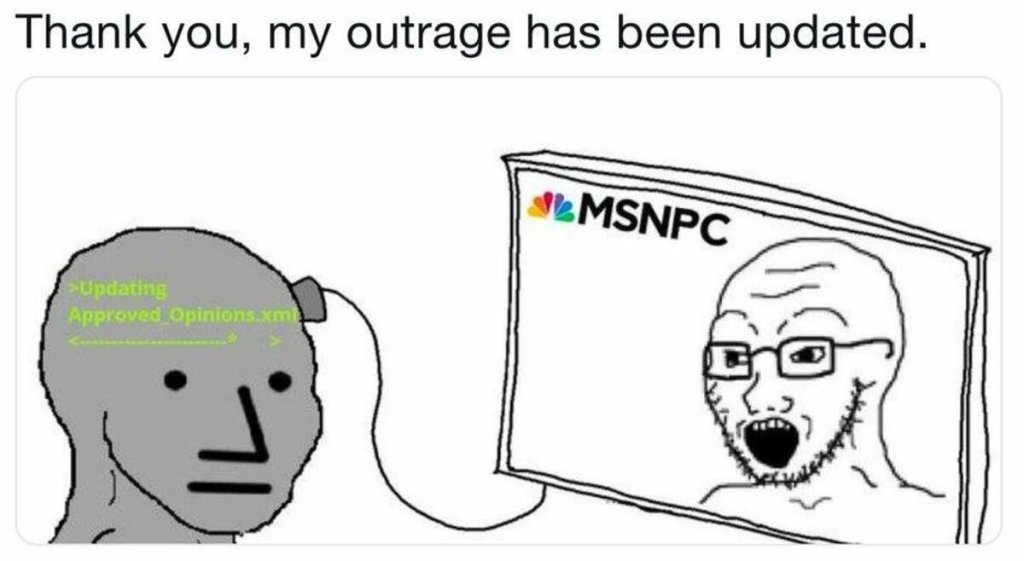
When people publicly rage about perceived injustices that don’t affect them personally, we tend to assume this expression is rooted in altruism—a “disinterested and selfless concern for the well-being of others.” But new research suggests that professing such third-party concern—what social scientists refer to as “moral outrage”—is often a function of self-interest, wielded to assuage feelings of personal culpability for societal harms or reinforce (to the self and others) one’s own status as a Very Good Person.

Keep reading

Webster’s Dictionary Sprints To Edit Definition Of Word ‘Preference’ To Comply With Grievance Culture

Webster’s Dictionary quickly edited the definition of the word “preference” after it was declared by some as an “offensive” term to use when discussing sex.

The dictionary previously added in a definition for “preference” to include “orientation” and “sexual preference,” Steve Krakauer, the executive producer of Megyn Kelly’s podcast, tweeted.

After Supreme Court nominee Judge Amy Coney Barrett used the term “sexual preference” Tuesday during confirmation hearings, some, including Democratic Hawaii Sen. Mazie Hirono, claimed that the term is offensive – despite it being used widely. Barrett later apologized, saying she “honestly did not mean any offense or to make any statement by that.”

Shortly after, Webster’s Dictionary sprinted to edit the definition of “preference” in regards to the term “sexual preference,” this time declaring that it is “offensive,” archives of the website suggest.

Keep reading