THE BROOKLYN HOLOGRAM STUDIO RECEIVING MILLIONS FROM THE CIA

LAST SUMMER, Looking Glass Factory, a company based in the Greenpoint neighborhood of Brooklyn, New York, revealed its latest consumer device: a slim, holographic picture frame that turns photos taken on iPhones into 3D displays. Linus Sebastian, an affable YouTube personality behind the immensely popular technology channel Linus Tech Tips, gave his viewers a preview of the technology.

Sebastian praised the Looking Glass Portrait as “freaking awesome,” especially considering the progress the company had made since Sebastian had toured their office two years earlier, after $2.5 million in money from a Kickstarter campaign. “For the price, for the amount of development work, and how niche this thing is, it honestly looks like a pretty compelling value for the right customer,” marveled Sebastian. “Which raises the questions, who is that exactly?”

Sebastian suggested the product would be a perfect fit for those who wanted to “flex” with a novelty piece of artwork or a designer seeking to preview their own work.

But Looking Glass Factory’s other customers went unmentioned in any of the splashy coverage of the new device: the Central Intelligence Agency and the Department of Defense. The military was interested in holographic technology, but the price was a potential obstacle. “The high cost of assembling holographic display devices are restraining market growth,” noted International Defense Security & Technology, a trade publication, last year. One of the growing players in the market, IDST added, is Looking Glass Factory.

Keep reading

Biden admin adds $100 million in arms for Ukraine on top of $40 billion aid package

The Biden administration has announced $100 million in arms funding to Ukraine on top of the newly approved $40 billion aid package.

On Thursday, the Senate approved $40 billion in aid for Ukraine as the nation continues to fight back against Russia’s invasion.

Just hours later, Secretary of State Antony Blinken announced that the United States would be sending an additional $100 million in arms.

In a statement, Blinken explained that Ukrainian forces have “remained firmly in the fight” against Russia, but are in need of assistance, namely arms and other equipment.

“Pursuant to a delegation from the President,” Blinken said, “I am authorizing our tenth drawdown of additional arms and equipment for Ukraine’s defense from US Department of Defense inventories, valued at up to $100 million.”

Keep reading

US troops smuggle 70 oil tankers out of Syria

US occupation forces have reportedly continued looting Syrian oil from the northern Al-Jazeera region of Syria’s Hasakah governate, as a US-military convoy of around 70 oil tankers made their way towards Iraq through the illegal Al-Waleed border crossing on 14 May.

According to local sources in the Al-Yarubiyah countryside, the convoy was accompanied by an additional 15 trucks carrying military equipment bound for Iraq, as well as six armored vehicles.

This comes just one day after 46 US vehicles were reportedly transferred out of Syria through the same border crossing.

US troops and their proxy in northern Syria, the Syrian Democratic Forces (SDF), are in control of most of the oil fields in Hasakah and Deir Ezzor and have been regularly smuggling Syrian oil out of the country to sell it abroad.

Dozens of similar US convoys have been reported over the last year and a half. On 18 December 2021, nearly one hundred oil tankers were smuggled into northern Iraq through the same illegal crossing.

Keep reading

The Bizarre, Unanimous Dem Support for the $40b War Package to Raytheon and CIA: “For Ukraine”

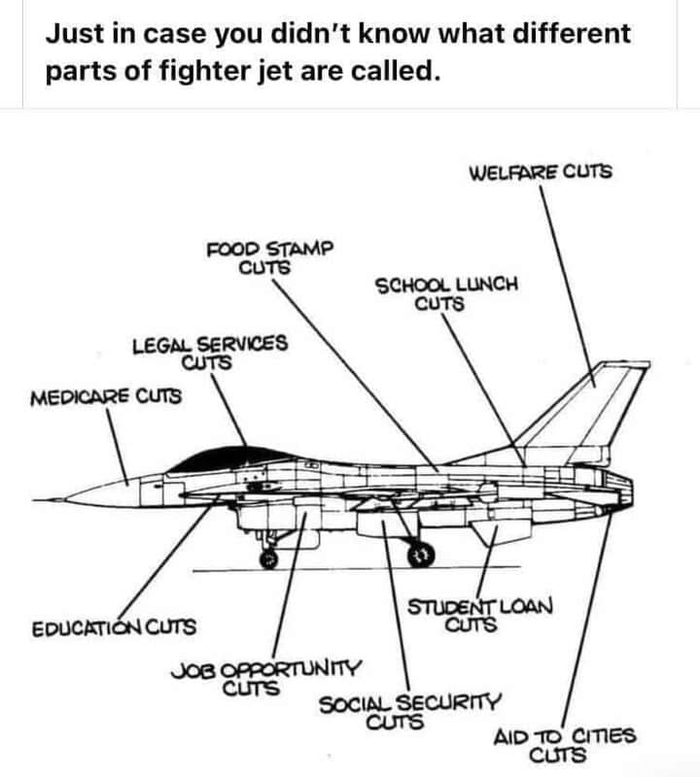
After Joe Biden announced his extraordinary request for $33 billion more for the war in Ukraine — on top of the $14 billion the U.S. has already spent just ten weeks into this war — congressional leaders of both parties immediately decided the amount was insufficient. They arbitrarily increased the amount by $7 billion to a total of $40 billion, then fast-tracked the bill for immediate approval. As we reported on Tuesday night, the House overwhelmingly voted to approve the bill by a vote of 388-57. All fifty-seven NO votes came from Republican House members. Except for two missing members, all House Democrats — every last one, including all six members of the revolutionary, subversive Squad — voted for this gigantic war package, one of the largest the U.S. has spent at once in decades.

While a small portion of these funds will go to humanitarian aid for Ukraine, the vast majority will go into the coffers of weapons manufacturers such as Raytheon, Lockheed Martin, Boeing and the usual suspects. Some of it will go to the CIA for unspecified reasons. The extreme speed with which this was all approved means there is little to no oversight over how the funds will be spent, who will profit and how much, and what the effects will be for Ukraine and the world.

To put this $54 billion amount in perspective, it is (a) larger than the average annual amount that the U.S. spent on its own war in Afghanistan ($46 billion), (b) close to the overall amount Russia spends on its entire military for the year ($69 billion), (c) close to 7% of the overall U.S. military budget, by far the largest in the world ($778 billion), and (d) certain to be far, far higher — easily into the hundreds of billions of dollars and likely the trillion dollar level — given that U.S. officials insist that this war will last not months but years, and that it will stand with Ukraine until the bitter end.

Keep reading

The Occult History of the U.S. Military’s PSYOPS and its Highly Symbolic Recruitment Video

Michael Aquino joined the U.S. Army in 1968 where he became an officer specializing in psychological warfare and, later, a Lieutenant colonel in military intelligence.

As Aquino climbed the ranks of the U.S. military, he also climbed the ranks of another organization: The Church of Satan.

“Michael Aquino began corresponding with Anton LaVey while a psychological operative for the U.S. Army, stationed in the jungles of Vietnam. Aquino returned to the States and was soon made a high-ranking priest and editor of the church’s Cloven Hoof newsletter. His distinctive appearance — he sported a prominent widow’s peak and darkly accented eyebrows — was further enhanced by a small 666 tattooed on his scalp.”
– Washington Post, A Devil of a Time

As years passed, the relationship between Aquino and LaVey deteriorated. The main reason: LaVey believed that Satan was a symbolic force while Aquino believed in the literal existence of Satan. In 1975, Aquino founded the Temple of Set – an occult order that revolved around an Egyptian deity on whom the Hebraic Satan was supposedly based.

Aquino’s occult activities did not interfere with his military career. In fact, he described politics and propaganda as forms of “lesser black magic”.

Aquino divided black magic into two forms: lesser black magic and greater black magic. He stated that lesser black magic entails “impelling” things that exist in the “objective universe” into doing a desired act by using “obscure physical or behavioral laws” and into this category he placed stage magic, psychodramas, politics, and propaganda.
– Jesper Aagaard, “The Seeds of Satan: Conceptions of Magic in Contemporary Satanism”

In 1980, as a “PSYOP Research & Analysis Team Leader”, Aquino c0-authored MindWar – an internal U.S. Army paper about the future of psychological operations. While this document was only intended for the eyes of government policymakers, it accidentally became public. And it caused quite a stir.

Keep reading

Biden Wanted $33B More For Ukraine. Congress Quickly Hiked To $40B. Who Benefits?

From the start of the Russian invasion of Ukraine on February 24, the Biden White House has repeatedly announced large and seemingly random amounts of money that it intends to send to fuel the war in Ukraine. The latest such dispatch, pursuant to an initial $3.5 billion fund authorized by Congress early on, was announced on Friday; “Biden says U.S. will send $1.3 billion in additional military and economic support to Ukraine,” read the CNBC headline.

This was preceded by a series of new lavish spending packages for the war, unveiled every two to three weeks, starting on the third day of the war:

  • Feb. 26: “Biden approves $350 million in military aid for Ukraine”: Reuters;
  • Mar. 16: “Biden announces $800 million in military aid for Ukraine”: The New York Times;
  • Mar. 30: “Ukraine to receive additional $500 million in aid from U.S., Biden announces”: NBC News;
  • Apr. 12: “U.S. to announce $750 million more in weapons for Ukraine, officials say”: Reuters;
  • May 6: “Biden announces new $150 million weapons package for Ukraine”: Reuters.

Those amounts by themselves are in excess of $3 billion; by the end of April, the total U.S. expenditure on the war in Ukraine was close to $14 billion, drawn from the additional $13.5 billion Congress authorized in mid-March. While some of that is earmarked for economic and humanitarian assistance for Ukraine, most of it will go into the coffers of the weapons industry — including Raytheon, on whose Board of Directors the current Secretary of Defense, Lloyd Austin, sat immediately before being chosen by Biden to run the Pentagon. As CNN put it: “about $6.5 billion, roughly half of the aid package, will go to the US Department of Defense so it can deploy troops to the region and send defense equipment to Ukraine.”

As enormous as those sums already are, they were dwarfed by the Biden administration’s announcement on April 28 that it “is asking Congress for $33 billion in funding to respond to the Russian invasion of Ukraine, more than double the $14 billion in support authorized so far.” The White House itself acknowledges that the vast majority of that new spending package will go to the purchase of weaponry and other military assets: “$20.4 billion in additional security and military assistance for Ukraine and for U.S. efforts to strengthen European security in cooperation with our NATO allies and other partners in the region.”

It is difficult to put into context how enormous these expenditures are — particularly since the war is only ten weeks old, and U.S. officials predict/hope that this war will last not months but years. That ensures that the ultimate amounts will be significantly higher still.

The amounts allocated thus far — the new Biden request of $33 billion combined with the $14 billion already spent — already exceed the average annual amount the U.S. spent for its own war in Afghanistan ($46 billion). In the twenty-year U.S. war in Afghanistan which ended just eight months ago, there was at least some pretense of a self-defense rationale given the claim that the Taliban had harbored Osama bin Laden and Al Qaeda at the time of the 9/11 attack. Now the U.S. will spend more than that annual average after just ten weeks of a war in Ukraine that nobody claims has any remote connection to American self-defense.

Even more amazingly, the total amount spent by the U.S. on the Russia/Ukraine war in less than three months is close to Russia’s total military budget for the entire year ($65.9 billion). While Washington depicts Russia as some sort of grave and existential menace to the U.S., the reality is that the U.S. spends more than ten times on its military what Russia spends on its military each year; indeed, the U.S. spends three times more than the second-highest military spender, China, and more than the next twelve countries combined.

Keep reading

Robot dogs seeking new homes in U.S. military and security agencies

Robot dogs are finding new homes in Washington’s security establishment, as a Philadelphia-based firm is building new military companions with the goal of keeping service members and other personnel away from danger.

Ghost Robotics showed off its four-legged creatures at a military expo in D.C. this week. The firm recently hired lobbyists and has been spotted conducting demonstrations in Northern Virginia.

The robotic dogs’ ability to bite, bark, and smell goes beyond what people expect from man’s best friend — these dogs can carry weapons, communicate via a speaker, and detect biological, chemical, nuclear, and radiation threats.

“The robot is a tool, right? It’s really a tool for force multiplication; for keeping humans out of harm’s way,” Ghost Robotics CEO Gavin Kenneally said in an interview.

Mr. Kenneally’s team maneuvered its “quadrupedal unmanned ground vehicle” using a Samsung tablet at the sprawling Modern Day Marine exhibition in Washington, D.C., where government and security customers shop and test the latest equipment offered by a few hundred vendors.

The robot dogs can climb, crawl, walk, and run, moving at a maximum speed of about ten feet per second. Mr. Keneally said the robots are also capable of going underwater, and Ghost Robotics can craft software teaching it how to doggy paddle through water.

Assembling and disassembling the robots for repair takes approximately 15 minutes, according to Mr. Keneally, who said the robot’s endurance and low level of noise create advantages over other drones and robots.

“What we’re trying to do is have all humans further from harm’s way and have the robot be the thing that goes up ahead and provides [intelligence, surveillance, and reconnaissance] or inspection or security, or whatever needs to happen,” he said.

Keep reading