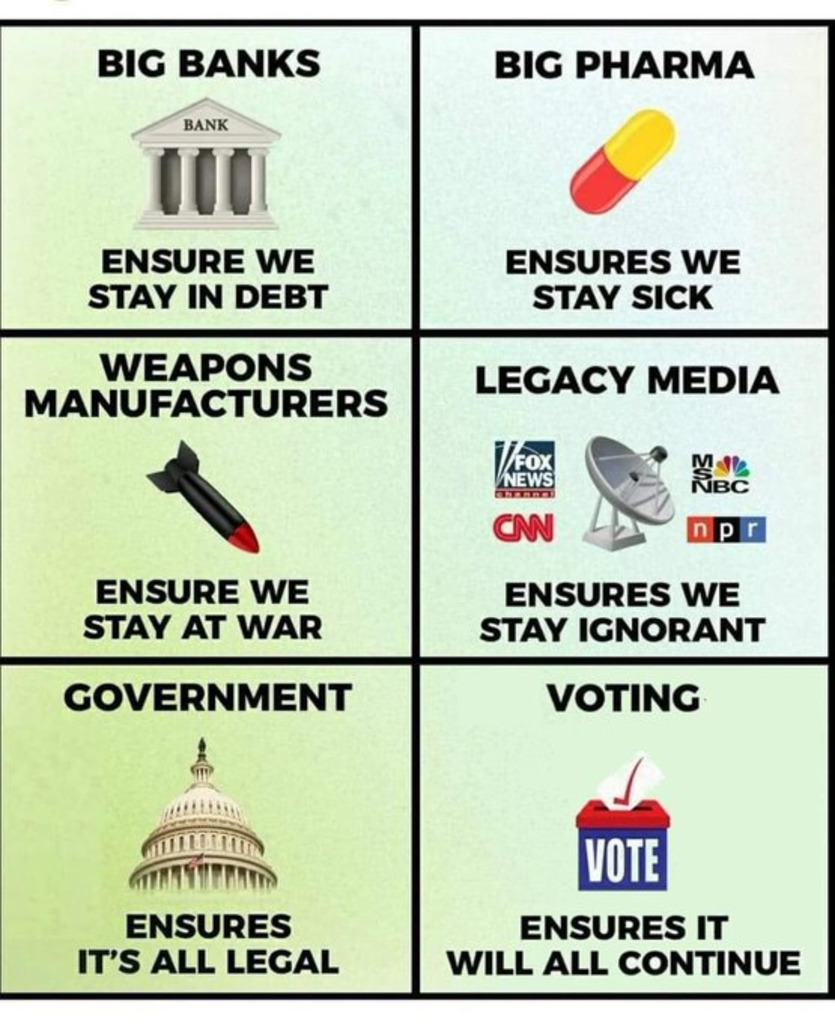
When Your Government Ends A War But Increases The Military Budget, You’re Being Scammed

The US Senate has passed its National Defense Authorization Act (NDAA) military spending bill for the fiscal year of 2022, setting the budget at an astronomical $778 billion by a vote of 89 to 10. The bill has already been passed by the House, now requiring only the president’s signature. An amendment to cease facilitating Saudi Arabia’s atrocities in Yemen was stripped from the bill.

“The most controversial parts of the 2,100-page military spending bill were negotiated behind closed doors and passed the House mere hours after it was made public, meaning members of Congress couldn’t possibly have read the whole thing before casting their votes,” reads a Politico article on the bill’s passage by Lindsay Koshgarian, William Barber II and Liz Theoharis.

The US military had a budget of $14 billion for its scaled-down Afghanistan operations in the fiscal year of 2021, down from $17 billion in 2020. If the US military budget behaved normally, you’d expect it to come down by at least $14 billion in 2022 following the withdrawal of US troops and official end of the war in Afghanistan. Instead, this new $778 billion total budget is a five percent increase from the previous year.

“Months after US President Joe Biden’s administration pulled the last American troops out of Afghanistan as part of his promise to end the country’s ‘forever wars’, the United States Congress approved a $777.7bn defence budget, a five percent increase from last year,” Al Jazeera reports.

“For the last 20 years, we heard that the terrorist threat justified an ever-expanding budget for the Pentagon,” Win Without War executive director Stephen Miles told Al Jazeera. “As the war in Afghanistan has ended and attention has shifted towards China, we’re now hearing that that threat justifies it.”

Keep reading

15 lawmakers profiting from defense industry investments while running US defense policy

Fifteen lawmakers serving on House and Senate committees that shape U.S. military policy are profiting from investments in prominent defense contractors benefited by the very policies they influence, according to federal financial records analyzed by Business Insider this week.  

Insider examined nearly 9,000 financial reports for every sitting member of Congress, as well as their top staffers, as part of a broader effort dubbed the Conflicted Congress project, which aims to identify possible conflicts of interest among lawmakers in Congress. Both Democrats and Republicans serving on the Armed Services committees have combined defense industry investments nearing $1 million as of 2020, and they’re continuing to invest and cash in.

Among the contractors that appeared in the committee members’ financial disclosures were Lockheed Martin Corp., Boeing Co., Raytheon Technologies Corp., Honeywell, and General Electric. Each company is known for spending millions to lobby the federal government in an effort to win lucrative government contracts and shape public policy.

Keep reading

Military Officers: To Combat ‘Disinformation,’ The Government And Its Big Tech Buddies Should Tell You What To Think

Four military officers who describe themselves as “researchers” at the Army’s highly respected Cyber Institute have published an article that adds to the growing concern about the ongoing politicization of the military. Published by the military’s National Defense University (NDU), their article purports to analyze the dangers of misinformation and disinformation and to advise the Biden administration about how to counter it.

The article’s authors all are military officers and at least two are professors at West Point. They say their article “is written in response to the Capitol insurrection.”

Ironically, the article is itself misinformation. That this misinformation is published by military officers associated with two highly prestigious institutions, the NDU and the Cyber Institute, makes it all the more inappropriate and dangerous.

The article attempts to address a real and dangerous issue: how mis- and disinformation can endanger national security. Preparing for and combatting disinformation is a complex issue that involves disciplines from sociology and psychology to highly technical cyberwarfare issues.

The difference between misinformation and disinformation is generally understood to be a matter of intent; disinformation is intentionally and maliciously deceptive. Disinformation is as old as warfare itself; only the techniques vary. The U.S. military has been practicing and studying it and related disciplines for many years. Misinformation has been a staple of military operations since the days of the Trojan horse and Sun Tzu.

Keep reading

Biden administration purchased surveillance technology from CCP-linked firm, which is banned from doing business with the government

According to recent reports, different federal agencies of Joe Biden’s U.S. government have made technology purchases from a Chinese firm linked to the Chinese Communist Party (CCP), which is on the list of companies from which the government has been banned from making purchases since the 2019 Defense Spending legislation was implemented during the Trump era.

Despite the federal ban, Fox News reported, U.S. government agencies have reportedly purchased surveillance technology from the firm Lorex, a subsidiary of controversial Chinese firm Dahua Technology.

Dahua Technology is one of several Chinese-based companies that were included on the list of firms banned from marketing technology to the U.S. government under the 2019 defense spending bill, citing fears that the Chinese regime could use the devices to conduct espionage.

The Dahua firm was additionally placed on a federal list of companies that have trade restrictions because the company is linked to the Chinese government’s efforts to suppress the Uighur population in China’s Xinjiang region.

As records released by Fox News show, federal agencies spent thousands of dollars on Lorex video surveillance equipment, including the Drug Enforcement Agency, which purchased Lorex hard drives in May through a Washington, DC technology supplier.

Records also show that the Department of the Army and the Defense Department’s Defense Finance and Accounting Service also purchased Lorex equipment. 

The news broke a day after Senate Democrats, in a last-minute intervention, excluded a bill banning the importation of goods made by millions of people detained in concentration camps by the Chinese Communist regime.

According to a memo from Senate leaders, the bill, which was being promoted as the Uighur Forced Labor Prevention Act, was excluded from the annual defense appropriations bill, the Washington Free Beacon reported Dec. 2. 

Keep reading

US military explosives vanish, emerge in civilian world

The Marine Corps demolition specialist was worried — about America, and about the civil war he feared would follow the presidential election.

And so, block by block, he stole 13 pounds of C4 plastic explosives from the training ranges of Camp Lejeune.

“The riots, talk about seizing guns, I saw this country moving towards a scary unknown future,” the sergeant would later write, in a seven-page statement to military investigators. “I had one thing on my mind and one thing only, I am protecting my family and my constitutional rights.”

His crime might have gone undetected, but authorities caught a lucky break in 2018 as they investigated yet another theft from Lejeune, the massive base on coastal North Carolina. In that other case, explosives ended up in the hands of some high school kids.

These are not isolated cases. Hundreds — and possibly thousands — of armor-piercing grenades, hundreds of pounds of plastic explosives, as well as land mines and rockets have been stolen from or lost by the U.S. armed forces over the past decade, according to an ongoing Associated Press investigation into the military’s failure to secure all its weapons of war. Still more explosives were reported missing and later recovered.

Troops falsified records to cover up some thefts, and in other cases didn’t report explosives as missing, investigative files show. Sometimes, they failed to safeguard explosives in the first place.

The consequences can be deadly.

Keep reading

Senate Skeptics Are Right: End Missile Sales To Saudi Arabia

In response to the proposed sale of U.S. missiles to Saudi Arabia, Senators Rand Paul and Bernie Sanders are leading a bipartisan effort to oppose the sale. This is still a fight of David and Goliath, as Congress has never successfully stopped an arms sale. It’s time for that to change.

While President Biden has pledged to end support for “offensive operations,” U.S. support for Saudi Arabia has continued under the guise of defense. There have been advances, namely a halt on new SDB smart-bomb sales. But the U.S. has relabeled, not halted, the support, which could end Saudi involvement in the Yemeni war altogether. The U.S. continues logistical support for Saudi warplanes and helicopters, the chief means through which the Saudis conduct their offensives.

Saudi Arabia’s territorial integrity isn’t threatened. The country is actively engaged in an offensive war of its own choosing, and the U.S. tipping the scales in Saudi Arabia’s favor just perpetuates that war. U.S. neutrality, by contrast, would bring Yemen closer to a negotiated peace. As Saudi Arabia has been forced to deal with diminished U.S. support since April, it has begun brandishing diplomacy instead of bombs.

Keep reading

Space Force general says US satellites are attacked on daily basis

A Space Force general said American satellites are attacked by adversaries every day in ways that flirt with “acts of war,” and the US will lose a space arms race if it doesn’t take action.

China and Russia regularly strike US satellites with lasers, radiofrequency jammers, and cyber attacks, Gen. David Thompson told The Washington Post in an op-ed published Tuesday.

“The threats are really growing and expanding every single day. And it’s really an evolution of activity that’s been happening for a long time,” said Gen. Thompson, Vice Chief of Space Operations in the new military branch.

“We’re really at a point now where there’s a whole host of ways that our space systems can be threatened.”

Thompson disclosed a 2019 incident when a Russian satellite flew so close to a US “national security satellite” that authorities believed it could be an offensive. But the spacecraft backed away and tested a projectile, according to the op-ed.

“It maneuvered close, it maneuvered dangerously, it maneuvered threateningly so that they were coming close enough that there was a concern of collision,” he reportedly said. “So clearly, the Russians were sending us a message.”

Keep reading

Nearly 3/4 of the World’s Dictators Receive US Weapons and Military Assistance

The US supports nearly 75% of the world’s dictators, autocracies, monarchies, military regimes, etc., with weapons, military training and money. Please remember this the next time someone tells you the US should do X or Y because such and such a nation is bad…

Comparing Freedom House’s list of Not Free nations* to FY 2020 US overseas weapons sales, military training and financial assistance**, we find that of the 57 nations considered undemocratic, 42 receive weapons, training and/or money for their military and security services. This means 74% of the non-democratic nations of the world are supported militarily by the US. Interestingly, the remaining 15 nations are nearly all sanctioned. The world’s countries can be divided into two parts: those who buy/receive weapons from the US and those sanctioned. It seems like it’s a pretty simple arrangement.

74% is a slight increase from four years ago when Rich Whitney at Truthout utilized the Freedom House list and compared it to FY 2015 military assistance data. It is likely no surprise to anyone that US support for non-democratic governments increased under President Trump, but, to be fair, it was a minor increase. The hypocrisy and dissonance between stated US support for democracy, liberty and freedom, and how the US government conducts itself exists whether a Democrat or Republican is in the White House.

The list of nations is below. I have listed occupied territories with the nations that are occupying them; so, Gaza and West Bank are under Israel, Western Sahara is under Morocco, Tibet is under China, and Donbas and Crimea are under Russia. Also, please note, this list only includes nations not considered democracies. Nations that are listed as partly free or free by Freedom House, but are clear and gross violators of human rights, and that are recipients of US weapons, military training and military assistance funding, like Columbia, Honduras, India, Pakistan, Philippines, and Ukraine are not included.

Keep reading