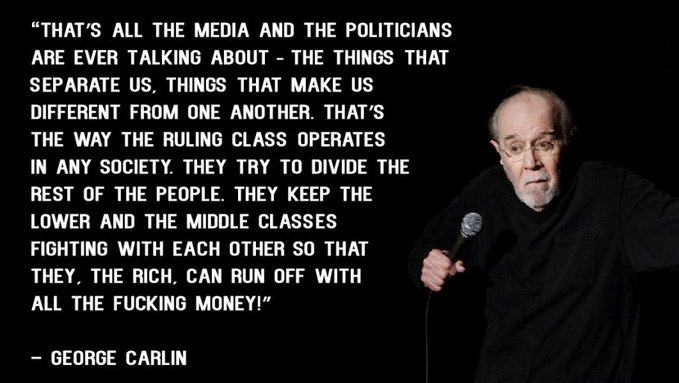
Frank Church on the CIA and the media…


It should now be crystal clear why Democrat John Fetterman refused to take part in more than a single debate with his Republican Senate rival, Mehmet Oz, and why Fetterman insisted on pushing that debate to just two weeks before Election Day—after at least 500,000 Pennsylvania voters had already voted.
Last night’s debate was an unmitigated disaster.
A disaster for Fetterman, Pennsylvania’s lieutenant governor—who appeared confused and could barely manage a coherent sentence, let alone a complete paragraph.
And a disaster for Pennsylvania voters, who didn’t get the tough, substantive debate they deserved, one that would have pushed Oz to explain, among other things, why he was distancing himself from Donald Trump (without whom he wouldn’t be the nominee); his position on abortion; China; and how he plans to bring down gas prices.
Oz had some solid talking points, but they were just that—talking points. But Fetterman lacked even those.

A star reporter for ABC News has been missing since an April 27 FBI raid at his Arlington, Virginia apartment.
Emmy award winner James Gordon Meek – a deep-dive journalist who was also a former senior counterterrorism adviser and investigator for the House Homeland Security Committee, abruptly quit his job of 9 years and “fell off the face of the earth,” after the raid, one of his colleagues told Rolling Stone.
At the time of the raid, Meek, 52, was co-authoring a now-published book about the botched US withdrawal from Afghanistan. According to ‘sources familiar with the matter,’ federal agents allegedly found classified information on Meek’s laptop during their raid – though one investigative journalist who had worked with him said it would be highly unusual for a reporter to do so.
“Mr. Meek is unaware of what allegations anonymous sources are making about his possession of classified documents,” said his lawyer, Eugene Gorokhov, in a statement. “If such documents exist, as claimed, this would be within the scope of his long career as an investigative journalist covering government wrongdoing. The allegations in your inquiry are troubling for a different reason: they appear to come from a source inside the government. It is highly inappropriate, and illegal, for individuals in the government to leak information about an ongoing investigation. We hope that the DOJ [Department of Justice] promptly investigates the source of this leak.”

Of all the face-meltingly stupid narratives that have been circulated about the US proxy war in Ukraine, the dumbest so far has got to be the increasingly common claim that aggressively escalating nuclear brinkmanship is safety and de-escalation is danger.
We see a prime example of this self-evidently idiotic narrative in a new Business Insider article titled “Putin’s nuclear threats are pushing people like Trump and Elon Musk to press for a Ukraine peace deal. A nuclear expert warns that’s ‘dangerous.’”
“An understandable desire to avoid a nuclear war could actually make the world more dangerous if it means rushing to implement a ‘peace’ in Ukraine that serves Russian interests,” writes reliable empire apologist Charles Davis.
“Such a move, which some influential figures have called for, risks setting a precedent that atomic blackmail is the way to win wars and take territory troops can’t otherwise hold, a model that could be copycatted by even the weakest nuclear-armed states, and may only succeed at delaying another war.”
Davis’ sole source for his article is the UN Institute for Disarmament Research’s Pavel Podvig, who is very openly biased against Russia.
“The West supports Ukraine with weapons and financial and moral and political support. Giving that up and saying that, ‘Well, you know, we are too afraid of nuclear threats and so we just want to make a deal’ — that would certainly set a precedent that would not be very positive,” says Podvig. “If you yield to this nuclear threat once, then what would prevent Russia in the future — or others — to do the same thing again?”
Like other empire apologists currently pushing the ridiculous “de-escalation actually causes escalation” line, Davis and Podvig argue as though nuclear weapons just showed up on the scene a few days ago, as if there haven’t been generations of western policies toward Moscow which have indeed involved backing down and making compromises at times because doing so was seen as preferable to risking a nuclear attack. We survived the Cuban Missile Crisis because Kennedy secretly acquiesced to Khrushchev’s demands that the US remove the Jupiter missiles it had placed in Turkey and Italy, which was what provoked Moscow to move nukes to Cuba in the first place.
Throughout the cold war the Soviet Union insisted on a sphere of influence that US strategists granted a wide berth to, exactly because it was a nuclear superpower. Even as recently as the Obama administration the US president maintained that “Ukraine, which is a non-NATO country, is going to be vulnerable to military domination by Russia no matter what we do.”
Nevertheless we’re seeing this new “escalation is safety and de-escalation is danger” narrative pushed with increasing forcefulness by imperial spinmeisters, because it would take a lot of force indeed to get people to accept something so self-evidently backwards and nonsensical.
Joe Rogan had Rolling Stone co-founder Jann Wenner on his Joe Rogan Experience podcast last Wednesday and, among other topics, the pair touched on the government regulating the internet and the media landscape today.
Wenner – a magazine magnate who, according to reports, was in the past a prominent donor to Democratic candidates and liberal groups – spoke in favor of regulating the internet like any other industry in the US – although for some reason prefacing his “yes, but” argument by saying that the internet is great and that he “loves” social media.
But – he continued, it has to be regulated, and when Rogan asked by whom, Wenner replied, “the government.”
The question then became whether the government can be trusted with a job of such nature and magnitude – particularly given its credibility issues.
But Wenner appeared unwavering in his support of the internet – that is today heavily influenced by the authorities- tomorrow also becoming more formally regulated by them. “Absolutely,” he replied, when asked whether he trusted the White House to do a good job.
Rogan, otherwise not known for mincing his words, recalled that the US was plunged into the Iraq War under false pretenses (of WDMs) made by the government (and, to be fair, heavily promoted by their media mouthpieces like the New York Times).
Trusting the class of people who did that did not seem to sit well with the host.
“Do you think that makes any sense,” he asked Wenner, who made a curious attempt at arguing that it was politicians specifically, rather than the government, who led the US into a war.
Self-described “Award-winning multi-media journalist” David Leavitt called Child Protective Services on Virginia State Senate candidate Tina Ramirez, reporting her for “child abuse” because her opinion of Columbus Day differed from his.
The spat began with an apparent non-sequitur, when Leavitt replied to a tweet from Ramirez over reports that PayPal planned to fine people for spreading “misinformation” — a story broken by Daily Wire reporter Ben Zeisloft.
“Only women can be pregnant. Do I owe PayPal $2500 now?” Ramirez asked, to which Leavitt replied, “Why are you celebrating torture, rape, murder, and enslavement?”
Leavitt appeared to be referencing another tweet in which Ramirez wished her followers a happy Columbus Day, and Ramirez responded with a simple explanation: “I teach my daughter real American history. I refuse to join the radical left’s campaign to erase history.”
Leavitt responded by attempting to get some of his 330,000+ followers to harass Ramirez by reporting her to Child Protective Services.
“Can someone please call child care services on Tina Ramirez who’s teaching her child to be a racist?” he asked.
He then apparently decided to make the call himself — and complained about the long wait time to speak to someone at the hotline.
“The Virginia State hotline for child abuse has a 10+ minute hold and is experiencing ‘high call volumes’ with 14 callers ahead of me. This is absolutely unacceptable. How many people try to report child abuse and hang up? How many children will continue to be abused?” he asked.
Multiple explosions last week off the coast of Poland damaged both the Nord Stream 1 and Nord Stream 2 pipelines, shutting down one and preventing the other from going online. The pipelines, intended to carry natural gas from Russia to Germany, are critical infrastructure for Europe’s energy markets.
The explosions triggered a lopsided “whodunnit” in US media, with commentators almost universally fingering Russia as the culprit, despite the lack of a plausible motive. Official US opposition to the pipeline has been well-established over the years, giving Washington ample motive to destroy the pipelines, but most newsrooms uniformly suppressed this history, and attacked those who raised it.
After the explosions, much of the press dutifully parroted the Western official line. The Washington Post (9/27/22) quickly produced an account: “European Leaders Blame Russian ‘Sabotage’ After Nord Stream Explosions,” citing nothing but EU officials who claimed that while they had no evidence of Russian involvement, “only Russia had the motivation, the submersible equipment and the capability.”
Much of the media cast their suspicions towards Russia, including Bloomberg (9/27/22), Vox (9/29/22), Associated Press (9/30/22) and much of cable news. With few exceptions, speculation on US involvement has seemingly been deemed an intellectual no-fly-zone.

You must be logged in to post a comment.