Find Out If Google Is Tracking You With New FloC System

Google is ramping up its monopoly on tracking users with a new system called FloC, or Federated Learning of Cohorts”.  It is currently in test mode with some Chrome users, and you can quickly find out if you are being “FloCed” by going to EFF’s AmIFloced.org site.

Google is running a Chrome “origin trial” to test out an experimental new tracking feature called Federated Learning of Cohorts (aka “FLoC”). According to Google, the trial currently affects 0.5% of users in selected regions, including Australia, Brazil, Canada, India, Indonesia, Japan, Mexico, New Zealand, the Philippines, and the United States. This page will try to detect whether you’ve been made a guinea pig in Google’s ad-tech experiment.

Keep reading

Google Shadow Bans Searches For “Riots Today” Following Violent Unrest in Minnesota

Amidst yet another night of violent unrest in Minnesota, Google is effectively shadow banning searches for “riots today” despite other search engines providing links to stories about the riots when the same search term is used.

Black Lives Matter agitators rioted and looted for a second night in Minnesota despite the deployment of the National Guard.

The unrest is in response to the police shooting of Daunte Wright, who resisted arrest after cops stopped him for a traffic violation.

The killing is being described as an example of “systemic racism” despite the fact that Wright was shot by a dumb female officer who mistook a gun for a taser.

Apparently, Google is keen to not have the disorder that followed be described as “riots,” despite the fact that is precisely what happened.

Keep reading

YouTube Censors Coronavirus Roundtable Hosted by Florida Gov. Ron DeSantis

Google-owned YouTube took down a video of a roundtable conference hosted by Florida Gov. Ron DeSantis (R), featuring former White House coronavirus task force member and medical scholar Scott Atlas, and the three co-authors of the Great Barrington Declaration.

The Great Barrington declaration argues that blanket lockdowns and mask mandates are counterproductive, instead advocating for a targeted approach focused on protecting vulnerable segments of the population.

The three co-authors, who attended Gov. DeSantis’ roundable, are Harvard professor of medicine Martin Kulldorff, Oxford professor of epidemiology Sunetra Gupta, and Stanford professor of medicine and epidemiologist Jay Bhattacharya.

Keep reading

Google Says BILL GATES Is “The Most Powerful Doctor In The World”

A search for “who is the most powerful doctor in the world?” on Google provides the answer as Bill Gates.

In response to the query, the entire first page of results lists Bill Gates, who isn’t even a doctor, based on a Politico article from 2017 detailing Gates’ ‘sway’ over the World Health Organisation.

The article notes that Gates has donated $2.4 billion to the WHO since 2000, a figure that has increased in the five years since the piece was penned.

Keep reading

Google and the CIA: How Independent Are Multinational Giants?

How independent are the largest corporations in the world? It is often portrayed that companies such as Google are simply private corporations that have very few connections to the establishment. Yet, as It turns out, there are endless connections between many corporate giants and the military-intelligence complex.

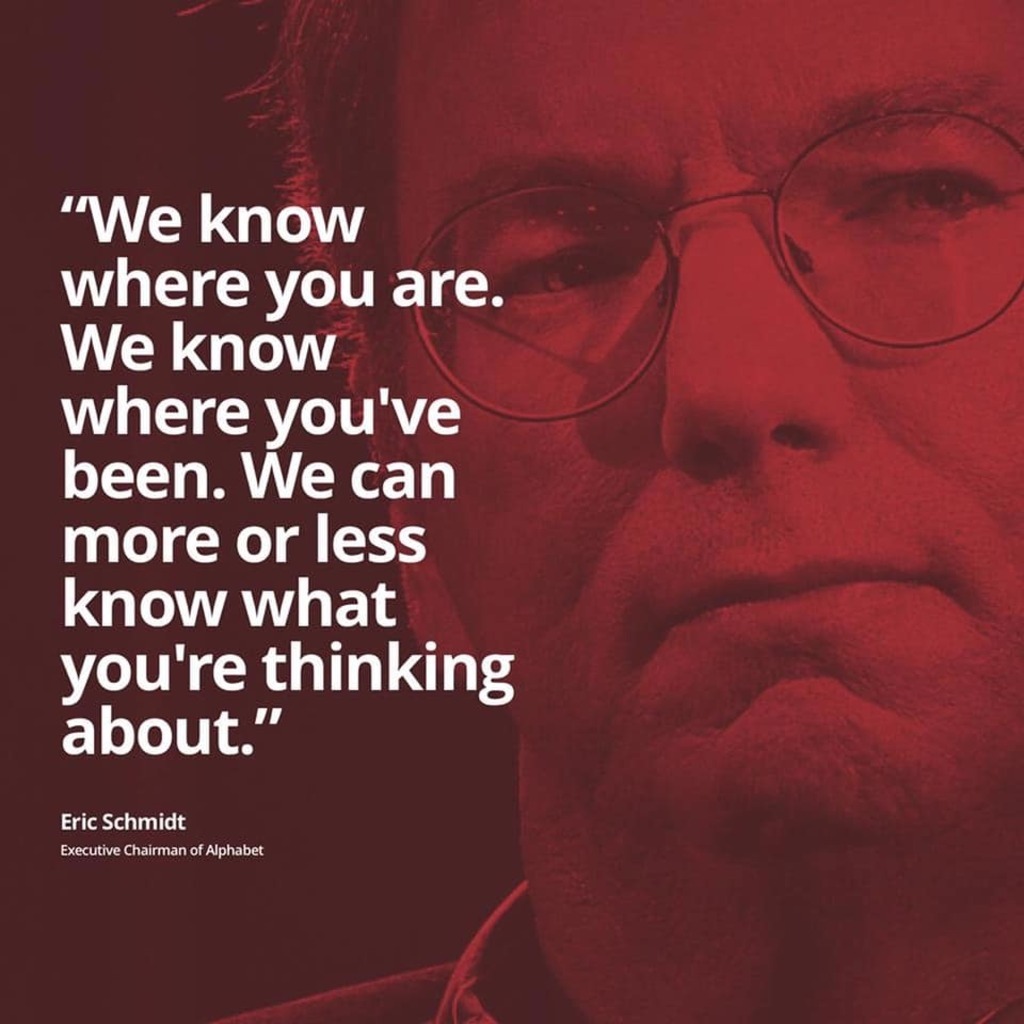
We got a glimpse into this relationship back in 2016, when the former CEO of Google, Eric Schmidt, who, at the time, was Executive Chairman of Google’s parent company, Alphabet Inc, became the head of a new innovation board at the Pentagon. Later that year, Jeff Bezos, the CEO of Amazon, joined the same board at the Pentagon.

Google and DARPA

The ties between Google and US government agencies run much deeper than this, however. The relationship started even before the tech company was founded in the late 1990s. In 1994, the US government launched the Digital Library Initiative (DLI). This initiative awarded research grants to various university projects, mostly those who focused on developments in the early and emerging internet, with the overarching aim of this initiative being the creation of a global digital library.

Multiple organizations were involved in selecting projects for DLI funds. Three of these organizations were the National Science Foundation, the National Aeronautics and Space Administration (NASA), and The Defense Advanced Research Projects Agency (DARPA), which is the arm of the US Department of Defense that funds and develops emerging technologies.

Keep reading

Google repeatedly hands over user data to law enforcement without a warrant

Google is turning over user data to US law enforcement, even when requests for that come without a warrant, in the form of requests that are not court-ordered.

That emerges from information shared with the LA Times by an anonymous Google user, who said they were notified about this in an email from the tech giant, who said the request came from the Department of Homeland Security, without including the request itself in the email.

When this Google user asked to see the document, it turned out to be an administrative subpoena issued by the Immigrations and Customs Enforcement (ICE), while the data the agency was requesting from Google included the user’s name, home, email, and IP addresses, as well as sources of payment associated with the account.

And here, the term “account” covers any Google service and app, such as Gmail, Google Pay, YouTube, etc.

In the original email that arrived from the giant’s Legal Investigations Support, the user was advised that this data would indeed be handed to the agency as requested unless they obtained a federal court stamped motion to quash the subpoena within seven days.

For most people, Just Futures’ co-founder Paromita Shah suggested, this is a task they would be unlikely to accomplish, as it requires hiring a lawyer and going to federal court, and do it all in such a short period
of time.

According to available data from the company’s transparency report covering the first half of 2020, Google received 15,500 subpoenas and complied in turning over “some data” in 83% percent of cases.

Keep reading

Google and Urban Dictionary censor ‘Blue Anon’ following widespread mockery of left-wing conspiracy theories

The life of new term “Blue Anon” in the online Urban Dictionary was short-lived. After emerging on social media and landing in a spot in the slang-term glossary on Saturday, it was quickly purged. A Google search brings up nothing on the term other than brand name ski gear.

Jack Posobiec pointed out the deletion from Urban Dictionary: “I have never even heard of a word being banned from Urban Dictionary before the banned Blue Anon.” A search of the dictionary for the term comes up short.

Keep reading

“Don’t Go Down The Rabbit Hole!” — NY Times Decries Critical Thinking Tells Us to Trust Google Instead

A new article from the New York Times claims that instead of engaging with someone who challenges your worldview, you should “resist the lure of Rabbit Holes” and go to more authoritative sources such as Google and Wikipedia.

The New York Times appears to have declared war on traditional critical thinking, which they say “isn’t helping in the fight against misinformation”.

Sharing the insights of “a digital literacy expert” named Michael Caulfield, the article reads as follows:

“We’re taught that, in order to protect ourselves from bad information, we need to deeply engage with the stuff that washes up in front of us,” Mr. Caulfield told me recently. He suggested that the dominant mode of media literacy (if kids get taught any at all) is that “you’ll get imperfect information and then use reasoning to fix that somehow. But in reality, that strategy can completely backfire.”

In other words: Resist the lure of rabbit holes, in part, by reimagining media literacy for the internet hellscape we occupy.

Keep reading

Judge “Disturbed” To Learn Google Tracks “Incognito” Users, Demands Answers

A US District Judge in San Jose, California says she was “disturbed” over Google’s data collection practices, after learning that the company still collects and uses data from users in its Chrome browser’s so-called ‘incognito’ mode – and has demanded an explanation “about what exactly Google does,” according to Bloomberg.

In a class-action lawsuit that describes the company’s private browsing claims as a “ruse” – and “seeks $5,000 in damages for each of the millions of people whose privacy has been compromised since June of 2016,” US District Judge Lucy Koh said she finds it “unusual” that the company would make the “extra effort” to gather user data if it doesn’t actually use the information for targeted advertising or to build user profiles.

Keep reading