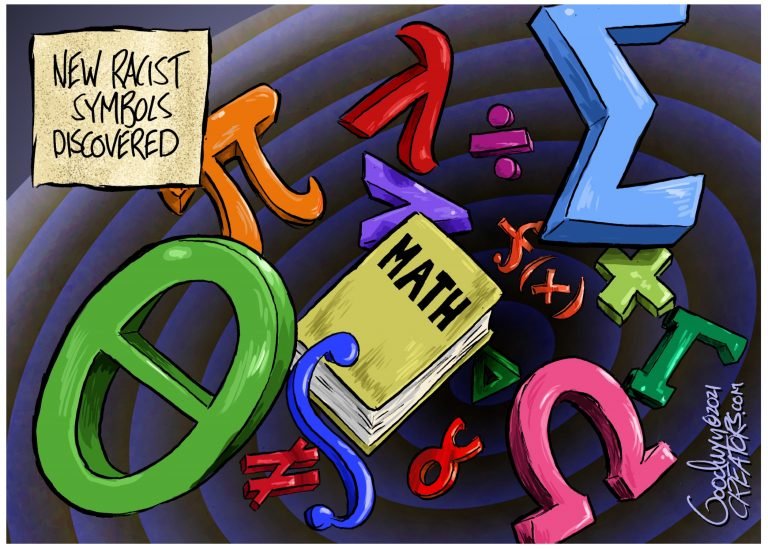
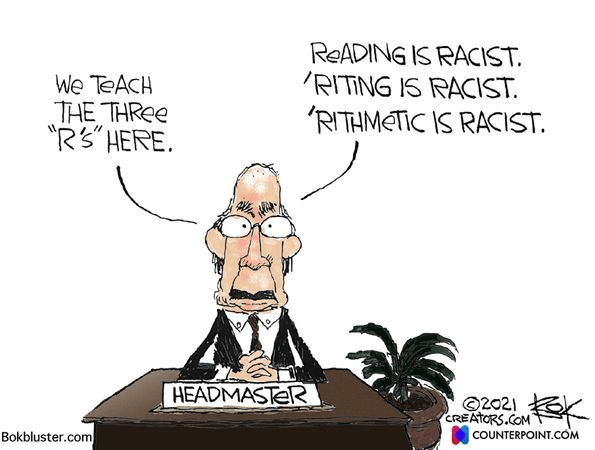
Avert your eyes!


NPR, man. It used to be good, though liberal, until it was taken over by woke fanatics. Now NPR’s TV critic, Eric Deggans, is attacking Tom Hanks for not being woke enough. Deggans, who is black, praised Hanks for his recent op-ed about the Tulsa race massacre, and calling on Hollywood to tell more stories like it. But now Deggans wants Hanks to do penance for having made movies about white people. I kid you not. From Deggans’s essay:
[I]t’s wonderful that Hanks stepped forward to advocate for teaching about a race-based massacre – indirectly pushing back against all the hyperventilating about critical race theory that’s too often more about silencing such lessons on America’s darkest chapters.
But it is not enough.
After many years of speaking out about race and media in America, I know the toughest thing for some white Americans — especially those who consider themselves advocates against racism — is to admit how they were personally and specifically connected to the elevation of white culture over other cultures.
But in Hanks’ case, he is no average American. Or average Hollywood star, for that matter.
Over the years, he has starred in a lot of big movies about historical events, including Saving Private Ryan, Greyhound, Forrest Gump, Apollo 13, Bridge of Spies and News of the World. He has served as a producer or executive producer on even more films and TV shows based on American history, including Band of Brothers, The Pacific, John Adams and From the Earth to the Moon. He was an executive producer of documentaries such as The Assassination of President Kennedy and The Sixties on CNN.
In other words, he is a baby boomer star who has built a sizable part of his career on stories about American white men “doing the right thing.” He even played a former Confederate soldier in one of his latest films, News of the World, standing up for a blond, white girl who had been kidnapped and raised by a Native American tribe.
He’s not alone. Superstar director Steven Spielberg has a similar pedigree (notwithstanding occasional projects such as The Color Purple and Amistad). And fellow director Ron Howard. These stories of white Americans smashing the Nazi war machine or riding rockets into space are important. But they often leave out how Black soldiers returned home from fighting in World War II to find they weren’t allowed to use the GI Bill to secure home loans in certain neighborhoods or were cheated out of claiming benefits at all.
They don’t describe how Black people were excluded from participating in space missions as astronauts early in America’s space program. As the book and film Hidden Figures notes, even brilliant Black and female mathematicians faced discrimination in the space program during the 1950s and 1960s. If given better opportunities, perhaps they could have helped us get to the moon sooner, by putting our best minds on the problem, regardless of race.
Deggans is angry because these artists didn’t make the films he thought they should have made.
More than 40 percent of teachers say civics education should be focused on critical race theory, according to a Heritage Foundation study released Monday.
The report found that 43 percent of teachers are familiar with critical race theory. Of those teachers, 55 percent supported the doctrine, which teaches that American institutions are inherently racist. Forty-one percent of teachers said civics education should focus on critical race theory, while 57.5 percent of teachers said critical race theory should be included in civics education. Parents were marginally less supportive of critical race theory compared to teachers.
Parents and educators have feuded over the future of American civics education in recent months. Voters in Virginia and Texas have ousted pro-critical race theory school board members in recent elections. Red state legislators have moved to ban critical race theory, while blue states have encouraged it. The Illinois State Board of Education in February approved standards that asked teachers to “mitigate” behaviors that stem from “unearned privilege” and “Eurocentrism.”
The Heritage Foundation conducted the survey, first reported by The Federalist, of 1,003 teachers and 1,012 parents from December 2020 through February 2021. The report’s authors claim that teaching critical race theory in schools could reverse “the immense progress this country has made in race relations and equality.”
“Young Americans are taught not to be proud of their country, but to see it as an oppressor,” the study says. “In order to reverse this destructive and dangerous trend, it is essential that schools teach America’s founding principles, while at the same time build strong relationships between parents and teachers.”
While critical race theory in schools has made headlines over the past year, 65 percent of parents said they were not familiar, or unsure if they were familiar with, critical race theory. Just under 57 percent of teachers said the same.
As American educational institutions continue to be called into question, a North Korean defector fears the United States’ future “is as bleak as North Korea” after she attended one of the country’s most prestigious universities.
Yeonmi Park has experienced plenty of struggle and hardship, but she does not call herself a victim.
One of several hundred North Korean defectors settled in the United States, Park, 27, transferred to Columbia University from a South Korean university in 2016 and was deeply disturbed by what she found.
“I expected that I was paying this fortune, all this time and energy, to learn how to think. But they are forcing you to think the way they want you to think,” Park said in an interview with Fox News. “I realized, wow, this is insane. I thought America was different but I saw so many similarities to what I saw in North Korea that I started worrying.”
Those similarities include anti-Western sentiment, collective guilt and suffocating political correctness.
Yeonmi saw red flags immediately upon arriving at the school.
During orientation, she was scolded by a university staff member for admitting she enjoyed classic literature such as Jane Austen.
“I said ‘I love those books.’ I thought it was a good thing,” recalled Park.
“Then she said, ‘Did you know those writers had a colonial mindset? They were racists and bigots and are subconsciously brainwashing you.’”
It only got worse from there as Yeonmi realized that every one of her classes at the Ivy League school was infected with what she saw as anti-American propaganda, reminiscent to the sort she had grown up with.
“’American Bastard’ was one word for North Koreans” Park was taught growing up.
“The math problems would say ‘there are four American bastards, you kill two of them, how many American bastards are left to kill?'”
She was also shocked and confused by issues surrounding gender and language, with every class asking students to announce their preferred pronouns.
“English is my third language. I learned it as an adult. I sometimes still say ‘he’ or ‘she’ by mistake and now they are going to ask me to call them ‘they’? How the heck do I incorporate that into my sentences?”
“It was chaos,” said Yeonmi. “It felt like the regression in civilization.”
“Even North Korea is not this nuts,” she admitted. “North Korea was pretty crazy, but not this crazy.”

Jessamyn Stanley is a yoga instructor and “body activist.”
Jessamyn is making headlines for some reason after blaming white supremacy for polluting yoga.
Seriously. This happened.
When is the left just going to come out and call for mass genocide of whitey?
Yale Law School is imploding.
What might be the single most prestigious academic institution in the United States is tearing itself apart in a manner befitting a Warsaw Pact country, with students spying on professors and on each other, politically-motivated inquisitions, and absurd demands for preferential treatment based on identity politics.
The central figures of the meltdown are two married professors, Amy Chua and Jed Rubenfeld.
On March 26, a group of students at Yale Law School approached the dean’s office with an unusual accusation: Amy Chua, one of the school’s most popular but polarizing professors, had been hosting drunken dinner parties with students, and possibly federal judges, during the pandemic.
…
Her husband, Jed Rubenfeld, also a law professor, is virtually persona non grata on campus, having been suspended from teaching for two years after an investigation into accusations that he had committed sexual misconduct.
…
At the law school, the episode has exposed bitter divisions in a top-ranked institution struggling to adapt at a moment of roiling social change. Students regularly attack their professors, and one another, for their scholarship, professional choices and perceived political views. In a place awash in rumor and anonymous accusations, almost no one would speak on the record. [NY Times]
Chua, whose classes are some of the most popular at Yale, has been stripped of the right to lead a small group (a collection of 10-15 first-year students that is a core part of the Yale Law experience). The school appears intent on driving her from the campus entirely.
In the past several months, multiple state legislatures have made moves to ban critical race theory — the latest hot-button issue in contemporary American politics — from their public schools. Activists have opined that critical race theory is either the cure for racial injustice in America or the most dangerous force threatening our democracy.
Plenty of writers have explained the main tenets of the theory, some in great detail. But where did it come from? How did an obscure academic theory come to dominate the national political conversation in only a few years?
The answer to these questions lies in the origins of the theory. Critical race theory emerged from one of America’s foremost institutions: Harvard University. Tracing the history of critical race theory reveals just how intimately connected it is with America’s most prestigious university.
In the wake of the Civil Rights Act of 1964, legal scholars grappled with how the sweeping legislation would affect America’s racial struggles. By the 1970s, it was clear that anti-discrimination law and racial integration had not fully healed the nation’s race relations. This frustrated many civil rights advocates, who after Martin Luther King Jr. died in 1968 lacked a moral lodestar to underpin their faith in American democracy to solve racial problems.
Students in one 10th-grade history class at a Massachusetts high school last month were tasked with creating slides to highlight the effects that “systemic racism” had on George Floyd’s life.
According to Parents Defending Education, a national grassroots nonprofit group dedicated to combatting state-sanctioned racism under the cloak of critical race theory in K-12 schools, sophomores at Concord-Carlisle High School were assigned a prompt based on required reading from the Washington Post.
Students were asked to create a slide outlining “one form of systemic racism, how it impacted Mr. Floyd’s life and how he responded,” after they read the piece, “Born with two strikes: How systemic racism shaped Mr. Floyd’s life and hobbled his ambition” in the Washington Post.
Parents Defending Education published the assignment shown below, where it appears students were offered no opportunity to dissent from the premise that the United States was systemically racist and oppressive, an idea at the heart of critical race theory, a once-fringe theory being forced into the U.S. educational system.
Last week, a black Amazon delivery driver sucker-punched an elderly white woman after the victim rejected the driver’s snide remark about the “white privilege” of getting annoyed while waiting for a package. A few months back, a Yale lecturer spoke about her “fantasies of unloading a revolver into the head of any white person that got in my way.” Chicago Mayor Lori Lightfoot complained that too many of the journalists reporting on her are white.
A noxious leftist ideology links all of these racist incidents, and it is already wreaking tremendous havoc on American society. This ideology justifies blatant racism in the name of promoting “equity.” It is spreading throughout American classrooms, corporate boardrooms, and legacy media outlets. One of its architects has even called for a totalitarian bureaucracy to enforce his vision of “equity.” This new racism masquerades as “anti-racist,” but it judges people according to the color of their skin, not the content of their character.
Marxist thinkers invented critical race theory (CRT) in order to upend society by claiming that hidden racism pervades American institutions. CRT teaches people to seize on any racial disparity as ipso facto proof of racial discrimination, despite the clear prohibitions on racial discrimination in federal law. Advocates claim that the American status quo is racist — if not “white supremacist” — so extreme measures to reverse historic injustices are the only “anti-racist” option.
Since American society must be secretly racist, CRT advocates attribute various aspects of society to the nefarious impact of “whiteness.” The Smithsonian briefly published a “teaching tool” infographic on “whiteness.” That infographic claimed that the nuclear family, science, capitalism, the Judeo-Christian tradition, individualism, “objective, rational linear thinking,” and even values such as “be polite” are aspects of oppressive whiteness. The Smithsonian rightly removed the graphic after facing criticism, but this incident illustrates just how mainstream CRT has become.
You must be logged in to post a comment.