The U.S. Military Doesn’t Even Track How Many Weapons It Loses, And It Has Lost Thousands

Adamning investigative report published by The Associated Press today details how over 2,000 weapons have gone missing from military arsenals between 2010 and 2019. While the data set was far from complete, what the outlet did obtain shows a worrying pattern of lost and stolen weapons, some of which ended up in the hands of criminals who used them in the commission of violent crimes, while others were even simply discarded in public parks.

The Associated Press‘s investigation states that, between 2010 and 2019, these weapons went missing or were deliberately taken from a wide variety of locations, including armories, warehouses, firing ranges, Navy vessels, or even while in transit. Reasons cited in the report included unlocked doors, burglary, security personnel falling asleep, or lapses in surveillance and other security systems. 1,504 weapons were reported missing or stolen from the Army, 211 from the Navy, 204 from the Marines, and 39 were categorized as “Other,” which presumably includes the U.S. Coast Guard and Department of Defense security forces like the Pentagon Force Protection Agency.

While the Marines and Navy offered their own figures about weapons lost or stolen throughout the last decade, the Army and Air Force did not willingly provide The Associated Press with exact numbers about how many of their weapons were unaccounted for, so the report instead relied on Freedom of Information Act (FOIA) requests for military criminal case files, as well as internal military small arms registries. One of those FOIA requests filed with the Army’s Office of the Provost Marshal General revealed 1,303 lost firearms from the Army alone. The AP reported the Air Force was less cooperative:

The Air Force was the only service branch not to release data. It first responded to several Freedom of Information Act requests by saying no records existed. Air Force representatives then said they would not provide details until yet another FOIA request, filed 1.5 years ago, was fully processed.

Keep reading

Former Republican Lawmaker Shot Dead

A former Republican Mississippi lawmaker was found, shot dead, outside the burned home where her sister-in-law’s  body was found in December.

The former lawmaker, Ashley Henley, was shot in the back of the head as she was believed to be mowing her lawn, The Daily Mail reported.

The 40-year-old’s sister-in-law Kristina Michelle Jones was found dead in a burnt out trailer at the property in rural Yalobusha County, about 70 miles south of DeSoto County, in December last year, and Henley and her husband Brandon were convinced she was murdered.

Henley was at the property – where the couple have erected a large sign with pictures of Jones picture saying ‘I was Murdered’ as part of their campaign – on Sunday when she was killed.

Her body was found at about 10pm. She leaves behind a 15-year-old son.

Police have not formally linked the two deaths but Brandon Henley said he believed his sister and wife may have been killed by the same person. 

“’I feel that if something would have been done sooner this would have never happened,” he said to WJTV.

“I’d like for [the police] to do their job because this is the second person someone down there has taken from me. My son doesn’t have a mother,” he said.

Keep reading

Columbus police say weekend shooting spree was racially motivated

The 39-year-old man charged in a weekend shooting spree told Columbus police his assaults were racially motivated, targeting white men he felt had taken from him all his life, a detective testified Monday.

Though police allege Justin Tyran Roberts was involved in three separate assaults that wounded five people Friday and Saturday in Columbus and Phenix City, he was in Columbus Recorder’s Court to face charges in just one of those incidents, a shooting around 2 p.m. Saturday under the Oglethorpe Bridge at Broadway and Fourth Street.

That’s where a man was shot in the back as he was getting into his vehicle in a parking area under the bridge, said Detective Brandon Lockhart, who quoted Roberts as telling police, “I had to have him.”

The victim was hit once in the back, but four bullets hit his vehicle, and police found six shell casings at the scene, Lockhart said.

Under questioning by public defender Robin King, Lockhart elaborated on what Roberts, who is Black, told him during an interview at police headquarters.

“Basically, he explained throughout his life, specifically white males had taken from him, and also what he described as ‘military-looking white males’ had taken from him,” the investigator said.

Roberts also claimed that such men were “shooting at him in a wooded area with a slingshot,” and the wounds had infected his skin, Lockhart testified. Police saw no injuries to substantiate that, he said.

Keep reading

US Military Guns Keep Vanishing. Some Are Later Used in Street Crimes

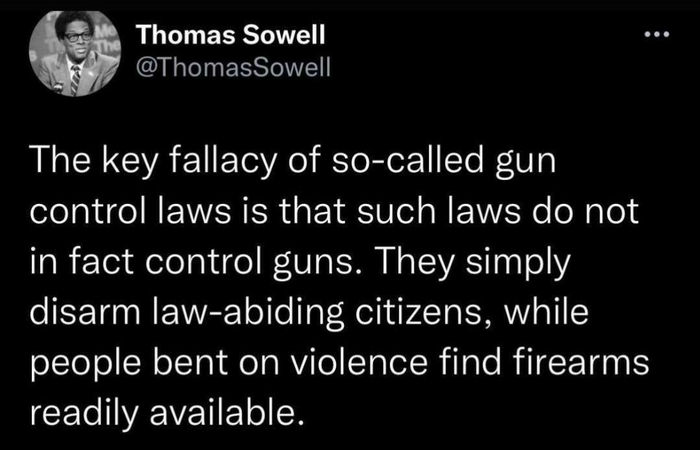
In the first public accounting of its kind in decades, an Associated Press investigation has found that at least 1,900 U.S. military firearms were lost or stolen during the 2010s, with some resurfacing in violent crimes. Because some armed services have suppressed the release of basic information, AP’s total is a certain undercount.

Government records covering the Army, Marine Corps, Navy and Air Force show pistols, machine guns, shotguns and automatic assault rifles have vanished from armories, supply warehouses, Navy warships, firing ranges and other places where they were used, stored or transported. These weapons of war disappeared because of unlocked doors, sleeping troops, a surveillance system that didn’t record, break-ins and other security lapses that, until now, have not been publicly reported.

While AP’s focus was firearms, military explosives also were lost or stolen, including armor-piercing grenades that ended up in an Atlanta backyard.

Keep reading

Austin Paper Refuses to Release Police’s Description of Black Male Mass Shooting Suspect to Avoid ‘Perpetuating Stereotypes’

The Austin American-Statesman on Saturday refused to release police’s description of an at-large black male mass shooting suspect because they said it “could be harmful in perpetuating stereotypes.”

“Police have only released a vague description of the suspected shooter as of Saturday morning,” the Statesman wrote in an editor’s note at the bottom of their article. “The Austin American-Statesman is not including the description as it is too vague at this time to be useful in identifying the shooter and such publication could be harmful in perpetuating stereotypes.”

The Austin Police Department stated that “it is unknown if there is one, or multiple suspects involved” but one suspect was “described as a black male, with dread locks, wearing a black shirt and a skinny build.”

Austin Police reported on Saturday evening that one suspect was arrested and they’re still looking for another but provided no further details.

Keep reading

Phase 2 of Austin’s homeless camping ban enforcement begins Sunday

 Phase 2 of the City of Austin’s plan to begin the recently reenacted ban on homeless camping across the city begins on Sunday. Austin officials will start issuing written warnings and citations to those in violation.

This comes after the approval of Proposition B in the May election, which makes it a criminal offense (a Class C misdemeanor punishable by a fine) for anyone to camp in public areas, sit or lie down in the downtown or University of Texas campus areas, or solicit at specific hours and locations.

Over the past 30 days, in Phase 1 of the approach, police and other City departments have been visiting dozens of encampments across the area to provide information to those experiencing homelessness about how the new ordinance affects them. They have been worked to help people comply with the rules while also prioritizing heal and safety, as well as connecting people to the right resources and services.

Keep reading

FBI sold phones to organized crime and read 27 million “encrypted” messages

The Federal Bureau of Investigation created a company that sold encrypted devices to hundreds of organized crime syndicates, resulting in 800 arrests in 16 countries, law-enforcement authorities announced today. The FBI and agencies in other countries intercepted 27 million messages over 18 months before making the arrests in recent days, and more arrests are planned.

The FBI teamed up with Australian Federal Police to target drug trafficking and money laundering. They “strategically developed and covertly operated an encrypted device company, called ANOM, which grew to service more than 12,000 encrypted devices to over 300 criminal syndicates operating in more than 100 countries, including Italian organized crime, outlaw motorcycle gangs, and international drug trafficking organizations,” Europol said today.

Distribution of the devices began in October 2018. The cellphones sold by the FBI-run company were “procured on the black market” and “performed a single function hidden behind a calculator app: sending encrypted messages and photos,” The New York Times wrote today. The cellphones were “stripped of all normal functions,” with the faux calculator being the only working app. Once users entered a code, they could use the app to send messages that they thought were protected by end-to-end encryption.

“For years, organized crime figures around the globe relied on the devices to orchestrate international drug shipments, coordinate the trafficking of arms and explosives, and discuss contract killings, law enforcement officials said,” the Times wrote. “Users trusted the devices’ security so much that they often laid out their plans not in code, but in plain language.”

Unbeknownst to users, messages were routed to an FBI-owned server and decrypted with a master key controlled by the FBI.

Keep reading

Most online recruitment in sex trafficking cases occurs on Facebook: analysis

The majority of online recruitment in sex trafficking cases last year took place on Facebook, according to a new report.

The Human Trafficking Institute on Tuesday said in its annual report that 59 percent of online recruitment of victims occurred on Facebook, along with 65 percent of child victims.

“The internet has become the dominant tool that traffickers use to recruit victims, and they often recruit them on a number of very common social networking websites,” Victor Boutros, CEO of the Human Trafficking Institute, told CBS News on Wednesday.

“Facebook overwhelmingly is used by traffickers to recruit victims in active sex trafficking cases,” he added.

In a statement to CBS News, Facebook said: “Sex trafficking and child exploitation are abhorrent and we don’t allow them on Facebook. We have policies and technology to prevent these types of abuses and take down any content that violates our rules.”

Keep reading