Makes sense or not…

Researchers at Google’s DeepMind AI division reportedly ran a number of experiments where a deep neural network was ordered to distribute resources in a more equitable way that humans preferred. The researchers claim their data shows that AI would do a better job governing America than humans.
Vice reports that AI researchers at Google recently posed a new question — could machine learning be better equipped than humans to create a society that equally divides resources in a more fair and equal way? According to a recent paper published in Nature by researchers at Google’s DeepMind, the answer may be yes — as least as far as the study’s participants were concerned.
Before I begin this article, I want to give you a fun little fact about the National Public Radio (NPR) gets its funding.
According to The Corporation for Public Broadcasting (CPB), which helps fund, they recently received a $50 million increase in funding support from the federal government, totaling out at $525 million, thanks to the House and Senate passing the Consolidated Appropriations Act of 2022.
Got it? Good.
The assassination of Shinzo Abe was shocking news, not just to the people of Japan, but to the entire world. He was the longest-serving Prime Minister in Japanese history and a great ally in the fight against the communist regimes of North Korea and China. World leaders began issuing statements remembering the man fondly and expressing their sadness that such a man was slain.
However, there were two entities that made statements that disgusted many. One was from President Joe Biden who decided to turn Abe’s death into a chance at pushing anti-gun narratives.
The other was from NPR, which first posted a tweet calling Abe a “divisive arch-conservative” but soon deleted it.
But NPR didn’t delete it because they felt shame over their hyper-partisan tweet about a slain man. They just needed to reword it so that Abe came off even worse by using buzzwords that they typically associate with white supremacists, “ultranationalist.” Now he’s not just a political figure that opposed the left in his country, but now he’s a crazed xenophobe.
A proposed bill in New Jersey would require college students and staff at higher education institutions to receive the coronavirus vaccine.
Proposed by Democratic Assemblyman Herb Conaway Jr. and co-sponsored by Democratic Assemblyman Ralph Caputo, Bill A4334 would essentially require that all in-person students and staff be fully vaccinated while exempting only those who would work virtually.
“If the bill becomes law, it would go into effect in the 2022-2023 school year,” noted News12.
The bill will now be reviewed by the Assembly Health Committee and will have to pass the state Senate before it becomes law. A similar bill in the New Jersey Senate has not yet received a vote.
Colleges and universities have adopted their own vaccination policies without government mandates up until now. According to the National Conference of State Legislatures, no other state in the union has required coronavirus vaccinations for students in higher education.

It seems increasingly clear that more than any particular policy achievement, Abe’s greatest legacy was a more substantial global leadership for Japan and peace with Russia and China.
One focus of Abe’s foreign policy was to secure a treaty with Russia on their territorial dispute. Abe had pursued this initiative even after some of his closest foreign policy advisers tried to scupper his efforts. The operation in Ukraine gave current PM Kishida Fumio room to join US sanctions targeting Moscow – marking a changed course from Abe’s foreign policy legacy.
Japan had been happy to offer economic concessions on the disputed islands in the Kurils, but Kishida – even before the Ukraine crisis – had abandoned Abe’s Russia policy. There is little question that Abe’s diplomatic initiative was stymied by his successors, particularly given that the goal was ultimately strategic: to forge a friendship with Russia that would stabilize Japan’s northern flank.
Ironically, Abe often spoke throughout his career about revising the Japanese Constitution to give the Japanese Self-Defense Forces (SDF) greater room to expand. On Friday, he was murdered in cold blood by an alleged member of the Self-Defense Forces.
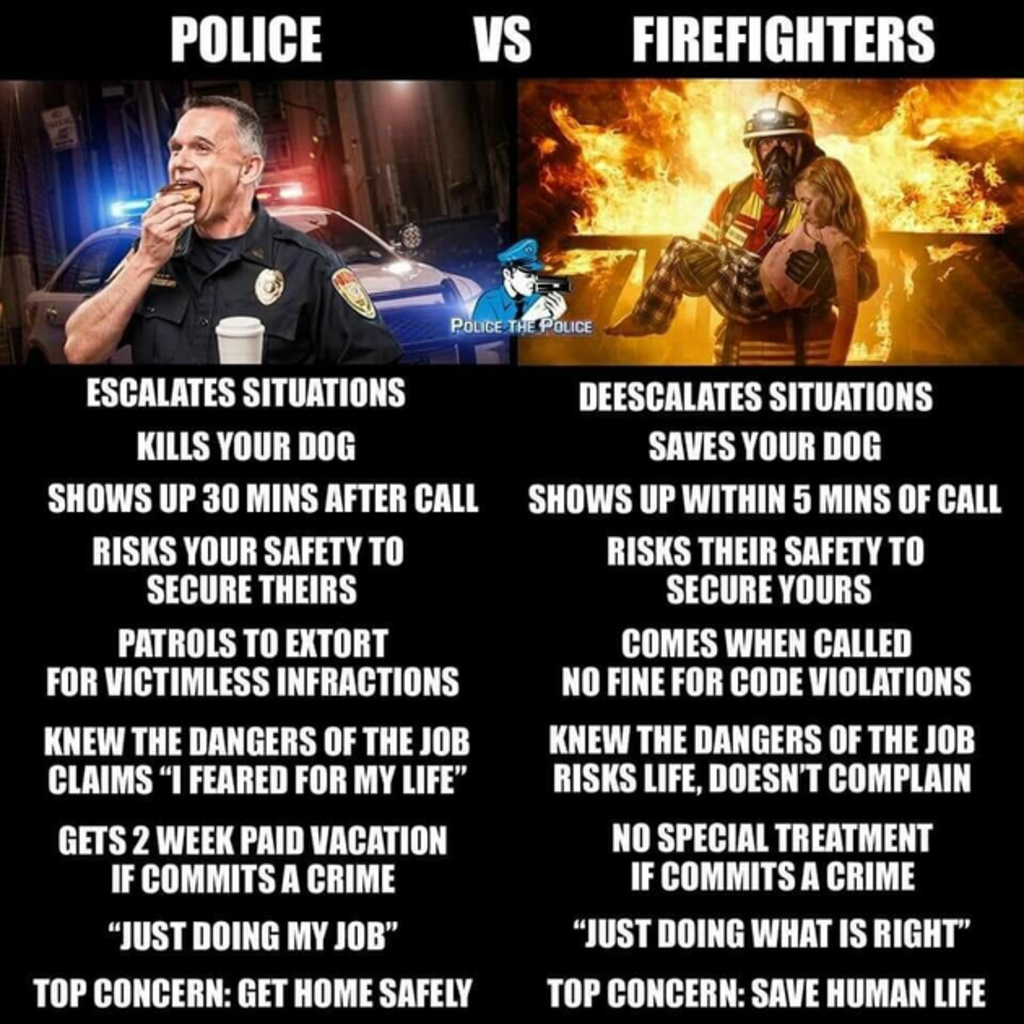
Frequent readers of the Free Thought Project know that filming the cops is not a crime. Despite this being a widely known provision — held up with multiple court precedents — cops continue to violate the First Amendment protected right of citizens to film the police. Earlier this year, the Arizona House Appropriations Committee approved a bill that would criminalize filming cops on the job, dealing a massive blow to First Amendment rights. The following month, the Senate passed it, and on Wednesday, Arizona Gov. Doug Ducey signed it into law.
On Sept. 24 it will be illegal to record the police in Arizona within an 8-foot distance.
Republican Representative John Kavanaugh, who is a former police officer, was the lead sponsor of the legislation. According to the new law, it is illegal “for a person to knowingly make a video recording of law enforcement activity, including the handling of an emotionally disturbed person, if the person does not have the permission of the law enforcement officer” and is within 8 feet of the cop.
Kavanaugh originally stipulated a 15 foot radius, however it was later amended after multiple objections. But for many, this is still too far.
As Valera Voce, points out, the law also classifies unlawful video recording of law enforcement activity as a petty offense, unless a person fails to comply with a verbal warning of a violation or has been previously convicted of a violation in which case an offense is a class 3 misdemeanor. A class 3 misdemeanor comes with a minimum of 30 days in jail. Finally, the bill explicitly declares that it “does not establish a right, or authorize any person, to make a video recording of a law enforcement officer.”
“It’s crazy thinking about that for a second. The video that led to the criminal conviction of the police officer who killed George Floyd would itself be a criminal act. And that makes no sense whatsoever,” attorney Dan Barr told FOX 10.
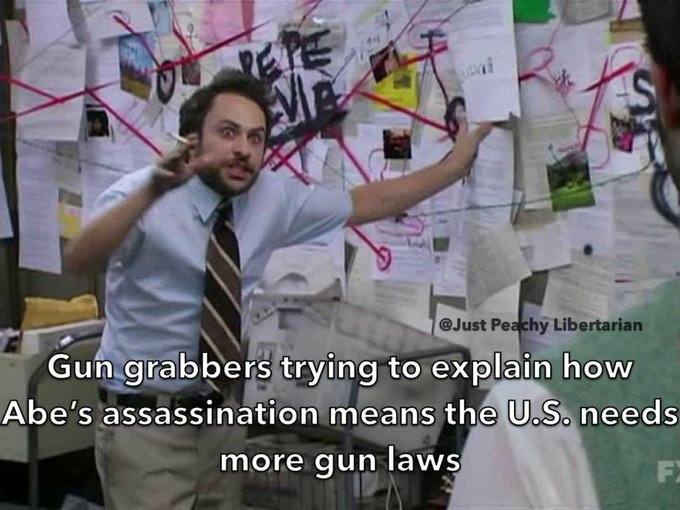
Japan’s gun laws are some of the strictest in the world making it the go-to example for the anti-gun lobby in America. This is why the world was shocked on Friday when Japanese former Prime Minister Shinzo Abe was shot and killed — with a gun.
Other than the police and the military, no one in Japan may purchase a handgun or a rifle. So comprehensive are the gun laws in Japan that even possession of a starter’s pistol is allowed only under extremely strict conditions.
Despite these oppressive gun control measures and a disarmed society, however, a deranged criminal was able to obtain a gun and kill the country’s former leader.
Before his body was even cold, the anti-gun corporate press began rolling out articles about Japan’s strict gun control and how this has contributed to the country’s low rate of gun violence. None of the articles mention anything about Japan’s far more peaceful culture and pacifism being the main contributor to lower violence, nor do they mention the fact that Japan is not free from mass killings.
In July of 2016, an assailant killed 19 people in an assisted-living facility. Because guns are banned, the killer used knives, highlighting the fact that disarming law-abiding citizens won’t stop criminals from committing mass harm.
Similarly, the banning of guns in Japan did not stop the killer from making his own gun and killing Shinzo Abe.
The Office of Communications (Ofcom), UK’s broadcasting and telecommunications authority, has issued a roadmap for tech companies to start preparing to implement the Online Safety Bill.
That’s despite the fact that the bill is still in parliamentary procedure and is yet to pass.
In fact, Ofcom refers to this democratic procedure, the outcome of which should be unknown until MPs vote on the proposal, as a mere technicality: “A countdown to a safer life online.”
Ofcom announced the roadmap document on Twitter, saying that it has presented its plans for the first 100 days of acting as online safety regulator – for when it starts overseeing the implementation of a law that does not yet exist.
And many civil and digital rights advocates are adamant that it should not exist, referring sometimes to the bill as “a censor’s charter.”


You must be logged in to post a comment.