
Ayaan Hirsi Ali on political correctness…

Protocol for UFOs? That’s exactly what Defense Minister Taro Kono ordered the Self-Defense Forces to follow Monday as he issued standing orders for dealing with unidentified aerial objects that could pose a threat to Japan’s security.
In a statement, Kono asked SDF members to record and photograph any such objects that they encounter or that enter Japanese airspace and to take steps for the “necessary analysis” of the sightings, including information provided separately by the public.
While the Defense Ministry says there have been no known cases of the SDF encountering UFOs, the latest move comes after the U.S. Defense Department established a special Unidentified Aerial Phenomena Task Force last month in order “to improve its understanding of, and gain insight into, the nature and origins” of the objects and other phenomena.
The Pentagon also released videos in April that were taken in 2004 and 2015, including one that showed an elliptical flying object that demonstrated unseen levels of speed and maneuverability.
Kono said after the videos’ release that he does not believe in UFOs.
One of the pilots whose encounter with a mysterious – and still unexplained – object off the coast of the US in 2004 says whatever it was, it committed an “act of war”.
In November 2004, anomalies had been detected on radar off the coast of California. Commander David Fravor, then a US Navy pilot, was dispatched to investigate – later describing what he saw as “like nothing I’ve ever seen” – a 14m-long Tic Tac-shaped object able to turn on a dime and make itself invisible to radar.
He was followed by other pilots who managed to catch it on video. Clips were leaked in 2017 by a UFO research group founded by punk singer Tom DeLonge of Blink 182, and formally declassified in 2020 by the Pentagon.
Fravor recently appeared on a podcast hosted by MIT research scientist Lex Fridman, who called him “one of the most credible witnesses” in the history of UFO research.
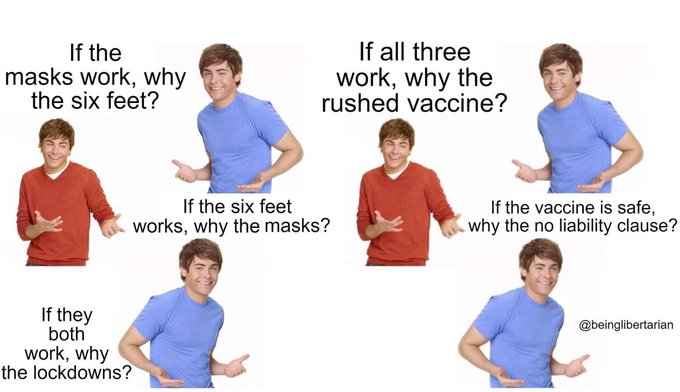
You know who isn’t worried about a second wave of COVID-19? Sweden. The stolid Scandinavian kingdom has just carried out a record number of COVID-19 tests and found a positive rate of just 1.2%, the lowest since the start of the pandemic. As Sweden’s case rate drops below Norway’s and Denmark’s, those commentators who spent April and May raging against what a Washington Post op-ed called its “experiment with national chauvinism” and predicting colossal fatalities have suddenly gone quiet.
“Sweden has gone from being one of the countries with the most infection in Europe to one of those with the least infection in Europe, while many other countries have seen a rather dramatic increase,” says Anders Tegnell, the state epidemiologist.
True, and it has happened not despite the absence of a lockdown but because of it. Sweden encouraged people to work from home, made university courses remote, and banned meetings of more than 50 people but otherwise trusted its citizens to use their common sense. The authorities judged that since hospitals could cope, there was no need to buy time by ordering people to stay indoors. That judgment has been amply vindicated.
A cause for unalloyed joy, you might think. Here, after all, is proof that a country can contain the coronavirus without depriving children of an education, piling up backlogs of non-coronavirus medical conditions, or leaving a smoking crater where its economy used to be.
But the rest of the world is far from pleased. Indeed, the tone of most foreign media coverage remains affronted, and you can see why. After all, if Sweden’s strategy was viable, the rest of us ruined ourselves for nothing. That is a disquieting thought, almost an unbearable one. But Sweden forces us to confront it.

“SINCE COVID-19 MANY AMERICANS FELL BEHIND IN ALL ASPECTS,” reads the website copy. The button below this statement is not for a GoFundMe, or a petition for calling for rent relief. Instead, it is the following call to action, from a company called Civvl: “Be hired as eviction crew.”
During a time of great economic and general hardship, Civvl aims to be, essentially, Uber, but for evicting people. Seizing on a pandemic-driven nosedive in employment and huge uptick in number-of-people-who-can’t-pay-their-rent, Civvl aims to make it easy for landlords to hire process servers and eviction agents as gig workers.

Starting in 2014, the National Institutes of Health granted millions of dollars in U.S. tax money to a “global environmental health nonprofit” called EcoHealth Alliance based in New York City.
The grant was for an eleven-year-long project entitled: “Understanding the risk of bat coronavirus emergence.” It aimed to study coronavirus in bats in China to determine which strains had the greatest risk of spillover to humans. (In other words, in hopes of preventing something like the Covid-19 pandemic and/or providing quick mitigation.)
A total of $3,748,715 was given for the project from 2014-2019.
EcoHealth Alliance’s partners on the taxpayer-funded project included scientist at China’s Wuhan Institute of Virology.
The Chinese researchers at the Wuhan Institute of Virology also “received assistance from the Galveston National Laboratory at the University of Texas Medical Branch and other U.S. organizations.”
The Wuhan Institute of Virology is located in the area of China where scientists believe the Covid-19 outbreak originated. Investigators have not ruled out the possibility that the virus was somehow released from the lab, either by accident or intentionally.
 Hellbound and Down
You must be logged in to post a comment.