Poll: 62% of Americans Say They Have Political Views They’re Afraid to Share

Anew Cato national survey finds that self‐​censorship is on the rise in the United States. Nearly two-thirds—62%—of Americans say the political climate these days prevents them from saying things they believe because others might find them offensive. The share of Americans who self‐​censor has risen several points since 2017 when 58% of Americans agreed with this statement.

These fears cross partisan lines. Majorities of Democrats (52%), independents (59%) and Republicans (77%) all agree they have political opinions they are afraid to share.

Liberals Are Divided on Political Expression

Strong liberals stand out, however, as the only political group who feel they can express themselves. Nearly 6 in 10 (58%) of staunch liberals feel they can say what they believe. However, centrist liberals feel differently. A slim majority (52%) of liberals feel they have to self‐​censor, as do 64% of moderates, and 77% of conservatives. This demonstrates that political expression is an issue that divides the Democratic coalition between centrist Democrats and their left flank.

Keep reading

Portland Police Officers Are Hiding Their Names. The Only Way to Find Out Who They Are: Tell the City Their Names

In the nearly two months that police and protesters have faced off on Portland streets, numerous incidents (including Brown’s beating) have been captured on video and raised questions about police tactics. The lawsuit the ACLU filed on behalf of Brown and other journalists and observers—demanding that cops keep their hands off—now winds its way through federal court.

Meanwhile, Kessler says scrutiny is more difficult since June 6, when the Portland Police Bureau initiated its new policy allowing officers to cover the name tags traditionally visible on their uniforms and instead identify themselves with only a tag or piece of tape with an internal personnel number written on it.

Keep reading

MACHINES CAN LEARN UNSUPERVISED ‘AT SPEED OF LIGHT’ AFTER AI BREAKTHROUGH, SCIENTISTS SAY

Researchers have achieved a breakthrough in the development of artificial intelligence by using light instead of electricity to perform computations.

The new approach significantly improves both the speed and efficiency of machine learning neural networks – a form of AI that aims to replicate the functions performed by a human brain in order to teach itself a task without supervision.

Current processors used for machine learning are limited in performing complex operations by the power required to process the data. The more intelligent the task, the more complex the data, and therefore the greater the power demands.

Such networks are also limited by the slow transmission of electronic data between the processor and the memory.

Researchers from George Washington University in the US discovered that using photons within neural network (tensor) processing units (TPUs) could overcome these limitations and create more powerful and power-efficient AI.

Keep reading

China, QAnon Censorship, And Other Notes From The Edge Of The Narrative Matrix

QAnon is one of the most annoying things on Twitter and its followers are morons. And, also, it is dangerous and unacceptable that monopolistic Silicon Valley tech plutocrats are exerting more and more control over human communication.

I criticize QAnon constantly and find its acolytes intensely irritating. And, also, I don’t want monopolistic tech billionaires paternalistically protecting my fragile little mind from them.

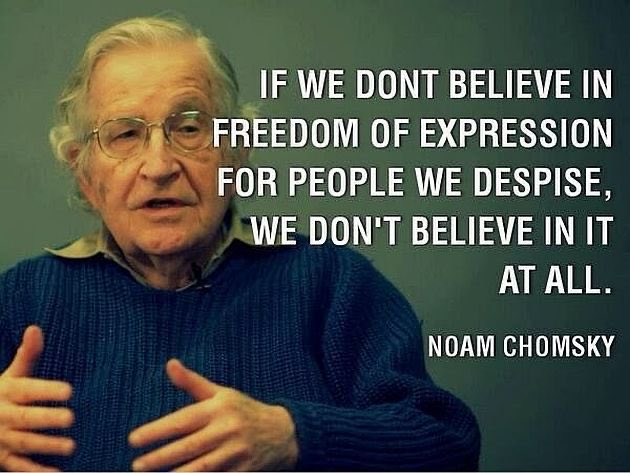
Twitter shouldn’t be censoring this.

In a corporatist system of government, where few meaningful distinctions exist between corporate power and state power, corporate censorship is state censorship. Permitting such a thing, to any extent, is extremely hazardous for the future of human development.

Keep reading

Kaine, Warner push for Virginia’s new gun control measures to become federal law

With Virginia’s controversial new gun control measures now in effect, the state’s Democratic U.S. senators want the state laws to become federal law.

Sens. Tim Kaine and Mark Warner, who is running for re-election, on Wednesday introduced the “Virginia Plan to Reduce Gun Violence Act of 2020” that would enact most of Virginia’s new gun control legislation nationally, including the state’s new “red flag” law, a one-handgun-a-month law and the required reporting of lost and stolen guns. The proposal is not likely to gain support in the Republican-controlled Senate or with the White House.

Keep reading