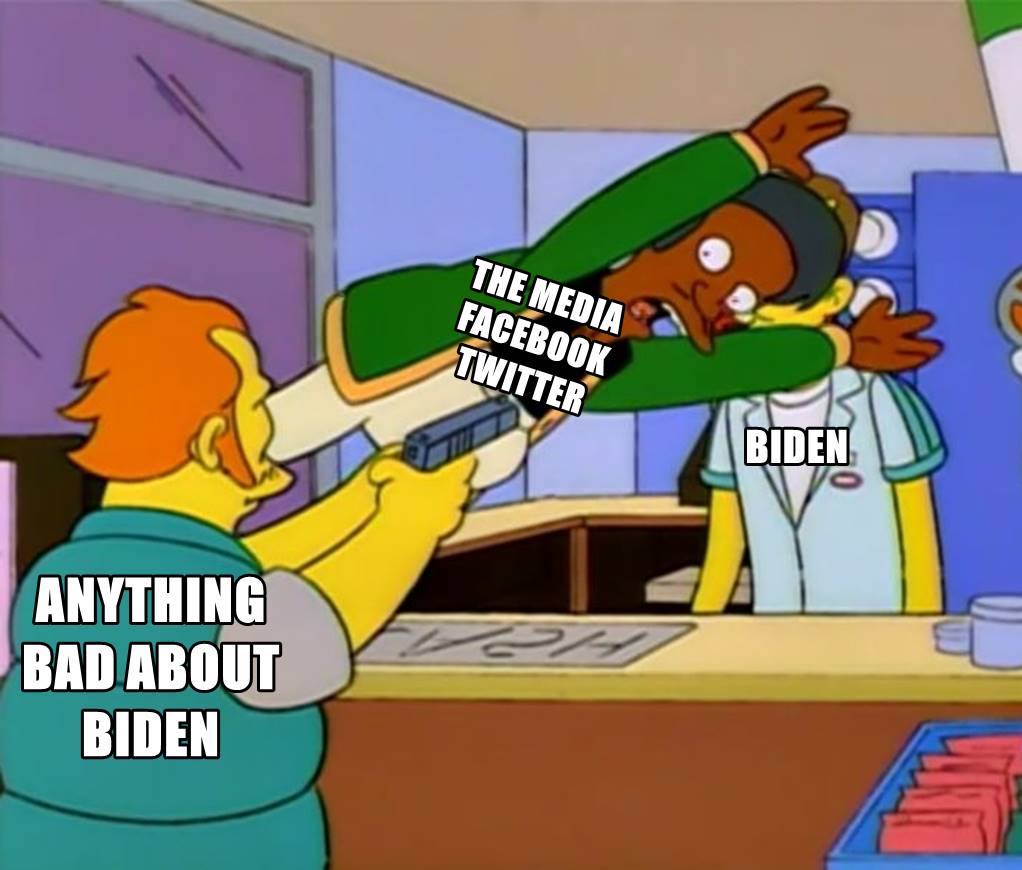
The fix is in!


“Receiving a new truth is like adding a new sense.”
Justus Von Liebig
“Beat them at their own game.” “Flip the script.” “Give them a taste of their own medicine.” Any of these phrases will apply to the absolutely ingenious measures taken by activists who are creating their own facial recognition systems to identify cops who hide their badges.
As TFTP reported during the George Floyd protests, across the country, in dozens of cities, cops were doling out unprecedented violence in the face of angry protests stemming from unchecked police brutality. Though Floyd’s death was the flash point of the unrest, the uprising represented something far deeper — systemic abuse by law enforcement of minorities, the poor, and everyone else not directly connected to the establishment. Countless incidents throughout this unrest involved officers who could not be identified and as a result of their anonymous instigation and violence, there has been no accountability.
In multiple states, police have been seemingly taking measures to avoid this accountability by removing their name tags or covering their badges. This is in direct violation of most departments’ policies. But no politicians, mayors, governors, or mainstream media seem to care.
Cops hiding their identification is ominous for two reasons. The first reason being that they can enact brutality against the innocent and we do not know who they are to hold them accountable. The second reason is the fact that anyone can dress up like a cop with no badge number and start doing whatever they want, up to and including inciting violence, detaining people, or any other numerous unscrupulous acts.
As we reported at the time, many of these departments appeared to have been given orders from the top down to cover their badge numbers and remove their name plates. This is not acceptable and thanks to a self-taught programmer, Christopher Howell, it no longer has to be.
Howell created a program that identifies cops who were permitted by their supervisors to cover their names while responding to protests.
“I am involved with developing facial recognition to in fact use on Portland police officers, since they are not identifying themselves to the public,” Howell told the NY Times.
Because Portland made it illegal to use facial recognition against the police, Howell had some barriers to using his software. However, as the NY Times reports, Portland’s mayor, Ted Wheeler, told Mr. Howell that his project was “a little creepy,” but a lawyer for the city clarified that the bills would not apply to individuals. The Council then passed the legislation in a unanimous vote.
“There’s a lot of excessive force here in Portland,” Howell told the NY Times. “Knowing who the officers are seems like a baseline.”
This self-taught computer programmer has since created a system that has led to flipping the script on police accountability.
Philosophers tend to be highly influenced by their environment, and can often be found rationalizing instead of critically examining the conventional views of the people around them. But if anything warrants philosophical scrutiny, surely it is our national taboos. As a philosopher of biology, one taboo is of particular interest to me: the taboo on considering the possibility that genes play a role in group differences in psychological traits. So I wrote a paper arguing that, while nothing can be definitively proved, there is strongly suggestive evidence that genes are involved in group differences, and we should stop suppressing and censoring research into this topic.
I submitted the paper to Philosophical Psychology—a respected journal that publishes work on the connection between philosophy and psychology, which at the time was co-edited by Mitchell Herschbach (a philosopher) and Cees van Leeuwen (a psychologist). To my pleasant surprise, I received two positive referee reports along with a request for revisions. After two rounds of review, the paper was accepted and published in the January 2020 issue of the journal.
The paper was accompanied by an Editors’ Note written by van Leeuwen and Herschbach, saying:
The decision to publish an article in Philosophical Psychology is based on criteria of philosophical and scientific merit, rather than ideological conformity… In sum, Cofnas’ paper certainly adopts provocative positions on a host of issues related to race, genetics, and IQ. However, none of these positions are to be excluded from the current scientific and philosophical debates as long as they are backed up with logical argumentation and empirical evidence, and they deserve to be disputed rather than disparaged.
Needless to say, heterodoxy about politically sensitive issues is not always well received in academia, so it was gratifying to see the editors of an important journal taking a stand for free inquiry. “2020 is gearing up to be the best year ever,” I thought to myself.
It didn’t take long for the paper and Editors’ Note to come to the attention of the wokerati on Twitter. Macquarie University philosophy professor Mark Alfano deemed my paper “shit” and announced his plan to “ruin [my] reputation permanently and deservedly.” He started a petition on change.org demanding an “apology, retraction, or resignation (or some combination of these three)” from the journal editors. A number of philosophers—many of whom did not even read the paper—joined the campaign to get it retracted and/or smear me. University of South Carolina professor Justin Weinberg promoted Alfano’s petition on his widely read philosophy blog, Daily Nous. He also published a guest post that falsely and preposterously claimed that I defended “segregation” and “apartheid schemes.”
But the editors of Philosophical Psychology stood firm. Van Leeuwen and Herschbach wrote a statement on Facebook reiterating that the review process had been carried out properly, and declaring, “Efforts to silence unwelcome opinion… are doing a disservice to the community.”
A 14-year-old boy with autism was left traumatized and physically injured last month after one of Topeka’s finest felt it necessary to throw him to the ground, handcuff him and then kneel on his neck in the same move that proved fatal for George Floyd — a fully grown man. The boy’s mother is now speaking out and seeking justice for her child.
According to police, they were responding to a call about the boy bringing his dog on a walk without a leash. There had been no incident — meaning the dog never once harmed anyone — but fear of an unleashed dog led to a police response.
“At around 4:26 p.m. the officer located the 14-year-old in the neighborhood a third time and conducted a pedestrian stop,” the police Facebook post said. “He did not comply with the officer’s commands. A use of force was generated when he was taken to the ground and handcuffed.”
The officer informed the boy that he was in violation of city law the first time and told him to take the “goddamn dog home” the second time, according to body-camera footage detailed in the audit report, and reported on by VICE.
The boy — who was likely scared to death when the armed man began yelling at him — did not immediately comply and decided to keep riding his bicycle home. When the officer finally caught up to the boy, violent force was used against him and his dog.
The horrifying video of George Floyd’s death, and the protests that followed, led to a rare occurrence: The police officers responsible are being prosecuted. Former Minneapolis police officer Derek Chauvin has been charged with murder and remains in jail, and three other officers are facing lesser charges.
Kentucky’s recent decision not to bring homicide charges against the officers who killed Breonna Taylor is much more typical. Most instances of law enforcement brutality do not result in criminal charges, even when they are captured on video. They often result in no consequences at all. This includes many cases of excessive force in response to the protests after Floyd’s death, but the problem is long standing, and not restricted to local police.
Border Patrol agent Jesus Mesa Jr. was not prosecuted or disciplined for shooting and killing a 15-year-old boy, and the Supreme Court ruled last year that the boy’s parents could not sue.
Most of the individuals responsible for the CIA torture program faced no consequences—in fact, one of the CIA employees who oversaw torture and evidence destruction now leads the agency.
And the list goes on.
SO USA TODAY DIDN’T WANT TO RUN MY HUNTER BIDEN COLUMN THIS WEEK. My regular editor is on vacation, and I guess everyone else was afraid to touch it. So I’m sending them another column next week, and just publishing this one here. Enjoy! This is as filed, with no editing from USAT.
* * *
In my 2019 book, The Social Media Upheaval, I warned that the Big Tech companies — especially social media giants like Facebook and Twitter — had grown into powerful monopolists, who were using their power over the national conversation to not only sell ads, but also to promote a political agenda.
That was pretty obvious last year, but it was even more obvious last week, when Facebook and Twitter tried to black out the New York Post’s blockbuster report about emails found on a laptop abandoned by Democratic presidential candidate Joe Biden’s son Hunter.
The emails, some of which have been confirmed as genuine with their recipients, show substantial evidence that Hunter Biden used his position as Vice President Joe Biden’s son to extract substantial payments from “clients” in other countries. There are also photos of Hunter with a crack pipe, and engaging in various other unsavory activities. And they demolished the elder Biden’s claim that he never discussed business with his son.
That’s a big election-year news story. Some people doubted its genuineness, and of course it’s always fair to question a big election-year news story, especially one that comes out shortly before the election. (Remember CBS newsman Dan Rather’s promotion of what turned out to be forged memos about George W. Bush’s Air National Guard service?)
But the way you debate whether a story is accurate or not is by debating. (In the case of the Rather memos, it turned out the font was from Microsoft Word, which of course didn’t exist back during the Vietnam War era.) Big Tech could have tried an approach that fostered such a debate. But instead of debate, they went for a blackout: Both services actually blocked links to the New York Post story. That’s right: They blocked readers from discussing a major news story by a major paper, one so old that it was founded by none other than Alexander Hamilton.
I wasn’t advising them — they tend not to ask me for my opinion — but I would have advised against such a blackout. There’s a longstanding Internet term called “the Streisand effect,” going back to when Barbara Streisand demanded that people stop sharing pictures of her beach house. Unsurprisingly, the result was a massive increase in the number of people posting pictures of her beach house. The Big Tech Blackout produced the same result: Now even people who didn’t care so much about Hunter Biden’s racket nonetheless became angry, and started talking about the story.
“Culture is a perversion. It fetishizes objects, creates consumer mania, preaches endless forms of false happiness, false understanding in the form of squirrelly religions and silly cults. It invites people to dehumanize themselves by behaving like machines.”
Terence McKenna

 Hellbound and Down
You must be logged in to post a comment.