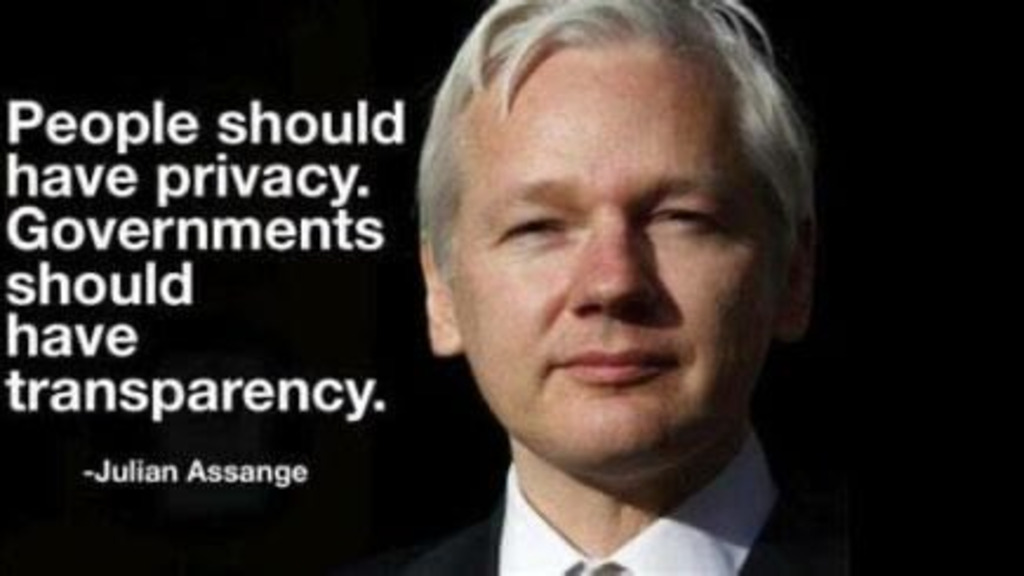
Julian Assange on privacy and transparency…

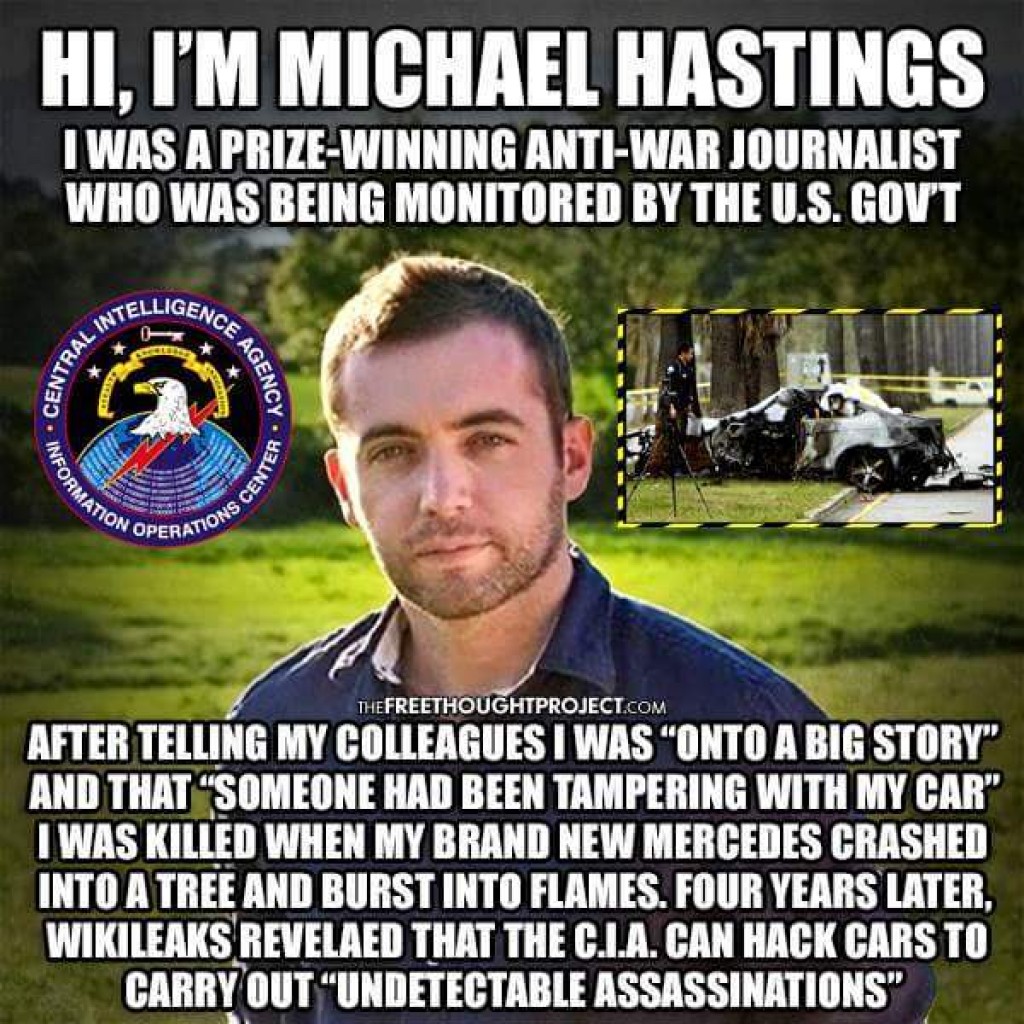
Three former abortion workers have accused their boss, the head of a North Carolina abortion facility, of lying about the status of her nursing license, among other bizarre and unethical behaviors.
According to The Daily Wire, the whistleblowers previously worked at Family Reproductive Health, an abortion facility owned and operated by Deborah Jane Walsh. As the outlet reported, Walsh passed herself off as a nurse on the facility’s website, even though her license expired in 2015.
Represented by the Thomas More Society, the former employees said they are coming forward to warn the public and “stop the deception, fraud, and criminal practices by their former boss.”
“She would tell patients unusual things, such as the abortion was only being performed on a ‘spirit’ or a ‘fairy.’ Ms. Walsh’s unusual behavior combined with her keeping a firearm on the premises made clinic staff, including myself, fearful for our safety and the safety of others,” one of the former employees said.
One of the whistleblowers also alleged that Walsh had turned a blind eye to underage abortions and even enabled sex trafficking.
“I saw a man bring to the clinic a girl seeking an abortion. The girl seeking an abortion appeared to be under 16 years of age, although I did not verify her age, since I was not involved in her care. Later, another worker at the clinic told me the same man had been there on prior occasions with different women or girls each time,” the whistleblower said.
Another former employee accused Walsh of illegally living at the abortion facility, claiming she slept and cooked there, even keeping a stove and a bed in her office. According to the report, Walsh frequently took melatonin and Benadryl, which often made her appear “disoriented and confused.”
In a “disturbing incident,” one whistleblower remembered hearing a gun chambering around before Walsh appeared, brandishing a shotgun. Walsh apparently thought it was nighttime and mistook the facility workers for burglars.
Walsh also allegedly violated informed consent laws, and failed to properly sterilize equipment and properly dispose of biohazardous materials, according to the report. Through their attorneys, the whistleblowers submitted a complaint to the North Carolina Board of Nursing in 2020, but the board declined to take action.
Dr. Anthony Fauci is the most highly compensated federal employee and the most visible. So, it’s incumbent upon all of us to give him oversight.
In 2011, I founded a national transparency organization called OpenTheBooks.com. Last year, we filed 47,000 Freedom of Information Act requests, the most in American history. We successfully captured and displayed online $12 trillion of federal, state, and local spending.
Over the past 14 months – since January 2021 – we investigated Dr. Fauci’s financials by filing FOIA requests. When I published our original reporting at Forbes, here is what happened.
The National Institutes of Health, Fauci’s employer, loaded an artillery shell in their big gun and fired it at the C-suite at Forbes. Quickly, Forbes folded and my column was terminated.
DHS whistleblower Philip Haney was found dead in February 2020.
The whistleblower against the Obama administration was shot dead near his vehicle in California.
Haney famously told Sean Hannity in 2016 that he was ordered during the Obama administration to scrub the record of Muslims in the US with terrorist ties.
Haney had been missing for two days before he was found dead.
Haney’s body was found by his car on a highway in Plymouth, California with a single gunshot. A firearm was reported found next to Haney. Almador County officials called the shooting a “suicide” at the time.
Haney’s close friend Jan Markell, a radio host, author and speaker, tweeted this out on her last conversation with Phil Haney.
Jan Markell: My friend Phil Haney was found shot yesterday in CA. I had lunch with him a month ago. He warned something could happen to him. He was to get married in a month. It will be falsely called a suicide.
Philip Haney was the co-author with Art Moore of the book, See Something, Say Nothing: A Homeland Security Officer Exposes the Government’s Submission to Jihad.
The FBi was later called in to investigate Phil Haney’s death.
On Friday, two years after his death, a Northern California sheriff-coroner ruled Phil Haney’s death a suicide.
A senior FBI special agent has sounded the alarm on the bureau’s investigation into the pipe bombs that were placed outside the Democratic National Committee and Republican National Committee buildings the night before the Jan. 6, 2021, riot at the Capitol, suggesting that the investigation has been a low priority and made no real progress.
According to a letter sent on Wednesday from Rep. Jim Jordan, ranking member of the House Judiciary Committee, to FBI Director Christopher Wray, the FBI agent filed a whistleblower disclosure about the pipe bomb investigation — an investigation the Associated Press had characterized as “one of the highest-priority investigations for the FBI and the Justice Department.” The agent alleged that on Feb. 7, 2022, more than a year after the bombs were planted, the bureau’s Washington Field Office asked its other field offices “to canvass all confidential human sources nationwide for information about the individual and the crime.”
A whistleblower has provided government data documenting 48,465 deaths within 14 days of COVID-19 vaccination among Medicare patients alone, according to medical freedom rights attorney Thomas Renz.
The announcement Saturday was made by the Ohio-based attorney, who remains involved in several major cases brought against federal agencies relating to fraud and violations of medical freedom rights.
In his presentation, Renz expressed his appreciation for whistleblowers who were coming forward to provide the public with such important information from the Centers for Medicare & Medicaid Service (CMS). He described the CMS database as the largest available in the U.S. for the study of COVID-19 trends because it contains the data of approximately 59.4 million Medicare beneficiaries.
One slide showed that the number of “persons who died within 14 days of a COVID-19 vaccine” equated to 19,400 for those younger than 81 years old, and 28,065 for those 81 and over, totaling 47,465 deaths.
“This is raw data,” Renz explained. “There’s no analysis.” And, he emphasized, these death numbers are from less than 20% of the U.S. population.
“Do you want to know why 14 days is important?” he asked. “Because if you die with 14 days, you’re not considered vaccinated.” According to the Centers for Disease Control and Prevention (CDC), one is not considered as being “vaccinated” until 14 days after their completed injection regimen, raising the question of whether government authorities have been classifying these fatalities as something other than vaccination-related deaths.
Whistleblower recordings obtained by Project Veritas appear to show medical staff and supervisors admitting they used the wrong dilutant in giving the COVID-19 Vaccine to children, lower income, and homeless adults, and confirming the error “could cancel out [the protection of the vaccine] or have adverse effects.” The company, DocGo and their subsidiary Ambulnz, failed to disclose the incidents. It is also unclear if any affected patients were ever notified.
The recordings, which come from a whistleblower employed through DocGo/Ambulnz, show nurses and other staff admitting they improperly mixed the COVID-19 Vaccine with bacteriostatic water instead of saline solution.
Pfizer, the CDC, and the FDA give clear instructions about diluents saying bacteriostatic water is not to be used.
Audio and video recordings, however, show nurses admitting that the erroneous mixture “could cancel out [the protection of the vaccine] or have adverse effects.” It is unclear if patients, including parents of children who were vaccinated, were ever notified, despite company supervisors appearing to be aware of the problem. According to the nursing staff, no incident reports were filed.
The potential risk to children who received the botched mixture was so significant that a nurse with DocGo/Ambulnz said she felt compelled to reach out to Project Veritas. “These are little kids, these are babies,” said the whistleblower during an emotional interview with Project Veritas founder James O’Keefe.
Sen. Ron Johnson, R-Wis., convened and moderated a Senate panel debate titled “COVID-19: A Second Opinion,” in which claims were made that the Defense Department falsified COVID data to reflect lower side-effects among US troops than the real data being reported.
Attorney Thomas Renz, who was defending three Defense Department officials, said the actual data reveals a 300 percent increase in miscarriages, a 300 percent increase in cancer, and a 1,000 percent increase in neurological disorder among U.S. military personnel, among other results.
The attorney stated that the word “corruption” was used frequently during the panel discussion, and that this whistleblower report involved corruption at the highest levels of government. He demanded an investigation into Defense Secretary Lloyd Austin and the entire Defense Department reporting machinery.
While his office launches a whistleblower inquiry, Johnson has asked the Defense Department to preserve all documentation related to the immunizations. He stated that it “appears to be data doctoring.”
The reason Trump failed to issue a pardon for either Snowden or Assange centers on the deep state trying to protect itself by placing Trump in jeopardy, suggested Greenwald last week in an episode of his System Update show.
In a written introduction for the episode, Greenwald notes that Trump, while president, had both “raised the possibility that he might pardon Snowden” and was “actively considering a pardon for Assange.”
Greenwald, in the introduction, zeros in on a recent interview of Trump by Candace Owens. In the interview, Trump stated he came “very close” to pardoning one of them but did not ultimately do so. Why? Trump said the reason was because Trump “was too nice” to issue the pardon.
Greenwald isn’t buying that explanation. He writes:
The question that obviously emerges from that answer: too nice to whom? To the U.S. security services — the CIA, NSA and FBI — which had spent four years doing everything possible to sabotage and undermine Trump and his presidency with their concoction of Russiagate and other leaks of false accusations to their corporate media allies? Too nice to the war-mongering servants of the military-industrial complex in the establishment wings of both parties who were the allies of those security services in attempting to derail Trump’s America First foreign policy agenda? Too nice to John Brennan, James Clapper and Susan Rice, the Obama-era security officials most eager to see both Assange and Snowden rot in prison for life because they exposed Obama’s spying crimes and the Democrats’ corruption in 2016? Trump’s “I’m too nice” explanation is, shall we say, less than persuasive.
 Hellbound and Down
You must be logged in to post a comment.