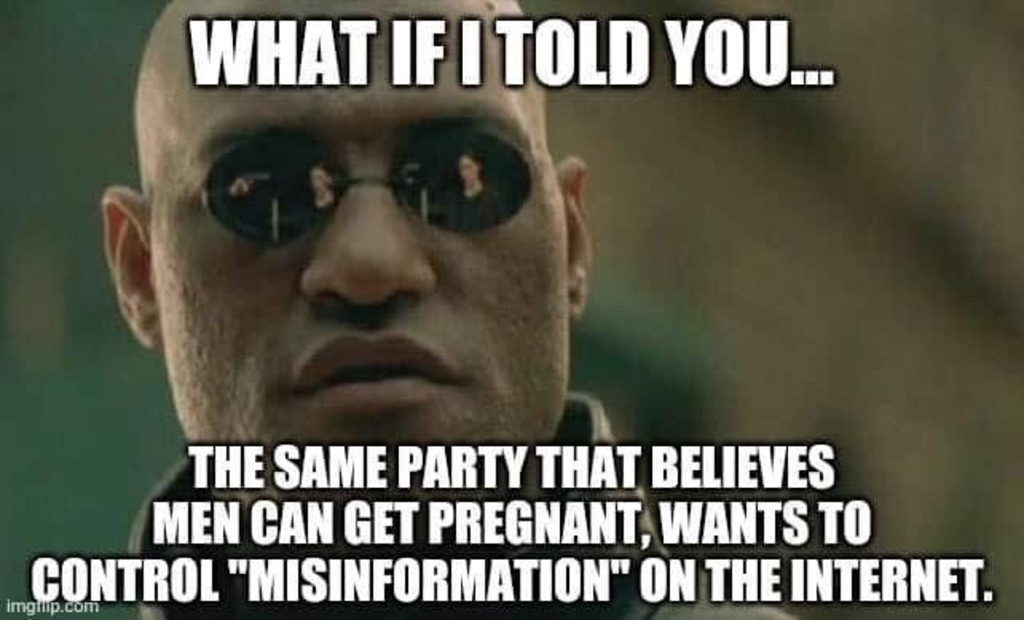
What if…

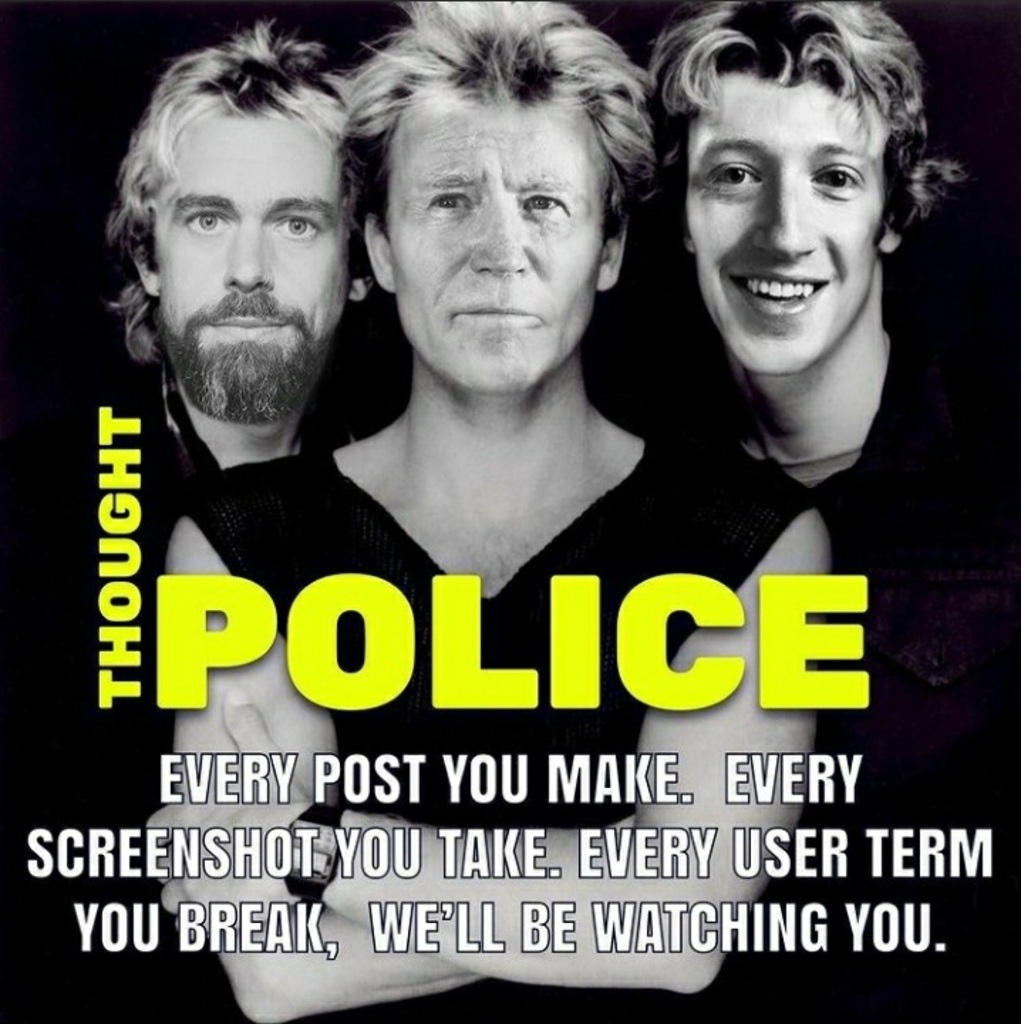
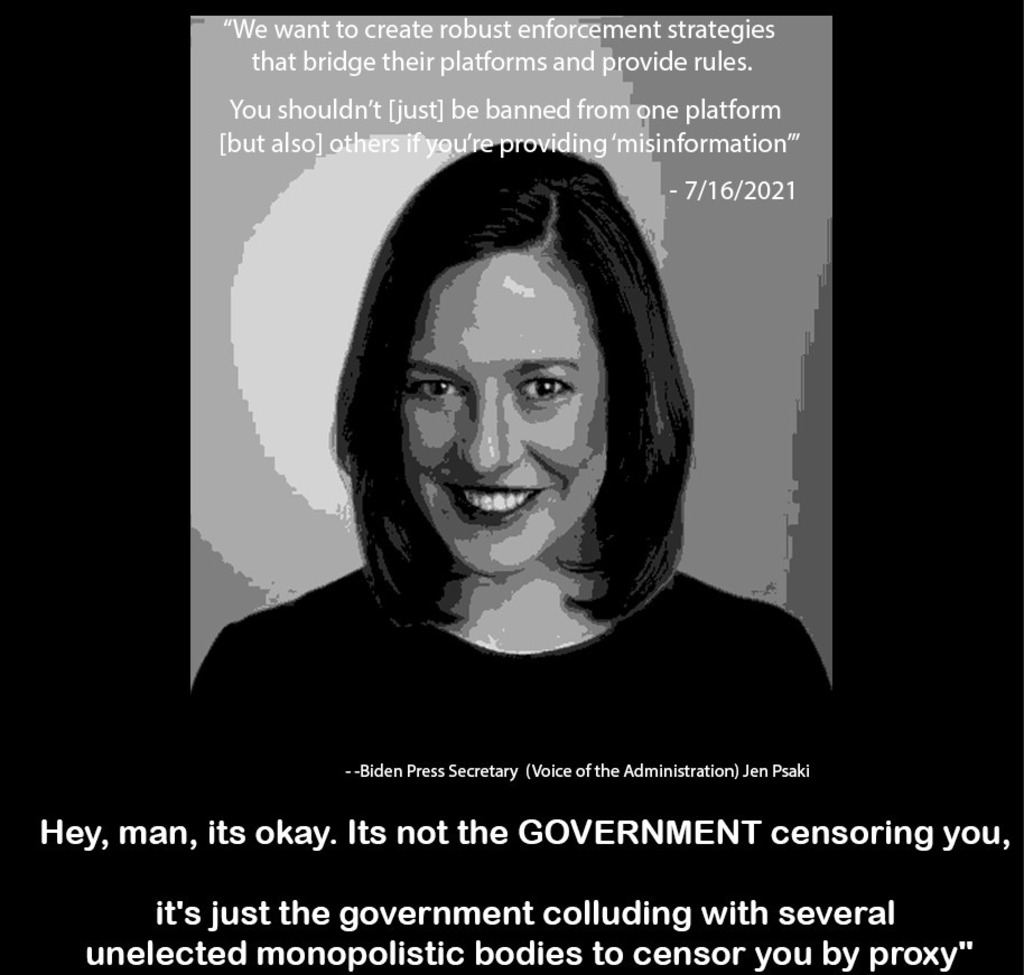
The weirdest thing about the Biden administration tasking itself with the censorship of “disinformation” on social media is that the United States is the hub of a globe-spanning empire that is built upon a foundation of disinformation, maintained by disinformation, and facilitated by disinformation.
If the propaganda engine of the US-centralized empire ceased actively deceiving the public about the world, it would collapse immediately. There would be mass unrest at home and abroad, status quo politics would be abandoned, alliances and coalitions would crumble, leaders official and unofficial would be ousted, and US unipolar hegemony would end.
The only thing keeping this from happening is the vast amounts of wealth and energy which are poured into continuously deceiving the people of America and its allies about what’s really going on in their nations and political systems, and in the world as a whole.
Claiming that “right-wing voices are being censored,” Republican-led legislatures in Florida and Texas have introduced legislation to “end Big Tech censorship.” They say that the dominant tech platforms block legitimate speech without ever articulating their moderation policies, that they are slow to admit their mistakes, and that there is no meaningful due process for people who think the platforms got it wrong.
They’re right.
But it’s not just conservatives who have their political speech blocked by social media giants. It’s Palestinians and other critics of Israel, including many Israelis. And it’s queer people, of course. We have a whole project tracking people who’ve been censored, blocked, downranked, suspended and terminated for their legitimate speech, from punk musicians to peanuts fans, historians to war crimes investigators, sex educators to Christian ministries.
Content moderation is hard at any scale, but even so, the catalog of big platforms’ unforced errors makes for sorry reading. Experts who care about political diversity, harassment and inclusion came together in 2018 to draft the Santa Clara Principles on Transparency and Accountability in Content Moderation but the biggest platforms are still just winging it for the most part.
The situation is especially grim when it comes to political speech, particularly when platforms are told they have a duty to remove “extremism.”
The Florida and Texas social media laws are deeply misguided and nakedly unconstitutional, but we get why people are fed up with Big Tech’s ongoing goat-rodeo of content moderation gaffes.
An influential COVID policy skeptic is threatening to sue Facebook for suspending his account based on a graphic he posted Tuesday, titled “Masking Children is Impractical and Not Backed by Research or Real World Data.”
Justin Hart was identified in a recent MIT paper as one of a handful of “anchors” for the anti-mask network on Twitter. He’s also chief data analyst for the COVID contrarian website Rational Ground.
A warning letter to Facebook from Hart’s lawyers at the Liberty Justice Center said the graphic was “science-based and contains footnotes to scientific evidence supporting its claims.” Facebook issued him a three-day suspension the next day, citing the post as misinformation. The page remains live but the post is no longer there.
Hart’s mask argument is similar to one made recently by University of California San Francisco epidemiologist Vinay Prasad. “No one has any clue” if the benefits of masking children outweigh the risks, he wrote in MedPage Today. “During the last year and half, the scientific community has failed to answer these questions. Failed entirely.”
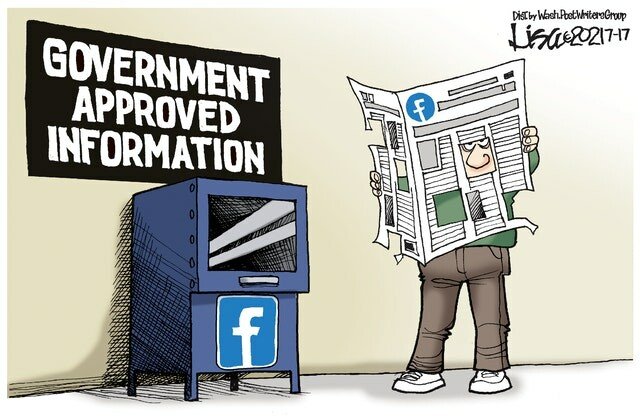
It was recently revealed that Dr. Anthony Fauci was privately saying in emails that the SARS-CoV-2 may have resulted from a lab leak from the Wuhan Institute of Virology. At the same time, Big Tech was deleting posts and manipulating search results that raised the same questions. Hence, what else are scientists currently saying about the pandemic and possible vaccine side effects that Facebook may not want you to hear?
When Project Veritas broke the news on May 24, 2021, of two Facebook whistleblowers who revealed an extensive program to combat so-called “vaccine hesitancy” by censoring accurate information if it tended to make people question the COVID-19 vaccines developed at “warp speed,” we weren’t surprised.
The Big Tech consortium has long engaged in a program of deception against the American public, sold through the mainstream media as a campaign against “hate speech,” but which in reality is nothing less than an authoritarian campaign against diversity of thought.

In a story that shows just how much detail Facebook has on the lives of its users, a new report says that Facebook fired 52 employees who were involved in obtaining location data of women they were romantically interested in.
Male programmers were able to view women’s whereabouts, personal messages, deleted photographs, and more because of their access to user data through Facebook’s internal systems.
This story follows an engineer who was on vacation with a woman in Europe. After a fight, the woman left the room they were sharing. The Facebook developer then used the location information he had access to locate her down at a hotel nearby.
In another case, following their date, a woman stopped replying to a Facebook engineer’s messages. He then surreptitiously spied on her using the position. He had exposure to years of private Facebook messages with contacts, events attended, photos shared, and postings she had remarked about or clicked on. He could also track her real-time location because she has Facebook installed.
In September 2015, Facebook’s top security officer, Alex Stamos, apparently informed Mark Zuckerberg about the situation.
According to Stamos, Facebook staff spied on individuals “almost every month.” At the time, over 16,000 workers had access to confidential user data. Stamos made many suggestions, including limiting access and forcing workers to submit formal requests for data access.


You must be logged in to post a comment.