THE FEDERAL BUREAU OF TWEETS: TWITTER IS HIRING AN ALARMING NUMBER OF FBI AGENTS

Twitter has been on a recruitment drive of late, hiring a host of former feds and spies. Studying a number of employment and recruitment websites, MintPress has ascertained that the social media giant has, in recent years, recruited dozens of individuals from the national security state to work in the fields of security, trust, safety and content.

Chief amongst these is the Federal Bureau of Investigations. The FBI is generally known as a domestic security and intelligence force. However, it has recently expanded its remit into cyberspace. “The FBI’s investigative authority is the broadest of all federal law enforcement agencies,” the “About” section of its website informs readers. “The FBI has divided its investigations into a number of programs, such as domestic and international terrorism, foreign counterintelligence [and] cyber crime,” it adds.

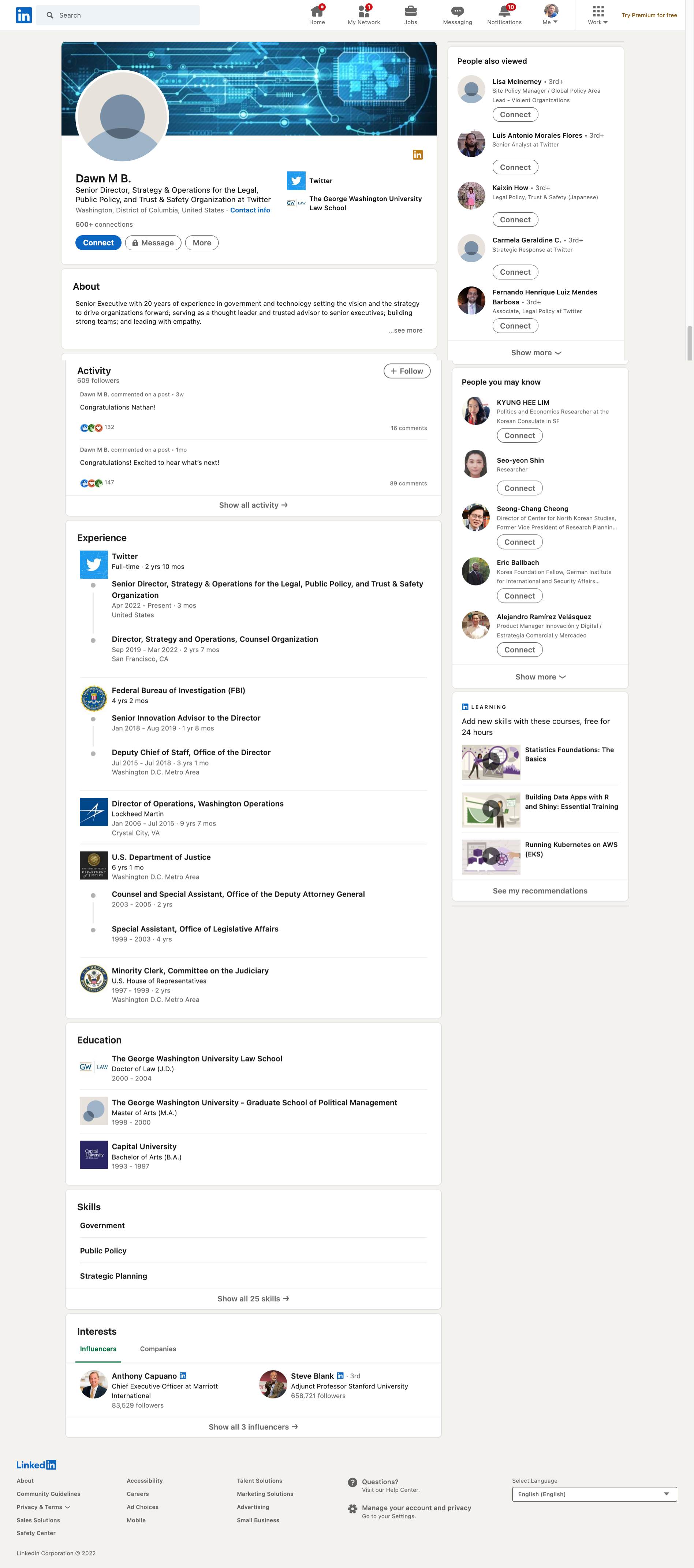
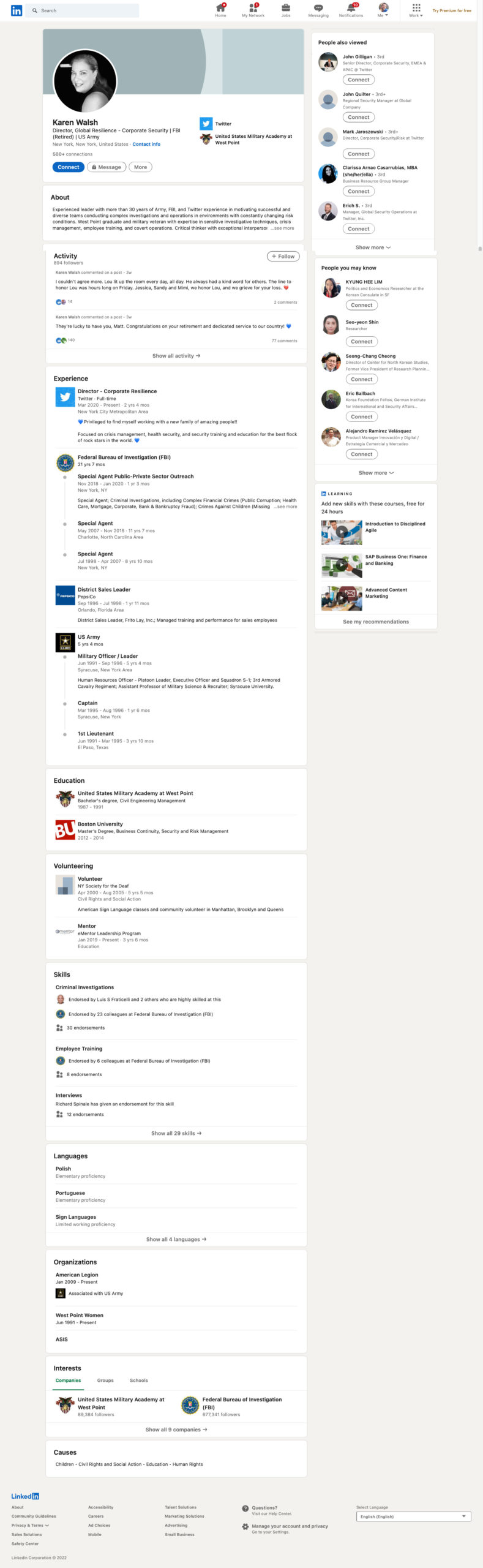
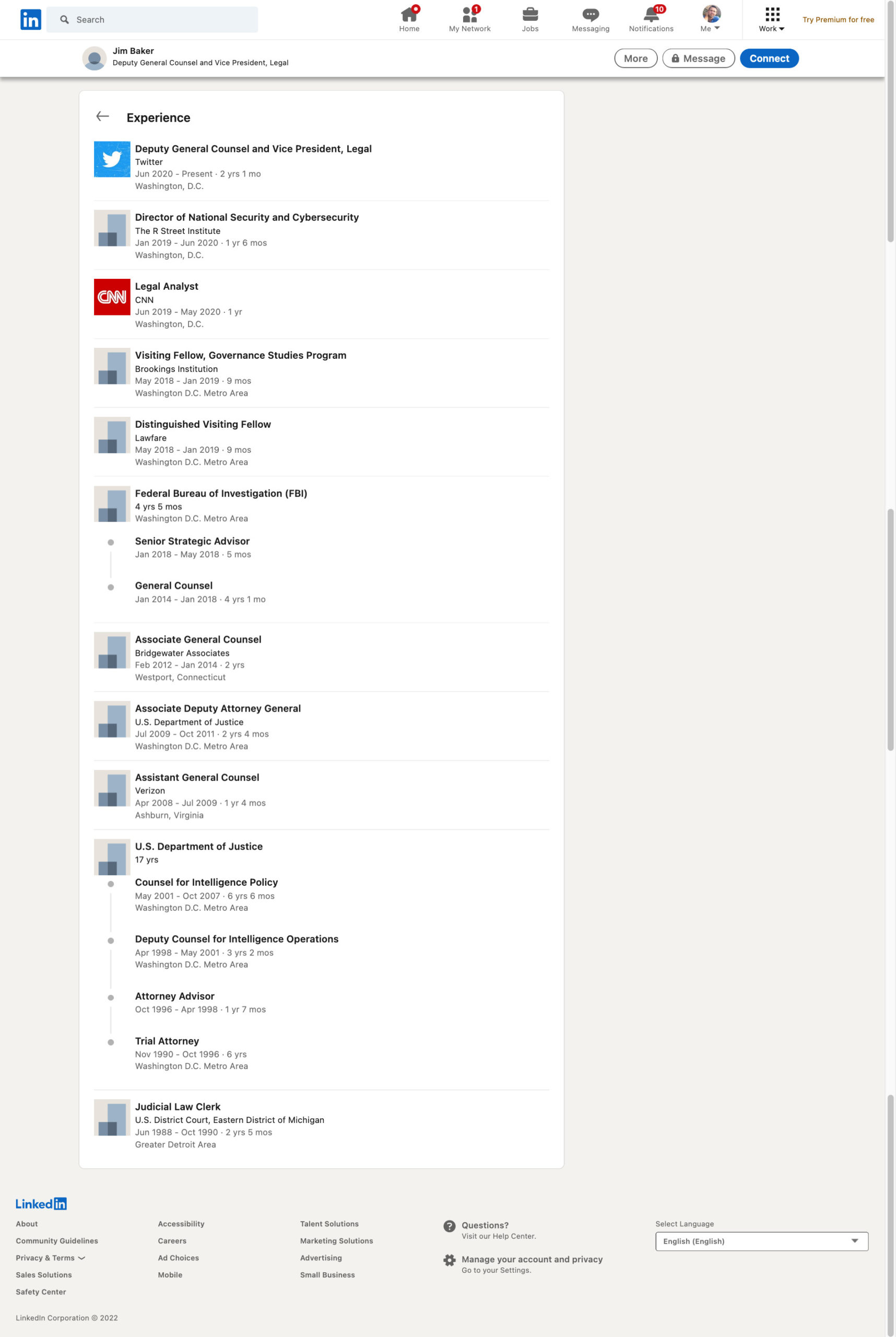
For example, in 2019, Dawn Burton (the former director of Washington operations for Lockheed Martin) was poached from her job as senior innovation advisor to the director at the FBI to become senior director of strategy and operations for legal, public policy, trust and safety at Twitter. The following year, Karen Walsh went straight from 21 years at the bureau to become director of corporate resilience at the silicon valley giant. Twitter’s deputy general counsel and vice president of legal, Jim Baker, also spent four years at the FBI between 2014 and 2018, where his resumé notes he rose to the role of senior strategic advisor.

Keep reading

Social media posts could lead to gun confiscation under proposed Red Flag laws, PA Gov Tom Wolf suggests

Pennsylvania Governor Tom Wolf has shared an infographic showing how US citizens posting photos of guns on social media, along with “cryptic messages,” could lead to a court confiscating their guns under proposed legislation that he supports.

“Red flag laws allow us to take action when someone who has a gun begins to act erratically,” Governor Wolf posted. In the social media age, this could include in online posts. “Red flag laws still require due process, and any removal of weapons is temporary,” Governor Wolf continued.

Governor Wolf rebuked Republicans in the House Judiciary Committee for refusing to approve what he called “commonsense” bills addressing gun violence in the state. 

Instead of voting to move the four bills to the House for debate, Republicans on the Judiciary committee forced a vote to refer the bills to another committee. 

“Shameful. That’s what I’d call today’s action – or, rather, inaction,” Governor Wolf said. “Lawmakers have an opportunity to take commonsense steps, which the majority of Pennsylvanians support. Instead of taking a vote to advance these bills, they are just delaying debate on this legislation. Gun violence won’t delay. Every day the Republicans stall, more people are at risk.

“This isn’t just a ‘Philadelphia’ issue. This is a statewide and national issue that must be addressed. It’s reprehensible that Republicans continue to stall when our own constituents want this addressed right now,” Governor Wolf said. “I urge Republicans to stop these tactics and take action.”

Keep reading

Japan passes bill making ‘online insults’ punishable by one year in jail

In an attempt to quell public concern about cyberbullyingJapan has passed legislation making “online insults” punishable by imprisonment.

The bill, passed by the Japanese government on Monday, has amended the country’s penal code and will take effect this summer.

According to the Japan Times, the amendment comes as a response to the death of professional wrestler and Netflix’s Terrance House reality star Hana Kimura.

Kimura, 22, died by suicide in 2020. News of her death was spread nationwide, with many Japanese citizens pointing to the ample online abuse and harassment Kimura received in the months before her death.

Offenders who post “online insults” can now be punished under the law with up to one year of jailtime, or fined ¥300,000 (approximately $2,870).

Prior to this legislation, insults were still illegal, though the punishment was lesser, with offenders earning fewer than 30 days detention and a fine of ¥10,000 (approximately $95).

According to CNN, under Japan’s penal code, insults “are defined as publicly demeaning someone’s social standing without referring to specific facts about them or a specific action.”

Insults differ from defamation in Japan, the distinguishing factor being that defamation must include specific facts when publicly demeaning another person. Defamation is also punishable under Japanese law.

The degree to which an insult will be punished under the new law has yet to be determined.

Keep reading

Google, Twitter, Meta, TikTok and more just signed the EU’s “anti-disinformation” code

Big Tech companies have signed a new version of the European Union’s “anti-disinformation” code. Some of the companies that signed include Google, Twitter, Meta, TikTok, and Twitch – but also smaller players such as Vimeo and Clubhouse.

There are 34 signatories in total:

Apple declined to sign.

The “code of practice on disinformation,” will require online platforms to show how they are tackling “harmful content.”

It will also require platforms to fight “harmful misinformation” by forming partnerships with fact-checkers and developing tools. They will be forced to include “indicators of trustworthiness” on information verified independently on hot-button issues like COVID-19 and Russia’s invasion of Ukraine.

Perhaps the most notable requirement is providing their efforts to tackle harmful content and disinformation on a country-by-country basis. The move was opposed by online platforms, but national regulators demanded that they need more specific data to better address the spread of disinformation.

Keep reading

Biden Advisor Says Social Media Should Silence Anyone Who Criticises Green Energy “Transition”

One of Joe Biden’s senior advisors told a reporter this week that social media companies should be cracking down on and censoring anyone who speeds information critical of the administration’s so called ‘green energy transition’.

National climate advisor Gina McCarthy made the comments in an interview with a reporter for Axios, stating “Now it’s not so much denying the problem. What the [fossil fuel] industry is now doing is seeding doubt about the costs associated with [green energy] and whether they work or not.”

She continued, “We need the tech companies to really jump in,” on “disinformation,” noting that criticising a green energy transition upheaval is “equally dangerous to denial,” and adding “we have to move fast.”

The Axios interviewer just nodded in agreement without any pushback.

Keep reading

Wickr, Amazon’s encrypted chat app, has a child sex abuse problem — and little is being done to stop it

Wickr Me, an encrypted messaging app owned by Amazon Web Services, has become a go-to destination for people to exchange images of child sexual abuse, according to court documents, online communities, law enforcement and anti-exploitation activists.

It’s not the only tech platform that needs to crack down on such illegal content, according to data gathered by the National Center for Missing & Exploited Children, or NCMEC. But Amazon is doing comparatively little to proactively address the problem, experts and law enforcement officials say, attracting people who want to trade such material because there is less risk of detection than in the brighter corners of the internet.

NBC News reviewed court documents from 72 state and federal child sexual abuse or child pornography prosecutions where the defendant allegedly used Wickr (as it’s commonly known) from the last five years in the United States, United Kingdom and Australia, using a combination of private and public legal and news databases and search engines. Nearly every prosecution reviewed has resulted in a conviction aside from those still being adjudicated. Almost none of the criminal complaints reviewed note cooperation from Wickr itself at the time of filing, aside from limited instances where Wickr was legally compelled to provide information via a search warrant. Over 25 percent of the prosecutions stemmed from undercover operations conducted by law enforcement on Wickr and other tech platforms. 

These court cases only represent a small fraction of the problem, according to two law enforcement officers involved in investigating child exploitation cases, two experts studying child exploitation and two people who have seen firsthand how individuals frequently use Wickr and other platforms for criminal transactions on the dark web. They point to direct knowledge of child exploitation investigations and sting operations, interviews with victims and perpetrators of abuse, and interactions with individuals soliciting child sexual abuse material as evidence that Wickr is being used by many people who exploit children.  

Posts linking Wickr and child sexual abuse material are also littered across the internet. On social media platforms such as Reddit, Tumblr and Twitter, NBC News found dozens of forums, accounts and blogs where hundreds of posts have been made soliciting minors, those who have access to them, or those interested in trading child sexual abuse material alongside Wickr screen names. No child sexual abuse imagery was viewed in the course of reporting this article.

Keep reading

Obama: We have to “detoxify” the “scourge of disinformation and conspiracy theories and hate online”

Former US President Barack Obama made a fresh push for online censorship during an appearance at the Copenhagen Democracy Summit by calling for crackdowns on content that he deems to be “disinformation,” “hate,” or a “conspiracy theory.”

Before Obama took the stage, 2022 Obama Foundation Leader Sarah-Josephine Hjorth hinted at what was to come by railing against “fake news and misinformation.”

“While the increase in use of smartphones and social media first came with the whisper of renewed democratic participation, fake news and misinformation dominate the digital landscape and result in an erosion of the fabric of truth and polarization,” Hjorth said.

Shortly after taking the stage, Obama continued this theme by invoking the January 6 Capitol riot and tying it to “misinformation and conspiracy theories.”

“In my own country, the forces that unleashed mob violence on our Capitol are still churning out misinformation and conspiracy theories,” Obama said.

Keep reading

DHS disinformation board pushed for partnership with social media platforms

The unraveling of the US Department of Homeland Security’s “disinformation board” has brought to light a number of controversial and interesting insights.

One of them is that the board was supposed to serve as a tool for the government to “work with” privately-owned social media platforms – specifically Twitter – by co-opting them as “stakeholders” in efforts to suppress debate about “conspiracy theories” – such as information around Covid, vaccines, and election integrity.

Silicon Valley social media platforms wield enormous power in the digital public square but refuse to accept any responsibility that comes with it.

Whenever that issue is raised in the context of widespread censorship on Twitter, YouTube, Facebook, etc., these giants habitually choose to play dumb by declaring themselves as nothing more than private companies. But there has long been suspicion that some of the censorship apparatus they employ often works on behalf of political actors.

Keep reading

Google relents after Post fights censorship of YouTube interview with Jan. 6 rioter

Google said Wednesday it will allow a Post video interview with a Capitol rioter to remain on YouTube — after The Post exposed the platform’s censorship of the clip in a front-page story that pointed out the video helped convict the man.

The latest Big Tech attempt to squash The Post’s reporting occurred Monday when the Google-owned video site deleted the interview taped inside the Capitol — saying Brooklyn man Aaron Mostofsky, 35, spouted “misinformation.”

The video featuring Mostofsky, the son of Brooklyn judge Steven Mostofsky, was one of the only professional interviews conducted with a rioter inside the Capitol on Jan. 6, 2021. It was cited by many news outlets and the Justice Department used it to help prosecute Mostofsky, who last month was sentenced to eight months in prison.

Mostofsky, who was wearing fur pelts, a police vest and a riot shield that he said he “found,” said in the interview that he joined the first wave of intruders because the election was “stolen” from then-President Donald Trump, who had just finished making a speech with similar claims.

Keep reading