The End of Airbnb in New York

THOUSANDS OF AIRBNBS and short-term rentals are about to be wiped off the map in New York City.

Local Law 18, which came into force Tuesday, is so strict it doesn’t just limit how Airbnb operates in the city—it almost bans it entirely for many guests and hosts. From now on, all short-term rental hosts in New York must register with the city, and only those who live in the place they’re renting—and are present when someone is staying—can qualify. And people can only have two guests.

Gone are the days of sleek downtown apartments outfitted for bachelorette parties, cozy two- and three-bedroom apartments near museums for families, and even the option for people to rent out their apartment on weekends when they’re away. While Airbnb, Vrbo, and others can continue to operate in New York, the new rules are so tight that Airbnb sees it as a “de facto ban” on its business.

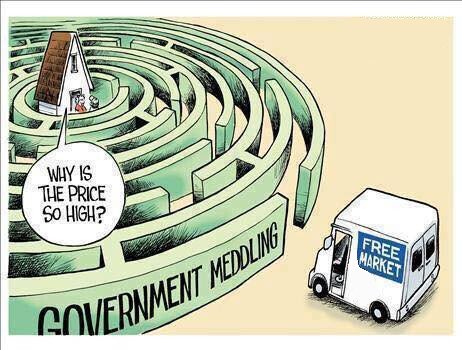
Short-term rentals can bring noise, trash, and danger, and they can price local residents out of their own neighborhoods. Some landlords in New York are prolific and have hundreds of Airbnb listings. But other New Yorkers who have listings on Airbnb are trying to make ends meet, either leasing their place while they’re out of town or renting half of a duplex to help cover their mortgage costs.

Airbnb is also popular with some of the 66 million visitors a year looking for accommodations that are cheaper and sometimes larger than hotels. In 2022 alone, short-term rental listings made $85 million in New York. The city might be a relatively small slice of Airbnb’s global market, but the new rules show how local governments can effectively stamp out short-term rentals overnight and lessen their impact on dense residential areas. And New York is just one of many cities around the world trying to calm the short-term rental gold-rush.

And everyone is taking a different approach. Dallas has limited short-term rentals to specific neighborhoods to avoid disruptive and dangerous parties. Elsewhere, the Canadian province of Quebec and Memphis, Tennessee, among others, now require licenses for short-term rentals. In San Francisco, the amount of time someone can list their entire residence for rent on Airbnb is limited to 90 days each yearAmsterdam puts that limit at 30 nights per year, Paris at 120 days. Berlin previously banned nearly all Airbnbs but walked the decision back in 2018.

Airbnb’s attempts to fight back against the new law have, to date, been unsuccessful. The company sued New York City in June, but a judge dismissed the case in August, ruling that the restrictions were “entirely rational.” Airbnb did not comment on whether it would appeal the decision. Hosts are also fighting for the right to list their apartments as short-term stays by meeting with city officials to try to change the law.

Keep reading

Biden Policies Could Spell the End of Freelance Contractors, Republicans Say

Republican members of Congress say President Joe Biden’s administration is waging war on independent contractors. Democrats counter that they are trying to ensure workers are not exploited and businesses compete on a level playing field.

Kim Kavin, a freelance writer from New Jersey, said this is not a partisan issue.

“Our members have voted for everybody from Bernie Sanders to Donald Trump,” Kavin told the Subcommittee on Workforce Protection of the House Committee on Education and the Workforce.

“All of us are in agreement on this.”

Kavin is one of five witnesses called before the committee for a hearing entitled “Examining Biden’s War on Independent Contractors.”

The hearing was called because the Biden administration is pushing a policy to deny Americans a fundamental right, according to Subcommittee Chairman Rep. Kevin Kiley (R-Calif.).

“Today’s hearing is about the right to earn a living. In a free society, few rights are as fundamental,” he said.

Keep reading

Biden Admin Unveils New Restrictions On Air Conditioners Despite Backlash Over Gas Stove Restrictions

Energy Secretary Jennifer Granholm unveiled new climate and efficiency restrictions on air conditioners despite widespread criticism the Biden administration received after officials recently announced restrictions on gas stoves.

The new energy efficiency standards, which will apply to room air conditioners and portable air cleaners, will enter into effect next year. The Energy Department contended that the new rules will assist with “tackling the climate crisis,” as well as save consumers $25 billion over the next three decades. Room air conditioners are more commonly called window air conditioners.

“Today’s announcement builds on the historic actions President Biden took last year to strengthen outdated energy efficiency standards, which will help save on people’s energy bills and reduce our nation’s carbon footprint,” Granholm said in a press release. She added that the Energy Department will “continue to engage with our public and private sector partners to finalize additional proposals like today’s that lower household energy costs and deliver the safer, healthier communities that every American deserves.”

The rules are the first federal standards for portable air cleaners. The Energy Department asserted that the regulations mark a consensus among “manufacturers, the manufacturing trade association, efficiency advocates, consumer advocacy groups, states, and utilities.”

The policies come weeks after multiple senior officials in the Biden administration repeatedly backtracked on new energy efficiency standards for gas stoves amid mounting criticism. Controversy over the potential regulations emerged earlier this year when Consumer Product Safety Commission Commissioner Richard Trumka Jr. said in an interview that gas stoves are a “hidden hazard” and declared that “any option is on the table” for a nationwide ban. Consumer Product Safety Commission Chairman Alex Hoehn-Saric later posted a statement asserting that neither he nor the agency planned to outlaw gas stoves.

Keep reading

Bacon may disappear in California once pig rules are enforced

Thanks to the reworked menu and a long time, Jinny Kim was able to keep the San Francisco restaurant alive during the coronavirus pandemic.

So I’m worried that breakfast-focused diners will be ruined within a few months by new rules that can make it difficult to get bacon, one of California’s top menus. increase.

“Our number one sellers are bacon, eggs and hash browns,” said Kim, who has been running SAMS American Eatery for 15 years on the city’s bustling market streets. “It may be devastating to us.”

California will begin implementing animal welfare proposals overwhelmingly approved by voters in 2018 early next year. This requires more space for the breeding of pigs, laying hens and calves. Veal and egg producers across the country are optimistic that they can meet the new standards, but currently only 4% of pig breeding complies with the new rules. California has lost almost all of its pork supply, much of it from Iowa, and pork production, unless courts intervene or the state temporarily permits the sale of non-compliant meat in the state. Face higher costs to regain major markets.

Animal welfare organizations have sought more humane treatment of livestock for years, but California rules could be a rare case where consumers clearly pay a price for their beliefs. I have.

Keep reading

Florida city fines woman more than $100K for parking incorrectly in her own driveway

Sandy Martinez and the Institute for Justice announced the lawsuit in a news conference Thursday, notifying the public that Martinez had been slapped with over a year’s worth of daily fines for the minor offense of parking her car partially on her front lawn in violation of town codes, WPTV-TV reported.

According to Section 6-30 of the Code of Ordinances of the Town of Lantana, “all off-street parking spaces, including driveways but not including parking spaces located in swale areas as permitted by section 17-34, shall be asphalt, concrete or block and shall be hard surfaced and in good repair in compliance with town codes.”

Martinez reportedly lives with her mother, her sister, and her three children — two of whom are now adults. Given the fact that, in total, the household contains four drivers, it is often the case that four vehicles need to be squeezed into the driveway as best they can. That predicament resulted in one of the four vehicles being parked partially on grass.

Martinez claimed that after she was first cited for the violation, she called the city, but an inspector never came to her residence. Then, more than a year later, she learned that she had been fined $250 a day for 407 days for the offense, totaling $101,750. On top of that, the city fined Martinez $65,000 more in fines for cosmetic violations, such as cracks in the driveway and a broken fence.

“I’ve been living here for 17 years now and I’m being fined over $160,000 for parking on my own property,” Martinez said during the press conference.

Keep reading