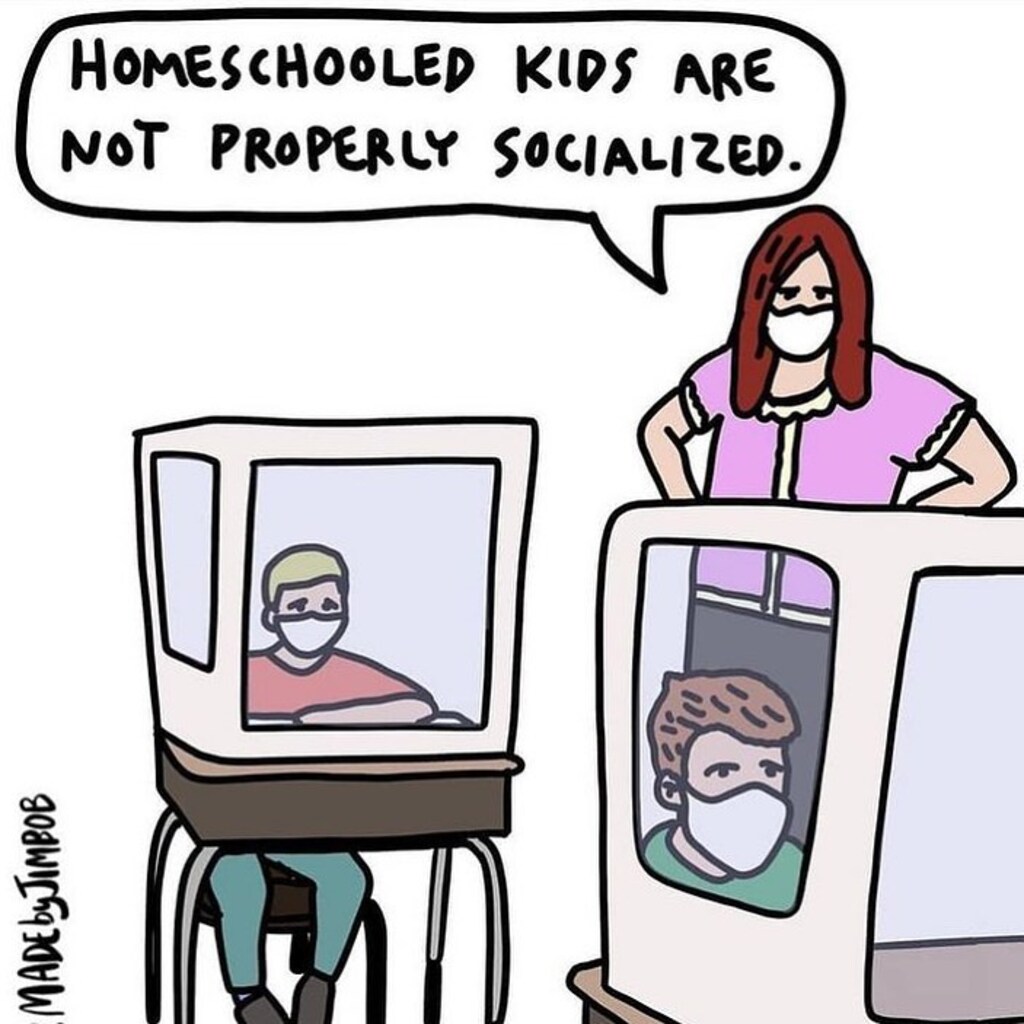
Wait…

The latest curriculum, however scaled back, still shares similarities with an earlier, rejected draft that a top state official said failed to comply with state law, and the Los Angeles Times editorial board characterized as a jumble of “politically correct pronouncements” that feel like “an exercise in groupthink, designed to proselytize and inculcate more than to inform and open minds.”
When all is said and done, the material emphasizing whites’ subjugation of non-whites is not a conventional textbook subject, but an ideology with an activist political agenda. Revisions may never satisfy parents and teachers who believe public schools shouldn’t be in the business of teaching kids how to develop a “social consciousness” or using class time to pinpoint a student’s intersectional identity to determine where they fit on a hierarchy of power.
At the same time, ethnic studies activists are furious that their efforts at promoting social justice, and centering “voices of color” are being diluted by, as they put it, power structures such as “whiteness,” Zionism and assimilationism.
Last year, the Wake County Public School System, which serves the greater Raleigh, North Carolina area, held an equity-themed teachers’ conference with sessions on “whiteness,” “microaggressions,” “racial mapping,” and “disrupting texts,” encouraging educators to form “equity teams” in schools and push the new party line: “antiracism.”
The February 2020 conference, attended by more than 200 North Carolina public school teachers, began with a “land acknowledgement,” a ritual recognition suggesting that white North Carolinians are colonizers on stolen Native American land. Next, the superintendent of Wake County Public Schools, Cathy Moore, introduced the day’s program and shuffled teachers to breakout sessions across eight rooms. Freelance reporter A.P. Dillon obtained the documents from the sessions through a public records request and provided them to City Journal.
At the first session, “Whiteness in Ed Spaces,” school administrators provided two handouts on the “norms of whiteness.” These documents claimed that “(white) cultural values” include “denial,” “fear,” “blame,” “control,” “punishment,” “scarcity,” and “one-dimensional thinking.” According to notes from the session, the teachers argued that “whiteness perpetuates the system” of injustice and that the district’s “whitewashed curriculum” was “doing real harm to our students and educators.” The group encouraged white teachers to “challenge the dominant ideology” of whiteness and “disrupt” white culture in the classroom through a series of “transformational interventions.”
Parents, according to the teachers, should be considered an impediment to social justice. When one teacher asked, “How do you deal with parent pushback?” the answer was clear: ignore parental concerns and push the ideology of antiracism directly to students. “You can’t let parents deter you from the work,” the teachers said. “White parents’ children are benefiting from the system” of whiteness and are “not learning at home about diversity (LGBTQ, race, etc.).” Therefore, teachers have an obligation to subvert parental wishes and beliefs. Any “pushback,” the teachers explained, is merely because white parents fear “that they are going to lose something” and find it “hard to let go of power [and] privilege.”
A group of current and former teachers and others in Loudoun County, Virginia, compiled a lengthy list of parents suspected of disagreeing with school system actions, including its teaching of controversial racial concepts — with a stated purpose in part to “infiltrate,” use “hackers” to silence parents’ communications, and “expose these people publicly.”
Members of a 624-member private Facebook group called “Anti-Racist Parents of Loudoun County” named parents and plotted fundraising and other offline work. Some used pseudonyms, but The Daily Wire has identified them as a who’s who of the affluent jurisdiction outside D.C., including school staff and elected officials.
The sheriff’s criminal investigations division is reviewing the matter — but the group’s activities might be no surprise to top law enforcement because the county’s prosecutor, narrowly elected with the help of $845,000 in cash from George Soros, appears to be a member of the Facebook group.
Secret communications reviewed by The Daily Wire do not offer any evidence of racism by the group’s targets, or even attempt to. Their opponents were apparently those who objected to, sought to debate, or were even simply “neutral” about “critical race theory,” a radical philosophy opposed by many liberals and conservatives but increasingly embraced by governments.
In recent years, Loudoun’s school system has flooded its curricula and policies with racial rhetoric, paying about $500,000 to one racial consulting company alone. It required all staff to undergo “Equity in the Center” training that promoted a sense of injustice and urgency.
The primary obstacle in getting people to realize that they are being propagandized by our rulers is their unquestioned assumption that if there were a mass-scale narrative management operation geared at manufacturing consent for the status quo, they would have heard about it in the news or learned about it in school.
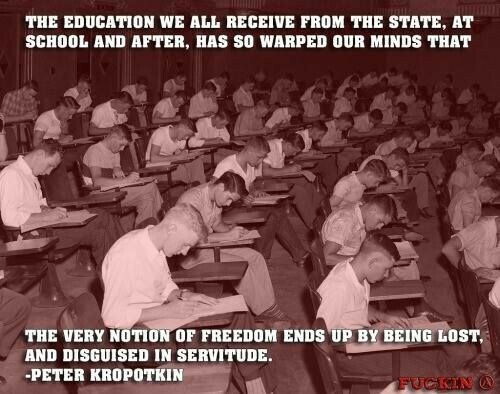
And, of course, they would not have, because both the plutocratic media and the modern schooling system are designed to indoctrinate people into accepting the status quo. From the time we are children our minds are deliberately and systematically warped to psychologically align us with the interests of the ruling class, and then we are passed on to the news media to ensure that we are continually shaped and reshaped in real time throughout our adult lives based on the specific needs of the oligarchic empire from year to year. A brainwashing institution is never going to teach you to be skeptical of their brainwashing.
Our indoctrination into the establishment worldview is not just in training us to espouse certain beliefs and think a certain way, it’s in training us to look to the sources of our indoctrination for guidance throughout our lives. What do we do when we are unsure about something, class? That’s right, we go to reliable, authoritative sources like The New York Times, The Washington Post, CNN, and any other outlet that has consistently supported every war we’ve ever been deceived into by our rulers.
Our indoctrination isn’t just in what to think, it’s in how to think.
An activist group pushing to get schools reopened in California has obtained internal memos indicating several districts contemplated using state and federal COVID-19 relief money to fund bonuses and, in one case, a Hawaiian trip.
In one instance, memos which were shared online by “Reopen California Schools,” a Facebook group founded early on during the pandemic by Jonathan Zachreson, show that the Clovis Unified School District in Fresno County discussed using COVID funds for a “one-time payment to employees…given the extraordinary effort required of every employee over the course of the pandemic.”
“The $6K proposed teacher and staff bonus to be voted by the board this Wed. It was shared with us by someone part of the negotiations. This person is outraged they are offering $6k in bonuses, money which is supposed to go towards programs for students,” the group noted in a tweet.
The California Department of Education has proposed an ethnic studies “model curriculum” that includes, among other things, chanting the names of Aztec gods in an attempt to build unity among schoolchildren.
Included in the draft curriculum is a list of “lesson resources” with a chant based on “In Lak Ech,” which it describes as “love, unity, mutual respect,” and “Panche Be,” which it describes as “seeking the roots of truth.”
The chant starts with a declaration that “you are my other me” and “if I do harm to you, I do harm to myself.” Before chanting the name of the Aztec god Tezkatlipoka, the text reads: “Seeking the roots of the truth, seeking the truth of the roots, elders and us youth, (youth), critical thinking through.”
It adds: “Tezkatlipoka, Tezkatlipoka, x2 smoking mirror, self-reflection Tezkatlipoka.”
Tezkatlipoka is the name of an Aztec god that was honored with human sacrifice. According to the World History Encyclopedia, an impersonator of Tezkatlipoka would be sacrificed with his heart removed to honor the deity.
 Hellbound and Down
You must be logged in to post a comment.