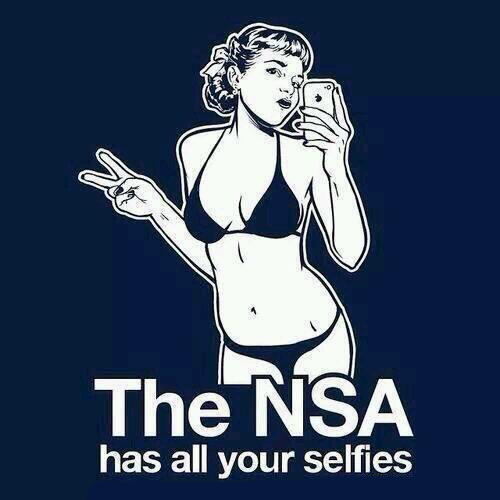
They do.

Digital rights advocates reacted with alarm to a report published Friday detailing how Defense Intelligence Agency analysts in recent years bought databases of U.S. smartphone location data without first obtaining warrants.
The Defense Intelligence Agency (DIA) is part of the Department of Defense and is tasked with informing military and civilian policymakers about the activities and intentions of foreign governments and nonstate actors.
The new revelation, first reported by the New York Times, initially came in the form of DIA responses to questions from Sen. Ron Wyden (D-Ore.) regarding the agency’s warrantless purchase of commercial location data generated by phones both inside and outside of the United States.
Wyden asked the DIA to clarify its interpretation of Carpenter v. United States, a 2018 U.S. Supreme Court decision barring law enforcement agencies from requesting personal location information from a cellphone company without first obtaining a search warrant from a judge.
“DIA does not construe the Carpenter decision to require a judicial warrant endorsing purchase or use of commercially-available data for intelligence purposes,” the agency replied, implicitly acknowledging its exploitation of an apparent loophole in the case that DIA believes permits its warrantless acquisition of location data from third-party brokers.
Writing at The Daily Beast, Jeff Stein asks whether America needs a new federal spy agency focused on domestic threats in the wake of the attack on the U.S. Capitol by Americans who refuse to accept that outgoing President Donald Trump lost the 2020 election.
But we already have such an organization. It’s called the FBI. Stein argues that the FBI is so focused on solving and clearing crimes that it’s not able to effectively engage in domestic intelligence gathering. He asks whether a new federal agency should be created for that purpose.
In reality, the FBI is set up just fine for intelligence gathering. In fact, under Trump, the FBI’s authority to secretly snoop on American citizens was actually expanded. The intelligence failures that preceded the attack on the Capitol involved a lack of communication between law enforcement agencies about the intelligence that had been gathered. It’s not entirely clear how yet another federal surveillance agency would fix that problem.
Privacy and security experts have warned for many years about privacy and cybersecurity risks associated with ALL “Smart” and wireless technology – cell phones (see 1, 2, 3), medical devices and implants (see 1, 2), personal and “Smart” home devices and wearables (see 1, 2, 3, 4, 5, 6), utility “Smart” meters (electric, gas, and water), and everything that uses Internet of Things (IoT) technology (see 1, 2). Last month, researchers from Carnegie Melon University proposed product warning labels that would make it easier for consumers to understand this.
Of course, manufacturers may not be in a hurry to use them because their “Smart” products allow them to collect data on consumers to analyze and sell to 3rd parties. This is referred to as “Surveillance Capitalism.” “Smart” light bulbs can be used for this as well.
It is official, unless airline passengers are willing to wear motorcycle helmets or Daft Punk style masks, the Feds can use facial and iris recognition to identify nearly everyone.
According to an S&T press release, a pilot program run by DHS proves they can use facial/iris recognition to identify airline passengers.
The in-person rally, held at the Maryland Test Facility (MdTF), included 10 days of human testing during which six face and/or iris acquisition systems and 13 matching algorithms were tested with help from 582 diverse test volunteers representing 60 countries.
What is DHS’s so-called motivation to ID everyone?
The arrival of government-operated autonomous police robots does not look like predictions in science fiction movies. An army of robots with gun arms is not kicking down your door to arrest you. Instead, a robot snitch that looks like a rolling trash can is programmed to decide whether a person looks suspicious—and then call the human police on them. Police robots may not be able to hurt people like armed predator drones used in combat—yet—but as history shows, calling the police on someone can prove equally deadly.
Long before the 1987 movie Robocop, even before Karel Čapek invented the word robot in 1920, police have been trying to find ways to be everywhere at once. Widespread security cameras are one solution—but even a blanket of CCTV cameras couldn’t follow a suspect into every nook of public space. Thus, the vision of a police robot continued as a dream, until now. Whether they look like Boston Dynamics’ robodogs or Knightscope’s rolling pickles, robots are coming to a street, shopping mall, or grocery store near you.
A recent Morning Joe appearance by CIA analyst-turned House Representative Elissa Slotkin eagerly informed us that the real battle against terrorism is now inside America’s borders.
“The post 9/11 era is over,” Slotkin tweeted while sharing a clip of her appearance. “The single greatest national security threat right now is our internal division. The threat of domestic terrorism. The polarization that threatens our democracy. If we don’t reconnect our two Americas, the threats will not have to come from the outside.”
“Before Congress, Elissa worked for the CIA and the Pentagon and helped destabilize the Middle East during the Bush and Obama admins,” tweeted journalist Whitney Webb in response. “What she says here is essentially an open announcement that the US has moved from the ‘War on [foreign] terror’ to the ‘War on domestic terror’.”
If Vice President Joe Biden decides to enter the race for the Democratic presidential nomination, his past positions — including on trade bills, the Iraq War, the repeal of Glass-Steagall, and changes to welfare — are sure to draw the ire of the party’s liberal base.
Much has already been made about Biden’s instrumental role as a senator pushing through the 1994 crime bill — “a bill that made the problem worse” according to former President Bill Clinton, who signed it into law.
Another potential sticking point for liberals: Biden not only voted for the 2001 Patriot Act, he, on many occasions, claimed credit for writing it.
“I drafted a terrorism bill after the Oklahoma City bombing,” Biden was quoted as saying by the New Republic in 2001.
“And the bill John Ashcroft sent up was my bill,” Biden continued, referring to the Patriot Act. The act broadened the surveillance capabilities of U.S. law enforcement agencies as it relates to identifying potential terrorists, and many of its provisions have been opposed by liberal Democrats and civil libertarians.
In the coming days and weeks we are likely to see pundits and lawmakers call for things like passing a new domestic terrorism law, expanding mass surveillance programs, increasing funding for the FBI and law enforcement, installing backdoors in encrypted messaging apps, and arming police with more technology like facial recognition and social media monitoring software. We’re also likely to see renewed attempts by the government to curtail freedom of expression, including misguided attacks on Section 230 of the Communications Decency Act.
This is the exact opposite of what we need to be doing. Expanding the U.S. government’s already bloated surveillance state will only bring more terror and harm to the same communities that Trump targeted with his racist policies and rhetoric. More money, weapons, and technology in the hands of the Department of Homeland Security—an agency complicit in human rights abuses long before Trump took office—won’t stop the rising threat of right-wing violence. Instead it will be used to suppress legitimate dissent, and disproportionately target Black and brown activists, Muslims, immigrant communities, and social movements that effectively challenge systemic injustice and corporate power.
There have been a lot of rumors and allegations against what “Mockingbird” actually was, but it appears that quite possibly, there were two project names. One has been confirmed while the other remains elusive (if real at all).
PROJECT Mockingbird was a wiretapping operation initiated by President John F. Kennedy to identify the sources of government leaks by eavesdropping on the communications of journalists.
This is the program mentioned in the CIA records below, and The Black Vault also added records from the Gerald Ford Presidential Library on the same.
OPERATION Mockingbird was a alleged secret campaign by the United States Central Intelligence Agency (CIA) to influence media. Begun in the 1950s, it was said to be initially organized by Cord Meyer and Allen W. Dulles, it was later led by Frank Wisner after Dulles became the head of the CIA.
The organization recruited leading American journalists into a network to help present the CIA’s views, and funded some student and cultural organizations, and magazines as fronts. As it developed, it also worked to influence foreign media and political campaigns, in addition to activities by other operating units of the CIA.


You must be logged in to post a comment.