San Diego County Passes Ordinance to Change Definition of ‘Woman’

The San Diego County Board of Supervisors has adopted a new definition of “woman” that would reportedly allow male-to-female transgender residents to demand inclusion as women in jails, homeless shelters, and domestic violence shelters.

The ordinance, passed by a 3-2 vote on April 26, and ratified on May 10 by the same margin, adopts the United Nations Convention on the Elimination of Discrimination Against Women (CEDAW), an international treaty adopted in 1979.

The treaty was signed by then-President Jimmy Carter in 1980, but it was never brought to the Senate for ratification.

But the ordinance goes further, expanding the definition of “woman” to include those who simply identify as women:

F. “Women and girls” shall mean those who identify as women and girls, including transgender women and gender non-conforming, and those assigned female at birth who include non-binary, transgender men and intersex communities.

G. “Gender” shall mean the characteristics of women, men, girls, and boys that are socially constructed. As a social construct, gender can vary among cultures and can change over time.

H. “Gender equity” shall mean the redress of discriminatory practices and ensuring equitable conditions that enable women and girls to achieve full, substantive equality with men, recognizing that needs of women and men may differ, resulting in fair and equitable outcomes for all. This includes the redress of discriminatory practices and ensuring equitable conditions for persons identifying as transgender, nonbinary, and/or gender non-conforming to achieve full equality and equity.

I. “Intersectional” shall mean the interconnected nature of social categorizations and individual characteristics that overlap as interdependent and compounded systems of discrimination. These categorizations and characteristics include, but are not limited to, gender, gender identity, race, ethnicity, nationality, immigration status, sexual orientation, age, socio-economic status, education, language, and disability.

Keep reading

Professor no longer teaching education class after quoting the N-word during a lecture

A George Washington University professor recently stepped down from teaching “Anti-Racist STEM Education” after reading the N-word aloud during the class when discussing the 1964 Norman Rockwell painting The Problem We All Live With.

The incident occurred Jan. 18 at GWTeach University, the institution’s teacher training college geared towards STEM majors. The incident was brought to the attention of the university after students filed numerous complaints, as reported by The Hatchet.

Professor Alicia Bitler reportedly said the N-word during a discussion of the painting that depicts Ruby Bridges, the first African-American child to attend a white school in Louisiana. In the painting, the N-word can be clearly seen in the background in the form of graffiti on a wall.

Alicia Bitler reportedly described the incident as an “oops-moment” soon after it happened. Bitler then continued to teach the class. Three days later, university officials acknowledged the students’ complaints.

Incidents like these have been around the country for years. In 2020, Campus Reform reported that a law professor at Emory University was suspended for using the N-word in an “academic context to illustrate the effect language has on the severity of a civil wrong” during a lecture. 

As reported by Inside Higher Ed, University of Southern California Professor Greg Patton was suspended for “saying a Chinese word that sounds like a racial slur in English” during a lecture on Chinese “filler words.”  

Keep reading

University language guide says ‘grandfather,’ ‘housekeeping,’ ‘spirit animal’ are ‘problematic’ words

A University of Washington language guide is calling everyday words used by Americans “problematic.”

The University of Washington Information Technology department released an “inclusive language guide” that lists a number of “problematic words” that are “racist,” “sexist,” “ageist,” or “homophobic.”

According to the guide, words such as “grandfather,” “housekeeping,” “minority,” “ninja,” and “lame” are considered “problematic words.”

For example, the language guide states that the word “lame” is considered problematic because it’s “ableist.”

“This word is offensive, even when it’s used in slang for uncool because it’s using a disability in a negative way to imply that the opposite, which would be not lame, to be superior,” the guide states.

Keep reading

CDC Director Rochelle Walensky Announces The Definition of ‘Fully Vaccinated’ Has Changed

During a press briefing Friday afternoon, CDC Director Rochelle Walensky announced the definition of fully vaccinated has changed and that the agency is “pivoting” its language on how it approaches boosters. This language change includes ditching the use of “fully vaccinated” and replacing it with “up to date.”

“What we are really are working to do is pivot our language so that everyone is as up to date with their COVID-19 vaccines as they personally could be, should be based on when they got their last vaccine. So importantly right now we are pivoting our language, we really want to make sure people are up to date. That means if you recently got your second dose you’re not eligible for a booster. You’re up to date. If you are eligible for a booster and you haven’t gotten it, you’re not up to date and you need to get your booster in order to be up to date,” Walensky said.

Keep reading

New alarm system is triggered when “offensive” language is detected

During the Dubai Design Week, a new alarm system was unveiled. The device sounds an alarm when it detects potentially “offensive” language.

The device is named after Themis, the Greek goddess of social order and justice. Themis is a lamp-sized device created for the purpose of moderating discussions in educational settings and “manifest political correctness.”

The device can also be used to police language at family gatherings and dinner parties. The designer of Themis, Zinah Issa, hopes it will help with “self-critique.”

Speaking to The Telegraph, Issa said: “Through the use of speech recognition and sound sensors we were able to program Themis to detect offensive terms – racial slurs, offensive jokes – through the microphone.

Keep reading

Leftist Hack Claims That If Any White Person Is Using The Word ‘Woke’, It’s A “Racial Slur”

A writer with Slate has declared that the word ‘woke’ when used by a white person should be treated as a racial slur because it was “shoplifted” from the “black community”.

It’s the latest narrative in the debate over cancel culture.

It is no longer credible to declare that cancel culture doesn’t exist, and so the left has reverted to what it knows best, baseless accusations of racism and bigotry.

Along with a tacit threat, Slate hack Joel Anderson tweeted “If you’re not black and started using ‘woke’ pejoratively sometime post-2018 or so (or worse, don’t know anything about the earlier iteration of the term), I think it’s fair to consider it a racial slur.”

Keep reading

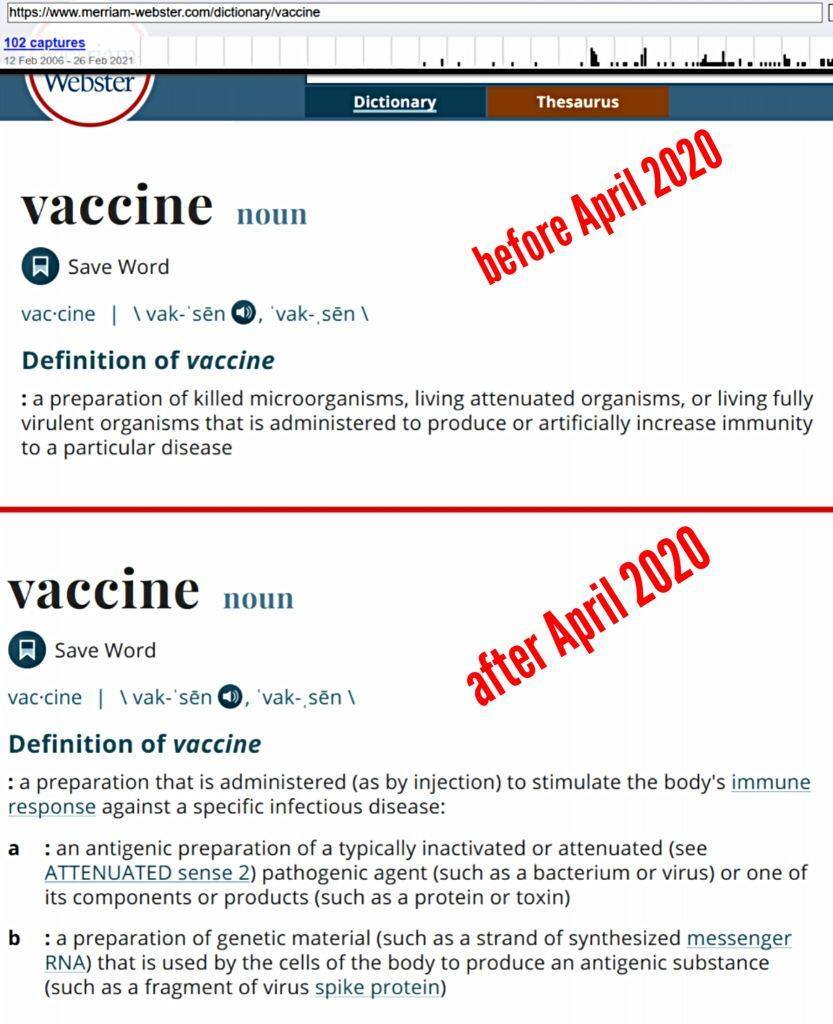
CDC Changed Definition of ‘Vaccine’ Because of COVID-19 Vaccines

The Centers for Disease Control and Prevention (CDC) altered the definition of “vaccine” because of concern that its definition did not apply to COVID-19 vaccines, according to newly released internal emails.

The agency updated its definition on Sept. 1.

The definition was formerly, “a product that stimulates a person’s immune system to produce immunity to a specific disease, protecting the person from that disease.” It is now, “A preparation that is used to stimulate the body’s immune response against diseases.”

One CDC employee in August, shortly before the definition was changed, said that the definition was being used by “right-wing COVID-19 pandemic deniers … to argue that mRNA vaccines are not vaccines,” according to the newly published emails.

The Pfizer and Moderna COVID-19 vaccines utilize messenger RNA technology. All three COVID-19 vaccines authorized for use in the United States have plummeted in effectiveness against infection in recent months after initially being promoted as protecting against infection and severe disease.

The definition “was twisted to claim that the existing COVID-19 vaccines were not vaccines because they only prevented severe illness,” the CDC employee said.

Alycia Downs, listed on LinkedIn as the lead health communication specialist for the agency, messaged a colleague on Aug. 19, saying she needed to update the definition and others like it “since these definitions are outdated and being used by some to say COVID-19 vaccines are not vaccines per CDC’s own definition.”

Downs didn’t receive a response so she messaged again the following week, writing, “The definition of vaccine we have posted is problematic and people are using it to claim the COVID-19 vaccine is not a vaccine based on our own definition.”

Valerie Morelli, another CDC official, approved the change on Sept. 1, even though it seems to differ greatly from a definition she laid out in an earlier document (pdf).

“If this is for the general public, I am good with the change,” Morelli wrote.

The emails were obtained by lawyer Travis Miller through a Freedom of Information Act request. The CDC did not dispute their authenticity.

Keep reading