
That’s weird…

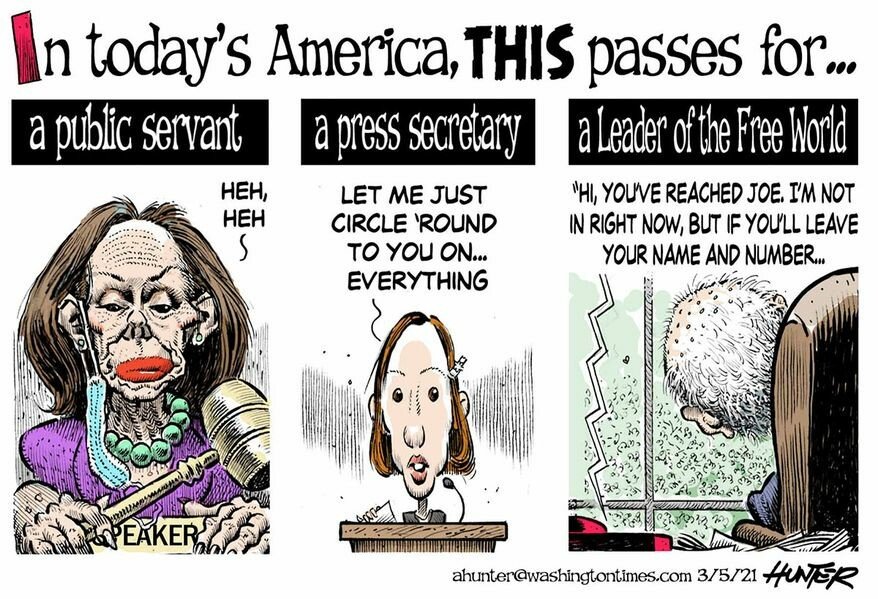
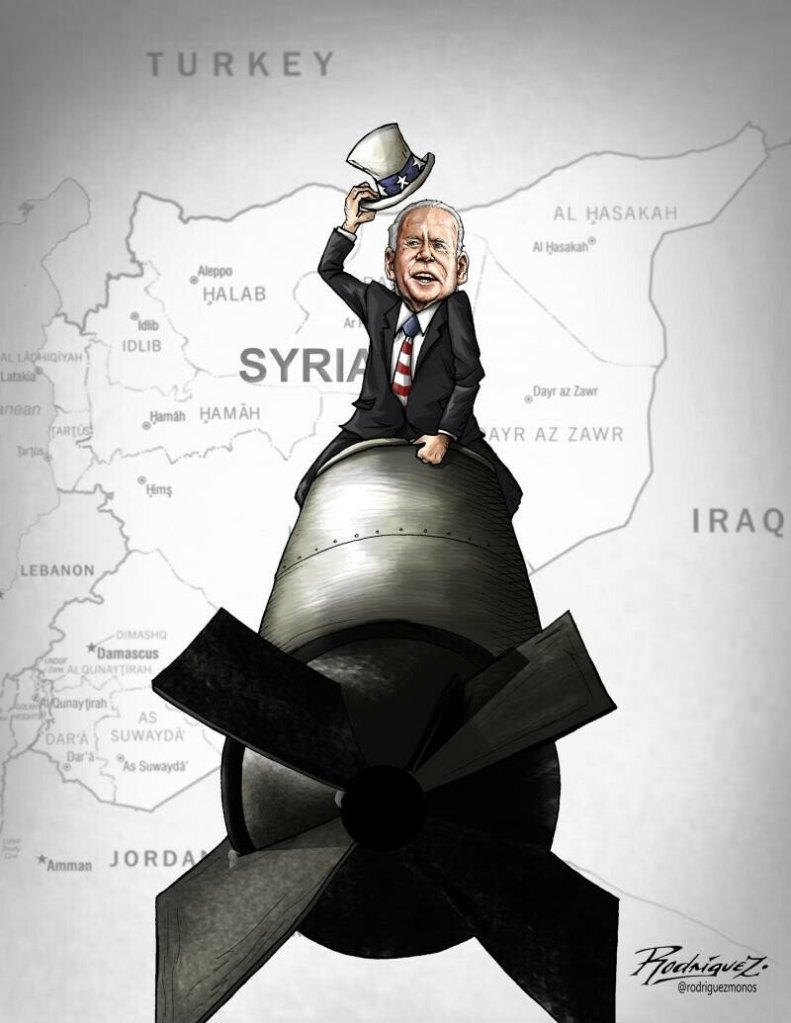
Transparency and accountability now seem to be a thing of the past for the White House. Since taking office, Joe Biden has signed a record number of executive orders, proclamations and directives, but hasn’t held one formal press conference to answer for them.
In January, Biden promised to address a joint session of Congress “next month” in February, which he may not realize already passed. Biden also claimed he would hold a press conference, but that too has not happened or even been scheduled. This is quickly earning Biden the reputation of an “absentee president,” and we’re not just talking about the ballots.
This week, Biden set a 100-year record by not holding a solo press conference, something that usually happens within an administration’s first 33-days. White House press secretary Jen Psaki said there are still no plans to do so, just as there are no plans to even schedule Biden’s address to a joint session of Congress. This is something that traditionally happens in the month of February.
As what now seems customary for the Biden White House, the speech has been pushed off and made conditional. Psaki said it is contingent on certain legislation being passed in Congress.
Biden appeared with House Speaker Nancy Pelosi (D-CA) and other members of the Democratic Party during the live event, and spoke about his administration’s ongoing obsession with COVID-19 and the steps purportedly taken to halt its spread.
“I’d be happy to take questions if that’s what I’m supposed to do, Nance,” Biden said to Pelosi. “Whatever you want me to do.”
Within moments, the feed cut to a blue screen, and President Biden was no longer visible. A “Thank You For Joining” message informed viewers that the event was now over.

Defense Secretary Lloyd Austin has called for a worldwide “stand down” of the U.S. military in April to focus on extremism in the ranks. This is fine, but indications are that the one-day sessions will not focus on both ends of the political spectrum, and will not identify true extremists who have no place in the military.
One wag snarked, “Just ask if they voted for Donald Trump.” More seriously, retired Army Brig. Gen. Thomas Kolditz, a former department head at West Point, told Fortune in an interview that he was very concerned about a “strong Trump following in the military.”
Kolditz conceded that military men and women can be conservative, but Trump supporters who think that the attack on the U.S. Capitol was “a good thing” (Are there any?) should be removed. “That probably won’t happen,” he added, “until the Trump loyalists are out.”

A staple of mainstream U.S. discourse is that the United States opposes tyranny and despotism and supports freedom and democracy around the world. Embracing murderous despots is something only Donald Trump did, but not normal, upstanding American Presidents. This belief about the U.S. role in the world permeates virtually every mainstream foreign policy discussion.
When the U.S. wants to start a new war — with Iraq, with Libya, with Syria, etc. — it accomplishes this by claiming that it is, at least in part, motivated by horror over the tyranny of the country’s leaders. When it wants to engineer regime change or support anti-democratic coups — in Venezuela, in Iran, in Bolivia, in Honduras — it uses the same justification. When the U.S. Government and its media partners want to increase the hostility and fear that Americans harbor for adversarial countries — for Russia, for China, for Cuba, For North Korea — it hauls out the same script: we are deeply disturbed by the human rights violations of that country’s government.
Yet it is hard to conjure a claim that is more obviously and laughably false than this one. The U.S. does not dislike autocratic and repressive governments. It loves them, and it has for decades. Installing and propping up despotic regimes has been the foundation of U.S. foreign policy since at least the end of World War II, and that approach continues to this day to be its primary instrument for advancing what it regards as its interests around the world. The U.S. for decades has counted among its closest allies and partners the world’s most barbaric autocrats, and that is still true.
Indeed, all other things being equal, when it comes to countries with important resources or geo-strategic value, the U.S. prefers autocracy to democracy because democracy is unpredictable and even dangerous, particularly in the many places around the world where anti-American sentiment among the population is high (often because of sustained U.S. interference in those countries, including propping up their dictators). There is no way for a rational person to acquire even the most minimal knowledge of U.S. history and current foreign policy and still believe the claim that the U.S. acts against other countries because it is angry or offended at human rights abuses perpetrated by those other governments.
Throughout his presidential campaign and continuing since taking the White House, Joe Biden has promised a transparent approach to press and public relations. Yet in recent weeks, his administration has closed off — at least for now — several key avenues via which the press and public have for years gained a modicum of transparency, accessibility and accountability from the White House.
These moves to curb press and public access come as President Joe Biden himself has at times appeared to be struggling with the public demands of his job.
Notably, the White House has said that while it will divulge records of individuals who physically visit the White House, it will not be sharing virtual visitor logs. The Biden administration has relied heavily on virtual meetings out of concerns that COVID-19 might spread in face-to-face gatherings.
An unnamed White House official told Politico this week that the administration’s refusal to release virtual meeting logs was in line with “the same way that previous administrations didn’t release phone logs.”
Meanwhile, White House Press Secretary Jen Psaki this week acerbically dismissed a reporter’s query into the administration’s lack of transparency on the issue.
“[Biden is] meeting with members of the Senate virtually today,” she said. “There, I’ve released it for you. What else would you like to know?”
The White House has also shut down its comment line by which American citizens can call in to leave comments for the executive branch. A recording claims that the comment office is “temporarily closed” and urges callers to visit the White House’s contact page instead.
The Biden administration has also removed the popular “We the People” petitioning platform originally started by President Barack Obama and continued through the Trump administration. As late as Jan. 18 of this year, the program was still active, yet now any attempt to reach the older URL simply reroutes users to the White House’s main page.
Gone, also, are White House tours, which the administration claims have been “suspended until further notice.” As late as mid-December, the Trump administration was still encouraging Americans to schedule tours through their congressional representatives.


You must be logged in to post a comment.